After nine days of searching — across the Kalahari, through the Okavango Delta, deep into Moremi Game Reserve — I finally saw lions. Two groups. And I was sleeping in a tent with nothing between me and the wild except a sheet of canvas. This is my review of Chobe Mobile Camp by Kalahari Tours — a one-night mobile safari in Botswana that I will never forget. One night inside Chobe National Park. One campfire. One elephant chewing branches outside my tent at 2am. And a morning game drive that delivered everything I’d been hoping for since Day 1. From a dawn game drive to a three-hour boat cruise on the Chobe River Botswana — this is the review.
If you’re considering a mobile safari in Botswana and wondering whether one night in Chobe is worth it — it is. Every single hour of it.
→ Planning your own Botswana trip? Start with my complete 11-day Botswana safari route — it covers every lodge, every region, and exactly how I planned the whole thing. ♥
Come with me · November 2026
Want to travel with me? And experience this trip yourself?
I’m taking two small groups of six back to Botswana & Zimbabwe this November — the exact route in this article, fully hosted, everything included, every photo taken by me.
See my Botswana group trip →What Is Chobe Mobile Camp?
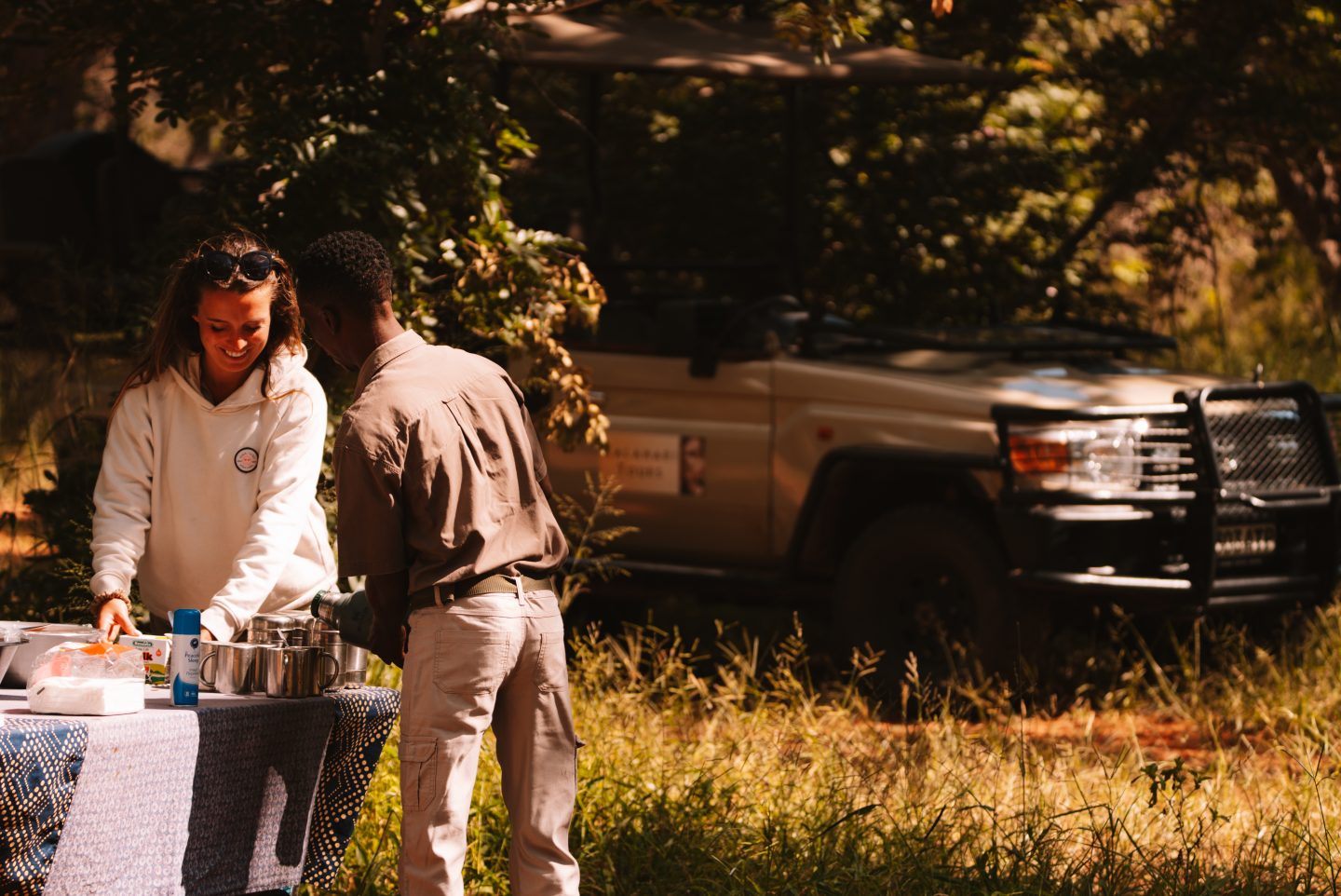
Chobe Mobile Camp is not a lodge. It’s not a permanent camp. It’s a mobile tented camp set up inside Chobe National Park, operated by Kalahari Tours — a Kasane-based safari company that runs day trips, boat cruises and multi-night camping safaris in and around Chobe.
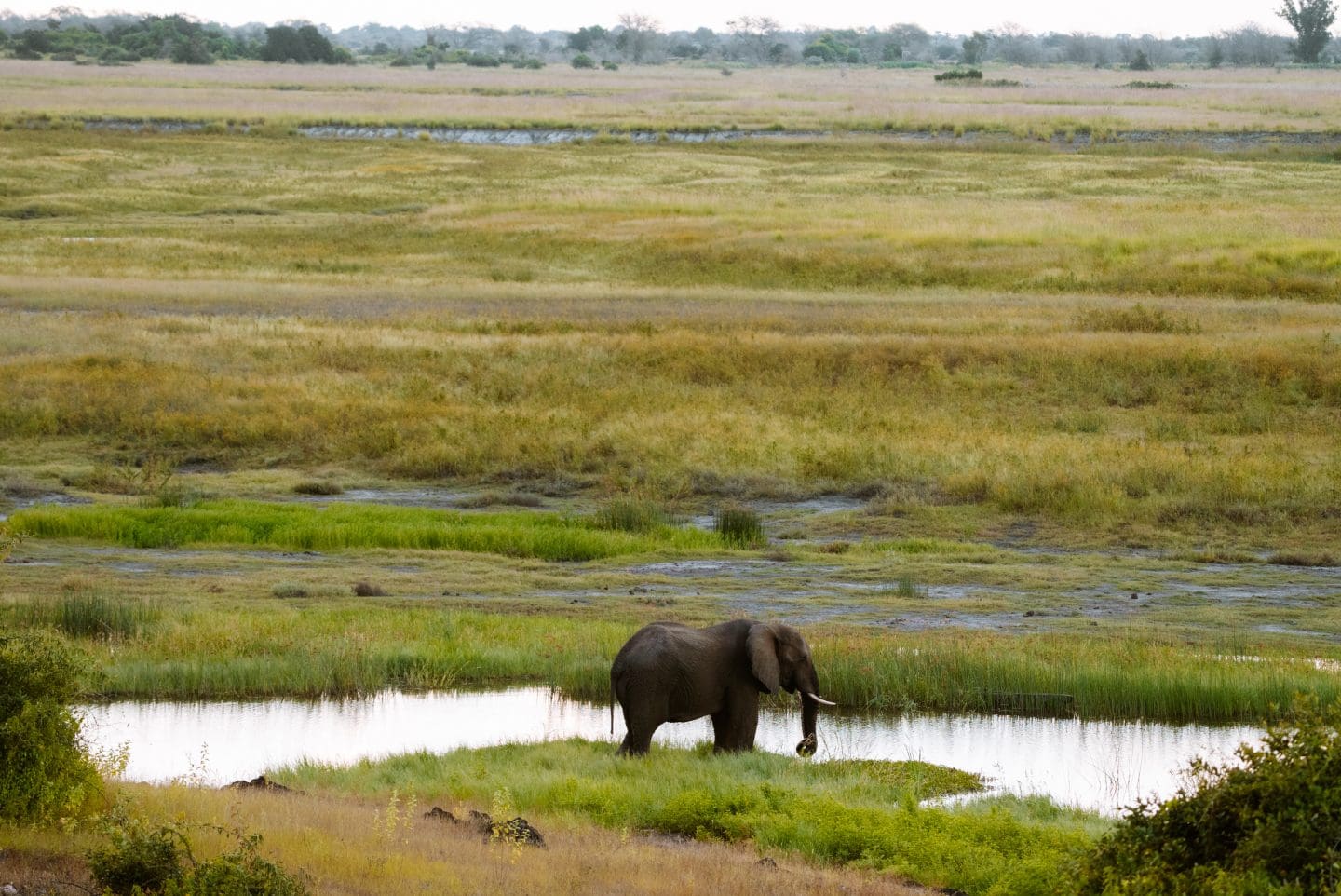
The camp sits completely off-grid inside a national park that holds more elephants than anywhere else on earth — around 130,000 at last count. Your tent has mattresses and just enough room for you and your suitcase. There’s a proper shower. And then there’s the toilet tent — a hole in the ground with a toilet seat placed on top, which made us laugh until we cried and which worked perfectly. Private, dignified, entirely wild.
This is what a mobile safari in Botswana actually looks like. No marble bathrooms. No infinity pools. Just the bush, a camp that could disappear without a trace, and the kind of closeness to wildlife that no luxury lodge can replicate. Among all the botswana tented camps I’ve experienced, this is the most raw and the most honest.
How We Got There — The Route from Saguni to Chobe
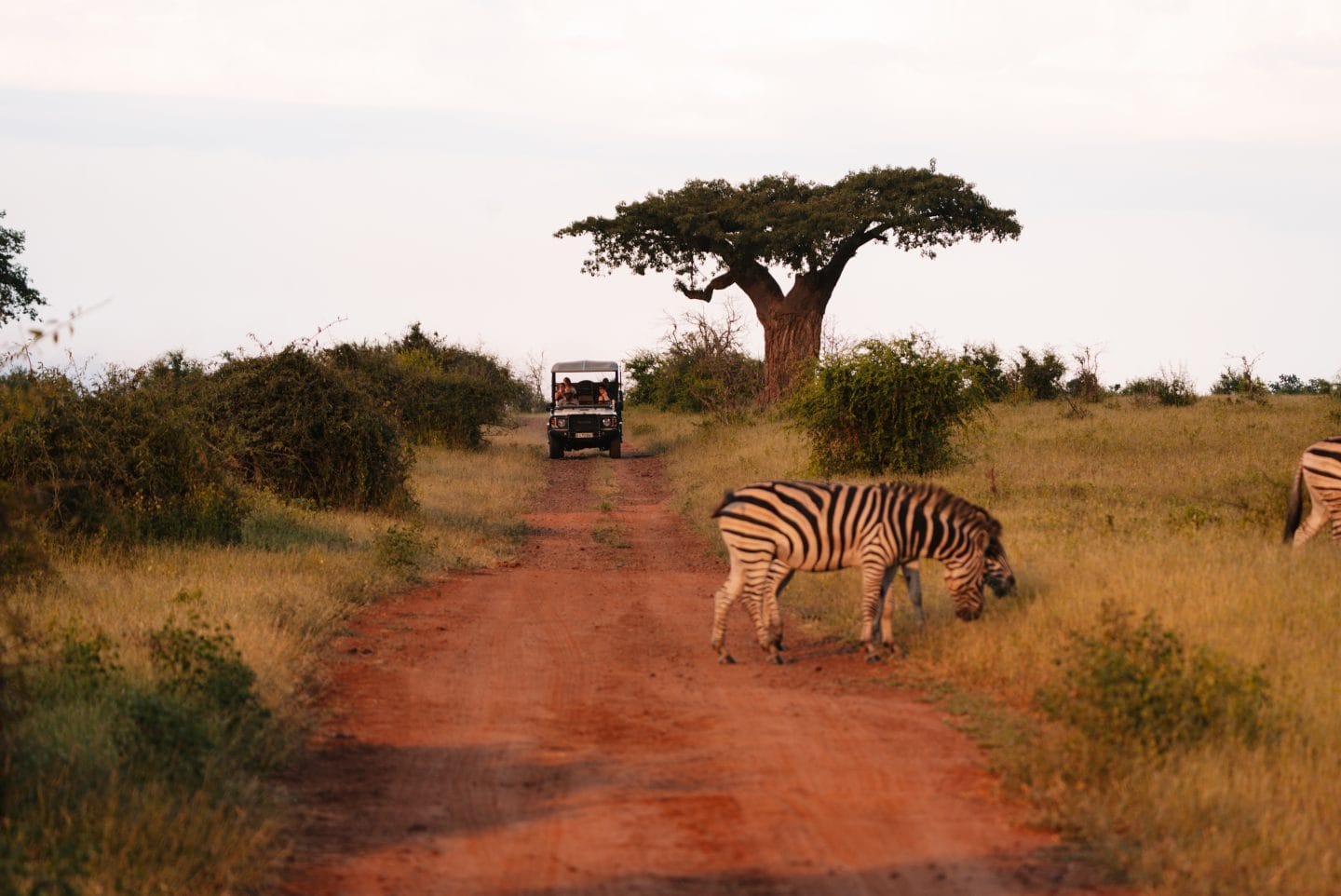
Our mobile safari in Botswana didn’t start in Kasane. We’d spent the previous three nights at Saguni Safari Lodge in Moremi Game Reserve — one of the most intimate lodges in the Okavango Delta. On the morning of Day 9, Saguni’s vehicle drove us to Mababe Gate, where the Kalahari Tours team was waiting.
From there, our guide Axe took us on a game drive through Chobe National Park toward the camp. This wasn’t a transfer — it was a proper game drive, and Chobe announced itself immediately. The landscape shifted. The bush opened up. And the animals were everywhere.
→ This was lodge four of five on my route. See all of them in my Botswana safari guide. ♥
A Mobile Safari — What It’s Actually Like to Sleep in Chobe National Park in Botswana
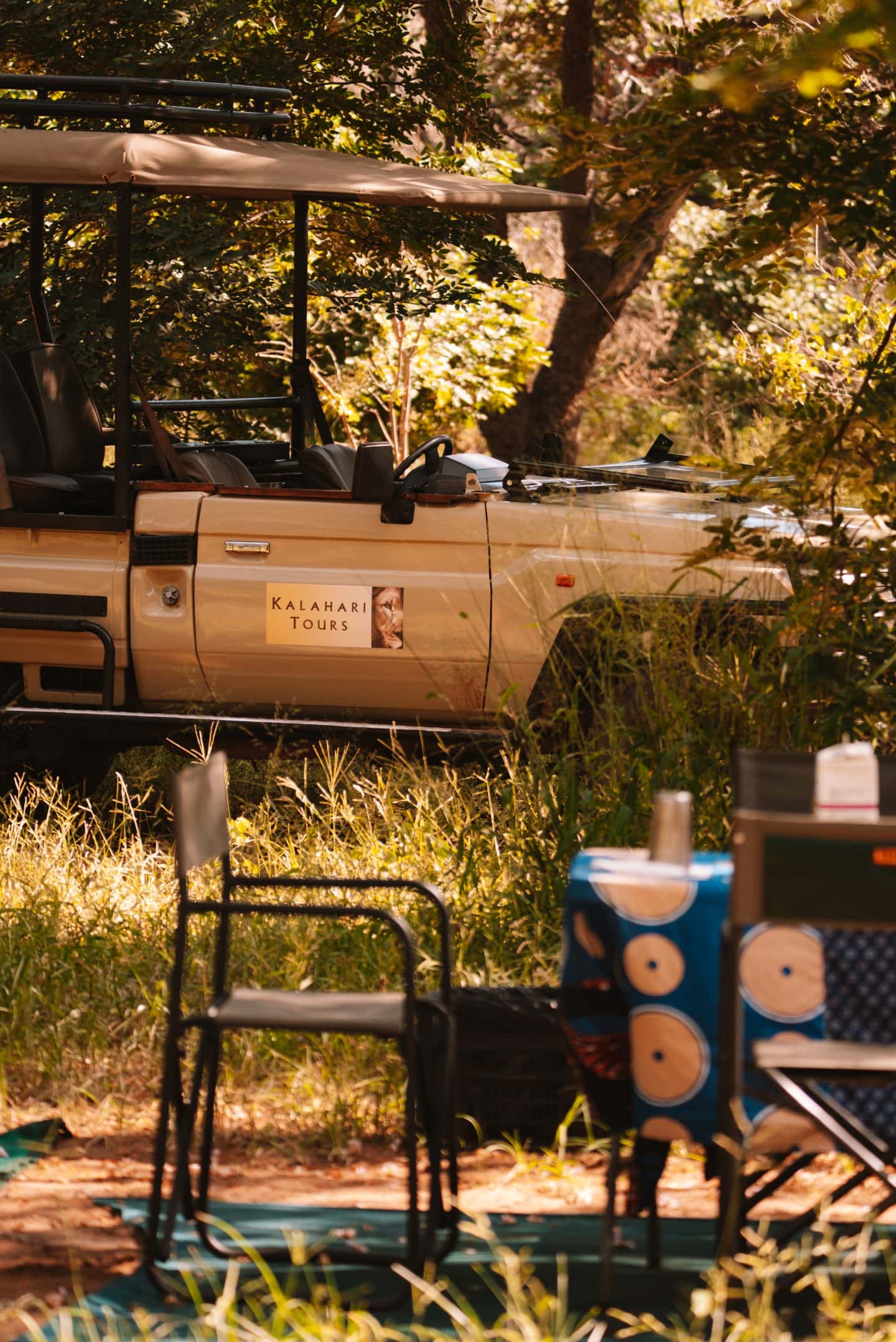
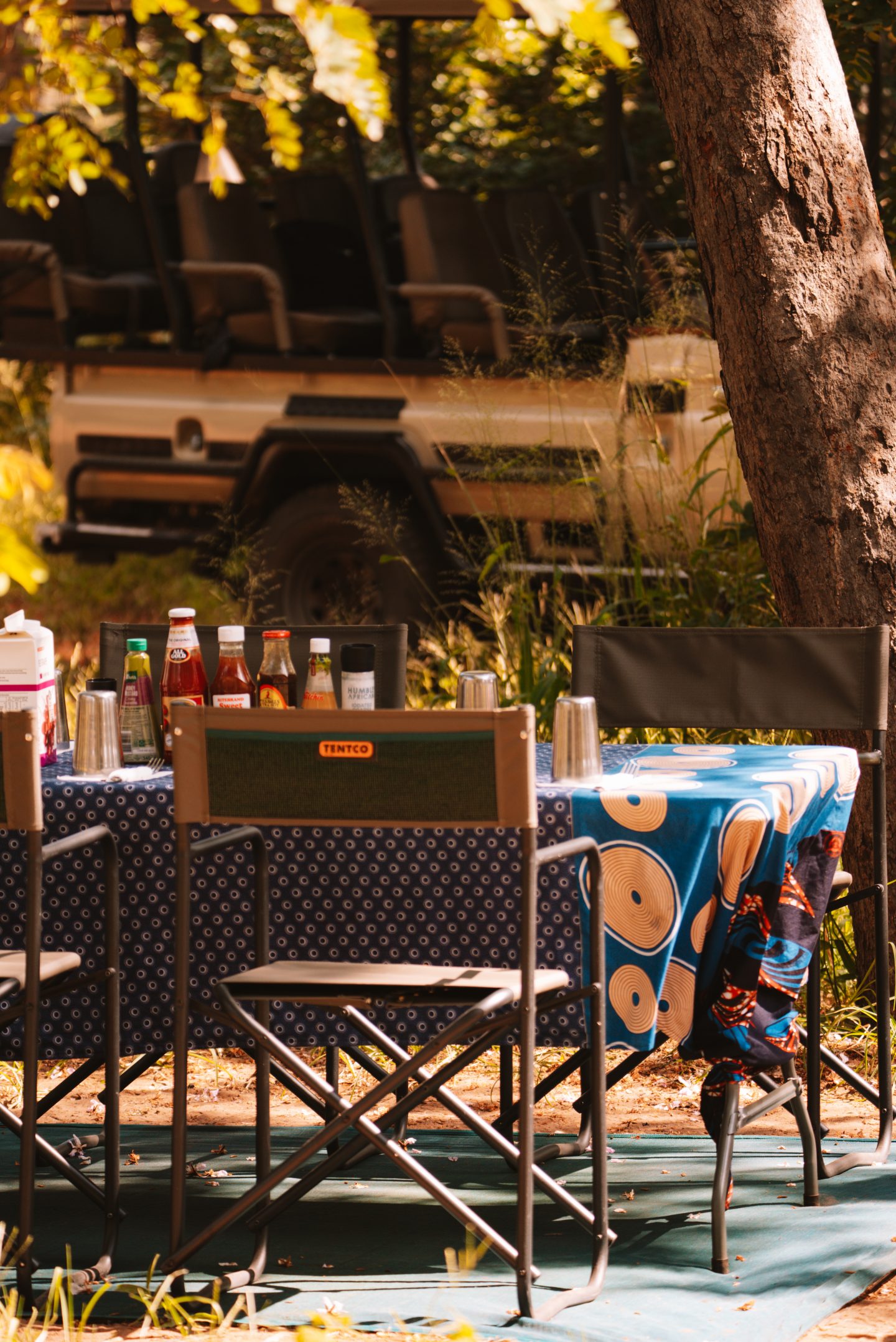
Let me be specific about what “mobile camp” means, because the phrase can mean anything from a roll mat on red sand to a semi-permanent luxury setup with butler service.
Chobe Mobile Camp falls somewhere beautifully in between. The tents are ensuite — mattresses on camp beds, a canvas structure you can stand up in, and a separate shower area. It’s not glamping. Also not roughing it. It’s camping in Chobe National Park Botswana done properly, with just enough comfort to let the experience be about the bush rather than about surviving the night.
The toilet tent deserves its own paragraph. A hole in the ground, a proper toilet seat placed on top, a canvas enclosure for privacy. My partner and I looked at it, looked at each other, and laughed until we couldn’t breathe. It is the most honest toilet in Africa. And it works.
That night, lying in the dark, I saw and heard an elephant chewing branches so closeby. My partner heard hyenas in the distance. After every extraordinary thing I’d seen across nine days — the Kalahari bushmen, the Okavango Delta, the night drive at Saguni — this was the moment I felt the entire trip most completely.
Nothing between you and the wild. That’s the whole point of a mobile safari in Botswana.
Dinner in the Wilderness
I need to talk about the food, because it caught me completely off guard.
Chilled white wine. Properly chilled, in the literal middle of nowhere. Three courses, including homemade bread baked in the ground over charcoal — smoky, dense, every bite reminding you that someone made this from scratch in a bush kitchen with no electricity. Great stews. Beautiful vegetables. All of it served by campfire under a sky so full of stars.
After dinner, we sat around the fire with our wine and talked about everything we’d seen. This is what I love about camping in Chobe National Park — there’s nothing to do except be present. No phone signal. Certainly no Wi-Fi. No background noise except the African night starting up around you. Just campfire, conversation, and the occasional sound of something large moving through the bush nearby.
This is, without question, one of the best botswana tented camps experiences for anyone who wants the real thing — unfiltered, unplugged, and completely unforgettable.
The Game Drive That Changed Everything
At 6am the next morning, Axe had us back in the vehicle.
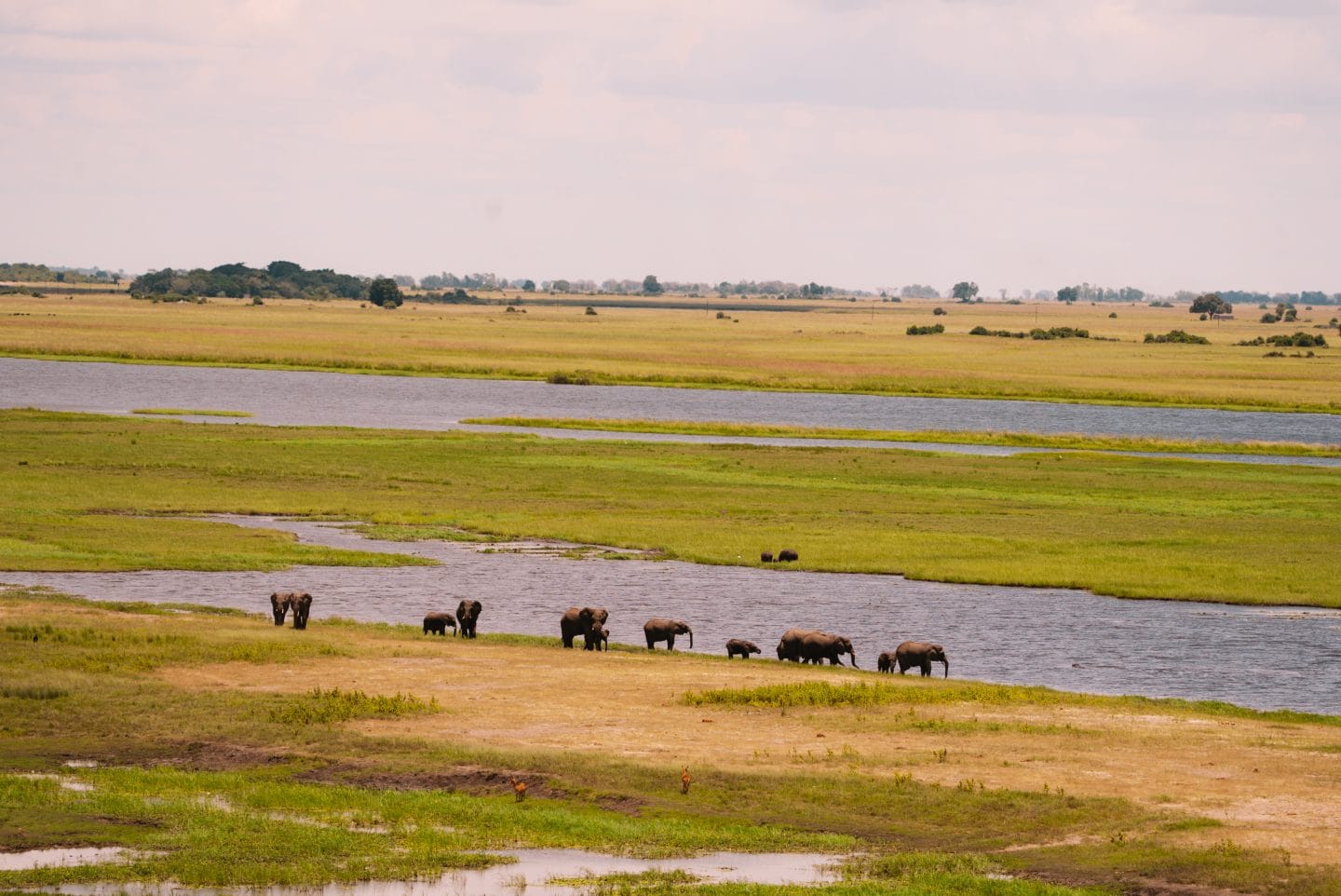
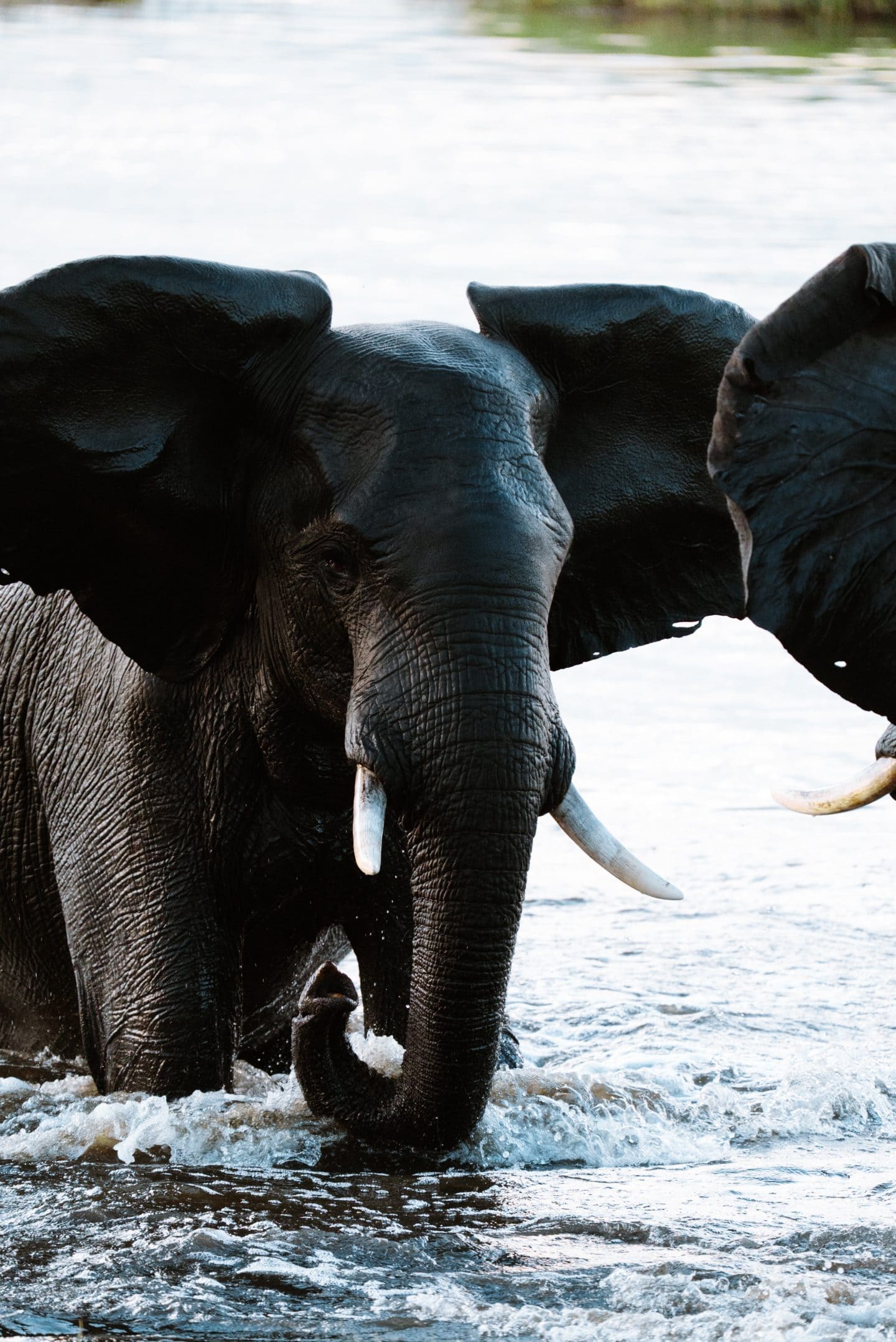
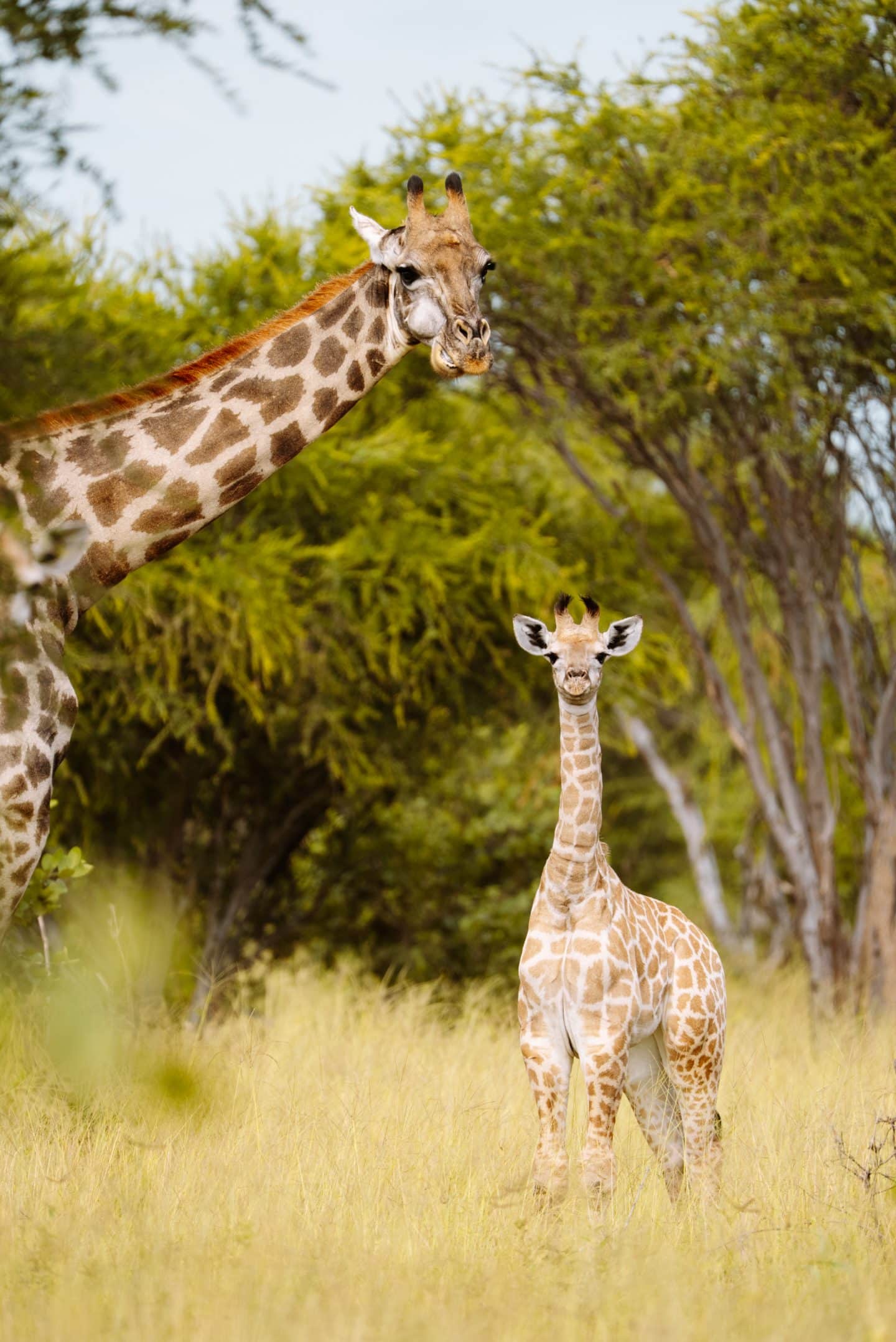
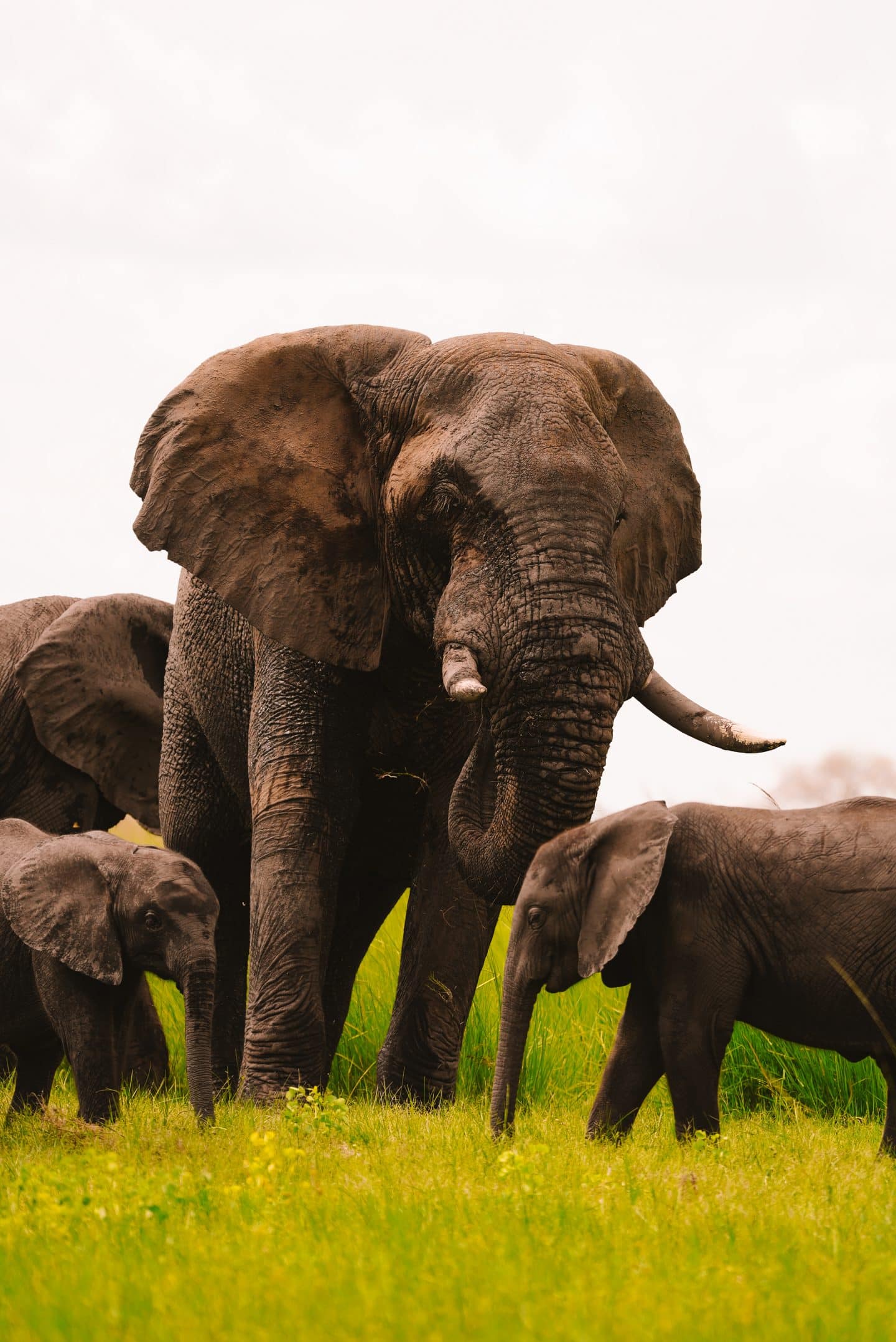
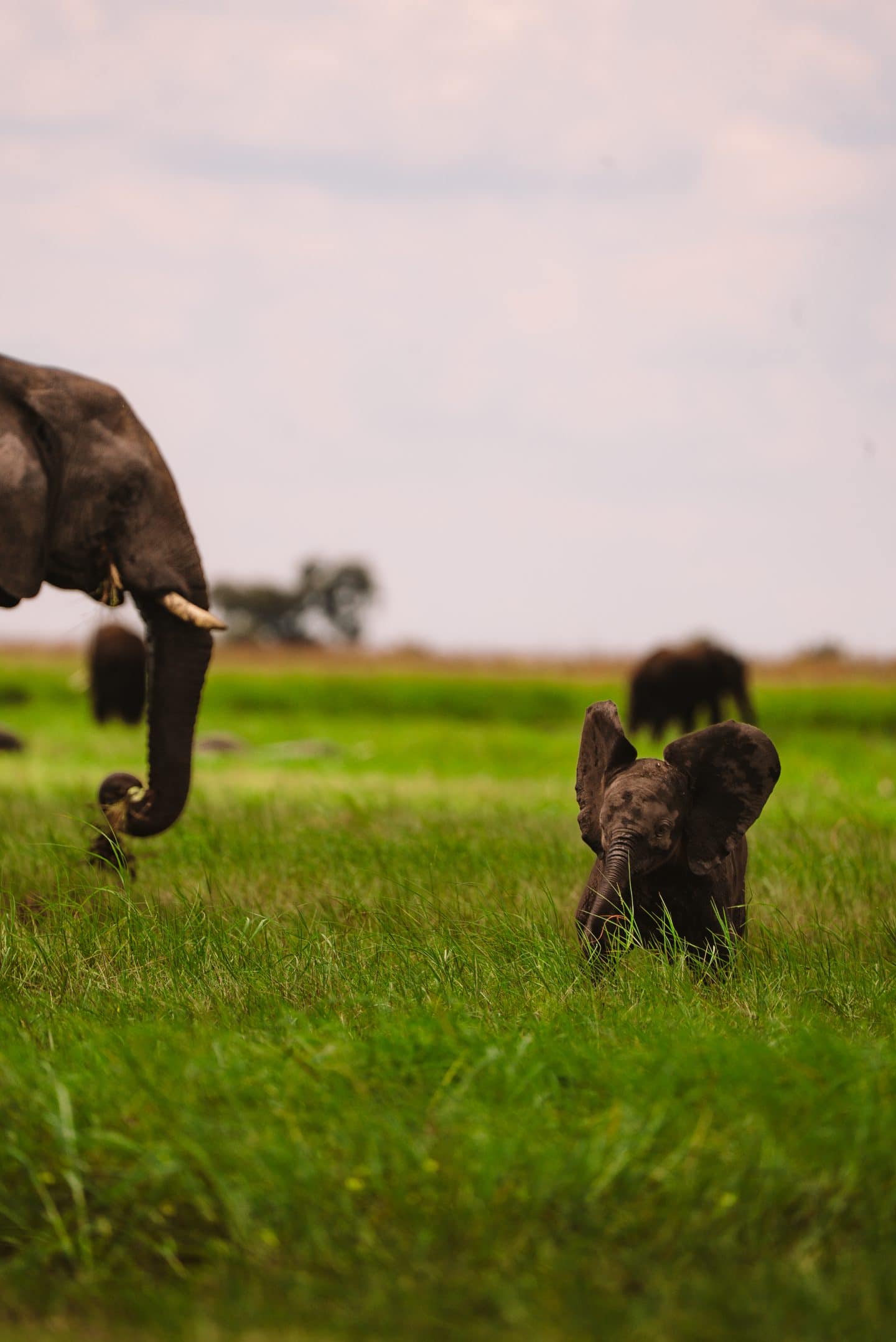
Chobe National Park Botswana is famous for having the largest elephant concentration on earth, and within the first hour I understood why. Elephants bathing as far as we could see — families, babies running between their mothers’ legs, males jostling and playing, entire herds crossing between Botswana and Namibia. You could see Namibia in the distance, just across the river, and the animals moved between countries as though borders were a human invention that didn’t concern them.
Axe pointed at a group of zebras heading toward the Namibian side and grinned. “They don’t need a passport. In half an hour they’ll be Namibian zebras.” I loved that.
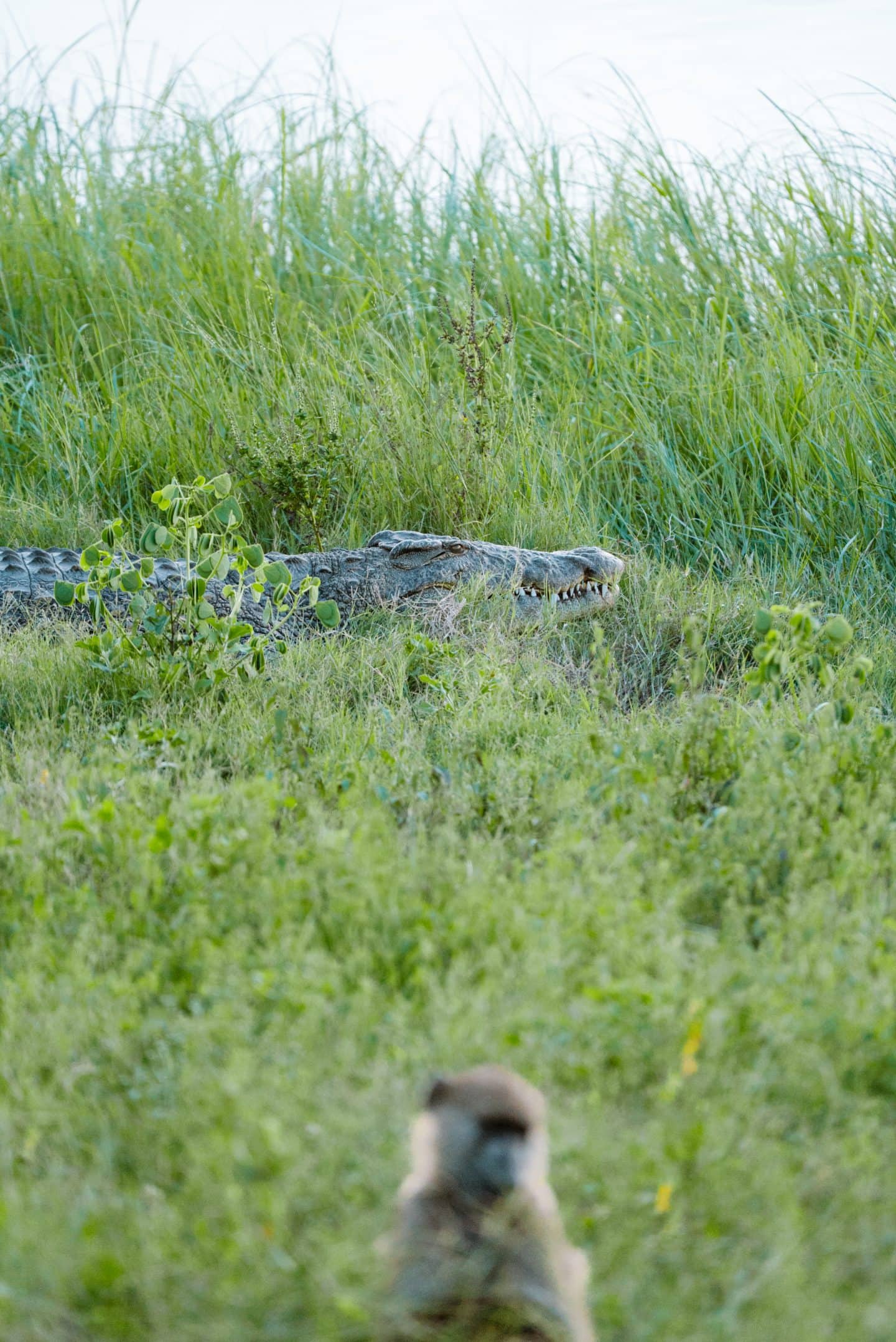
But the zebras were everywhere on our side too — whole herds, more than I’d seen at any other point on the trip. Loads of buffalo, moving in those heavy, deliberate groups that make you go quiet in the vehicle. Monkeys in the trees. A crocodile sunning itself on the riverbank, completely still, completely terrifying.
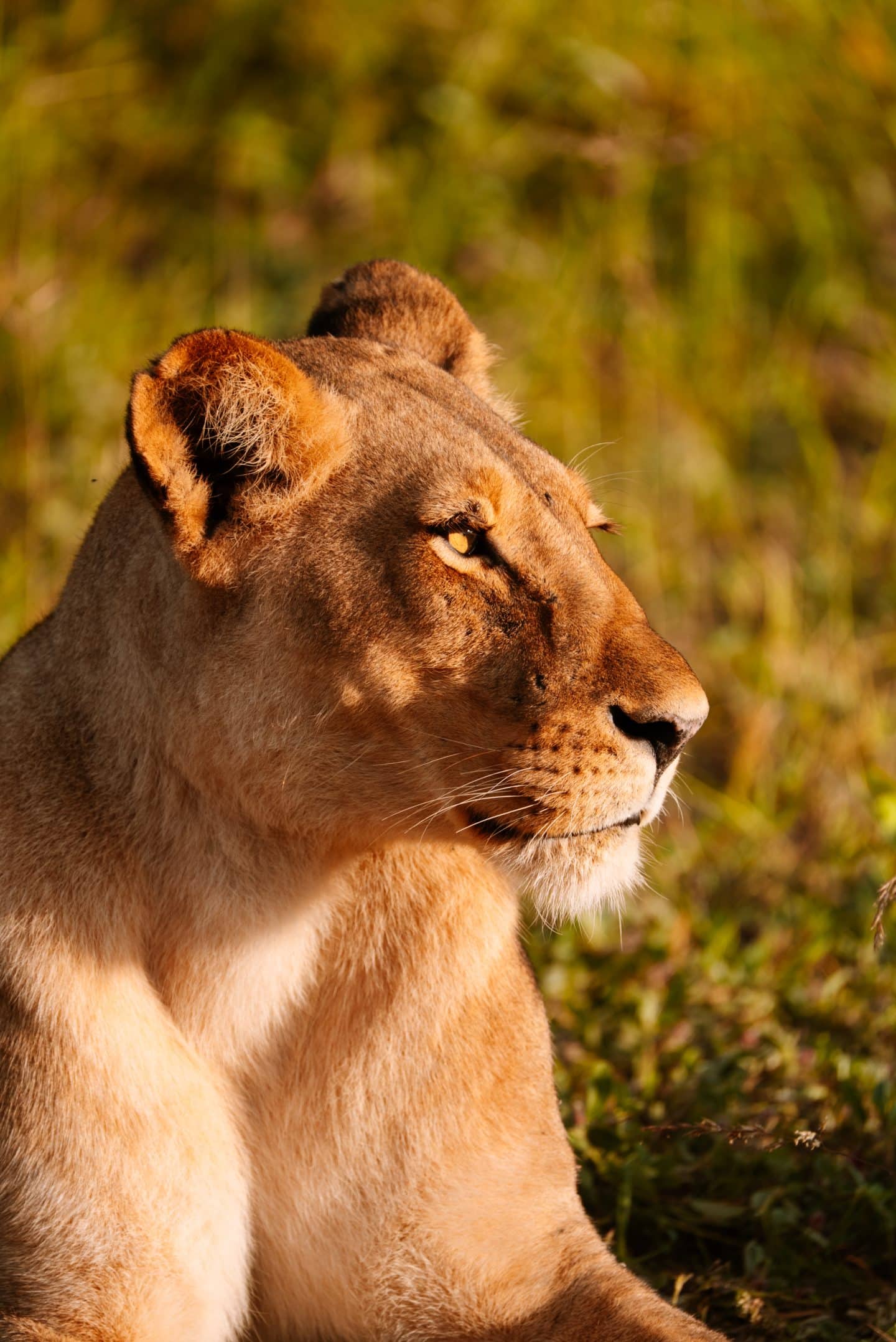
And then — lions.
Two groups. After nine days of patient searching across four lodges and three regions of Botswana, we had our lions. We watched a male and female mating — a ritual that continues over several days, Axe explained, completely natural and completely unhurried. Nobody spoke. The vehicle was silent. My hands were shaking.
Nine days. And on the morning of Day 10, in Chobe, it all came together.
The Chobe River Boat Cruise
After brunch back at camp, we drove to Kasane for lunch at Coffee Buzz — a local spot where you can eat properly, recharge, and do any last-minute shopping before your next activity.
Then came the boat cruise. Three hours on the Chobe River Botswana, and this is the moment where Chobe stops being impressive and becomes genuinely overwhelming.
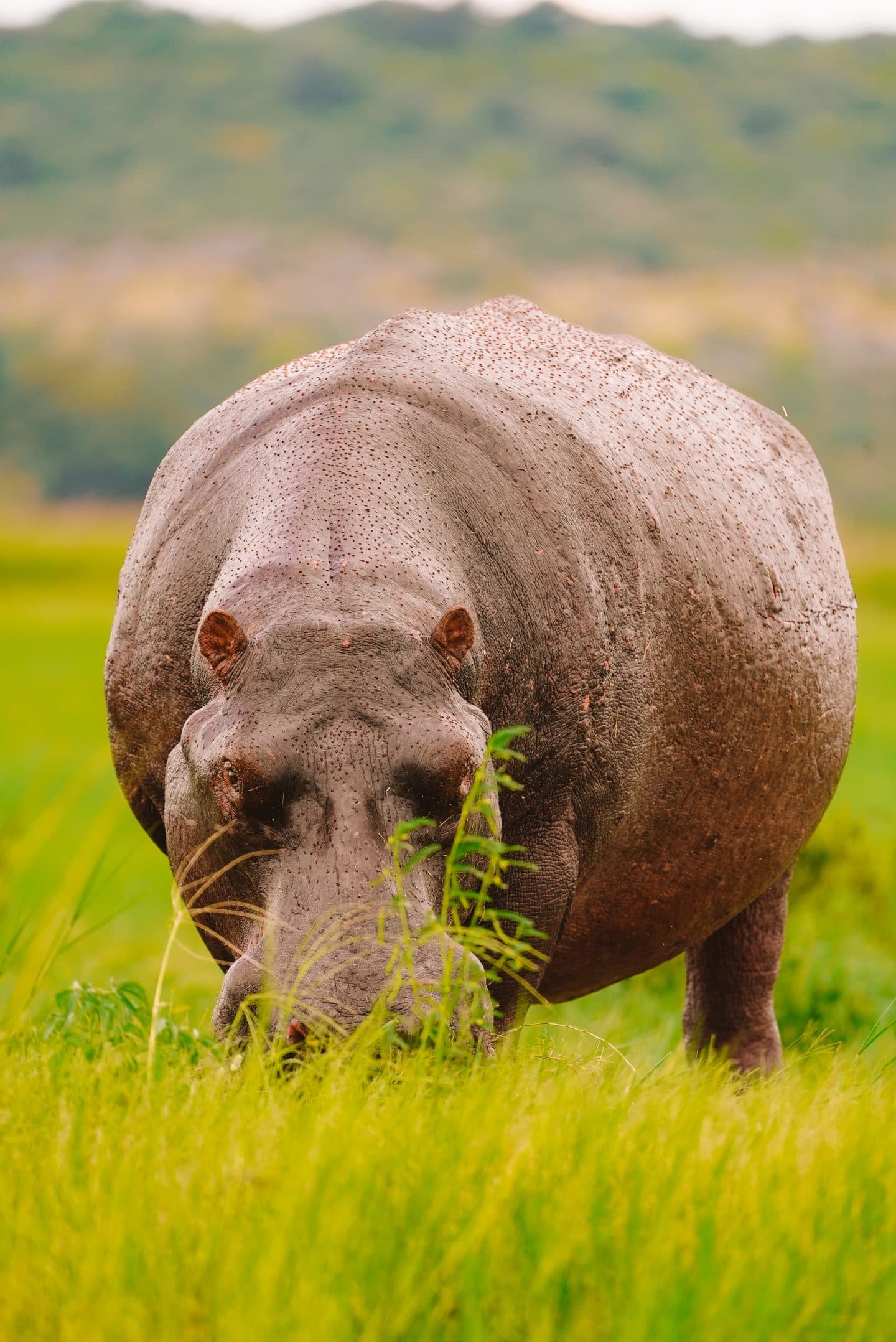
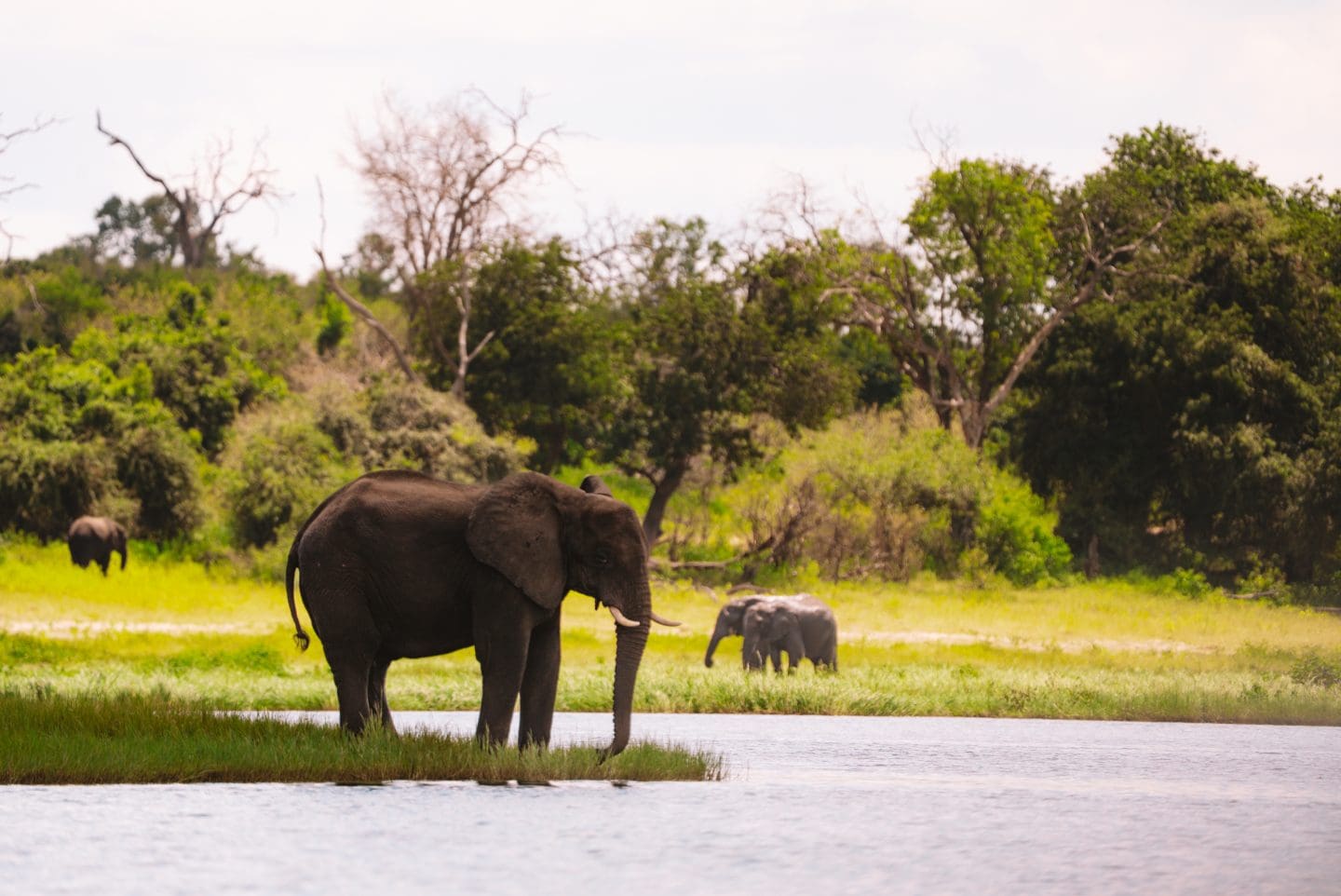
Elephants wading chest-deep through the water, trunks raised above the surface, completely submerging and resurfacing again. Families crossing the river from Botswana to Namibia and back, babies swimming between adults who shielded them from the current. Hippos at water level — so close I could almost hear them breathing. Not from a distance. Right there.
The Chobe River is what makes this national park unlike any other in Botswana. It pulls every animal to one place. Where the prey gathers, the predators follow. And from a boat, you see it all from a perspective that no game drive can match — eye level with the water, eye level with the animals, watching the entire ecosystem at work.
If you do one thing in Chobe National Park Botswana — do the river cruise. It is one of the great wildlife experiences on earth.
→ After the boat cruise, we crossed the border from Kasane into Zimbabwe on foot. That story — and Victoria Falls — is in my Victoria Falls review ♥
Who Is This For?
Staying at Chobe Mobile Camp is for you if:
You want a real mobile safari in Botswana. This is not a luxury lodge pretending to be rustic. This is camping inside one of Africa’s greatest national parks — canvas walls, campfire meals, and wildlife outside your tent at night. If that excites you, this is your place. If you need a hairdryer and a minibar, look at one of the permanent lodges along the Chobe riverfront.
You’re doing a multi-lodge Botswana itinerary. One night at Chobe Mobile Camp works perfectly as a bridge between the Okavango Delta/Moremi region and a border crossing into Zimbabwe for Victoria Falls. It’s how I structured my 11-day route, and it was one of the best decisions of the entire trip.
You want Chobe without the crowds. The permanent lodges near Kasane can feel busy, especially in dry season. A mobile camp puts you deeper into the park, away from the day-trippers, with game drives that start from camp rather than from a town.
You’re travelling with a partner or small group. The camp is intimate. The meals are communal around the fire. It’s the kind of experience that works best when it’s shared with someone you want to share silence with.
Practical Information mobile safari Botswana
- Operator: Kalahari Tours
- Price: From $312–$335 per person (2026 rates — check Kalahari Tours for current pricing)
- Location: Inside Chobe National Park, Botswana — accessed from Kasane
- What’s included: Game drives, boat cruise on the Chobe River, all meals, camping accommodation, park fees, guide
- What to bring to tented camps: Warm layers for early morning (it gets cold in the open vehicle), camera with a good zoom lens, insect repellent, a head torch, and the willingness to laugh about a hole-in-the-ground toilet in the middle of Botswana
Getting at your Botswana mobile camping safari:
- From Kasane: Kalahari Tours handles all transfers
- From within Botswana (as we did): coordinate with your previous lodge for a Mababe Gate handover — the lodges and operators arrange timing between themselves
- From Victoria Falls/Livingstone: Kalahari Tours offers border collection
Best time to visit: The green season (November–March) is extraordinary for lush landscapes, baby animals, and dramatically fewer tourists. The dry season (June–October) concentrates wildlife along the Chobe River in staggering numbers. Both are incredible. I visited in February and the green season delivered everything — including lions.
My Verdict | On the move
One night at Chobe Mobile Camp. That’s all we had.
And it gave me: elephants crossing between two countries at sunrise. Lions mating in the morning light after nine days of searching. A crocodile on the riverbank. Zebra herds so vast they looked like a migration. Hippos breathing next to the boat. Homemade bread baked in the ground. Wine by the campfire under a sky that didn’t look real. An elephant chewing branches on the other side of my tent wall at 2am.
This is not a luxury lodge review. This is a love letter to the experience of sleeping inside one of the wildest places on earth and waking up to discover that the wild had been right there with you all along.
If you’re planning a Botswana mobile camping safari and wondering whether to include a night in Chobe — do it. And if you’re choosing Chobe — choose to sleep in it, not just drive through it. One night is enough to understand a place completely.
But I might stay 2 next time! And you know what? I WILL. And you can too. With me! I’m going back with a group, and I’ll host 2 group trips here with the exact same route. Curious? Read more about my November Botswana & Zimbabwe group trip here.
ALSO IN THIS SERIES
→ My complete 11-day Botswana safari route
→ Grassland Safari Lodge, Central Kalahari Game Reserve
→ Gomoti River Lodge, Okavango Delta
→ Saguni Safari Lodge, Moremi Game Reserve
→ Victoria Falls, Zimbabwe
→ Okavango Delta Botswana Guide
→ Safari Packing List: What I Wore (and Forgot)
→ Botswana and Zimbabwe Itinerary

Hi, I’m Lisa, the Dutch blogger behind Dutchbloggeronthemove — a luxury slow travel platform built on the belief that the best journeys happen at a pace that lets you actually remember them.
She has lived in Mallorca for over three years, visited Lake Garda 35+ times since childhood, and spent years exploring South Africa’s wine regions until she knew them the way locals do. She travels with her partner and her Labrador Buddy, and she still returns to her favourite destinations four or more times a year — because one visit is never enough to write about a place honestly.
Everything published here starts from personal experience. That’s the only kind worth reading. ♥
