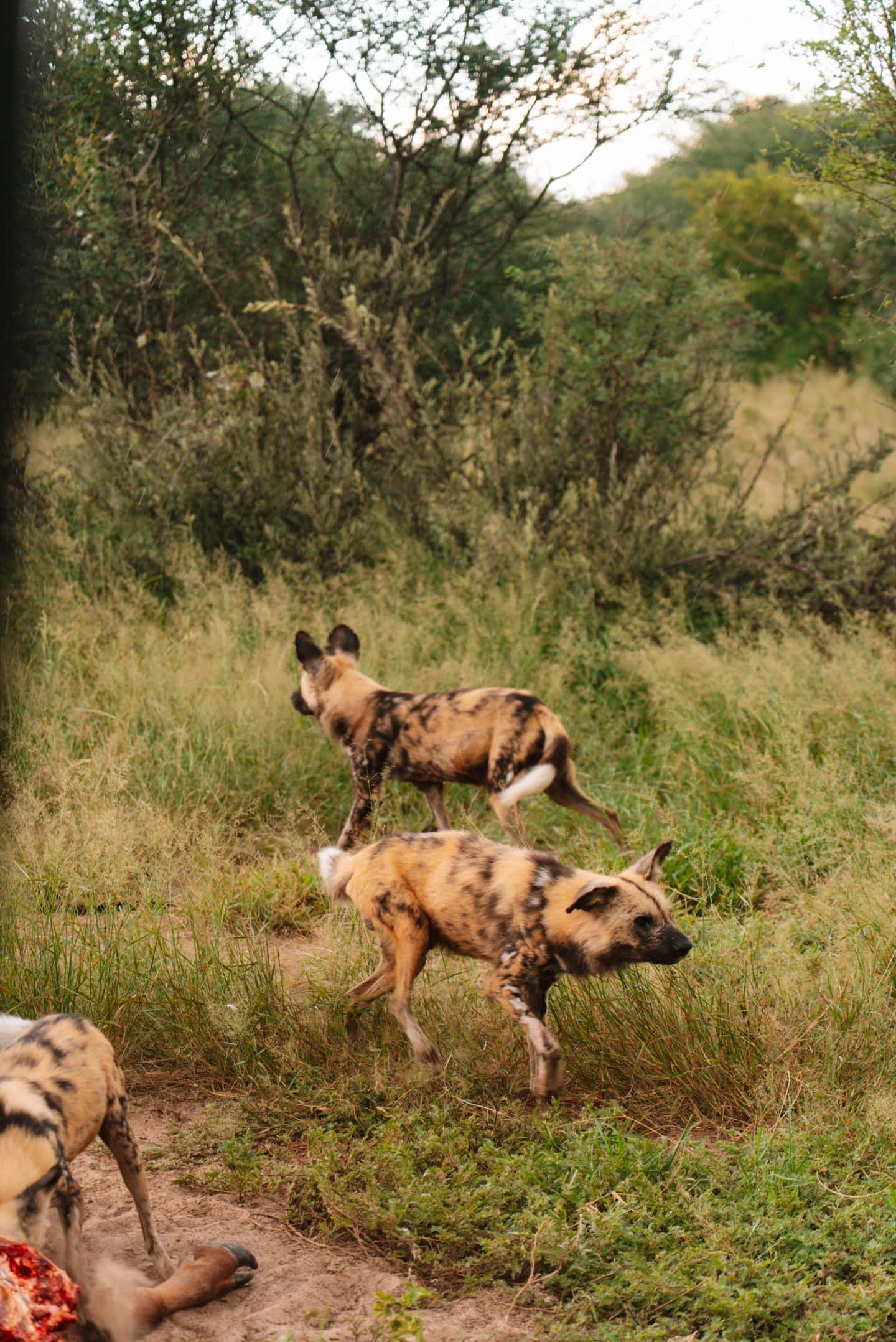
I landed in Maun. It was still early afternoon. And within a couple of hours of arriving at Grassland Safari Lodge in the Central Kalahari Game Reserve, I was watching African wild dogs disappear into long golden grass. It was day one. Not day five. Day one. If that tells you anything about what a Kalahari Botswana safari at this lodge looks like, it should be that it starts fast and doesn’t slow down — even though everything about the Central Kalahari Game Reserve is built for doing exactly that. Slowing down. Paying attention. Being somewhere.
And then there is Neeltjie Bower. But we’ll get to her.
I stayed two nights. Three would have been better. Here’s everything you need to know.
Let’s go – on the move
Table of contents | On the move
- The Central Kalahari Game Reserve, Botswana: Not What You’re Expecting
- Grassland Safari Lodge: What the Central Kalahari Actually Looks Like
- The San People (Bushmen) in Botswana: 70,000 Years of Knowledge in One Morning
- How Neeltjie Bower Protects Wildlife in the Kalahari Game Reserve
- Wildlife in the Kalahari Game Reserve Botswana
- Green Season at Grassland Safari Lodge: Why It Changes Everything
- My Full Botswana Safari
The Central Kalahari Game Reserve, Botswana: Not What You’re Expecting
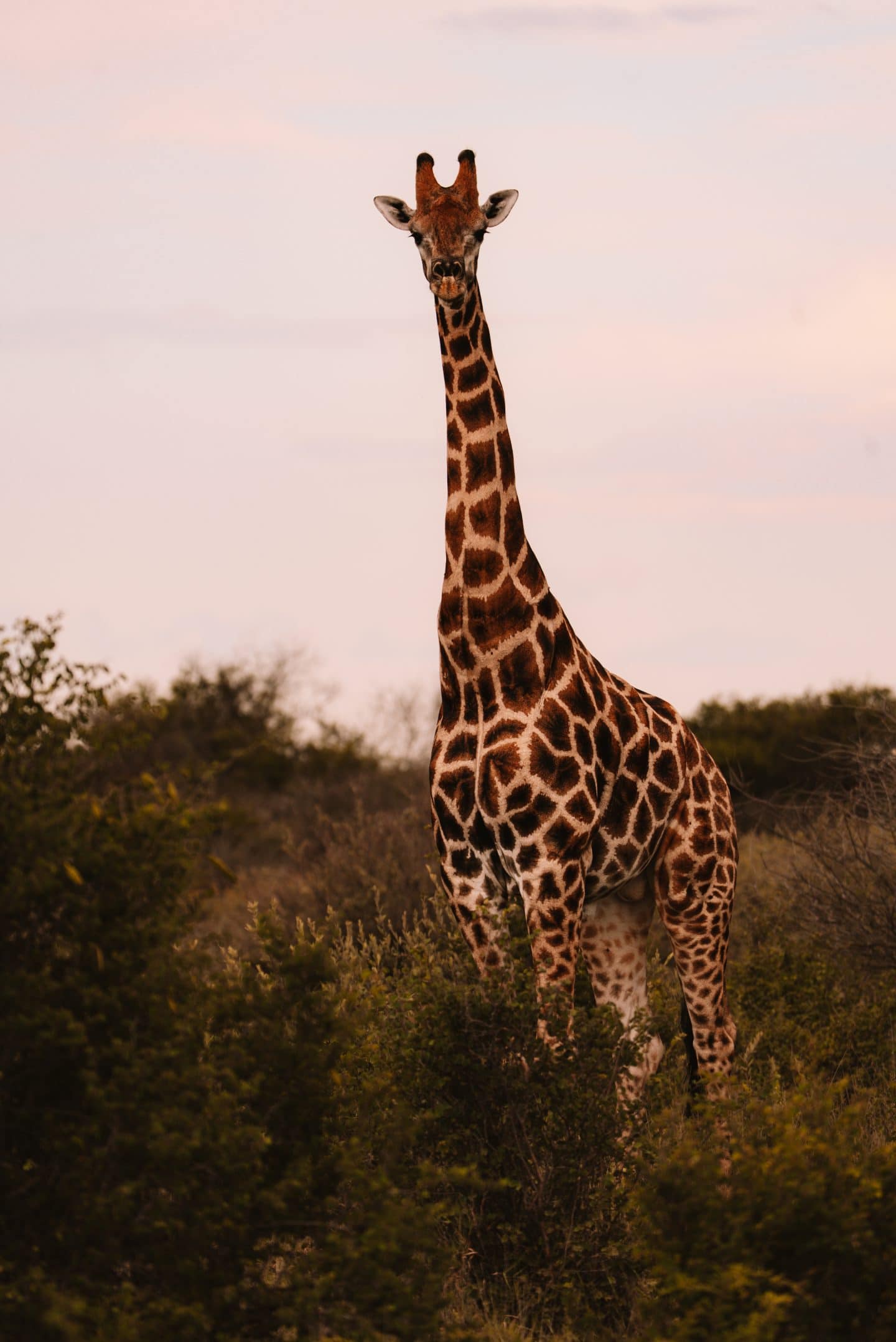
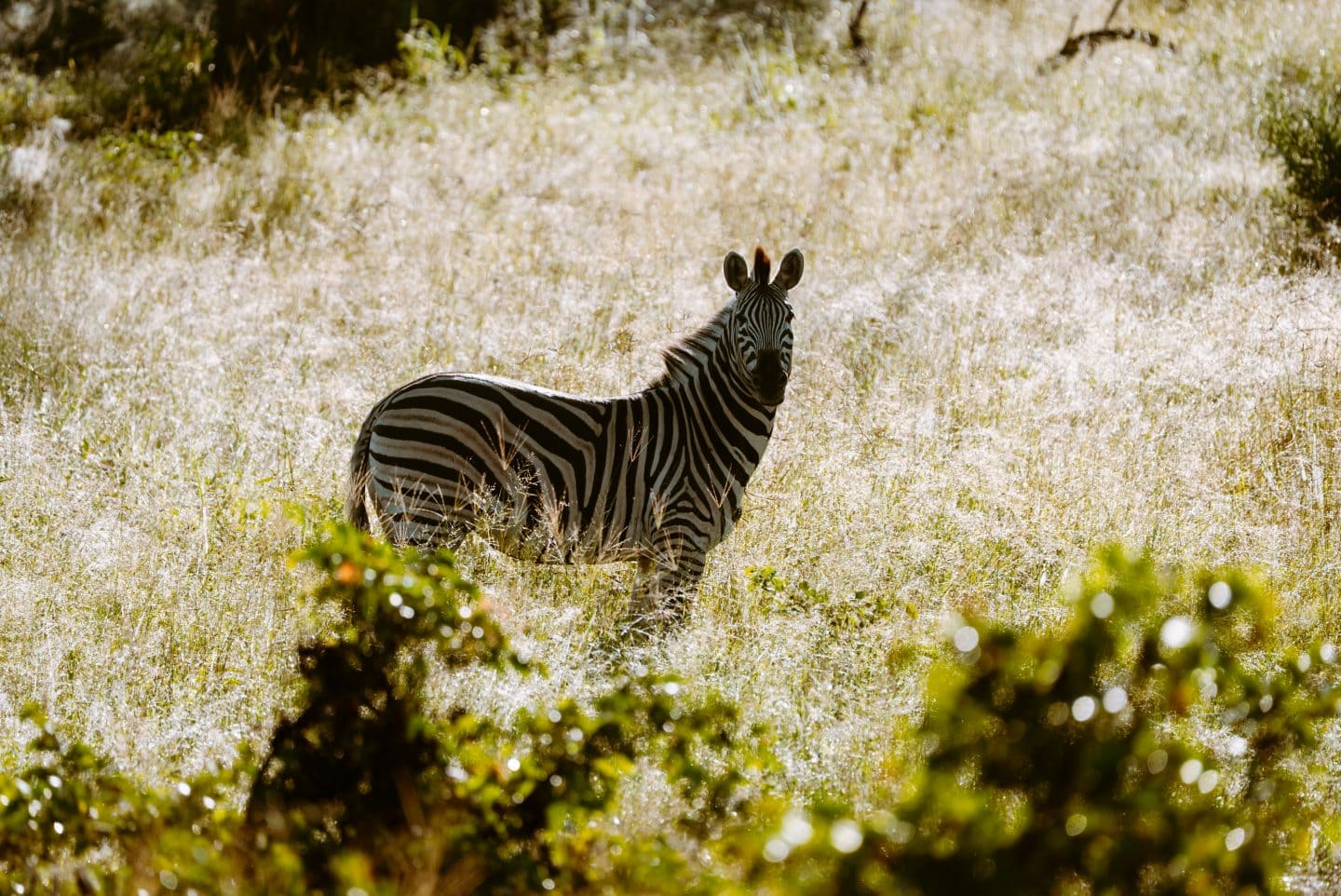
Not barren. Not a desert in the way anyone imagines. During the Botswana green season, the Central Kalahari is completely alive — golden grass, red sand, enormous skies, and a quiet that takes a day or two to get used to and then you never want to leave. The Kalahari during the rainy season is a completely different look from the dry, landscapes you see in many photographs.
It is also, I’ll say it now, one of the most genuinely unspoiled places I’ve been. The Central Kalahari Game Reserve is one of the largest protected areas on earth — over 52,000 square kilometres. During the green season, almost no one else is here. You might not see another vehicle for an entire game drive.
This is slow travel at its most literal.
Grassland Safari Lodge: What the Central Kalahari Actually Looks Like
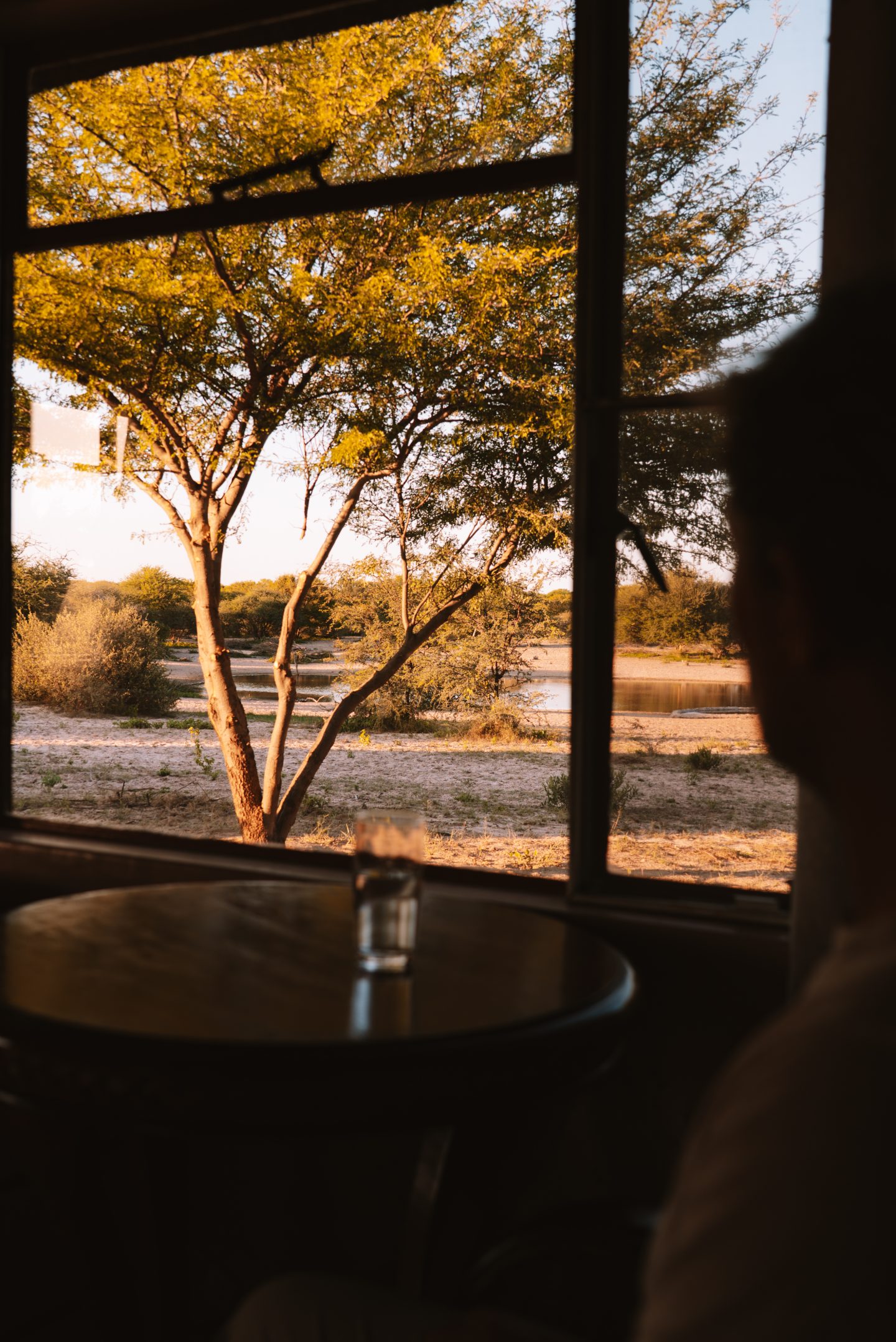
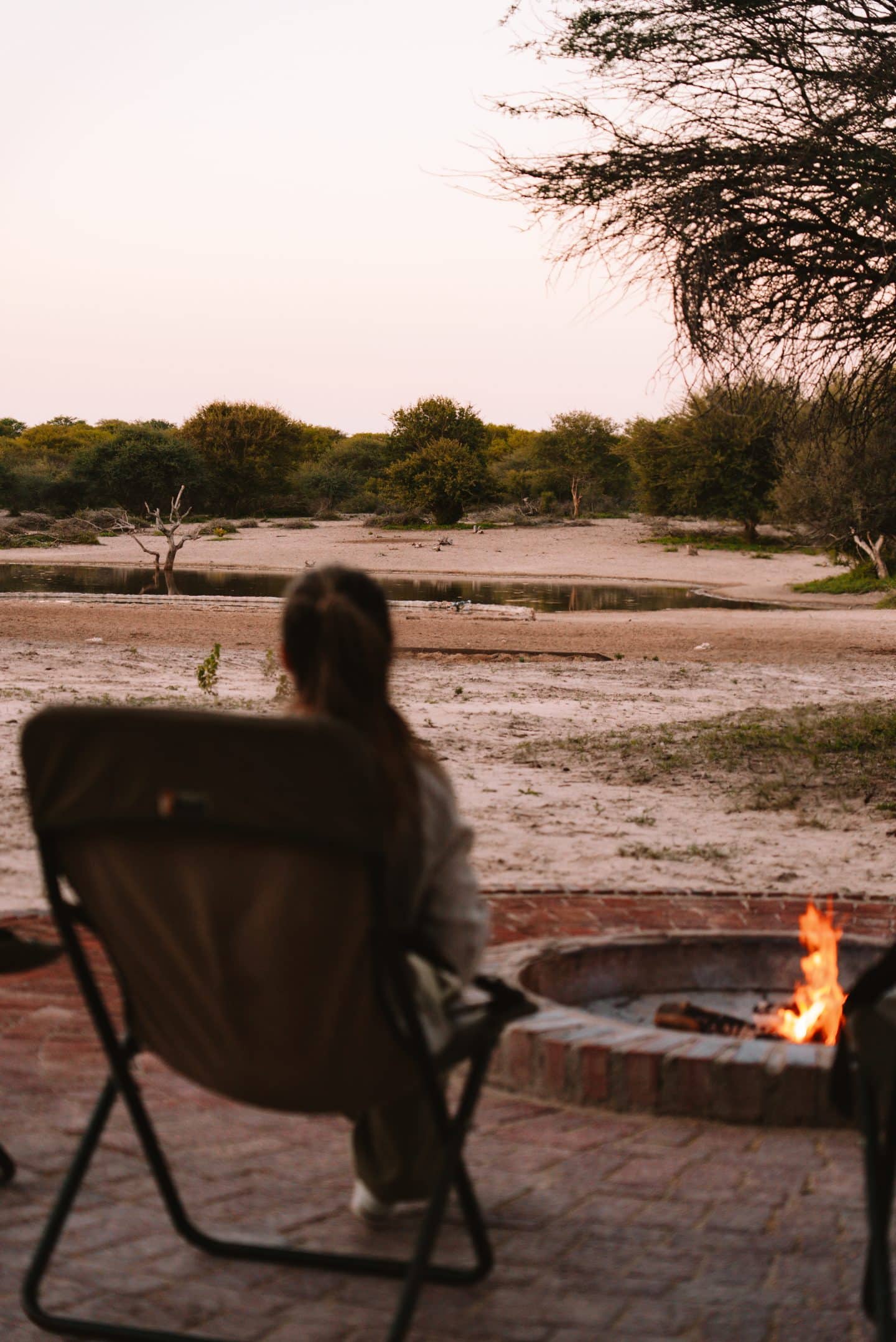
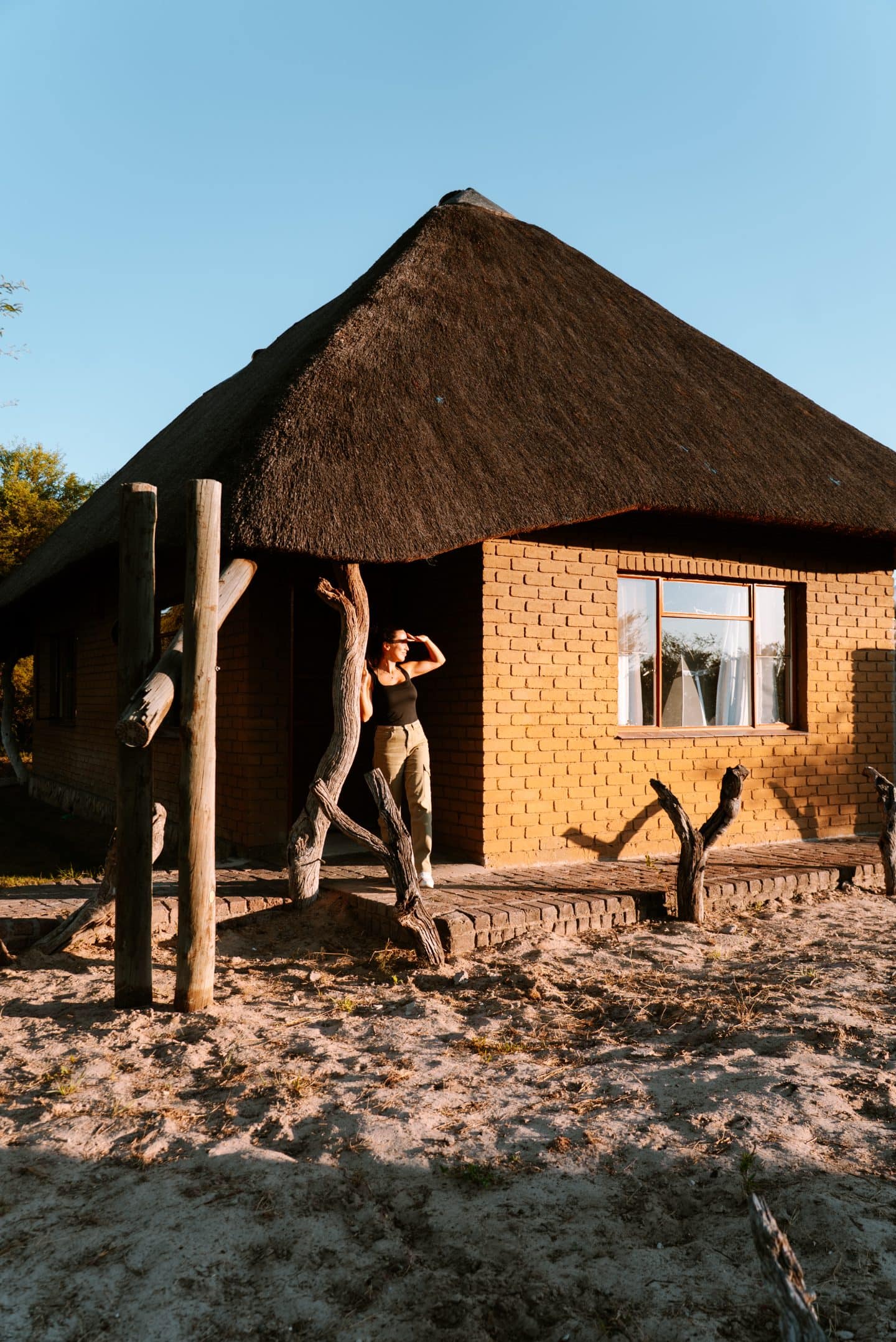
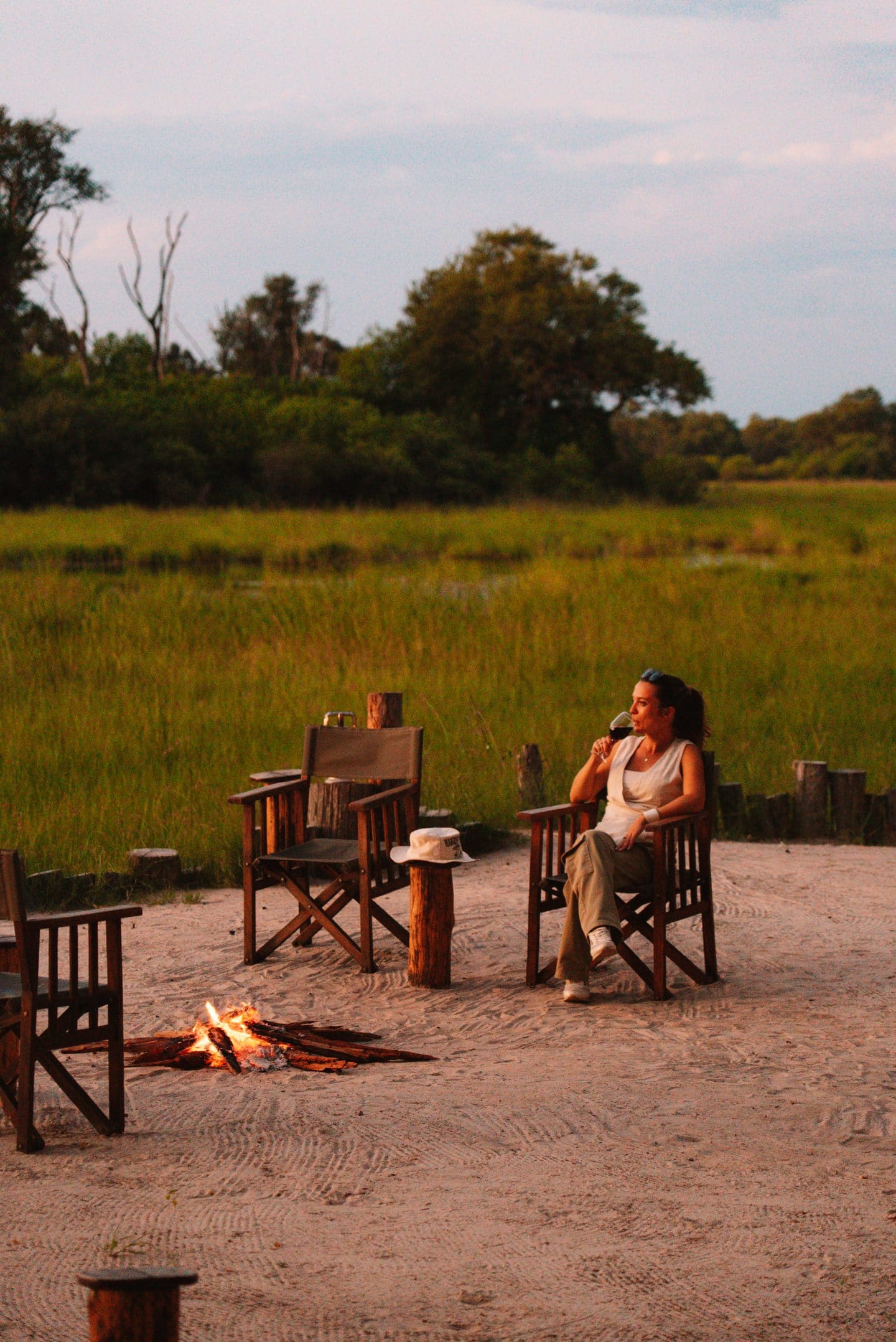
The Grassland Safari Lodge is not a resort. There’s no pool with a swim-up bar, no branded towels. What there is: a real place, locally owned and run by Neeltjie and Tiaan Bower, sitting in the middle of the Kalahari Game Reserve with deep roots in Botswana and a genuine love for it that you feel from the moment you arrive.
I stayed two nights. Hosted by Neeltjie and Tiaan, as part of my twelve day route through Botswana and Zimbabwe in February 2026. The accommodation is comfortable and honest — you’re in the Kalahari, not the Delta, and the Grassland safari lodge experience is richer for that honesty. You’re here for the landscape, the wildlife, and above all, for Neeltjie.
Two nights at Grassland goes fast. Three would be better. And I’m taking this all on board because when I go back (I’m hosting 2 small group trips to Botswana & Zimbabwe this November) we’re going to stay 3 nights.
Neeltjie Bower
I’ve been travelling for a long time. I’ve met a lot of guides, a lot of hosts, a lot of people who love where they live. Neeltjie Bower is in a different category entirely.
She is a sixth-generation descendant with deep family ties to the San people — her family arrived in Botswana in 1898. Grew up alongside San children, speaks fluent Naro (their primary language), and co-owns and runs Grassland Safari Lodge with her husband Tiaan. She is not a guide who shows you the culture. But she’s a bridge between two worlds. One of the most knowledgeable, quietly extraordinary people I have ever met on any trip.
Through Neeltjie, I spent a morning with the San Bushmen. The world’s oldest living culture. And it is the experience I keep coming back to most — weeks later, on a Tuesday at home, I’m still thinking about it.’
♥ my 11-day Botswana and Zimbabwe itinerary
The San People (Bushmen) in Botswana: 70,000 Years of Knowledge in One Morning
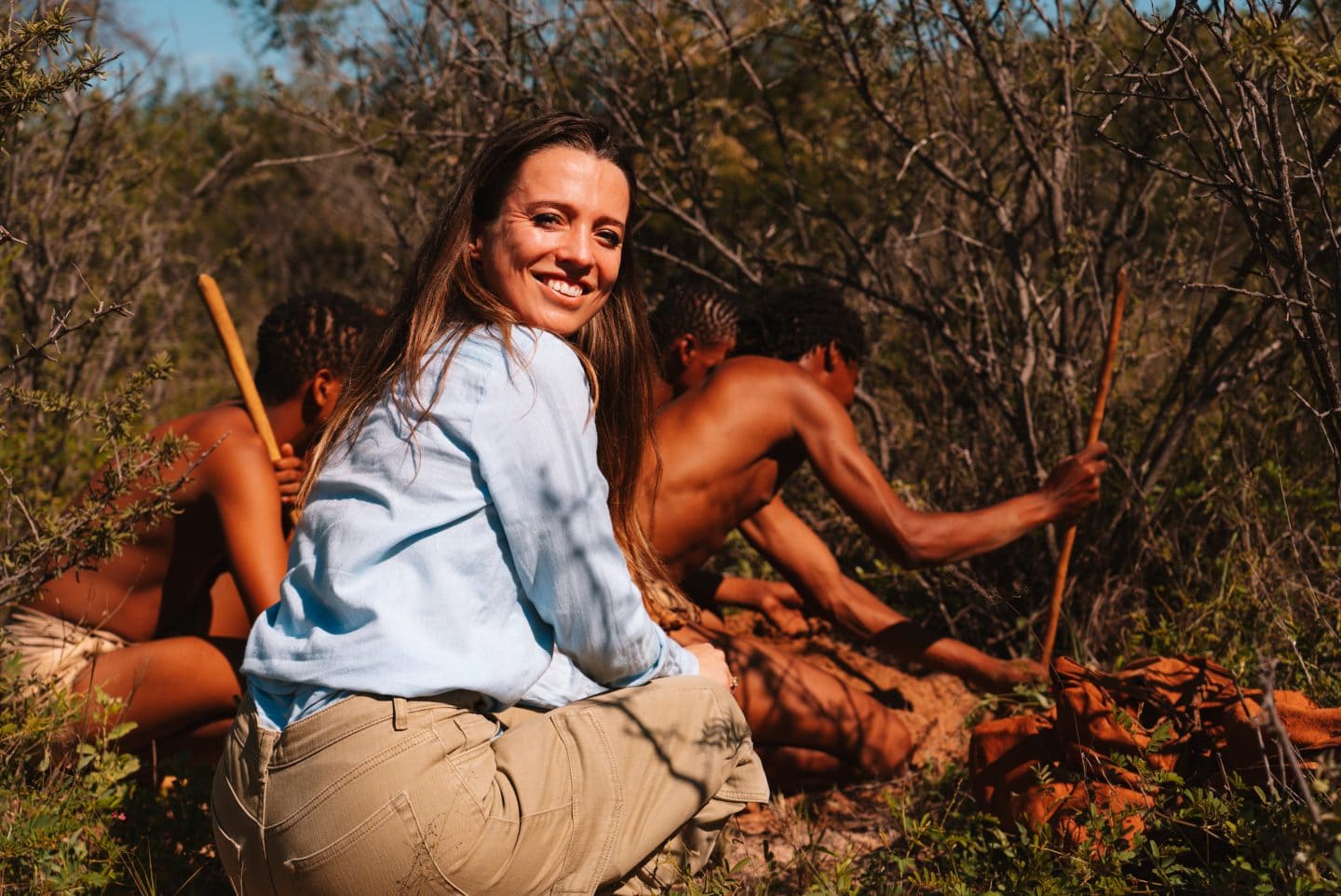
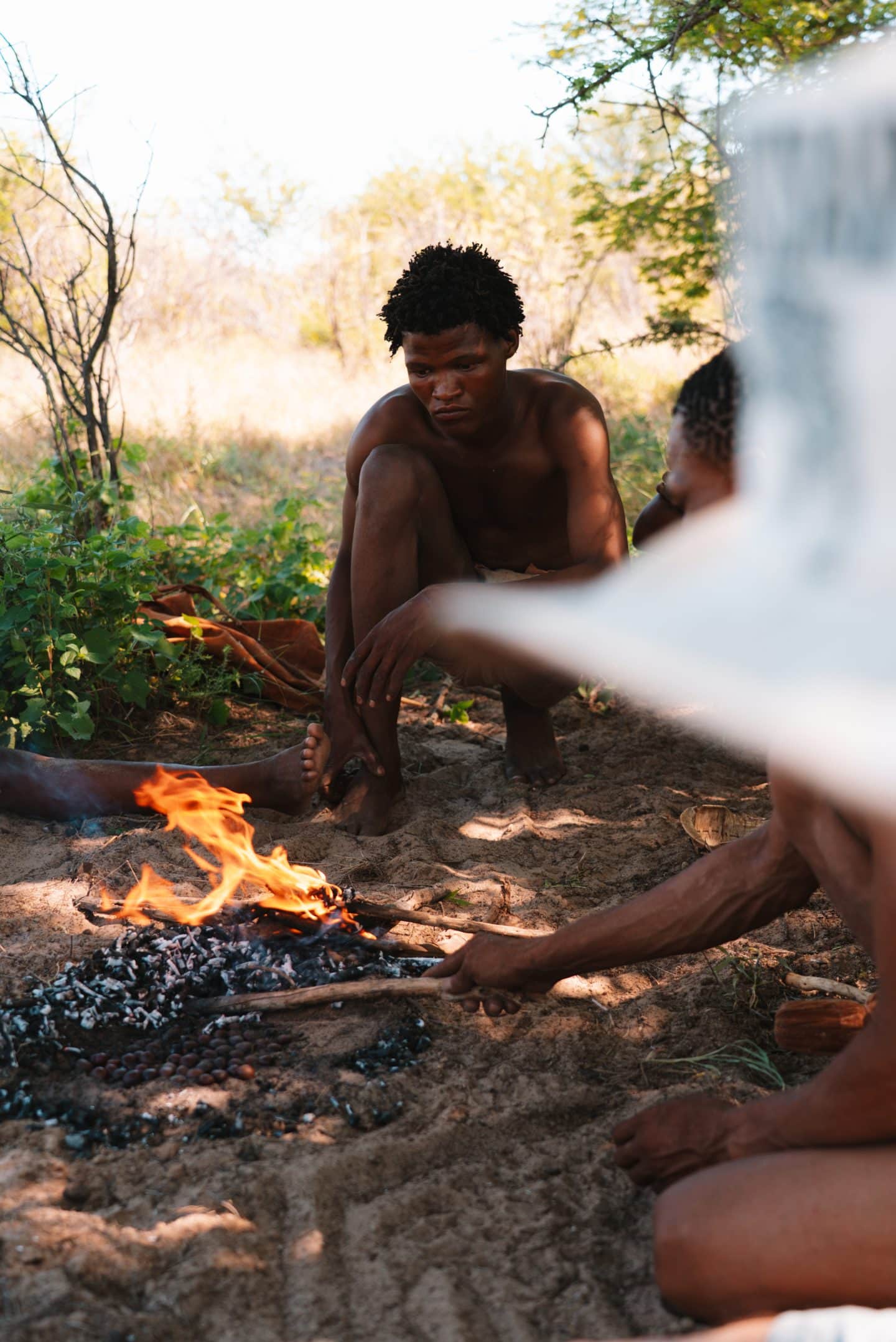
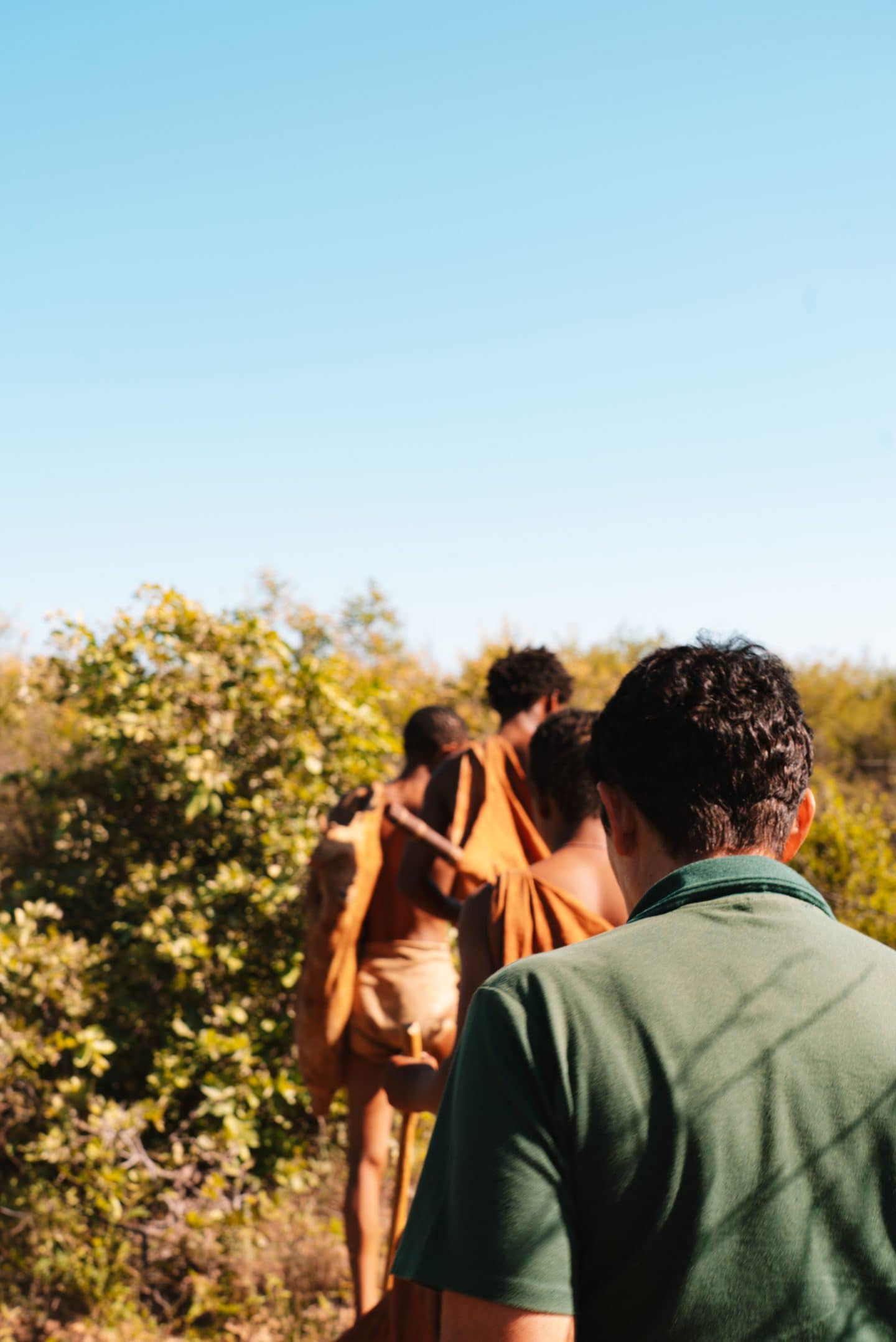
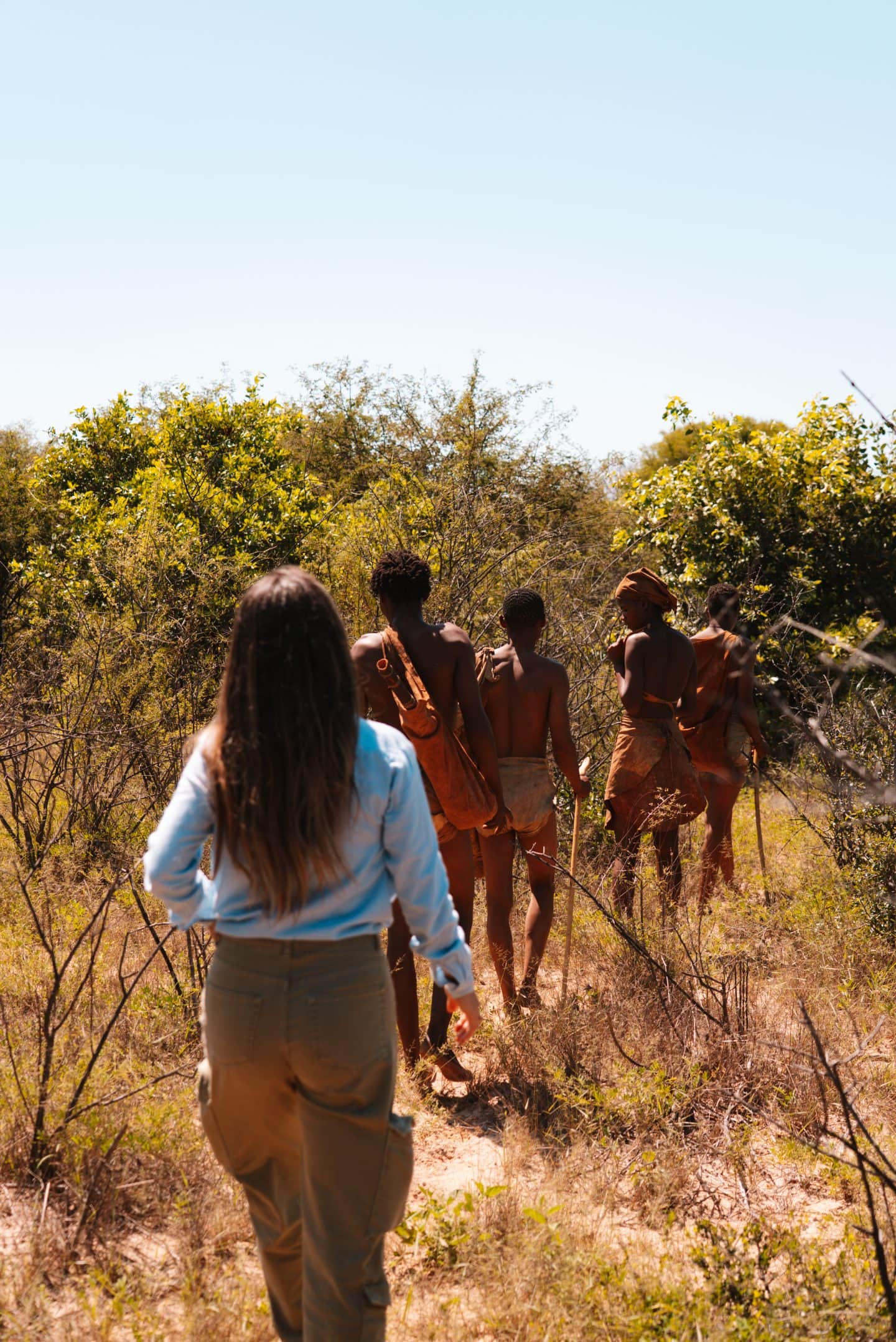
Walking through the Kalahari with the San people in Botswana is not a tourist show by any means. Nothing about it felt staged or performed. This is simply how they live.
They showed us how to make fire from two sticks. How to find water in roots. Which berries are edible. How to cook certain nuts in the ground — because too hot and they explode and become completely useless, and the San know exactly where that line is. They talked about ticks, about bats, about reading the land like a map. It was so interesting to me – when I looked around, I saw nothing but bushes but they saw food, life and so much more. It made me look differently as well and it made me realize that I’m so so far away from how things supposed to go. I don’t gather or hunt, I go to the supermarket and without it? I don’t know. So first thing I did when I came home is plant my own vegetables in the garden. A bit strange, I know.
And then Neeltjie told us about the persistence hunt.
In October and November, when the dry season strips the Kalahari desert and it’s landscape – the animals are weakened from dehydration, the San run their prey down over enormous distances. Not with speed — with endurance. An endurance that marathon runners simply cannot match. The San come back looking as though they’ve been for a walk. The runners came back broken.
It’s a different kind of endurance, something the body remembers said Neeltjie.
Some of the San were still a little shy around us (tourists). They’ll get used to it over time, Neeltjie said with a warm smile. I’m not sure they should. When we left we said goodbye and thank you – they said our heart is full (ofcourse Neeltjie translated this) and I can’t stop thinking about that. Because that’s exactly how I felt after leaving.
How Neeltjie Bower Protects Wildlife in the Kalahari Game Reserve
Here’s the other thing about Neeltjie. The thing that makes experience unlike anywhere else in the central Kalahari game reserve.
Two-thirds of Botswana is completely unfenced. Wildlife moves freely across the land — which is extraordinary, and which also means that predators regularly cross into farming territory. When that happens, they can get shot.
Neeltjie steps in. She runs a Predator Project at the lodge protecting wild dogs, lions, and leopards. She is also breeding white rhinos on the property. When I talk about responsible, locally rooted tourism that actually matters — this is what I mean. The wild dogs we watched on our first afternoon? They are alive because of her.
Wildlife in the Kalahari Game Reserve Botswana
We saw wild dogs. One of Africa’s most endangered predators and one of the rarest safari sightings on the continent. Not something I expected on the first afternoon in Botswana.
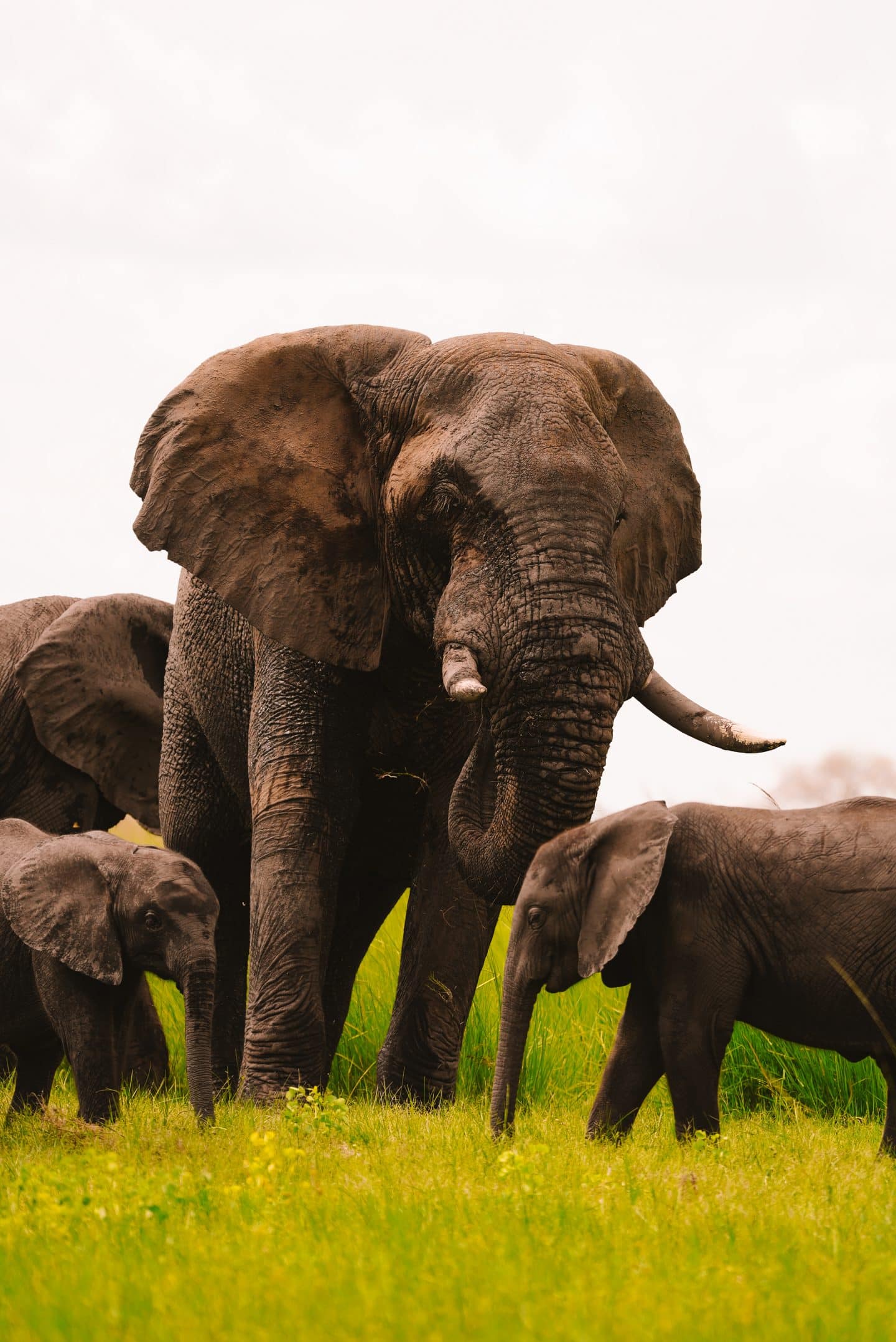
The Kalahari game reserve is also home to lions, leopards, cheetah, brown hyena, oryx, springbok, wildebeest, giraffes, and some extraordinary birdlife. Because of the weather it wasn’t possible to see the rhinos due to our tight schedule, so we’ll have to come back for that.
Green Season at Grassland Safari Lodge: Why It Changes Everything
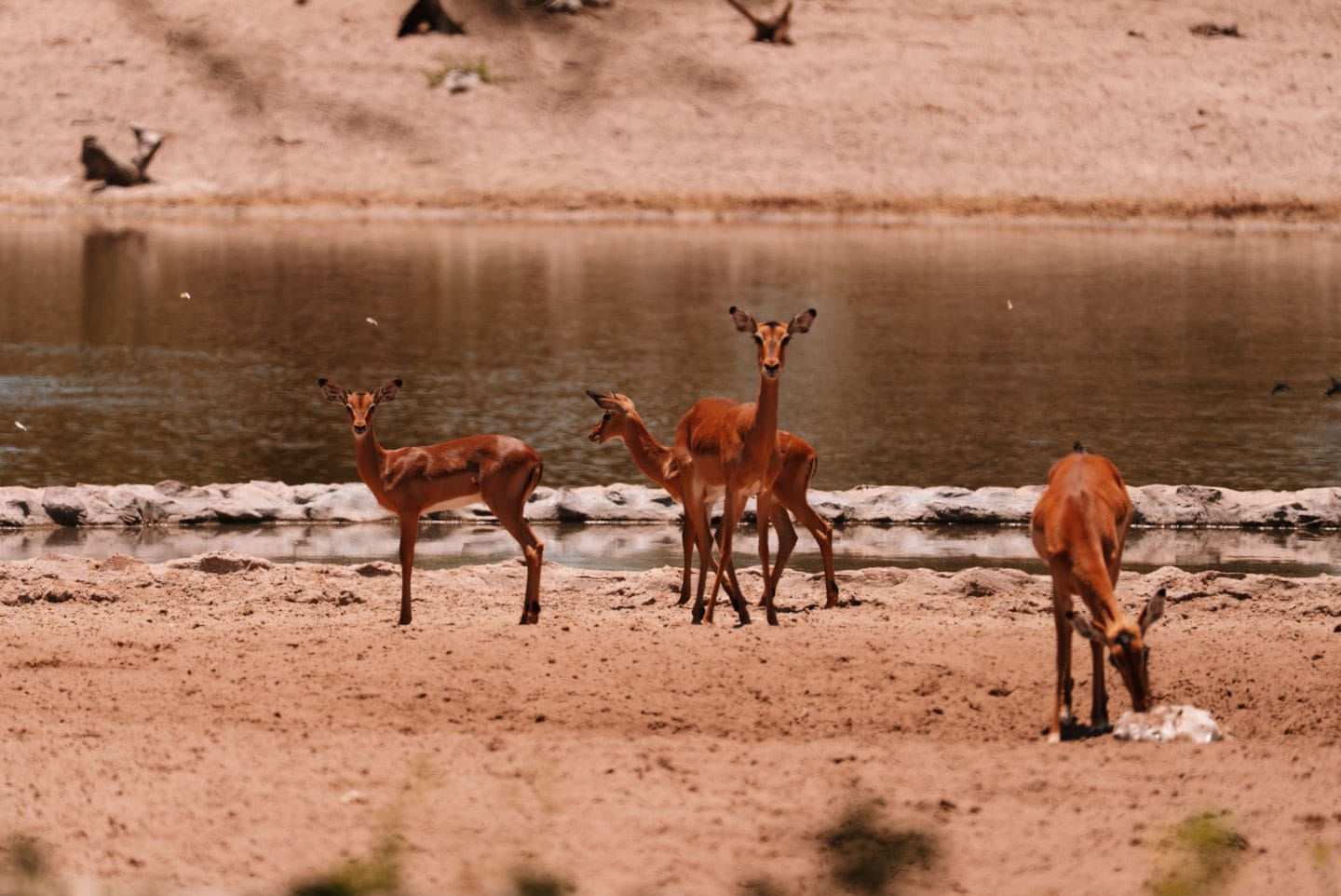
I visited in February 2026 — deep in the Botswana green season — and it was the perfect time for the Kalahari. The landscape was alive in a way I hadn’t expected. Green, lush, full of baby animals (in the green season, all the animals is giving birth — impala lambs, elephant calves, oryx babies taking their first shaky steps). The skies were extraordinary. The photography was extraordinary. And there were no other tourists.
Green season also means significantly lower rates at the Grassland safari lodge than peak dry season in Botswana. If you want the Central Kalahari Game Reserve mostly to yourself, with wildlife, incredible light, and newborn animals everywhere — this is when to come and book your flight to Botswana.
The quiet at Grassland during the green season is something I’ll carry for a long time. In the mornings the only sound was wind through the grass. On others, it was elephants moving through the bush in the distance.
Practical Information: Grassland Safari Lodge
- Where: Central Kalahari region, Botswana (road transfer from Maun)
- Recommended nights: 2 minimum — 3 or more if you can
- Best for: Travellers who want the Kalahari Botswana experience done properly — cultural depth, wildlife, conservation, space
- Part of: AfriTourism Collection
- Green season: November to April — quieter, lower rates, lush landscape, baby animals
- Book: grasslandsafarilodge.com
My Full Botswana Safari
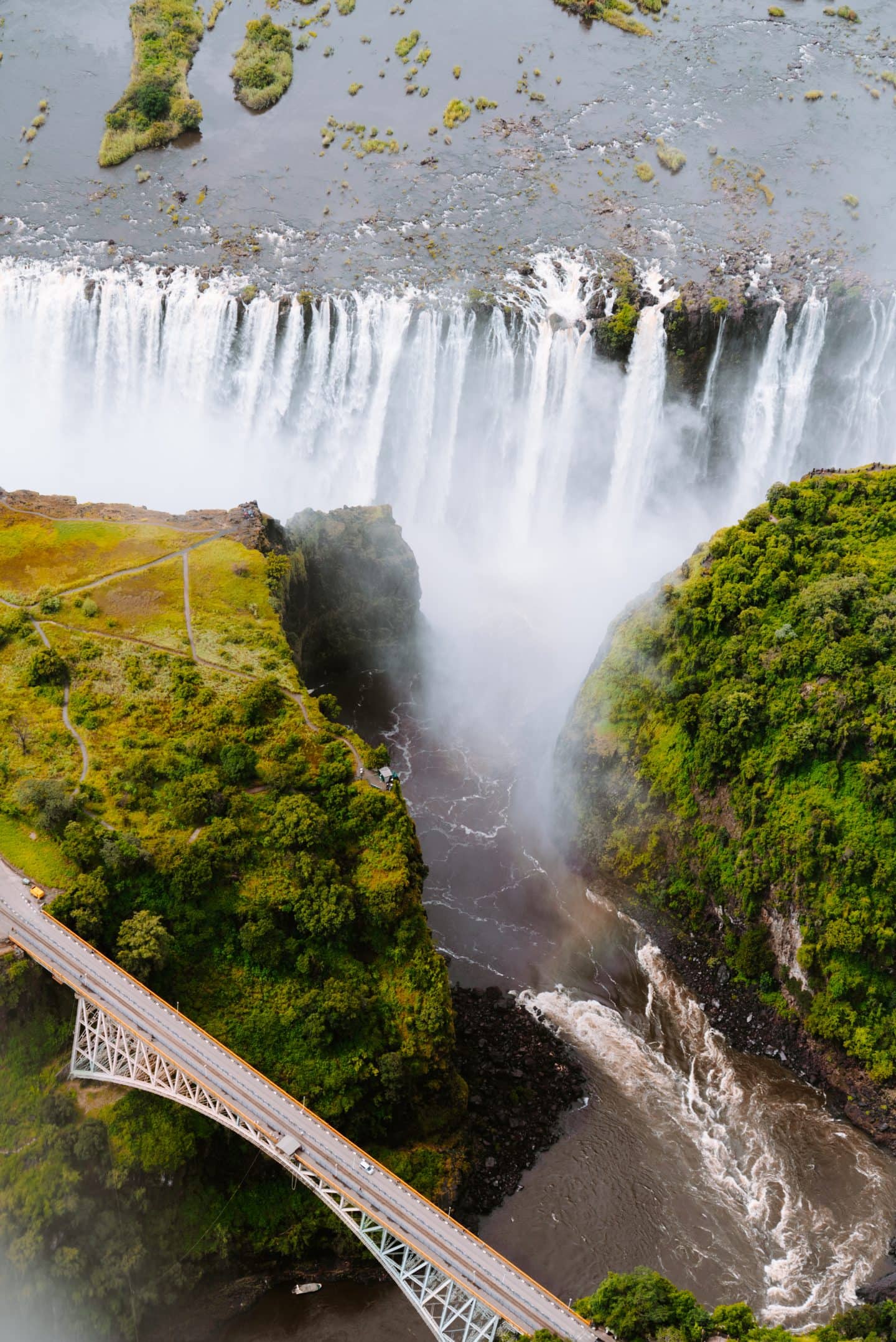
Grassland Safari Lodge was day one of eleven days through Botswana and Zimbabwe — and it set the tone for everything that followed. From the Central Kalahari Game Reserve I travelled to the Okavango Delta (Gomoti River Lodge, then Saguni Safari Lodge), then to Chobe Mobile Camp, then across the border into Zimbabwe for Victoria Falls.
If you’re planning a safari in Botswana and want to understand the full route, what each region actually offers, and whether the green season is right for you, I’ve covered everything in my complete guide: Botswana Safari Guide: Everything You Need to Know
Come with me · November 2026
Want to travel with me? And experience this trip yourself?
I’m taking two small groups of six back to Botswana & Zimbabwe this November — the exact route in this article, fully hosted, everything included, every photo taken by me.
See my Botswana group trip →- Saguni Safari Lodge Review – Three Nights in Moremi Game Reserve
- Gomoti River Lodge Review: The Okavango Delta
- Okavango Delta Botswana Guide
- Chobe Mobile Camp
- Victoria Falls in the green season — what to expect
- Best time to visit Botswana
- What a Botswana safari really costs

Hi, I’m Lisa, the Dutch blogger behind Dutchbloggeronthemove — a luxury slow travel platform built on the belief that the best journeys happen at a pace that lets you actually remember them.
She has lived in Mallorca for over three years, visited Lake Garda 35+ times since childhood, and spent years exploring South Africa’s wine regions until she knew them the way locals do. She travels with her partner and her Labrador Buddy, and she still returns to her favourite destinations four or more times a year — because one visit is never enough to write about a place honestly.
Everything published here starts from personal experience. That’s the only kind worth reading. ♥
