Looking for a slow travel train trip through Switzerland beyond the famous classics? Mine took me through the Lower Engadine in Graubünden for three days, using only trains, buses and one Swiss Travel Pass. I split my stay between Scuol and Ardez, took a day trip to Susch, and visited the Swiss National Park. Here’s what I loved: a 150-year-old hotel, Sgraffito and a butcher’s craft, goats coming home, modern art and the oldest national park in the Alps.
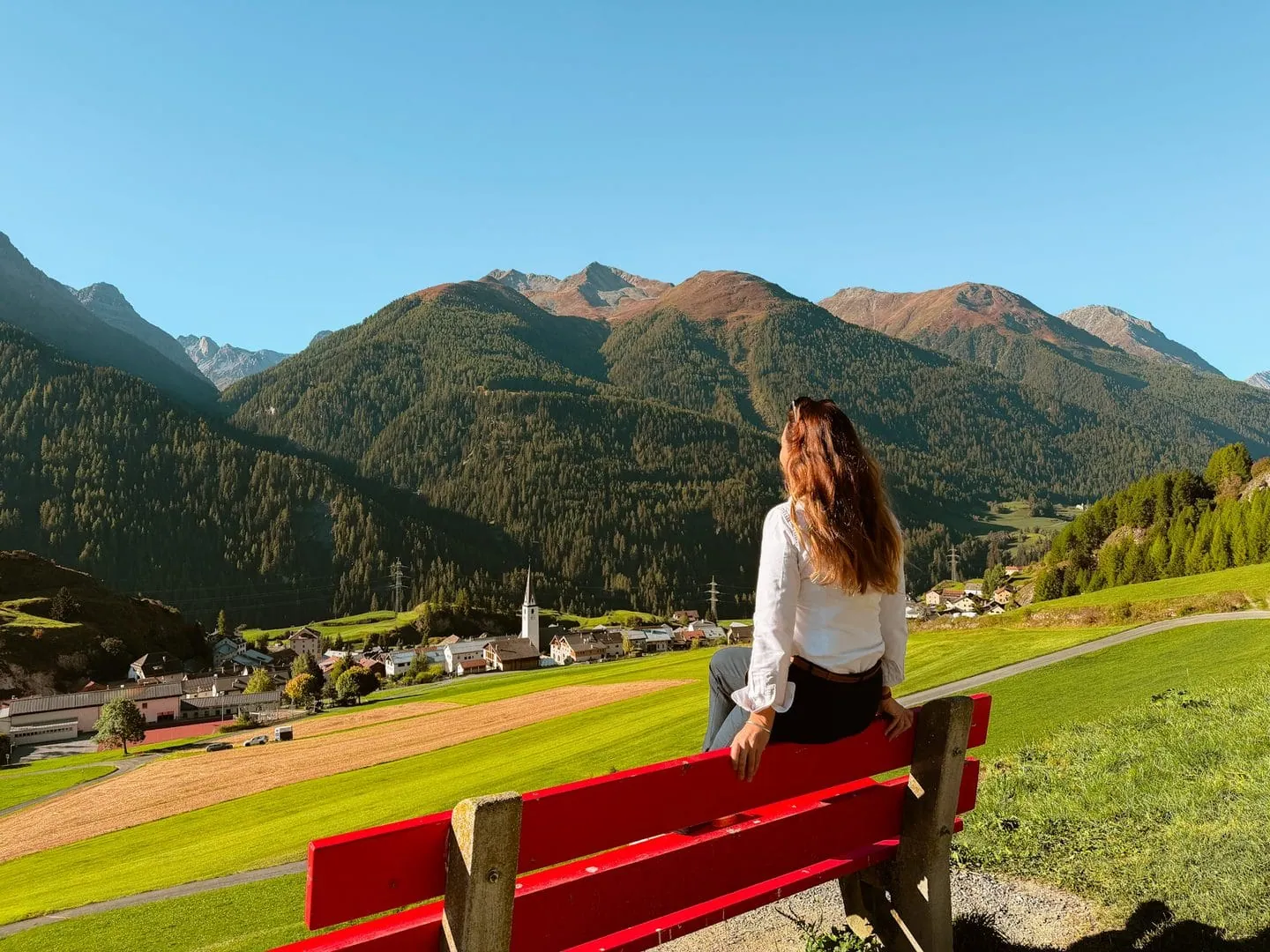
I travelled from 24 to 28 September. Three full days, plus an arrival evening and a departure day, so four nights in total.
I left home early in the morning, and this train trip through Switzerland started exactly as I’d hoped. A few train changes later, I was watching the Swiss mountains slide past my window, like a movie scene. I have travelled a lot, but I don’t remember ever arriving somewhere so relaxed.
The Swiss rail network is clean, modern and quiet, and the Wi-Fi is free and actually works. There are USB and plug sockets to charge your phone or laptop. And the landscape outside is like a film: rivers, forests, then mountains that keep getting closer.
My train trip through Switzerland at a glance
- Route: Zurich → Scuol-Tarasp, then by train to Ardez and Susch, and a day trip to the Swiss National Park
- Journey time Zurich to Scuol: about 2.5 to 3 hours, usually with one change of train
- Pass: I took the 6-day pass, because I also used it on my arrival and departure days. In 2026, an adult pass costs CHF 399 in 2nd class or CHF 634 in 1st class (the 3-day pass costs CHF 254 or CHF 405).
- Duration: 3 full days + arrival evening and departure day. In total 4 nights: 2 at Belvédère in Scuol, 2 at Hotel Schorta’s Alvetern in Ardez.
- Where to stay: Belvédère (4* superior, Swisstainable Leading), double rooms from about CHF 270 with half board. Hotel Schorta’s Alvetern (Swisstainable engaged), double rooms from about CHF 97 per person per night. Both hotels offer half board, which I had.
- Best time to go: late September. I travelled 24 to 28 September, when it was less crowded, and the goats came home in Ardez on 26 September.
- Dogs: welcome at both hotels. For CHF 25 per night at Belvédère and CHF 15 per night at Hotel Schorta’s Alvetern.
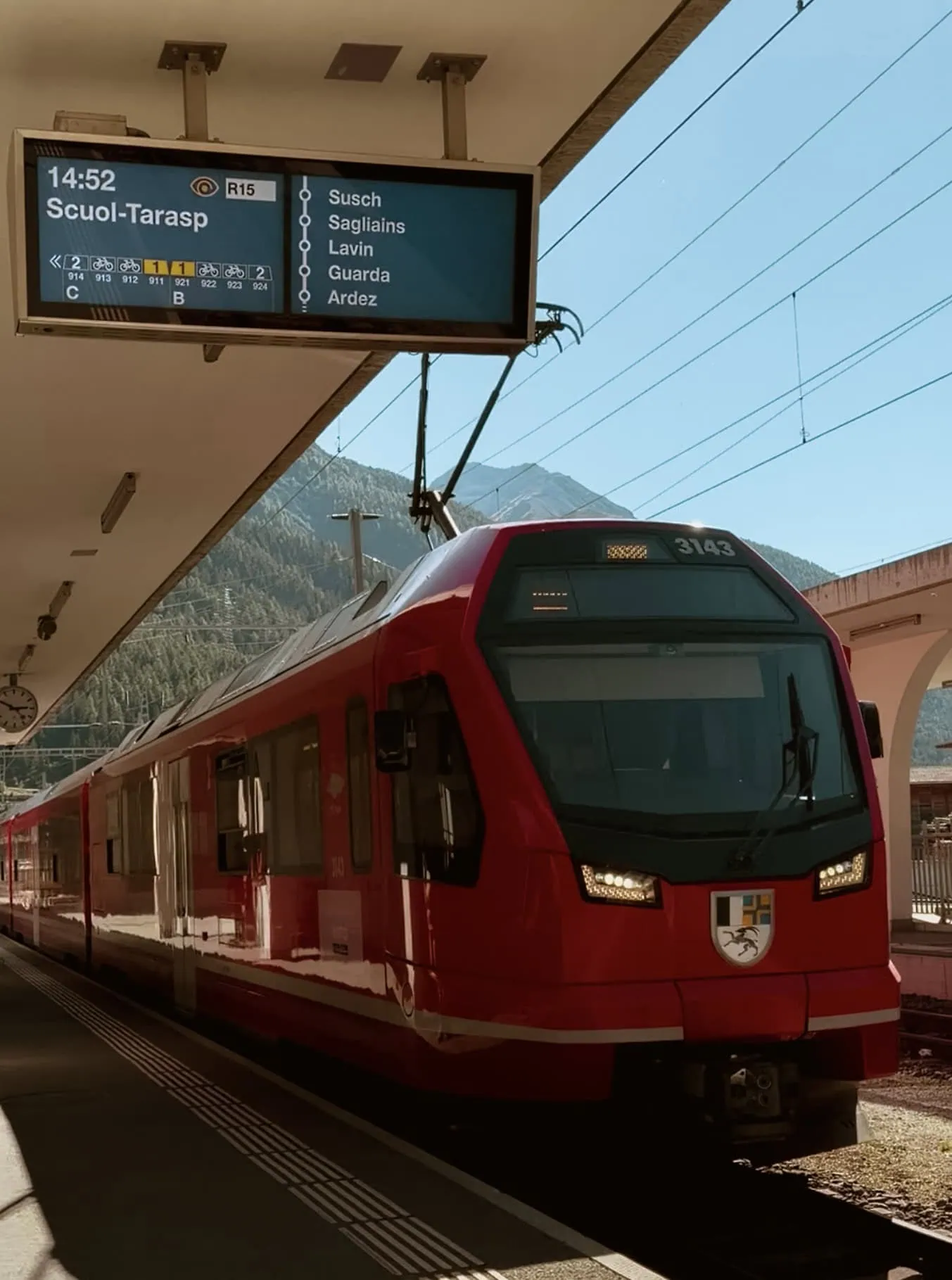
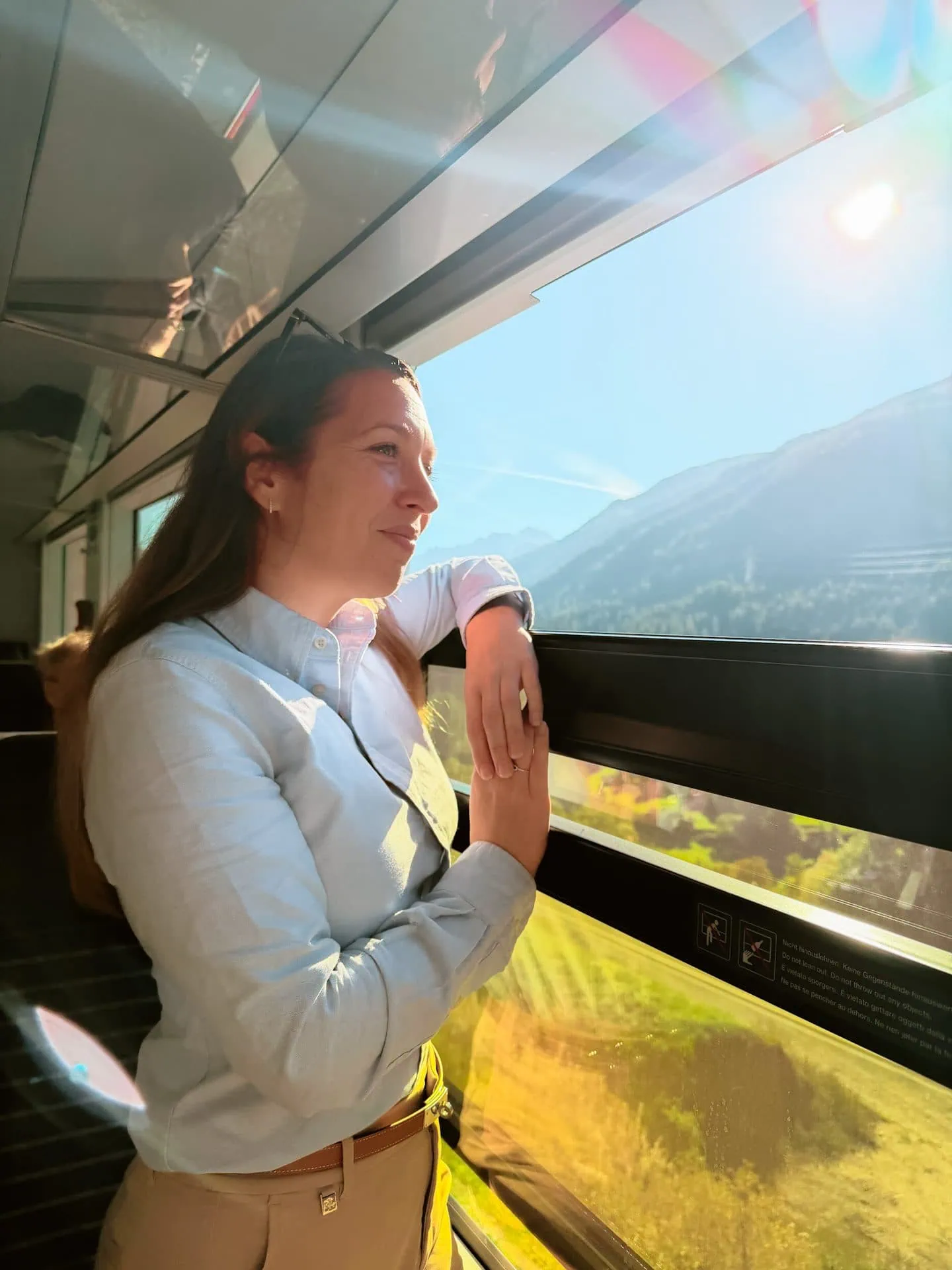
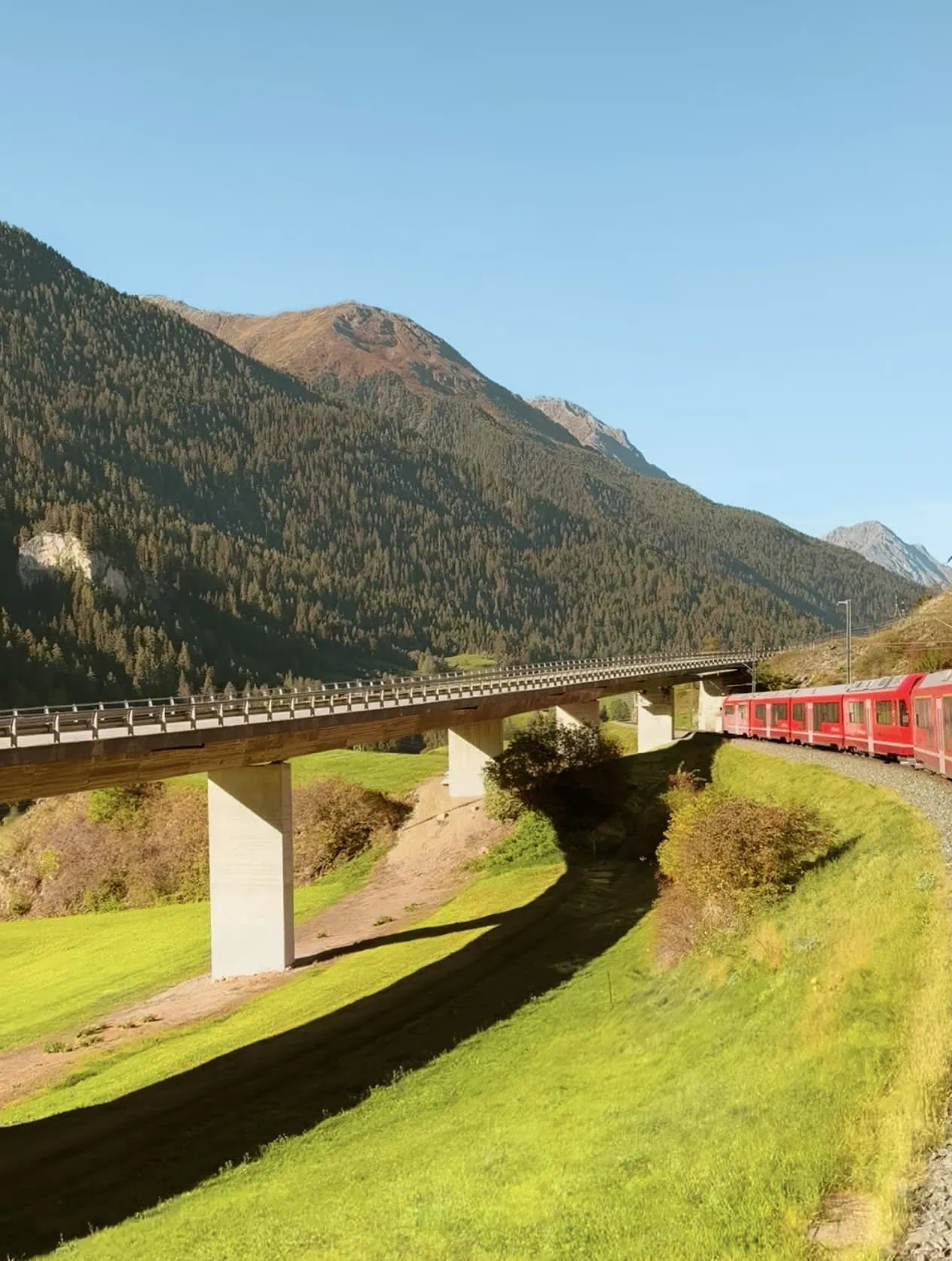
Why take the train through Graubünden, Switzerland, instead of driving?
Three things decided it for me: the Swisstainable label, how much easier train travel is than driving or flying, and the freedom the Swiss Travel Pass gave me once I got there.
What is the Swisstainable label?
Switzerland Tourism has created a label called Swisstainable, and it helped me choose how I wanted to travel. The label makes it easier to choose sustainable places to stay, eat and explore. There are three levels: committed, engaged and leading. The last one means a business is going above and beyond, making sustainability a core part of how it operates, not just a box to tick.
Is the train easier than a car or a flight in Switzerland?
Travelling by train is of course one of the most sustainable options, and for me much less tiring than driving a car and less stressful than flying. Plus, while on the way, I could continue to work, so I didn’t lose any time. And in Switzerland you don’t need a car.
You can travel from your home country, like me, or land at one of the international airports, Zurich, Geneva or Basel, and take the train from there. It gets you almost everywhere, even to a small village in the Lower Engadine valley of Graubünden in the far east of the country. It’s what makes a Switzerland train trip so easy to plan at your own pace.
♥ The Swiss Travel Pass: my must-have tip for a train trip through Switzerland
With the Swiss Travel Pass, you travel freely on trains, buses and boats across the country. It also gives access to many museums and some mountain excursions. It took away the entire stress of purchasing tickets. And being able to hop on a train or bus without any preparation, staying flexible. Carry your ID, because the pass is personal, and it was asked at every ticket check. I looked up the itineraries through the SBB Mobile app.
You can comfortably travel 2nd class, it’s clean and perfectly pleasant. I had a 1st class pass, but honestly, I didn’t bother switching carriages. The few times I ended up sitting in 2nd class by mistake, it didn’t matter at all.
Arriving in Scuol: the first stop of my train trip in Switzerland
I stayed at the Belvédère Hotel Family in Scuol. Its main house, Hotel Belvédère, is a traditional four-star superior hotel that has been welcoming guests since 1876 and is celebrating its 150th anniversary in 2026. It is also a Swisstainable Leading hotel. After a full day of train travel, I finally arrived in the early evening, just as the light was starting to soften over the mountains. I checked in at Hotel Belvédère, and my room, a Chasa Nova Suite, was in the neighbouring Chasa Nova. Once settled, I began with a drink at the Wine & Bar Lounge
Its floor-to-ceiling panoramic windows look out over the mountains, giving the odd, wonderful sensation of being outdoors. I sat next to the fireplace with a good cocktail in hand. I can easily imagine coming back here in winter, with a hot chocolate, watching the snow settle on the mountains.
Dinner at restaurant Allégra
When the cocktail was finished, I made my way to the hotel’s restaurant, Allégra, for dinner. I’d booked my room on a half-board basis (breakfast and dinner), and chef Henning changes the menu every evening, so even if you stay a week, you’ll never get bored with the choices. The waiter who served me, Ruben, originally from Italy, was impeccable. When the crème brûlée had run out, he negotiated with the kitchen to have one made just for me.
To finish the meal, he offered a glass of Iva as a digestif, a herb liqueur whose herbs are hand-picked by local pickers in Tschlin, a village in the Engadine. It was sweet on the palate, with a distinct herbal, alpine bitterness underneath, the perfect way to close the meal.
A hotel complex made for slow travel
The Belvédère Hotel Family group consists of a complex of 6 properties. Covered walkways link them all, so even in the depths of winter, you can move between them without changing clothes. I loved walking from my room to the spa with mineral water pools in my slippers and bathrobe.
I stayed in a Chasa Nova Suite, but if I returned, I’d book a room at the back of Hotel Belvédère instead. It’s the one to ask for if you want the mountain views. And I’d bring Takkie along: dogs are welcome by prior arrangement, for CHF 25 per night, though they’re not allowed in Restaurant Allégra.
I’m writing a full review of the Hotel Belvédère Family group and Bogn Engiadina spa, available soon 👩🏻💻
Day 1: Sgraffito in Susch, Muzeum Susch and a family butcher in Scuol | my train trip in Switzerland
A morning of Sgraffito in Susch
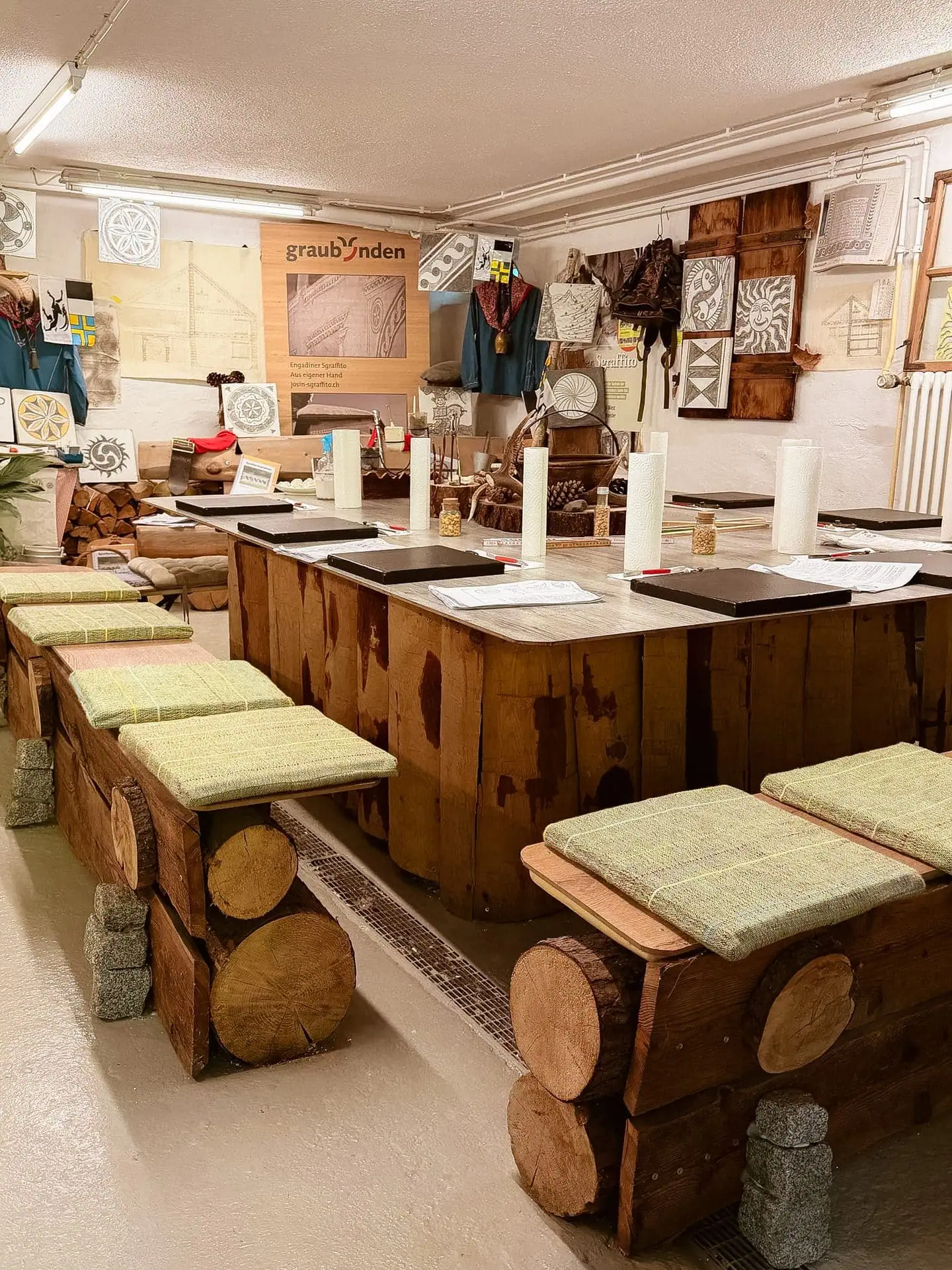
The next morning, I took the train to Susch for a Sgraffito workshop with Josin, a local Sgraffito artist. The train station Scuol-Tarasp lies a 1 km walk from the hotel, but since it’s uphill, I’d recommend taking the bus there and walking back on the return. The bus stop is right next to the hotel’s entrance.
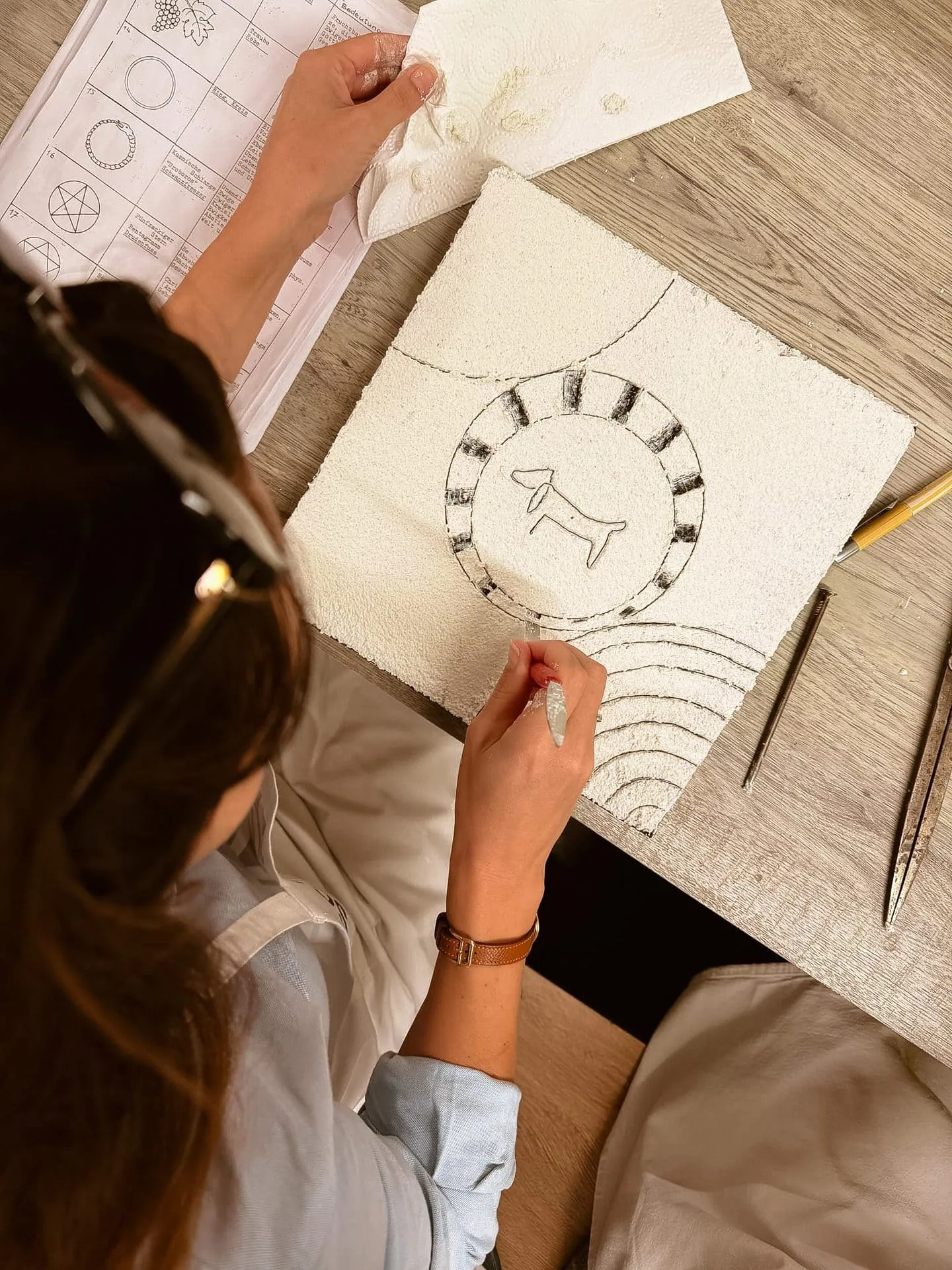
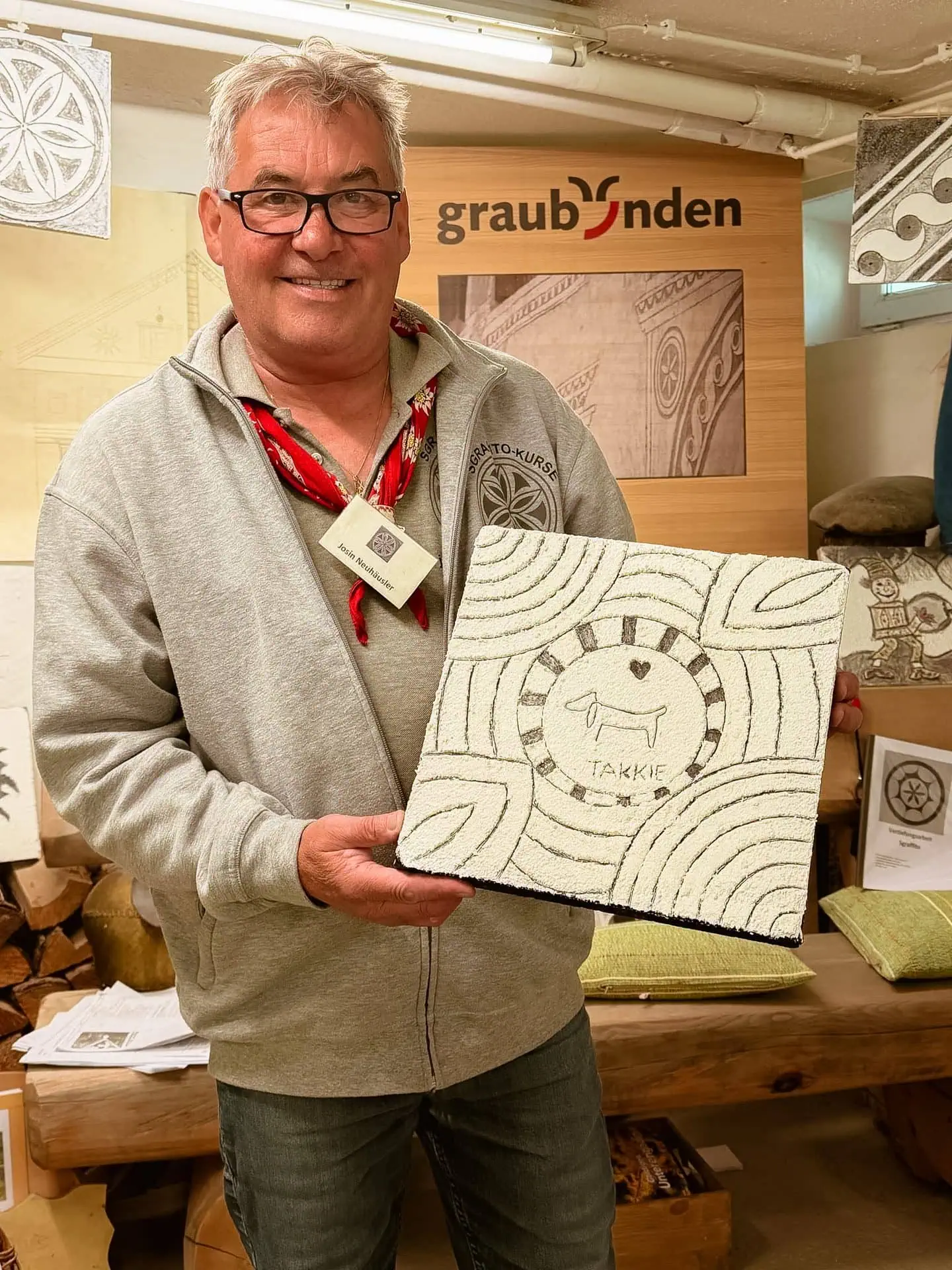
Sgraffito is the traditional technique you can see on the façades of Engadine houses across Graubünden: dark plaster sits under a light layer of limestone, which is then scratched away. Since it’s impossible to correct a line once you’ve made it, it’s a bit like living art. I spent an hour trying, and I’m not going to pretend I’m an artist, but I did make something small for my little dachshund Takkie, who couldn’t come on the trip and whom I missed a lot.
The workshop made me realise how difficult this craft really is. Besides the fact that you cannot correct an error, you must also work quickly, since the limestone is liquid when applied but dries very fast. I managed a little image, and I can’t imagine working on an entire house facade.
The price of Sgraffito for a house facade can vary between CHF 20,000 and CHF 300,000, depending on the size and design. I found examples on nearly every house in the village, some with symbolic drawings telling local events and stories.
♥ Good to know: Sgraffito workshop in Susch
- Best for: anyone curious about a local craft. No skills needed.
- Duration and price: the public workshop is listed daily from 14:00 to 16:30 and costs CHF 30 per adult for groups of ten or more. For fewer than ten, the price is on request. Children with an adult pay CHF 20.
- How to book: register by phone or email until 19:00 the day before (phone +41 79 221 34 78). The workshop is at Surpunt 91 in Susch, on the right bank of the Inn.
Lunch and modern art at Muzeum Susch
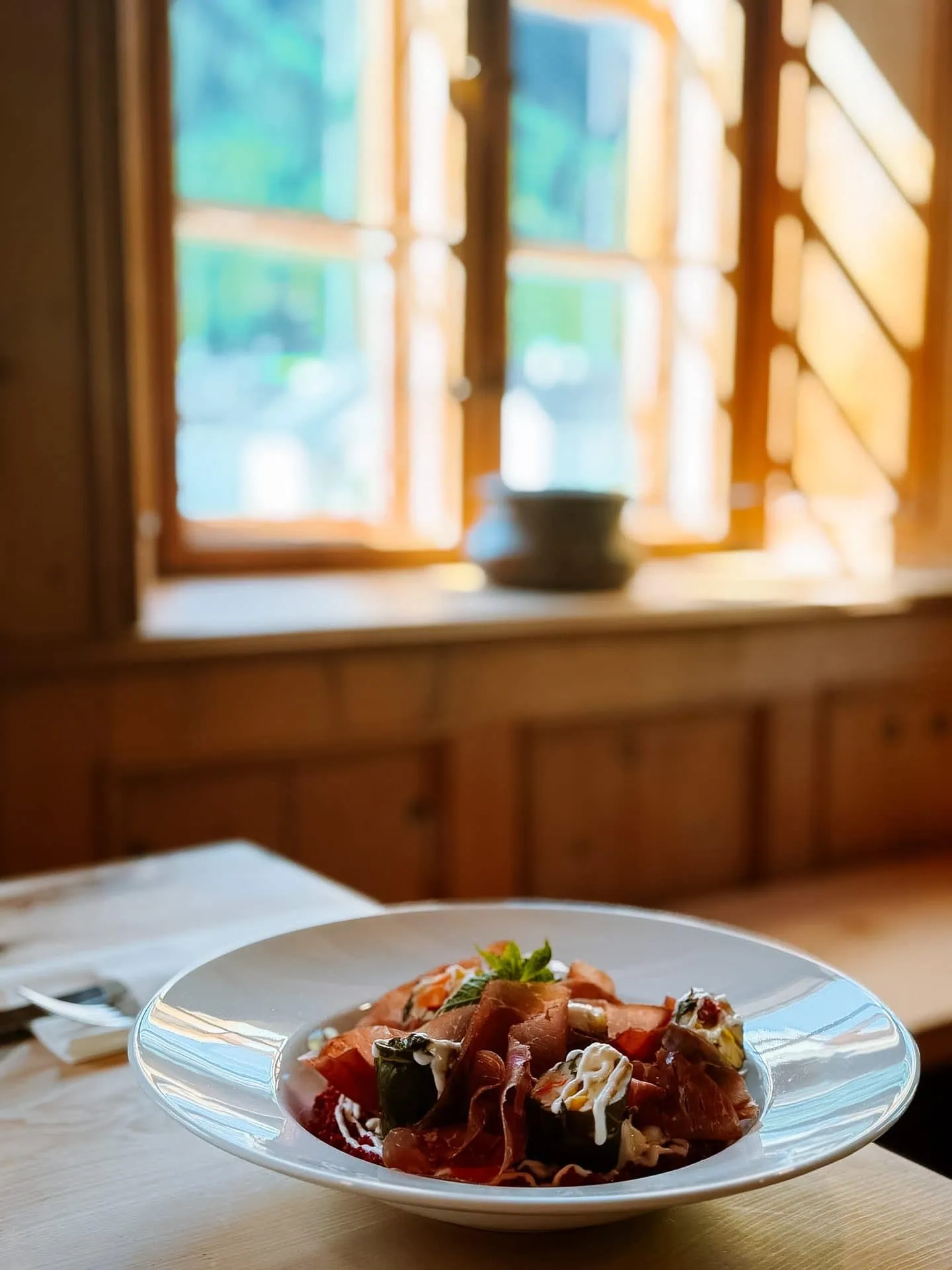
After the workshop, I headed to the Bistro of Muzeum Susch, with its unique view over the river, and tasted a revisited version of Sommer Capuns mit Rosa Couscous. Capuns are little parcels of spätzle dough (a soft egg-noodle batter) mixed with dried meat, wrapped in chard leaves and simmered in broth, then topped with cheese, a speciality found across Graubünden. This summer version came paired with couscous coloured rosé by beetroot. Then, I visited Muzeum Susch itself.
The museum is housed in a former 12th-century monastery, founded in 1157, partly carved into the mountain. This even makes some of the walls inside the museum part of the artwork. I don’t love all modern art objects, but some pieces were really impressive. Besides the permanent exhibition, there’s a temporary exhibition that changes twice a year. There are also a few art pieces outside you can enjoy with a view.
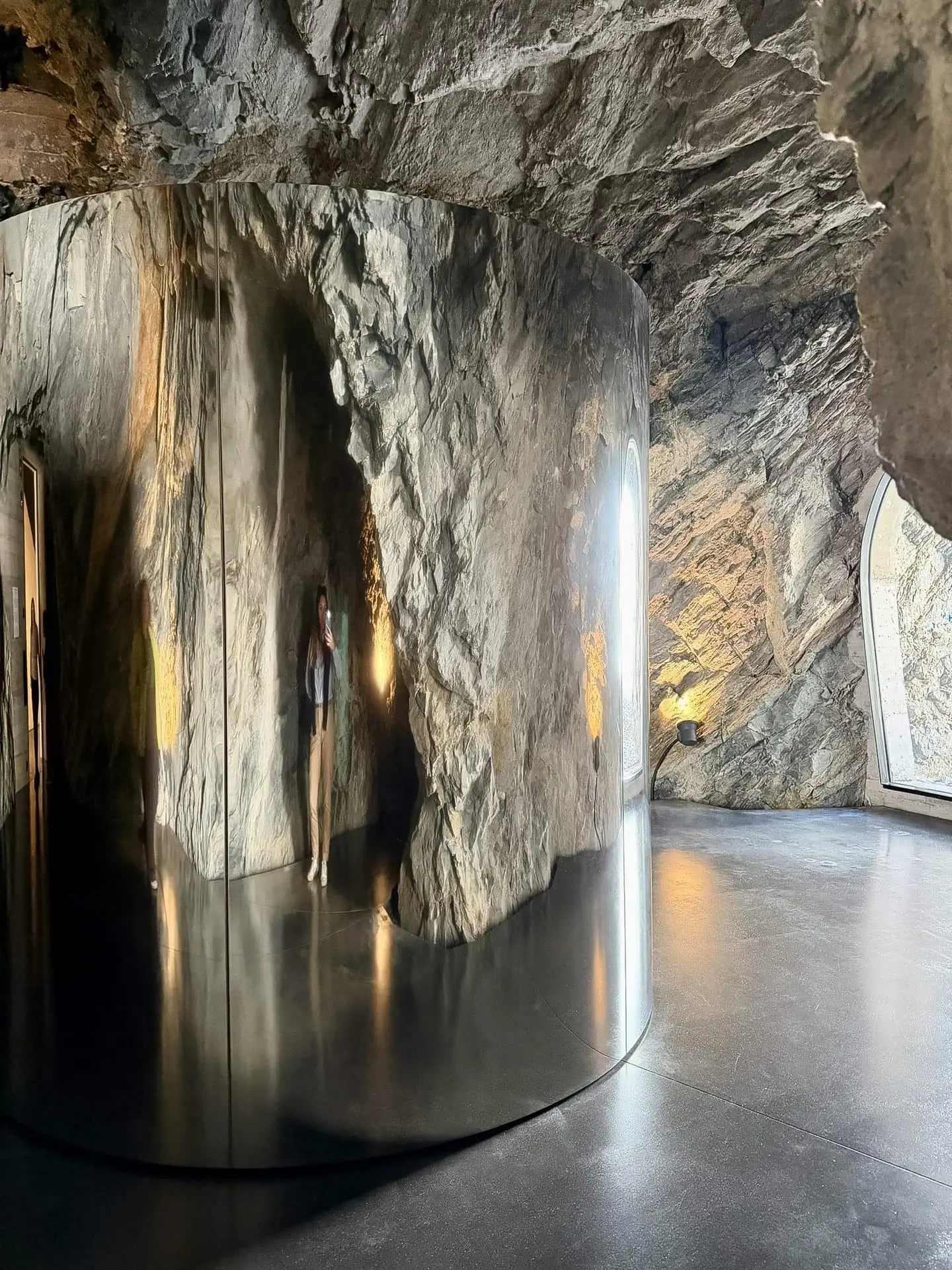
My favourite piece in Muzeum Susch is by Mirosław Bałka, called Narcissussusch. It sits in a natural cave of the former monastery. It’s a cylinder of polished steel that slowly rotates, reflecting the rock formation and the viewer’s silhouette. Look closely and you’ll spot me in the photo, caught mid-shot! With this mechanical, counterclockwise movement, Mirosław wanted to accentuate the passage of time. It also evokes the Platonic metaphor of the cave.
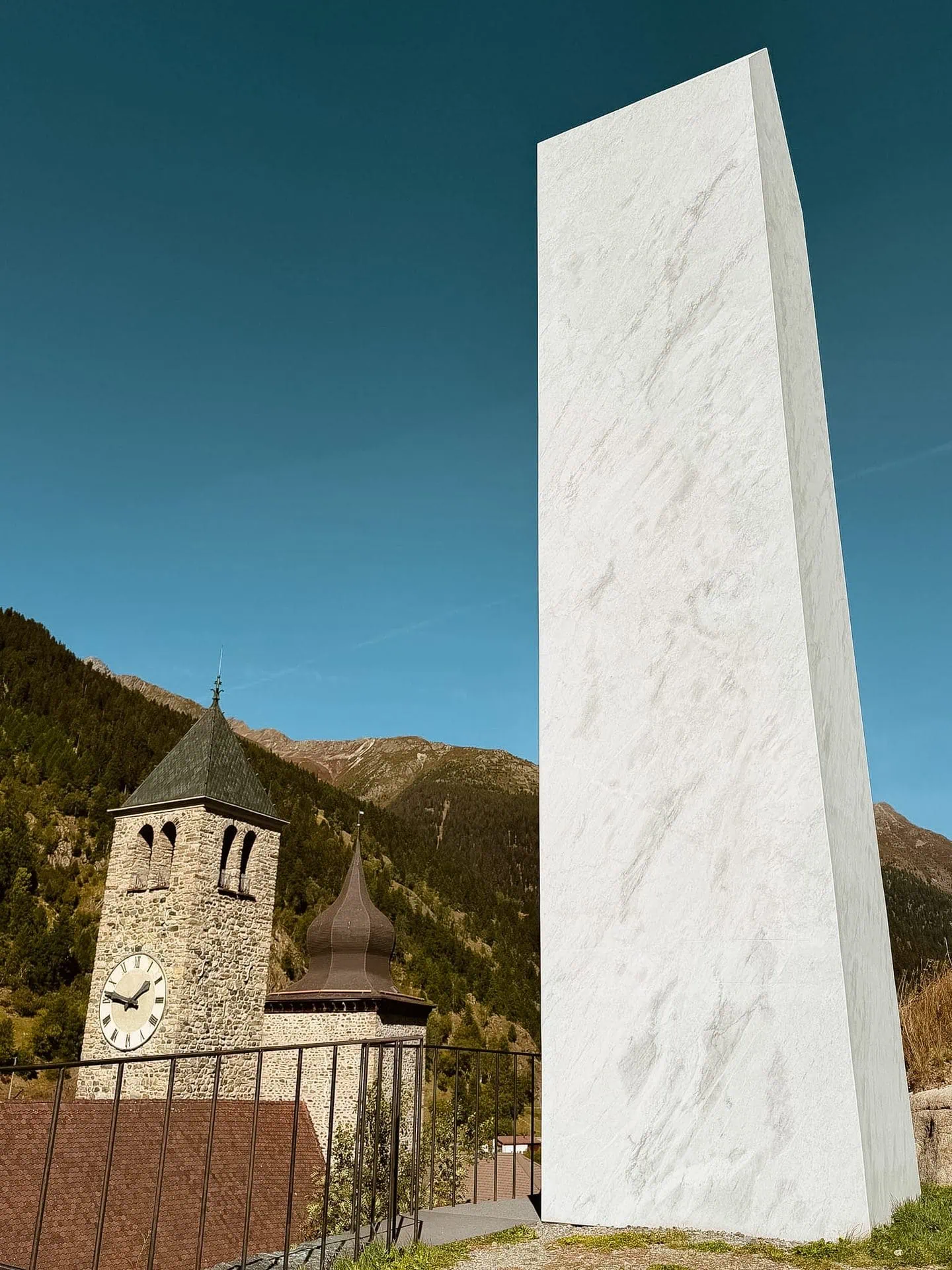
Outside, another piece caught my eye: Tuor per Susch, a 10-metre marble tower by Swiss artist Not Vital. Craftsmen in Pietrasanta carved it from a single block over two years. It now stands as the village’s fourth tower, alongside three historical ones. What I loved most was the contrast. This smooth, contemporary marble tower stands right next to Susch’s old stone clock tower, centuries apart, side by side.
Good to know: Muzeum Susch
- Opening days: Thursday to Sunday, 11:00 to 17:00, with Wednesdays added in high season. In spring and autumn, the museum is often closed for a few weeks while exhibitions change, so check the dates before you plan your day around it.
- Entry: CHF 25 for adults. Children under 6 are free.
- Getting there: it’s a 350 m walk from Susch station.
- The bistro: open Thursday to Sunday from 10:30 to 17:30. Dogs are not allowed in the museum.
Hatecke: a family butcher’s craft in Scuol
Back in Scuol, after a short train ride, I visited the family butchery Hatecke, now run by Ludwig, his wife and sons Noah and David, the third and fourth generation. It was one of the most fascinating parts of my trip through the Engadine valley of Graubünden. They still work the meat much like they did 200 years ago, and after explaining the process, Noah offered a tasting, my favourite part, of course!
You can simply drop in at the butchery on Stradun 197 in Scuol, and you can also eat there in the “Barboucherie”. A public guided tasting tour runs on Tuesdays at 16:00. It lasts about 45 minutes and costs CHF 15 per adult, with children up to 12 free. You taste dried meats with a glass of wine, then see the rock cellar where the meat ages.
Coming next, the full review of my visit to Butcher Hatecke on Dutchbloggeronthemove.
A mountain view, then the Bogn Engiadina spa at Hotel Belvédère
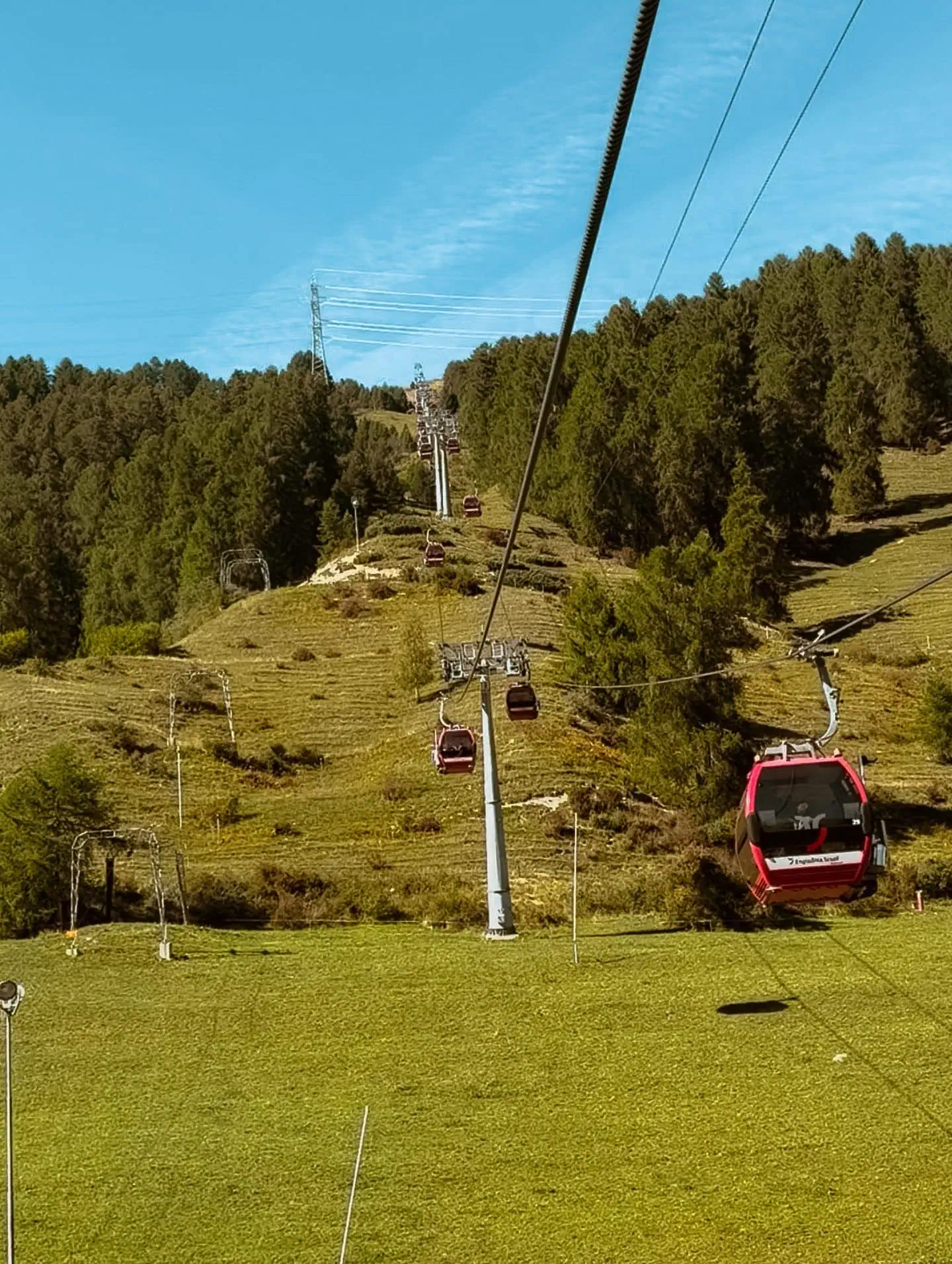
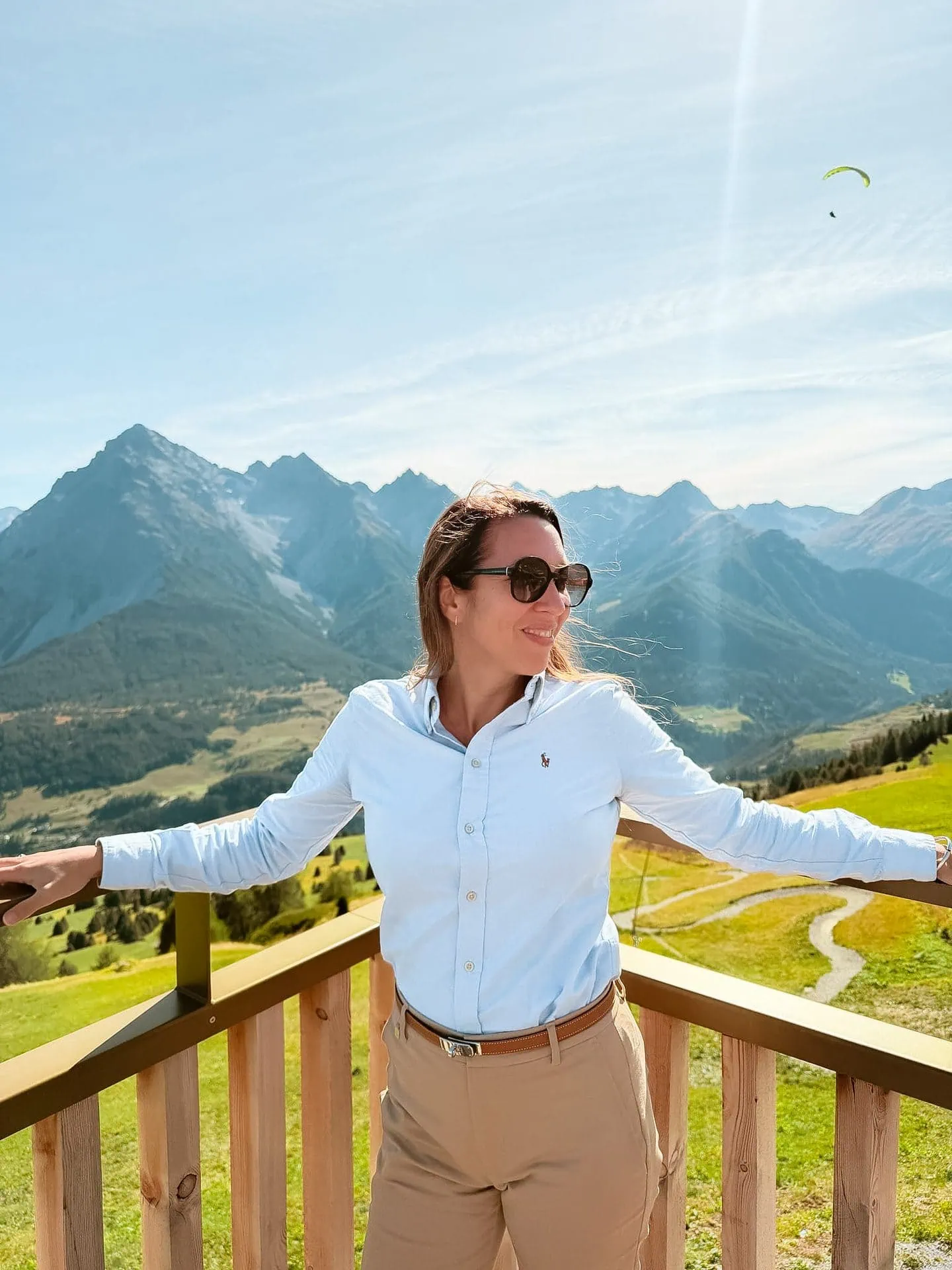
Before heading to the Bogn Engiadina mineral spa at Hotel Belvédère, I took the Motta Naluns gondola up the mountain for a cup of fresh herbal tea and a stunning view. It was the perfect spot to catch my breath after a day of workshops, museums and butchery tours.
♥ Don’t miss it: the Motta Naluns gondola doesn’t run all year. It operates in summer, roughly from late May to early November, and in winter, from mid-December to mid-April, with a break in between. Check the exact dates on Bergbahnen Scuol before you plan your trip.
Bogn Engiadina spa hosts six pools, indoor and outdoor, plus a sauna, steam room, warm and cold baths, and my favourite, a salt bath.
Read all the details about the spa in my review of the Hotel Belvédère Family group and Bogn Engiadina spa, that will be available soon.
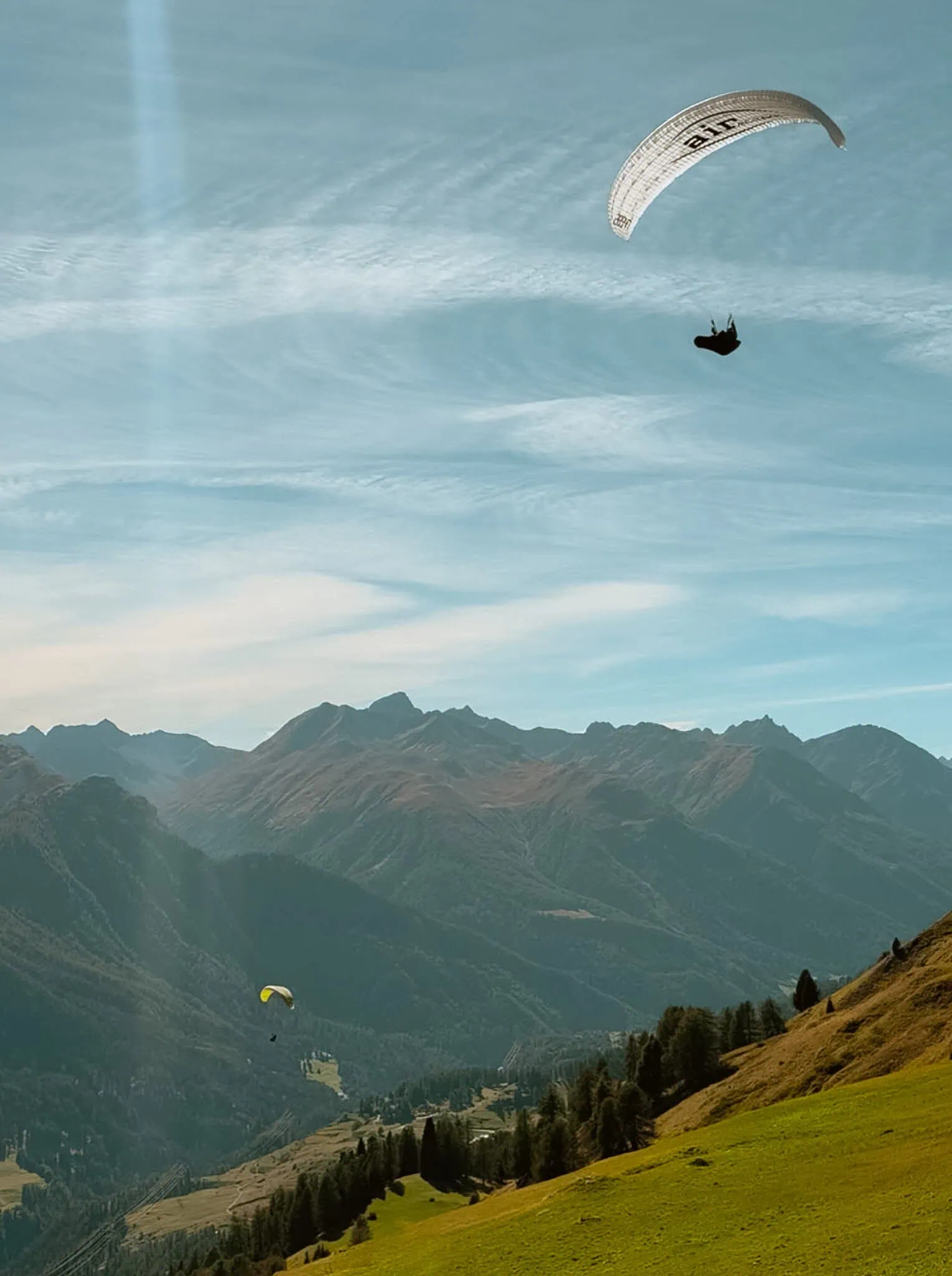
♥ Don’t miss it: on the train from Scuol to Susch, look to the left about five minutes in. Besides the beautiful mountain views, you’ll catch a glimpse of a little castle. It’s one of those details a train journey through Graubünden rewards you with, if you keep your eyes on the window.
Day 2: Goats coming home and a guided walk through Ardez | my train trip in Switzerland
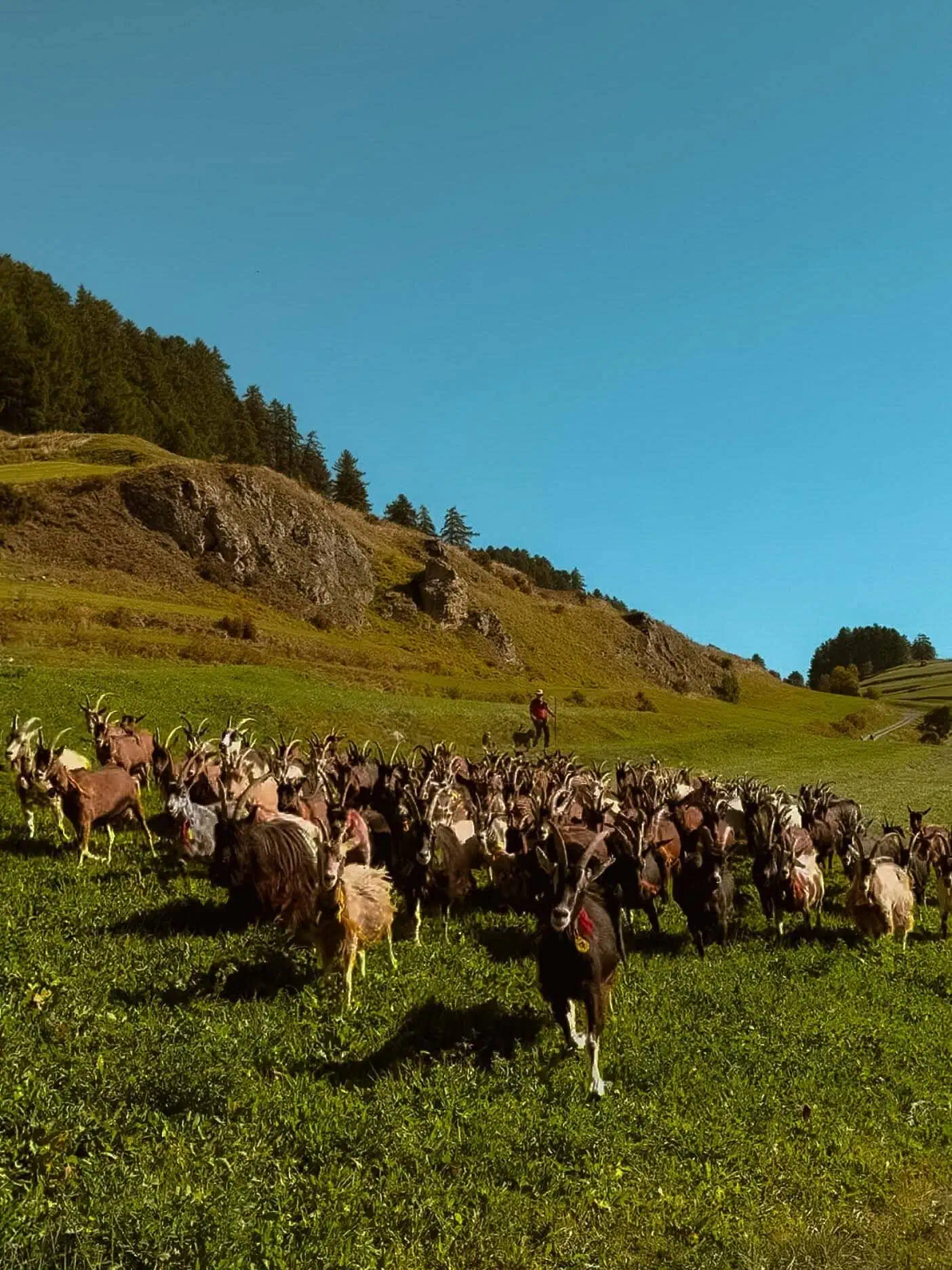
The next morning I took the train to Ardez, because it was the day of the goats’ return from the mountain pasture. At the beginning of summer, in June, the farmers bring the goats into the mountains, and by the end of summer, they come back home.
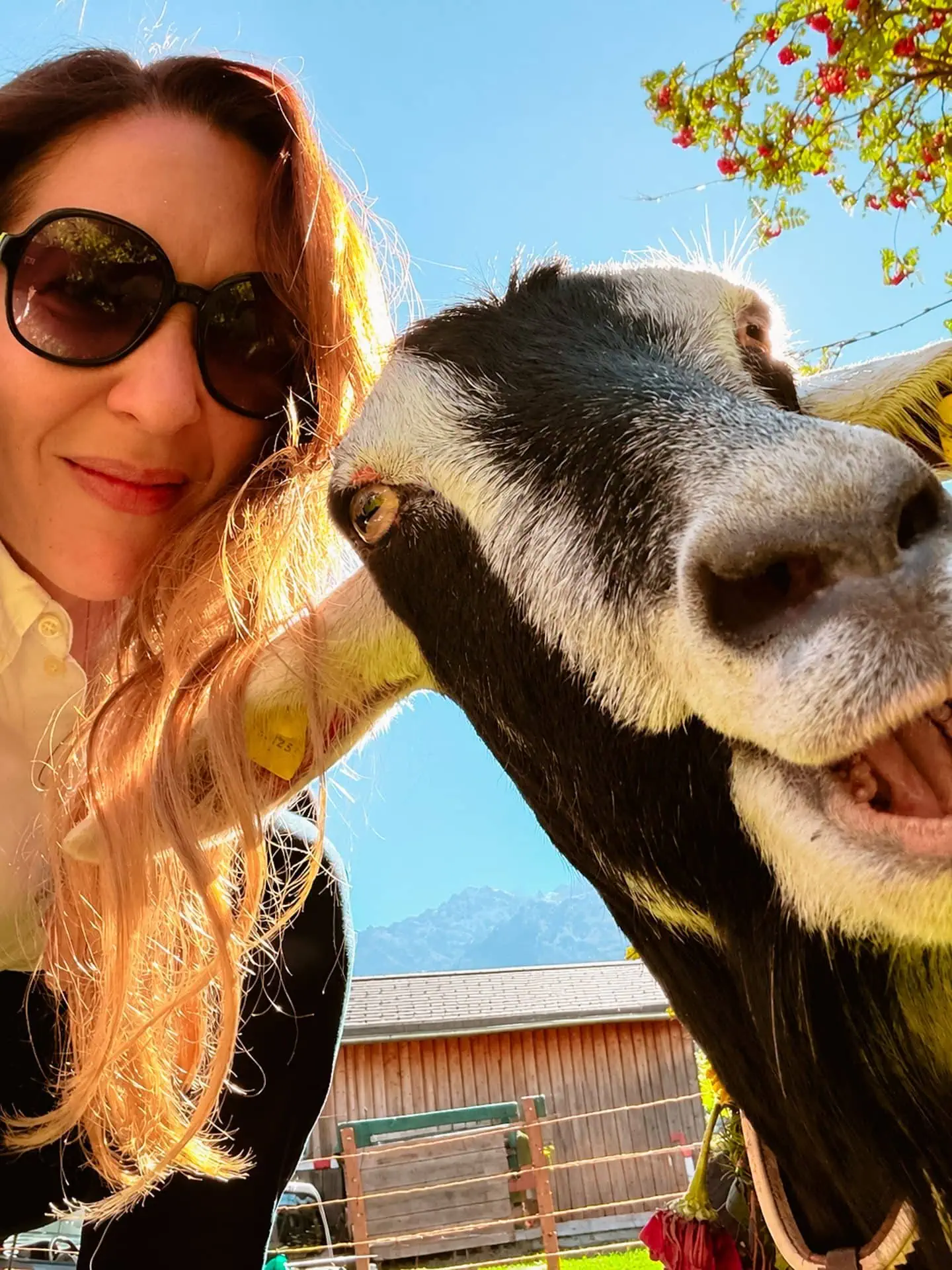
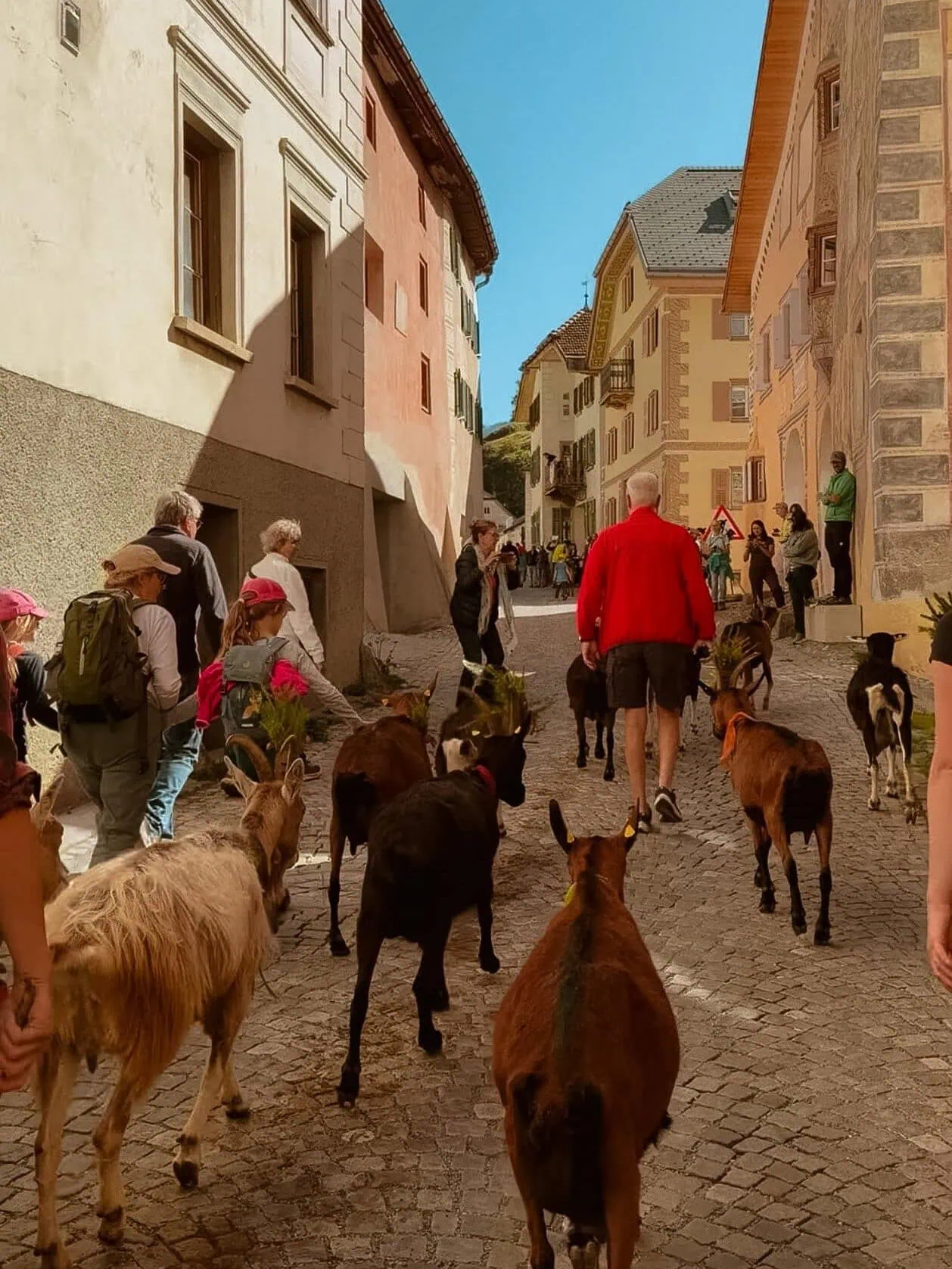
Here in Ardez, there were more than 100 goats from different farmers, each keeping between 4 and 20 goats. The farmers and their families go up the mountains to bring them down. Halfway, they decorate the goats beautifully with flowers, before passing through the little streets of Ardez and joining a large farm.
There, the entire village reunites for a simple but delicious lunch, with fresh local meat on the grill, cheese and fruit cakes for dessert. I even ran into Noah from the Hatecke family, out with his own family, enjoying the day like everyone else. It was a great, and above all authentic, moment on my itinerary by train through Switzerland.
♥ Don’t miss it: the goats come home on a single day in late September. In 2026, it was 26 September, but the date changes from year to year, so ask the Scuol tourist information before you plan your trip around it. If you can’t catch it, that same week is still a quiet and lovely time to visit.
For the afternoon, I met with Walter, who has lived in Ardez for 33 years and works as a guide in the village. He taught me how villagers built the Engadine houses in Graubünden around a fountain. The fountain was the meeting place, and the living rooms look onto it. Later I had a pastry at Garde-Manger, a French pâtisserie with Engadine roots.
Hotel Schorta’s Alvetern in Ardez
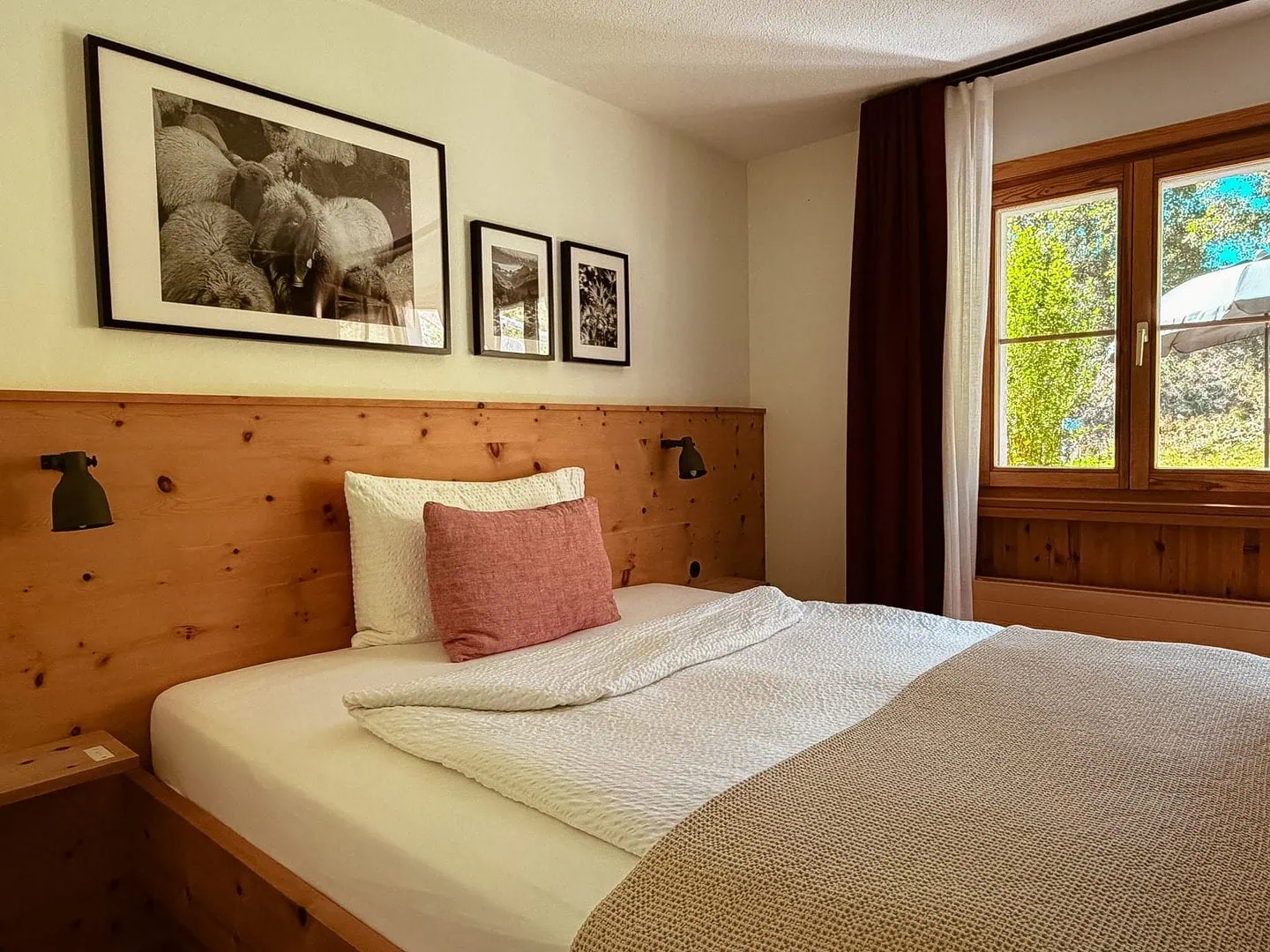
After two nights at Hotel Belvédère in Scuol, I moved on to Ardez for my last two nights. If, like me, you like to change hotels when moving from village to village, I can recommend Hotel Schorta’s Alvetern. It’s an 18-room, family-run boutique hotel, owned by the Schorta family since 1976, and it carries the Swisstainable engaged label. It sits at the entrance of the village, in a quiet location.
The kitchen, led by head chef Kristian, combines Engadine tradition with a modern style: regional, seasonal ingredients, no unnecessary frills, just natural flavours done right.
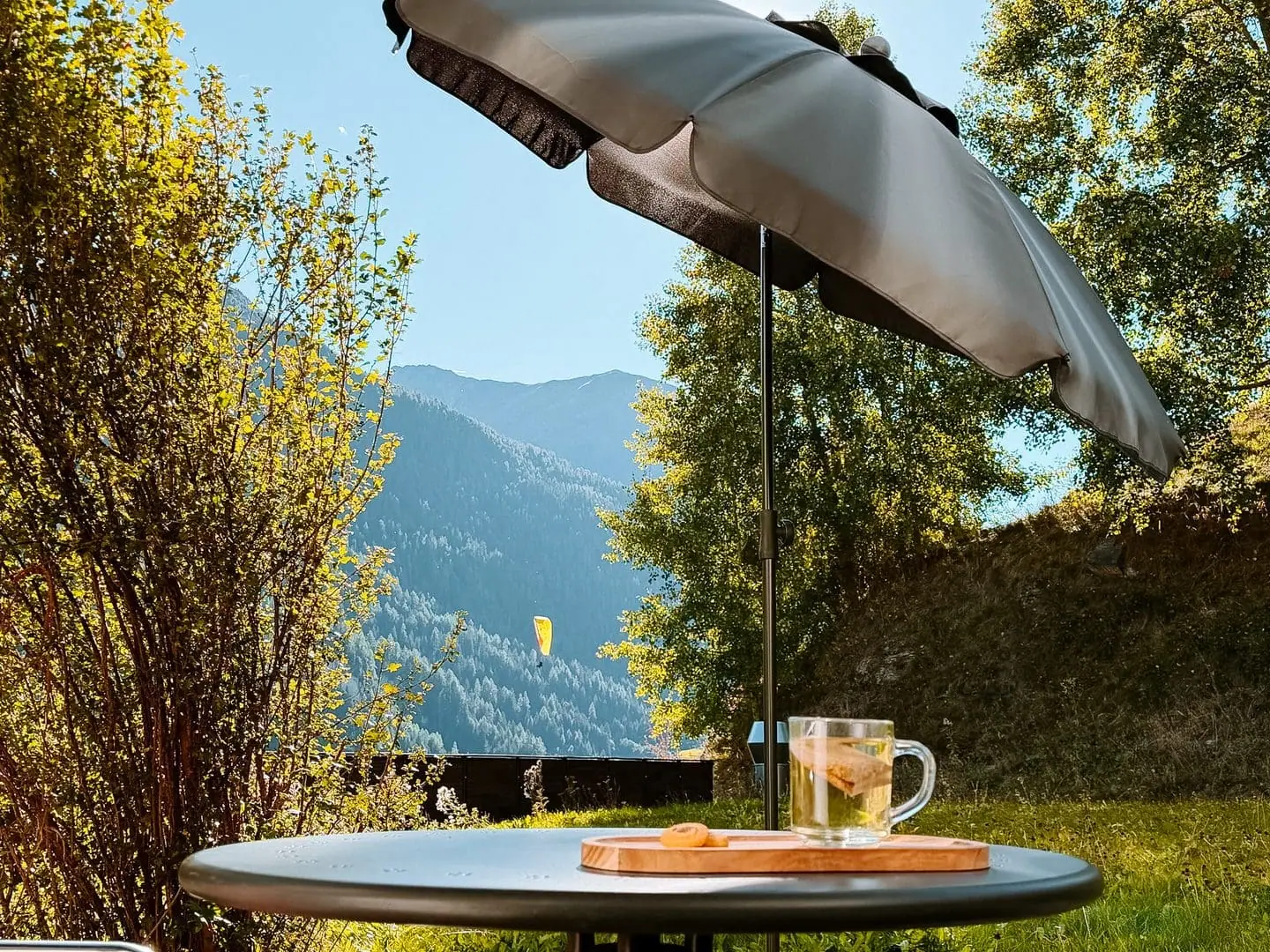
Come afternoon, the lounge and terrace practically beg you to slow down, whether that means a fine dessert, a stylish aperitif or simply a warm cup of herbal tea with the mountains for company.
My recommendations: you can walk from Ardez station to the hotel, but it’s all uphill, so it’s hard with luggage. A shuttle from the train station can be arranged on request, so ask when you book. Some rooms are on the upper floor and can only be reached by stairs, since there is no lift. Ask for a ground-floor room if you travel with heavy luggage.
Day 3: A guided hike in the Swiss National Park | my train trip in Switzerland
A guided hike through the oldest national park in the Alps
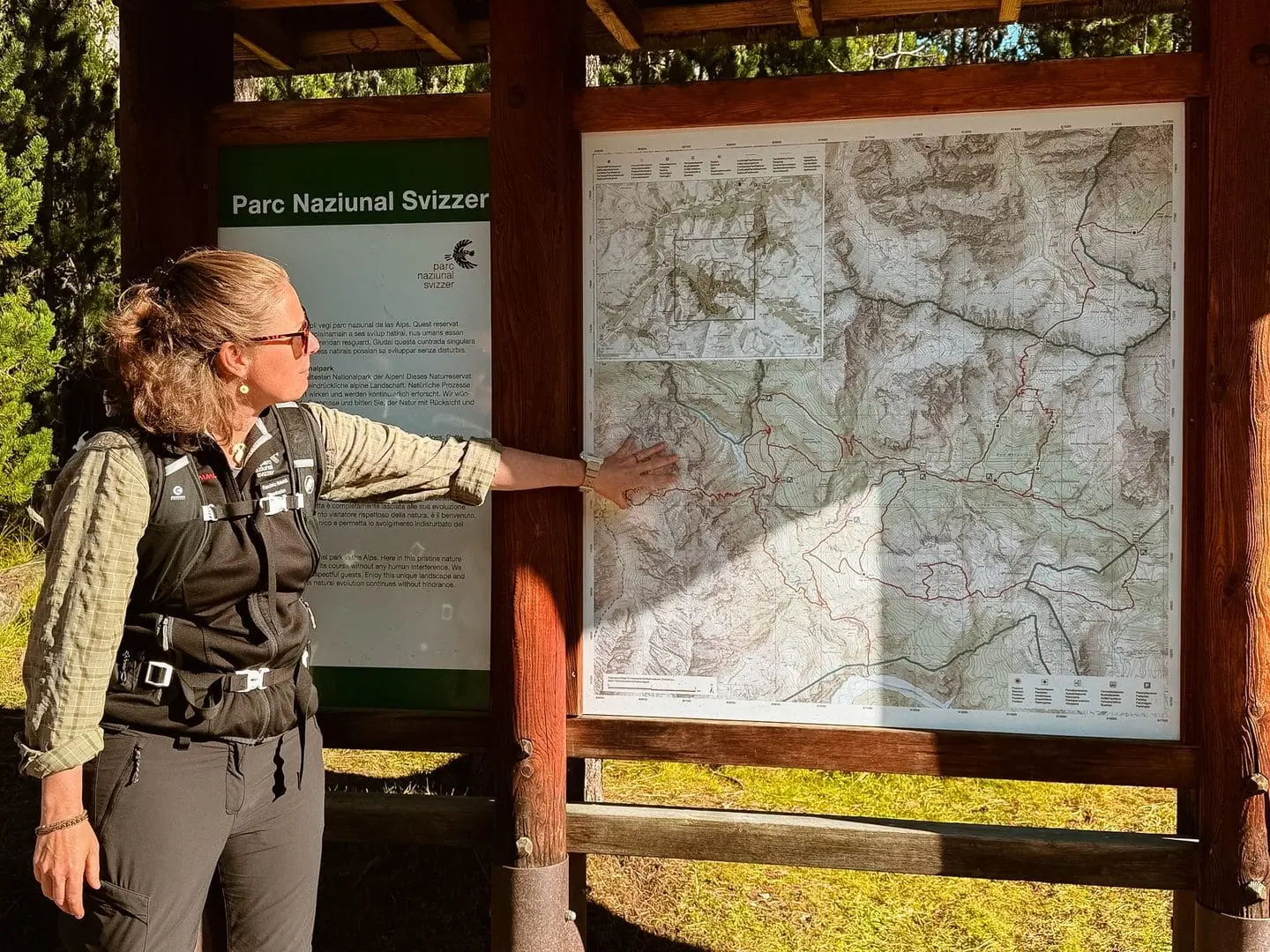
For the last morning, I planned a visit to the Swiss National Park, founded in 1914, the oldest and best-protected national park in the Alps, tucked in the heart of Graubünden. Franziska, a passionate biologist, guided me and explained what makes this park different from most: it was created for nature, not for people.
No dogs, no mountain bikes, no drones. And when a tree falls, it stays exactly where it fell, unless it becomes a safety issue. The park doesn’t arrange anything for visitors’ convenience.
That doesn’t mean visitors aren’t welcome, though. The park isn’t trying to attract as many people as possible. Instead, it’s designed to let people in while keeping their impact on nature to an absolute minimum. Everything I saw, from the marked trails to the strict rules, felt built around that balance.
Swiss National Park facts and figures
We walked a short route of about 1.5 hours, though there are also 3-hour hikes and multi-day itineraries of two to three days for those who want to go deeper. The park was created to let the land return to a wild state after the region’s industrialisation, one of Graubünden’s most ambitious conservation projects, and it still holds onto three missions today: protection, research and information.
Franziska, it turns out, spends most of her days behind a desk, not on the trail. Research takes up most of her time, and guiding is almost a treat she allows herself, just once or twice every two weeks, depending on the season.
Guided hikes vs. the family-friendly nature trail
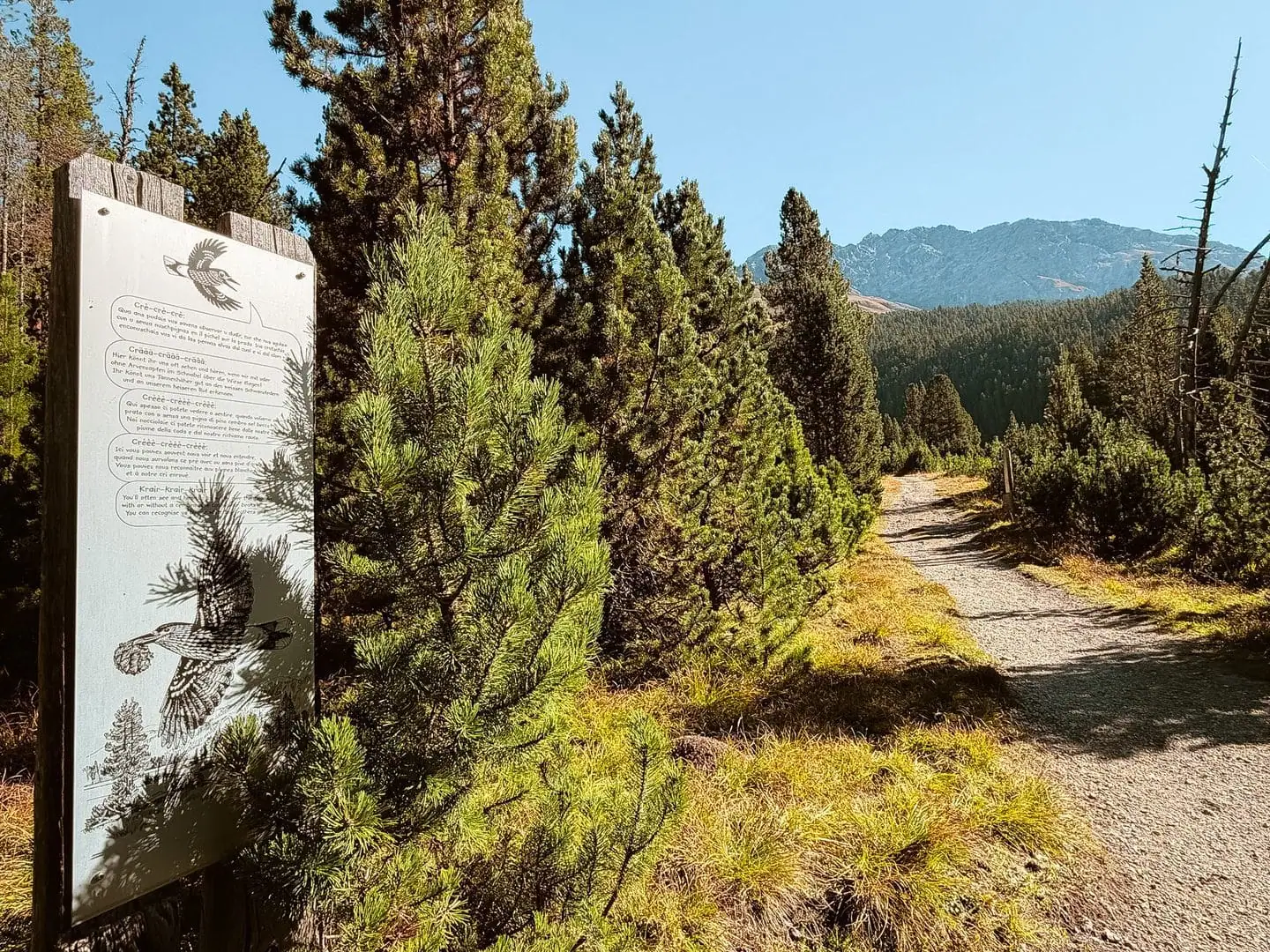
The park is freely accessible, but closes at night and through the winter. I’d recommend visiting with a guide to really understand what you’re looking at. But if you’re travelling with children, the classic nature trail in the Pass dal Fuorn area is a lovely alternative. Along the route, 45 information boards explain what’s living around you, and families can explore it and compare notes together. It starts near Hotel Parc Naziunal Il Fuorn and is easy to reach by Postbus from Zernez or Val Müstair. Allow half a day.
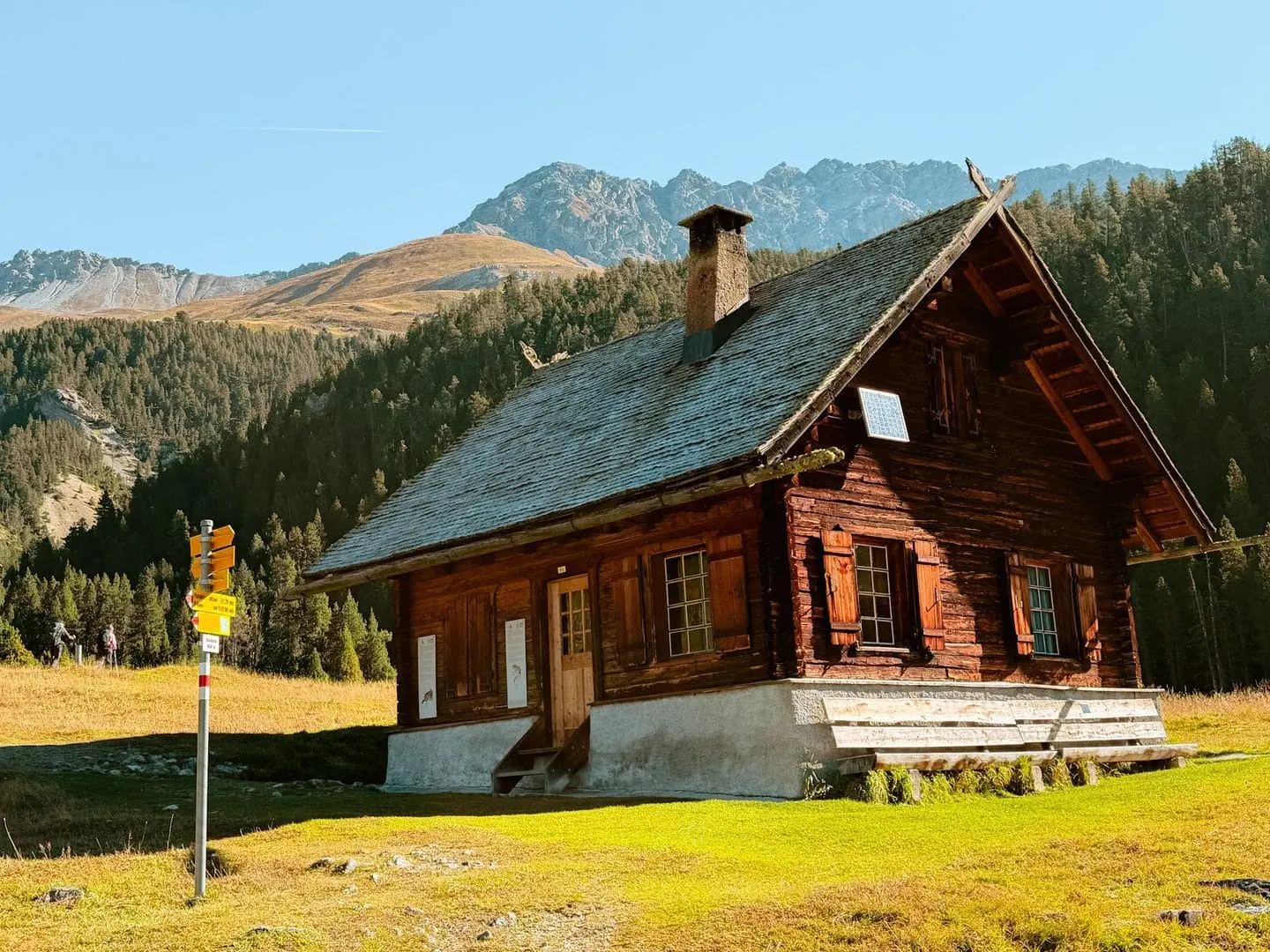
♥ Good to know: guided hikes in the Swiss National Park
- Opening: the hiking trails are generally open from mid-May to mid-November, depending on the weather conditions. The exact dates can vary.
- Taster tour: the Il Fuorn taster tour runs on selected Mondays from 14:00 to 16:30, and an adult ticket costs CHF 20. Children up to 16 pay CHF 10 and a family pays CHF 40. The meeting point is the Infomobil next to the Postbus stop at Il Fuorn.
- Duration: 2½ hours, 200 m of elevation gain, about 3 km.
- How to book: register online, at the National Park Centre in Zernez or by phone (+41 81 851 41 11), until 17:00 the day before.
- Private guide: a private guided walk costs CHF 400 for 6 to 7 hours, lunch break included. Private walks can also be booked in English.
- Language: the explanations on the public tours are in German, so if you would like it in English, book a private guide, like my tour with Franziska.
Where can I eat and plan my visit to the Swiss National Park?
After my guided walk, lunch was waiting at Hotel Parc Naziunal Il Fuorn, a well-deserved reward after the morning’s effort. Besides the food, the hotel struck me as the perfect base for anyone planning a multi-day itinerary inside this corner of Graubünden.
On the website of the Swiss National Park you can check current weather conditions and walking routes. You will also find protection regulations and guided walks.
A different kind of tasting: the mineral waters of the Lower Engadine
Back in Ardez that afternoon, I did something I didn’t expect to find myself doing on a Swiss train trip. A mineral water tasting. Sabina, a real water sommelier, guided me through several waters from the region’s fountains. They were paired with carefully chosen bites.
I’ll admit I went in a little sceptical, being more into wine tastings. But water, it turns out, is tasted a lot like wine. You look at it, smell it, and let it sit on your tongue before you swallow.
Sabina explained how the minerals each water carries (sodium, calcium, magnesium, iron, chloride, hydrogen carbonate, sulfate) shape its texture and flavour, from something tasteless to something with a faint metallic edge. Pairing changes everything too. The same water tastes completely different next to a piece of cheese than it does next to something sweet.
It also explains something I’ve been noticing all week without putting words to it: why the Lower Engadine takes its fountains so seriously. This region sits on some of the richest mineral springs in Switzerland, the same ones that feed the pools at Bogn Engiadina.
Not every village fountain runs the same water, though. Some carry mineral water, others plain drinking water, and there’s a dedicated map showing which is which. You can even book a guided fountain tour, to track them down yourself and taste the water straight from the source. Unlike most mineral waters, these aren’t bottled or sold commercially anywhere. The only way to taste them is to come here, to the source, in this part of Switzerland.
Good to know: water tasting and fountain tour
- Public tasting: it lasts 1½ hours (16:45 to about 18:15) and costs CHF 43 per adult, including specialities and a non-alcoholic Prisecco. It’s for 4 to 10 adults and held in German. My own tasting was a private one in Ardez, so for English, book privately.
- Fountain tour: the Scuol fountain tour is an easy 3.1 km walk of about one hour past five village fountains with mineral water. Don’t forget to bring a bottle or cup.
Looking back on three days in the Lower Engadine
Three full days, plus an arrival evening and a departure day: four nights, one train pass, and more than I expected to discover in a single corner of Graubünden. Between Scuol and Ardez, I found a historic hotel, a craft that takes a lifetime to master, and a modern art museum carved into the mountain. A family butchery, a mountain tradition, a national park built for nature rather than people, and water that tastes like nowhere else.
This is what slow travel looks like, and I’m already planning my next train trip through Switzerland with Takkie.
FAQ: your questions about my train trip through Switzerland
For planning, seasonal experiences, destinations and accommodations, Switzerland Tourism is the official source. For Graubünden specifically, hikes, villages and seasonal events, the website of Graubünden is the one I relied on most
Yes. I never once thought about buying individual tickets, which made the whole trip stress-free and flexible. The pass also covered museum entries along the way. Prices vary depending on how many days you choose, so you can match it to the length of your own trip. If you’re moving between several villages like I did, the time it saves alone makes it worth it.
No, and I’d honestly recommend against renting one. I reached Scuol, Susch and Ardez entirely by train and bus, from the modern art museum carved into the mountain to the family butchery and the goats coming down from the pastures. The connections were frequent and reliable, even to places that felt properly remote.
Yes, dogs are welcome on Swiss trains, and both hotels I stayed in allow them too, Hotel Belvédère and Hotel Schorta’s Alvetern. Check the SBB rules for the ticket you need for larger dogs. I actually missed my dachshund Takkie on this trip, and I’m already planning to bring him along next time.
Three days gave me a real taste of the valley: a historic hotel, a craft workshop, a family butchery, a village tradition and a national park. But I easily could have made a longer train trip through Switzerland. If you have the time, I’d stay a week to explore more of the region’s villages and hiking trails at a slower pace, and even longer if you’d like to discover more of the entire Graubünden region.
For me, it’s late September. I travelled from 24 to 28 September, when it was less crowded than in high summer and the weather was still incredibly nice. On 26 September I was lucky enough to catch the descent of the goats in Ardez, a mountain tradition you simply don’t see on a summer trip. The Swiss National Park is also open for walking and is much quieter than during the summer holidays. With a Swiss Travel Pass, hopping by train between Scuol, Susch and Ardez is easy, so you can build a slow trip around villages, craftspeople and nature without a car.
Slow travel: more European destinations to explore by train

Meet Jessika, a luxury travel writer with a background in international hospitality spanning over 15 years. Half Dutch, half French, and fluent in five languages, she has a natural affinity for the finer things: elegant hotels with soul, wine regions with a story to tell, and tables that celebrate local flavour at its best. Her writing is shaped by a slow, intentional approach to travel — where atmosphere, craftsmanship, and a strong sense of place matter most. She is often accompanied by her dachshund Takkie, her most discerning travel companion.
