Stromboli Island in Sicily is the most dramatic of the Aeolian Islands — a live volcano rising from the sea where lava erupts every 15 minutes, black sand beaches glow under a starless sky, and the best volcano tour starts at sunset and ends with fire. Whether you’re figuring out how to get to Stromboli, searching for the right hotels, or wondering about the best time to visit, this guide covers everything I learned during three unforgettable nights on Italy’s Island of Fire.
There’s a moment — somewhere between the second glass of Malvasia and the last bite of spaghetti alla strombolana — when the ground beneath you rumbles. Not dramatically. Not dangerously. Just enough to remind you that you’re eating dinner on one of the most active volcanoes on Earth.
That was my first evening on Stromboli — the wildest, most untamed of the Aeolian Islands — and the island that, twelve days into my solo journey through this volcanic archipelago off the coast of Sicily, still managed to take my breath away. I’d already fallen for Lipari‘s slow morning rhythms, Salina‘s green vineyards, Panarea‘s chicness and the raw sulphur edges of Vulcano. But Stromboli? Stromboli is the one that humbles you.
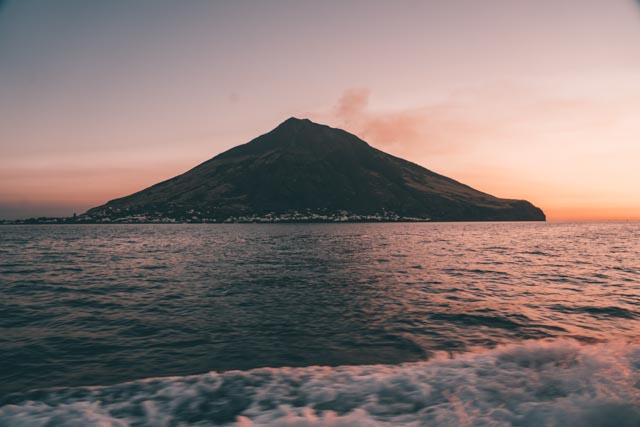
The Stromboli volcano in Italy has been erupting almost continuously for over 2,000 years. Locals call it Iddu — “him” in Sicilian dialect — the way you’d refer to someone who’s always in the room. Because he is. You see him from every corner of the island. You hear him at night. And when the sky darkens and orange lava arcs against black rock, you understand why ancient sailors called Stromboli the Lighthouse of the Mediterranean.
This is my complete guide to visiting Stromboli Island in Sicily — everything I wish I’d known before I stepped off that hydrofoil.
- Why Stromboli Is Unlike Any Other Aeolian Island | Sicily
- How to Get to Stromboli
- The Stromboli Volcano Hike: What You Need to Know
- Watching the Eruptions by Boat — Sciara del Fuoco at Night
- Things to Do in Stromboli Beyond the Volcano
- Where to Eat in Stromboli Island | Sicily
- Where to Stay on Stromboli — My 3 Hotel Recommendations
- Ginostra: The Hidden Village on the Other Side
- Practical Tips for Visiting Stromboli Island | Sicily
- FAQ Stromboli Island | Sicily
- My Final Thoughts on Stromboli | On the move
Why Stromboli Is Unlike Any Other Aeolian Island | Sicily
I’ve said this before and I’ll say it again: every island in the Aeolian archipelago has its own temperament. Panarea is effortlessly chic. Salina is soft and green. Lipari is the social one, always up for an aperitivo.
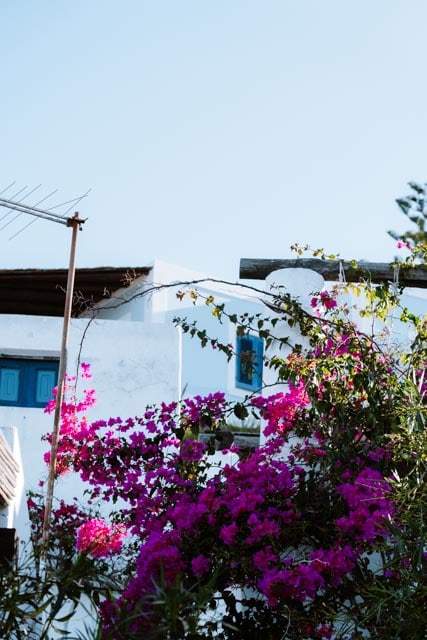
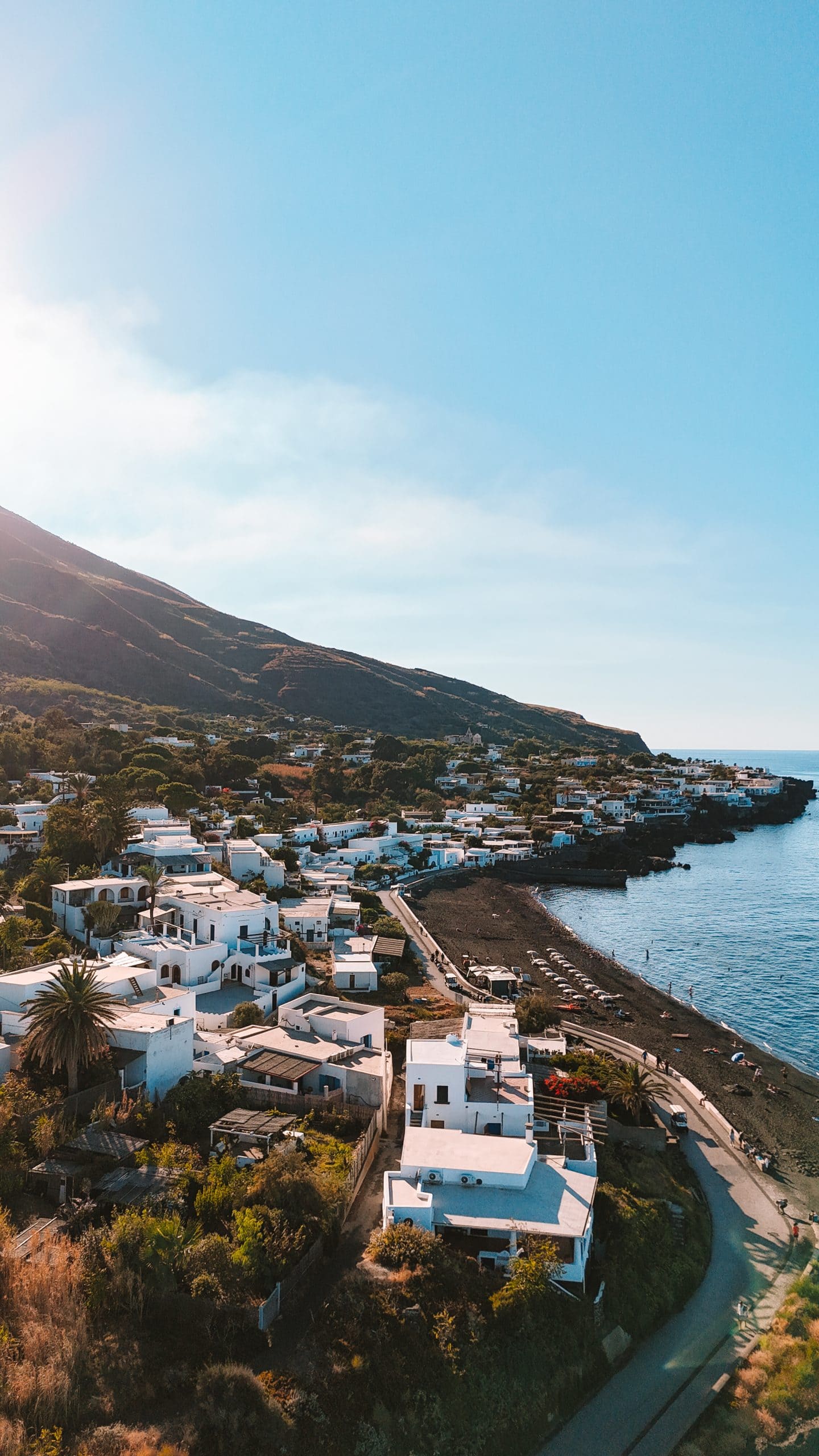
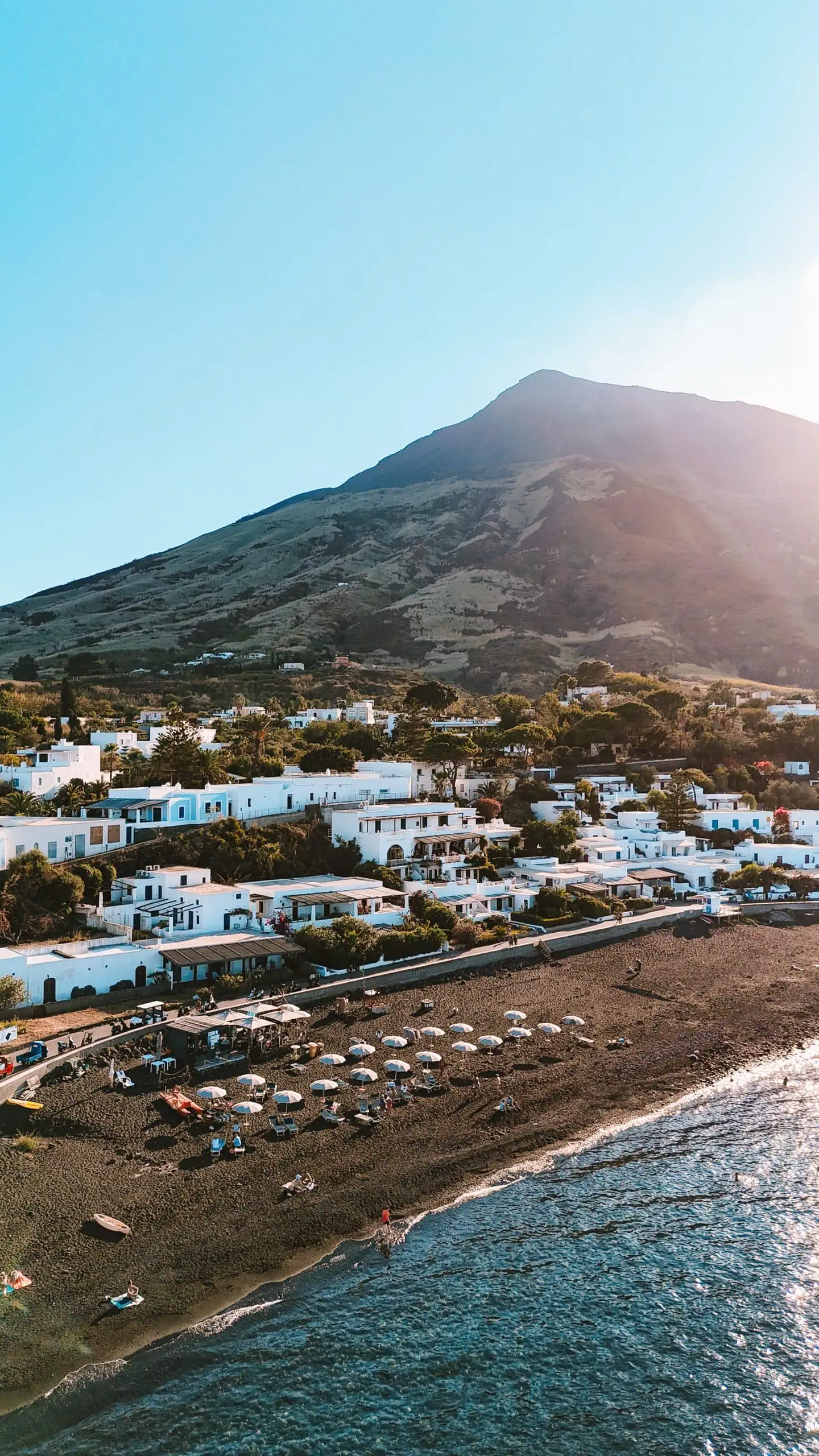
Stromboli is none of those things. Stromboli is raw. Wild. A place where nature is still very much in charge. There are no cars here — only electric golf carts humming through narrow lanes. No streetlights either, by design. At night, the village of San Vincenzo goes almost completely dark, and the only light comes from the volcano above. The effect is surreal: a small cluster of whitewashed houses with bougainvillea-draped walls, black sand beaches, and above it all, the mountain that never sleeps.
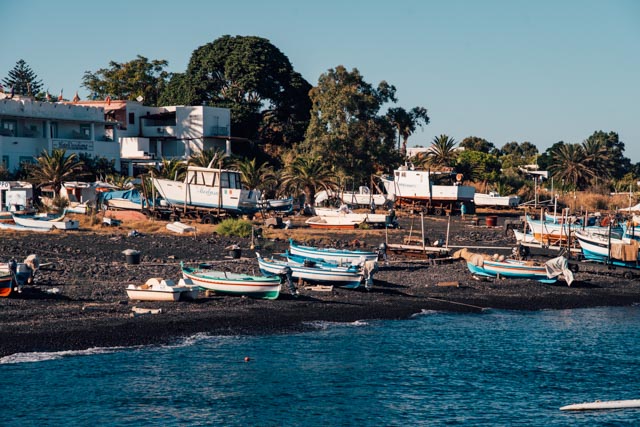
Around 400 people live here year-round. That number swells in summer, when day-trippers arrive from Milazzo, Lipari, and even Taormina. But spend a night — or better yet, three — and you’ll see a different Stromboli. The one that wakes up at dawn, that smells like sea salt and espresso, where fishermen still pull their boats onto the black shore and the baker on Via Roma has your cornetto ready before you’ve decided what to do with your morning.
This is not a tourist island that happens to have a volcano. This is a volcano that happens to have a village on it. And that distinction matters.
How to Get to Stromboli
Getting to Stromboli Island is part of the adventure — and part of the planning you absolutely cannot skip when traveling to Sicily.
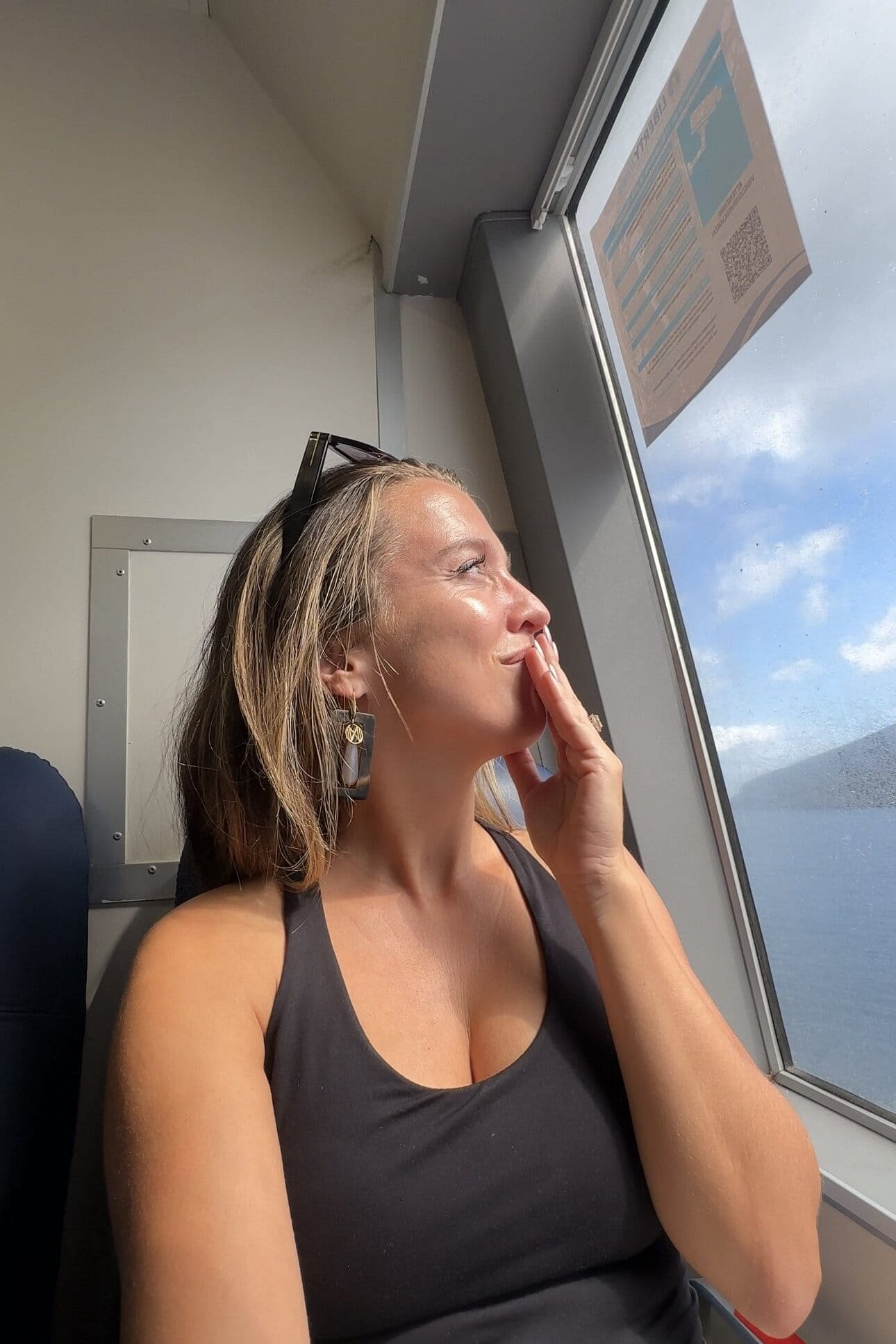
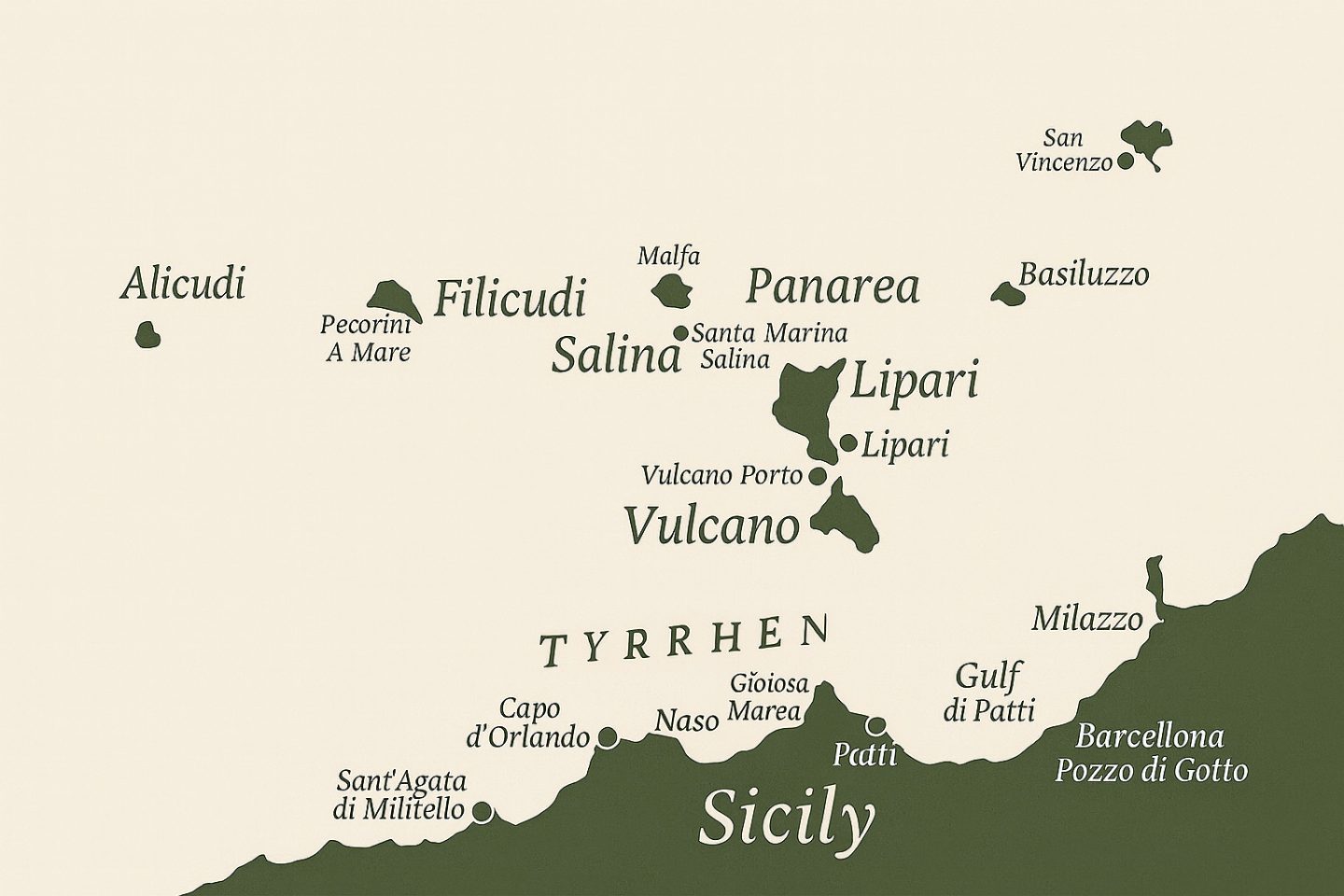
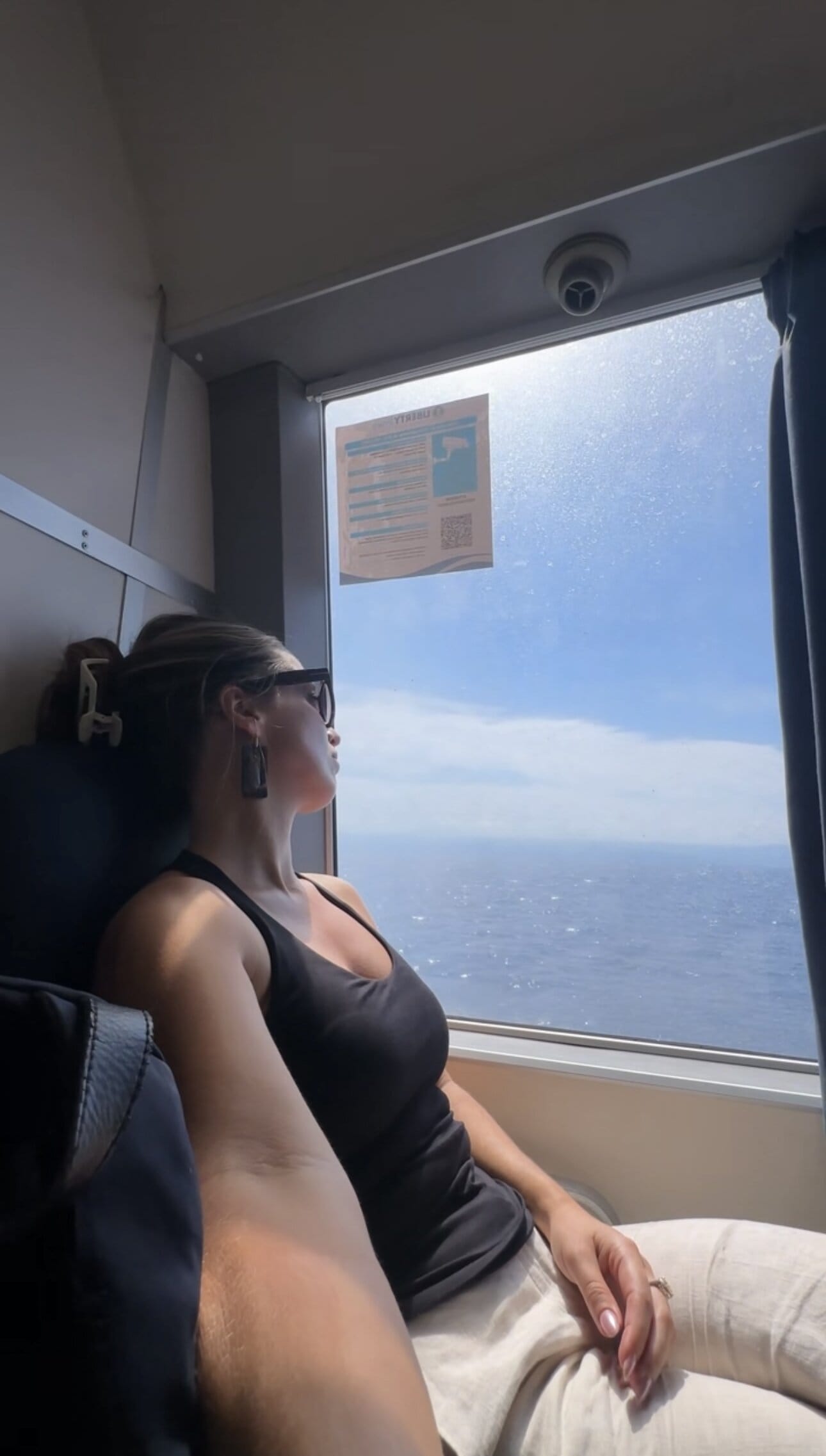
From Milazzo (most common route): The main gateway to Stromboli and any other Aeolian Island is Milazzo, on Sicily’s northeastern coast. Liberty Lines operates hydrofoils that reach Stromboli in about 2.5 to 3 hours, with stops at Lipari and sometimes Panarea along the way. Ferries (Siremar) are slower — roughly 5 hours — but they’re cheaper and a beautiful ride if the weather is on your side.
From Catania Airport: Fly into Catania, then take the Giuntabus shuttle directly to Milazzo port (about 2 hours). I did this exact route, catching an early flight from Amsterdam and stepping onto the hydrofoil by mid-afternoon. Book the Giuntabus in advance — they fill up in summer.
From Naples: There’s an overnight ferry from Naples to the Aeolian Islands operated by Siremar. You board in the evening, sleep in a cabin, and wake up to the islands. Stromboli is actually the first stop. Pure magic if you’re coming from the mainland.
From Lipari or Salina: If you’re already island hopping (which I’d strongly recommend), hydrofoils connect the islands multiple times per day in high season. Lipari to Stromboli is about 1.5 hours. Salina to Stromboli about 1 hour.
Pro tip: Always check Liberty Lines schedules the day before. Hydrofoils can be cancelled due to wind and sea conditions, especially in shoulder season. Have a backup plan and don’t schedule a flight home the same day you plan to leave Stromboli.
The Stromboli Volcano Hike: What You Need to Know
This is the reason most people come — and the experience that stays with you longest.
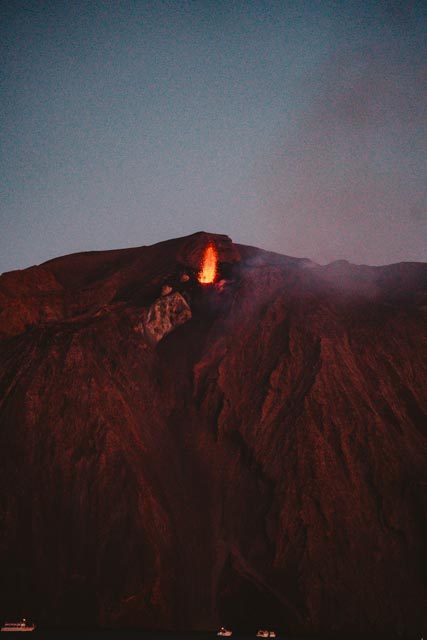
The Stromboli volcano stands 924 meters above sea level, and it erupts every 15 to 20 minutes. Not violently, not dangerously (from the designated viewpoints), but with a deep, guttural boom followed by a fountain of incandescent lava shooting into the sky. At night, it’s one of the most spectacular natural shows on the planet.
The guided hike to 400 meters: Since the major eruptions in 2019, independent hiking above 290 meters is prohibited. To reach the 400-meter viewpoint — the official observation platform overlooking the Sciara del Fuoco — you must go with a licensed volcanological guide. Companies like Magmatrek and Il Vulcano a Piedi operate daily sunset Stromboli volcano tours — the most popular guided tour on the island.
The hike itself takes about 2 hours up, with roughly 90 minutes at the viewpoint to watch the eruptions after dark, and then a descent with headlamps. The path starts near the church of San Vincenzo and climbs through Mediterranean macchia before hitting a barren, sandy switchback section. It’s not technical, but it is steep, and the loose volcanic sand makes it feel harder than the altitude suggests.
What to expect at the top: You sit on a ridge, and below you — just a few hundred meters away — the crater belches fire. You feel the rumble in your chest before you hear it. Then a column of orange lava rises, pauses for a split second at its peak, and cascades down the Sciara del Fuoco into the sea. Sparks fly. Rocks glow. The entire group goes silent. Then someone whispers “Dio mio” and you realize you’ve been holding your breath. This is, without question, the most unforgettable Stromboli volcano hike you’ll ever do.
I’ve seen the Northern Lights. I’ve watched elephants cross the Chobe River at sunset. But watching Stromboli erupt from 400 meters away, with nothing but stars above and fire below — that’s in a league of its own.
What to bring to Stromboli island and to Sicily in general:
- Sturdy hiking boots (you can rent these in town if needed — around €5)
- A headlamp (essential for the descent in the dark)
- Long trousers and a warm layer — it gets cold at 400 meters after sunset, even in July
- At least 1.5 liters of water
- A helmet (provided by the guide)
- Camera with decent low-light capability
Book Stromboli volcano tour in advance. Groups are capped in size and the hikes sell out, especially in July and August. I’d recommend booking at least 3–5 days ahead in high season.
Fitness level: Be honest with yourself. This is not a casual stroll. The guides say “moderate fitness,” but the combination of heat, altitude, and loose terrain makes it genuinely challenging. If you have knee problems or haven’t hiked recently, consider the boat alternative (next section).
Download the trail before you go. Cell signal on Stromboli’s slopes is unreliable at best, so I always download my hiking routes in advance. You can find the full Stromboli summit trail on AllTrails with elevation profiles, recent hiker photos, and up-to-date condition reports — especially useful since volcanic terrain shifts between seasons. Download it offline before you leave your hotel, and you’ll have the route on your phone even when the signal drops.
Watching the Eruptions by Boat — Sciara del Fuoco at Night
If the hike isn’t for you — or even if it is — the boat tour of Stromboli volcano tour at night deserves its own evening.
The Sciara del Fuoco (Stream of Fire) is a massive, near-vertical scar running from the crater down to the sea on Stromboli’s northwestern face. During eruptions, glowing rocks tumble down this slope and hiss into the water. From a boat just offshore, you watch it unfold from sea level — a completely different perspective from the hiking viewpoint above.
Most evening boat tours depart around sunset, circle the island, and then anchor off the Sciara del Fuoco as darkness falls. The eruptions are most visible between 9 PM and midnight. Some tours include a stop at Strombolicchio — the dramatic rock stack topped with a lighthouse about 1.5 km northeast of the island. It’s the eroded remnant of an ancient volcanic vent, older than Stromboli itself.
I did both the hike and the boat tour on separate nights, and honestly? Both are unmissable. The hike gives you the raw, physical, “I’m standing on a live volcano” feeling. The boat gives you the cinematic wide shot — fire reflected on black water, the silhouette of the island, the sound of the sea mixing with the volcano’s growl.
Book through local operators at the port. Prices hover around €25–35 per person. Some tours include an aperitivo.
Things to Do in Stromboli Beyond the Volcano
Yes, the volcano is the main event. But Stromboli has more layers than most visitors discover.
Walk the black sand beaches. Spiaggia di Ficogrande and Spiaggia Lunga are the most accessible. The sand is fine and volcanic — deep black, almost glittering in the sun. The water is crystalline but drops off steeply, so bring water shoes and be cautious with currents. Forgia Vecchia beach is harder to reach (a 15-minute walk from town) but worth it for the solitude.
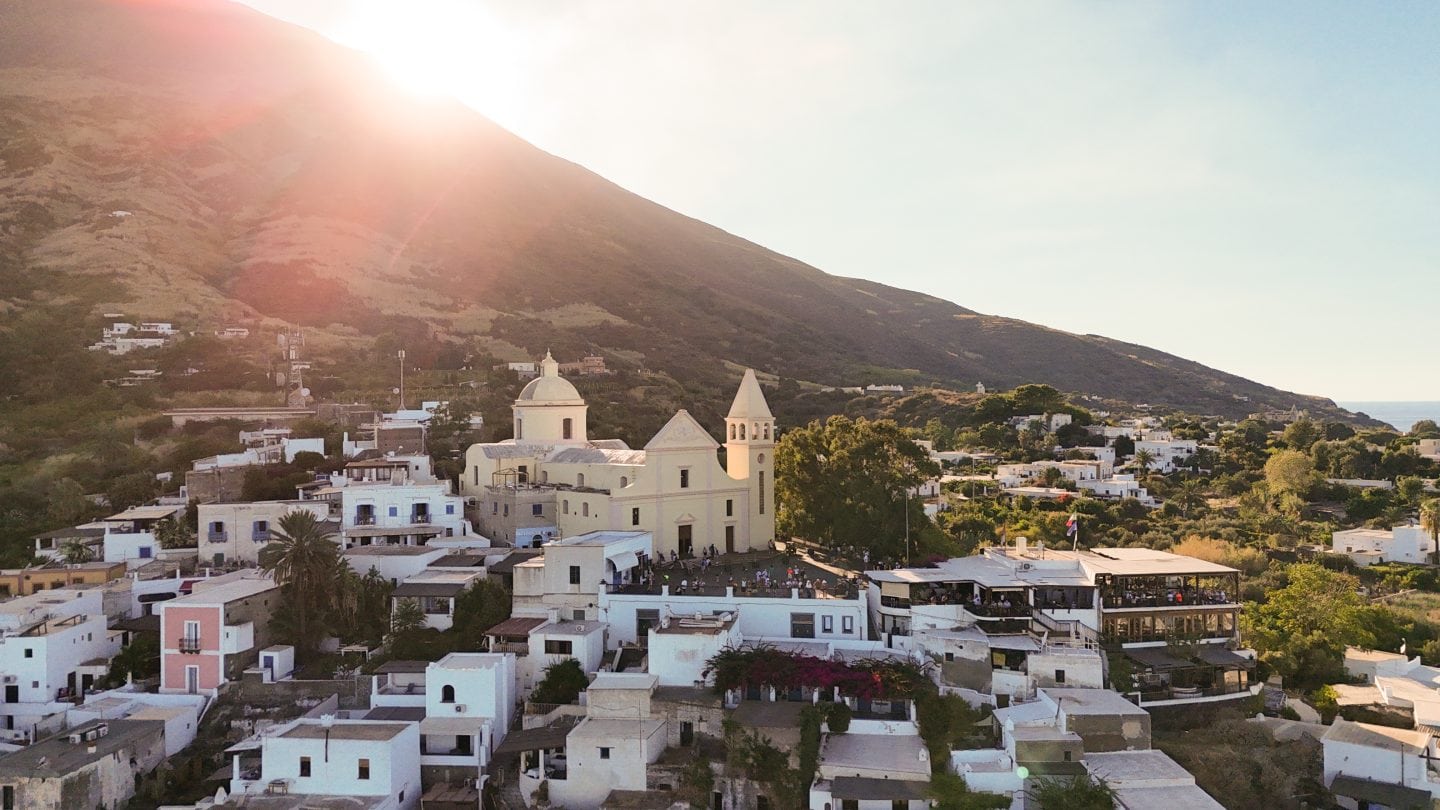
Explore San Vincenzo village on foot. There’s exactly one main street, and it’s barely wider than a golf cart. Whitewashed houses spill over with jasmine and caper plants. The church of San Vincenzo anchors the village — its bright white facade is the last thing you see from the ferry as you leave. Pop into the small Cinema Museum dedicated to Roberto Rossellini’s 1950 film Stromboli, terra di Dio — the movie that made the island (and the affair between Rossellini and Ingrid Bergman) world-famous.
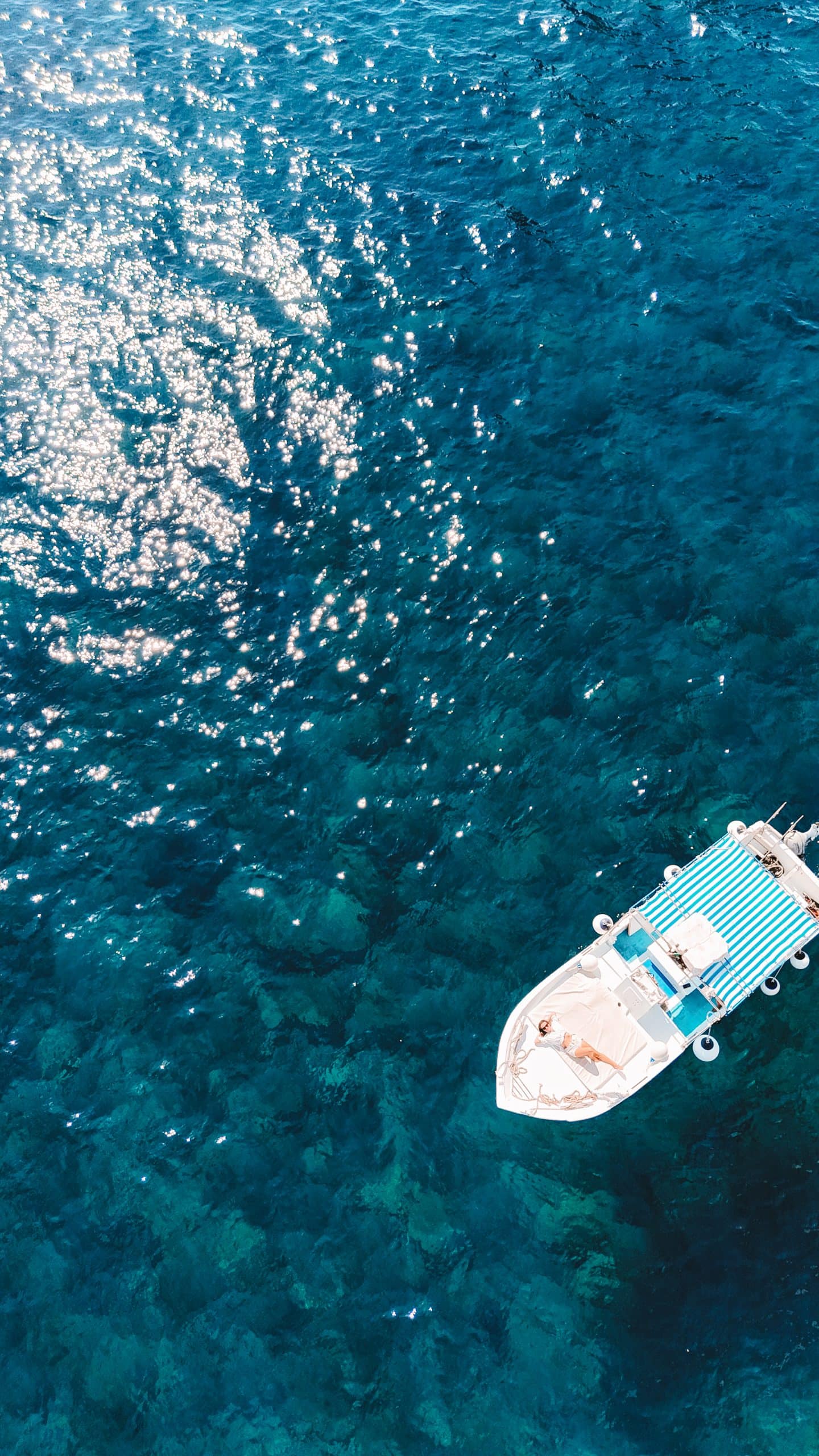
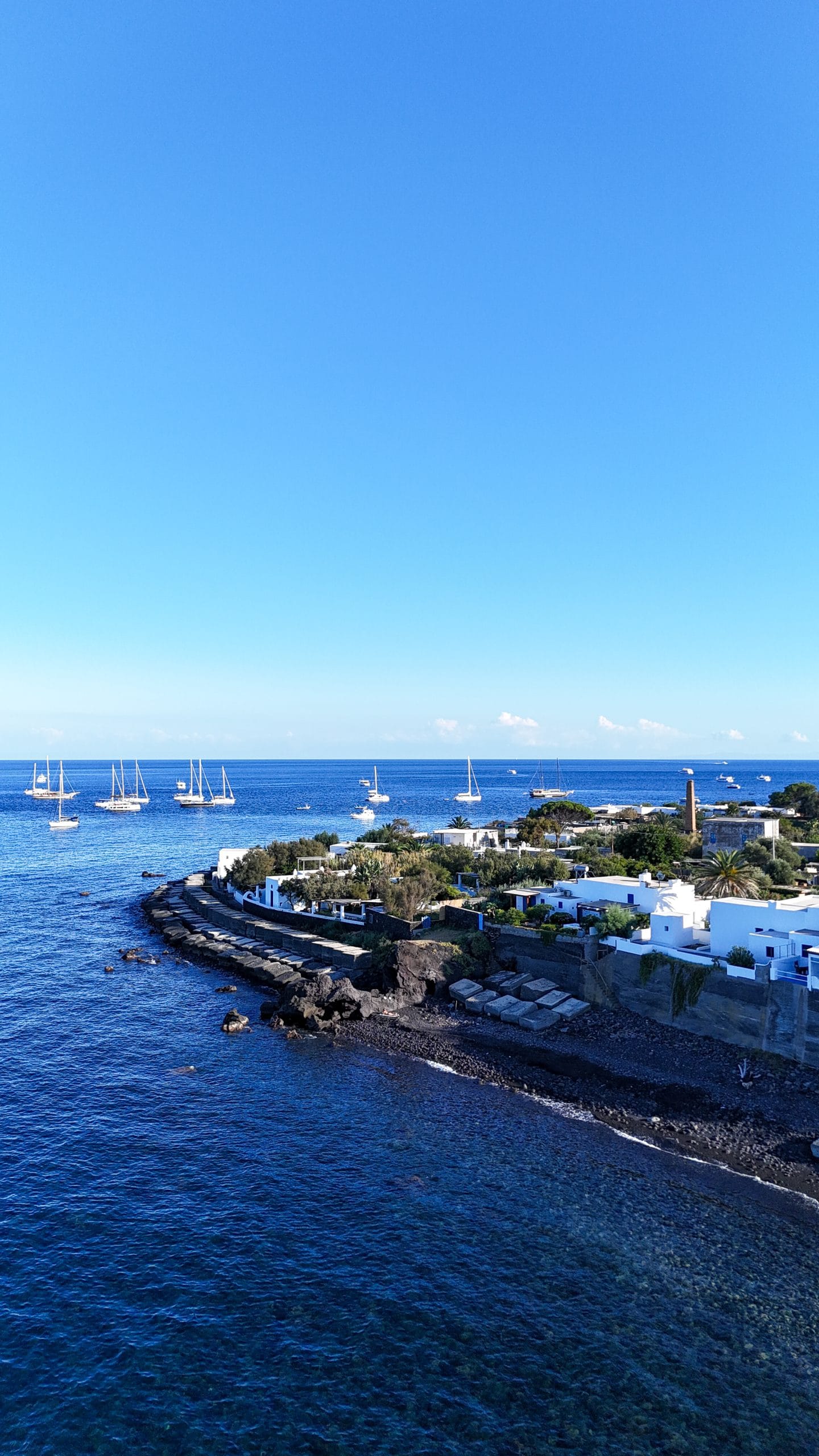
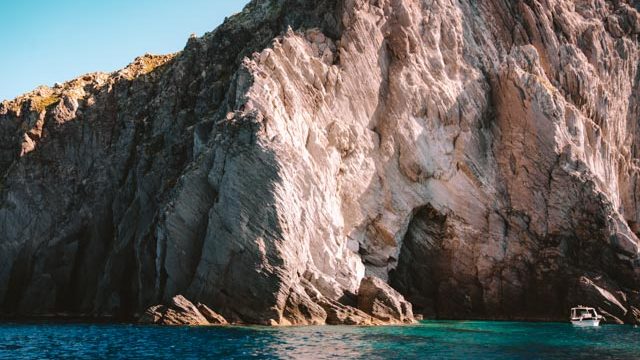
Rent a boat for the day. Small boats are available for hire at the port — no license needed for the smaller ones. Circle the island at your own pace, stop for a swim at the base of Strombolicchio, and find hidden coves that you’ll have entirely to yourself. This was one of my favourite days in the entire Aeolian Islands.
Swim at Strombolicchio. If your boat tour or rental takes you here, jump in. The water around this ancient volcanic rock is some of the clearest I’ve experienced in the Mediterranean. The rock itself rises straight up like a medieval castle from the sea, with a tiny lighthouse on top.
Hike to the old observatory (290m, no guide required). If the full 400-meter guided hike doesn’t suit you, the trail to the Punta Labronzo observatory is open independently. The views of the Sciara del Fuoco from here are still impressive, and the walk takes about an hour each way. Start from Piscità and follow the mule track. I’d recommend checking the trail on AllTrails beforehand — the reviews include recent condition updates, which matters on a volcano where the path can change between seasons.
Watch the sunset from Piscità. The western side of the island faces directly into the sunset. Bring a bottle of Malvasia, sit on the rocks, and let the sky do its thing. No filter needed.
Where to Eat in Stromboli Island | Sicily
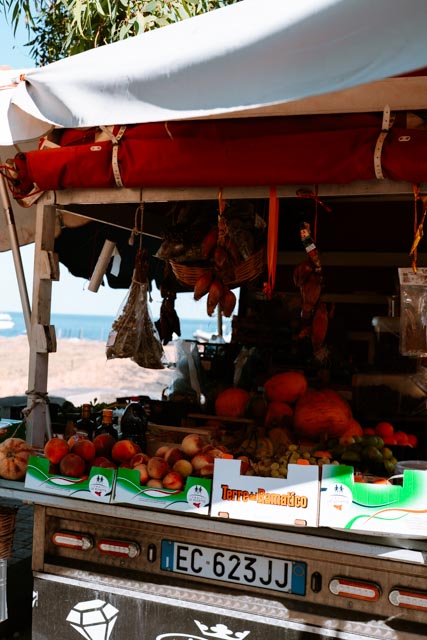
Stromboli Island has a handful of restaurants — Sicily’s best-kept culinary secret — and they are almost universally good. Because there’s nowhere to hide when your fish was swimming that morning and your tomatoes were on the vine yesterday.
Osservatorio sits at the top of the village with a panoramic terrace overlooking the sea. Their pizza is legendary on the island, but the real star is the grilled catch of the day. Book ahead in summer — there are only a handful of tables with the best views.
Ritrovo Ingrid (named after Ingrid Bergman, obviously) is the casual meeting point for everyone on the island. The spaghetti alla strombolana — capers, olives, cherry tomatoes, and anchovies — is the dish to order. Pair it with a cold Birra Messina and you’ve got the perfect post-hike meal.
Il Canneto is where the locals go, and that should tell you everything. Fresh seafood, no fuss, generous portions. The bruschetta with caper pesto is worth mentioning to your friends.
La Tartana on the beach at Ficogrande is more of a bar than a restaurant, but their aperitivo with Malvasia delle Lipari wine and a plate of local olives while the sun drops behind the sea is one of those travel moments you’ll replay in your head for years.
Pro tip: Prices on Stromboli are higher than the other Aeolian Islands — expect to pay €15–25 for a main course. Everything arrives by boat, including your dinner’s ingredients. It’s worth it.
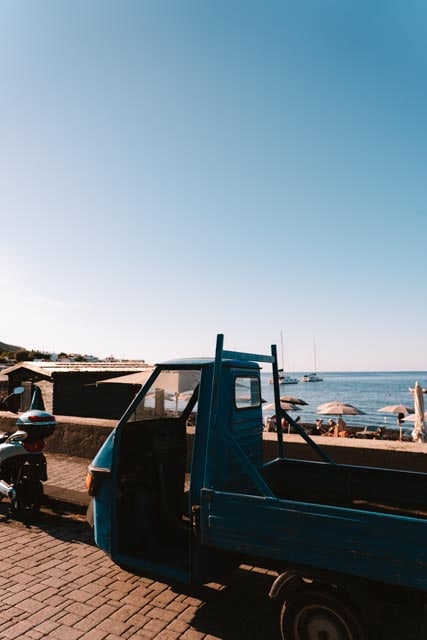
Where to Stay on Stromboli — My 3 Hotel Recommendations
Hotels and accomodation on Stromboli are limited, charmingly so. There are no large resorts, no chain hotels — just small properties that reflect the island’s intimate scale. Book early if you’re visiting between June and September.
La Sirenetta Park Hotel — For the Slow Luxury Traveler | Stromboli hotels
This is the closest thing Stromboli has to a proper upscale hotel. Set right on the waterfront near Ficogrande beach, La Sirenetta has a swimming pool overlooking the sea, a well-regarded restaurant, and rooms with terraces that face either the volcano or the open water. The gardens are lush — bougainvillea, palms, and jasmine everywhere — and the atmosphere is exactly what slow travel should feel like: unhurried, elegant, and rooted in place. It’s the kind of hotel where you might cancel your afternoon plans because the lounger by the pool is too perfect to leave.
Best for: Couples and anyone who wants comfort without losing the island’s wild spirit.
Il Gabbiano Relais — For the Design-Conscious Traveler | Stromboli hotels
A converted dance club turned boutique apartment-hotel (yes, really), Il Gabbiano Relais is one of the most architecturally interesting stays in the Aeolian Islands. The property uses organic furniture, linen, and cleaning products throughout, and each apartment comes with a kitchen, private terrace, and daily breakfast basket delivered to your door. The outdoor pool with hydromassage is a welcome luxury after a volcano hike. It’s about a 15-minute walk from the port — far enough for peace, close enough for convenience.
Best for: Design lovers, self-catering travelers, and anyone who values sustainability.
Hotel Ossidiana — For the Perfectly Located Base | Stromboli hotels
Steps from the main beach and right in the heart of the action, Hotel Ossidiana is where most returning visitors stay. The rooms are simple but clean, with the kind of no-nonsense Aeolian charm that doesn’t try to be anything it’s not. What sells this place is the location — the beach is at your feet, the port is a five-minute walk, and the volcano trail starts just up the road. The staff are famously helpful with booking excursions and restaurant tips.
Best for: First-time visitors, hikers, and anyone who wants to be in the middle of everything.
Check out more Stromboli hotels here:
Ginostra: The Hidden Village on the Other Side
On the opposite side of the island from San Vincenzo, accessible only by sea, sits Ginostra — a village of roughly 30 year-round residents, no roads, and what claims to be the smallest port in the world. The arrival alone is an experience: your small boat squeezes through a narrow rock opening barely two meters wide.
Ginostra feels like stepping 50 years back in time. Narrow paths wind between stone houses, donkeys carry supplies up the hillside, and the only sounds are waves, wind, and birdsong. There are a couple of tiny restaurants and a handful of rental properties, but mostly there is silence and sky.
If you want to experience what Stromboli was before tourism — raw, isolated, magnificently quiet — hire a boat to Ginostra for half a day. Swim in the crystalline water below the village, eat lunch at one of the two trattorias, and take the path up to the viewpoint overlooking the Sciara del Fuoco from the west. Then head back before dark, because there are truly no lights here at all.
Best Time to Visit Stromboli
May to mid-June and September to mid-October are the sweet spots. The weather is warm enough for swimming (water temperature around 20–24°C), the volcano hikes run daily, and the island isn’t overrun with day-trippers. This is exactly what slow travel looks like — choosing the season that lets the island reveal itself at its own pace, without competing for a restaurant table or a spot on the hiking group.
July and August in Stromboli bring crowds and heat. Temperatures push past 35°C, the hiking groups are full, and hotels books out months in advance. If this is your only window, book everything early and plan your activities for early morning or late evening.
Late October through March in Stromboli is quiet — too quiet for most visitors – many restaurants and hotels close. Ferry schedules are reduced. But the volcano keeps erupting regardless, and if you can handle cooler weather and limited services, you’ll have Stromboli almost entirely to yourself.
One key consideration: The guided summit hike can be cancelled due to volcanic activity or weather. If the volcano is in a heightened eruption phase, access above 290 meters may be restricted. This happened several times in recent years. Don’t plan your entire trip around a single summit attempt — build in at least two possible hiking evenings.
Practical Tips for Visiting Stromboli Island | Sicily
How many nights? I’d say two minimum, three ideal. One evening for the boat tour, one for the hike, and one to simply exist on the island without an agenda. Day-trippers see the surface. Overnight guests see the soul.
Cash: Bring it. There’s no ATM on Stromboli. Some restaurants accept cards, but several don’t. I’d recommend having at least €100–150 in cash per person per day.
Electricity and Wi-Fi: Both exist but can be unreliable. Don’t expect high-speed anything. Consider it a feature, not a bug.
Packing essentials for Stromboli: Headlamp (for walking at night — the streets have no lights), water shoes (for the rocky beaches), a good camera with low-light settings, reef-safe sunscreen, and layers for the volcano tour.
Getting around: On foot or by electric cart. That’s it. The island is small — you can walk from one end of the village to the other in 15 minutes.
Language: Italian, with a strong Sicilian accent. Very little English is spoken outside the hotels and guide companies. Learn a few basics — buongiorno, grazie, il conto per favore — and you’ll be met with warm smiles.
Safety: Stromboli is an active volcano, and the Civil Protection authority monitors activity 24/7. Follow all posted restrictions. Never hike above the permitted limit without a guide. The Sciara del Fuoco slope is completely off-limits. The volcano is beautiful, but it’s not a theme park — respect it.
FAQ Stromboli Island | Sicily
Yes. The island has been inhabited for thousands of years, and eruptions are monitored continuously. The village is located on the opposite side of the island from the Sciara del Fuoco, and the guided hikes stay within established safety zones. That said, volcanic activity can intensify — in 2019, there was a major paroxysm that temporarily halted tourism. Always check current conditions before traveling.
You can hike independently up to approximately 290 meters (the old observatory level). Above that, a licensed volcanological guide is required. Do not attempt to go higher alone — it’s both illegal and dangerous.
Two to three nights is ideal. This gives you time for the volcano hike, a boat tour, beach time, and the slow village experience that makes Stromboli special.
More so than the other Aeolian Islands, yes. There’s no budget accommodation to speak of, and restaurant prices reflect the island’s isolation. But it’s not luxury-island expensive — more “small Italian island where everything arrives by boat” expensive. Budget €150–250 per day for a couple including accommodation, meals, and one activity. Same goes for Stromboli hotels.
Technically yes — tour operators run day trips from Lipari, Milazzo, and even Taormina. But I’d strongly advise against it. You’ll spend most of your day on boats, have a rushed few hours on the island, and miss the evening eruptions entirely. Stromboli deserves more than a flyby.
Both the guided hike to 400 meters on Stromboli and the nighttime volcano boat tour around Stromboli are spectacular. If you can only choose one, the hike is the more immersive experience. If you can do both, do both — they offer completely different perspectives.
Stromboli is the Northeastern most of the seven Aeolian Islands, a volcanic archipelago in the Tyrrhenian Sea off the northern coast of Sicily, Italy. It sits about 80 km from mainland Sicily and 60 km from Lipari.
My Final Thoughts on Stromboli | On the move
I arrived on Stromboli thinking I’d already seen the best the Aeolian Islands had to offer. I’d spent days on Lipari’s back roads, evenings on Salina’s vineyard terraces, and mornings on Vulcano’s smoking crater. I thought I knew what these islands were about.
Then Stromboli erupted — literally — and reminded me that some places don’t reveal themselves gently. This island doesn’t ease you in. It confronts you with fire and darkness and the uncomfortable reminder that the Earth is very much alive. And then, the next morning, it hands you a perfect espresso and a view of black sand meeting turquoise water, and you think: I could stay here forever.
I didn’t stay forever. But I’ll be back. The Aeolian Islands aren’t done with me yet — and if you’ve read this far, I suspect they’re not done with you either.
» Explore all seven islands in my complete Aeolian Islands guide
» Read my guides to Lipari, Salina, Vulcano, and Panarea.
Pin this guide for later — and if Stromboli makes it onto your list, I’d love to hear about your experience.

Hi, I’m Lisa, the Dutch blogger behind Dutchbloggeronthemove — a luxury slow travel platform built on the belief that the best journeys happen at a pace that lets you actually remember them.
She has lived in Mallorca for over three years, visited Lake Garda 35+ times since childhood, and spent years exploring South Africa’s wine regions until she knew them the way locals do. She travels with her partner and her Labrador Buddy, and she still returns to her favourite destinations four or more times a year — because one visit is never enough to write about a place honestly.
Everything published here starts from personal experience. That’s the only kind worth reading. ♥
