

I’ve always believed every island has its own temperament. A mood. A rhythm. A way it meets you at the harbor and quietly decides what kind of version of yourself you’ll be there. And as most of you know by now – I’m a little obsessed with islands. This year, I finally had the chance to explore all of the Aeolian sisters. Lipari with its easygoing buzz, Vulcano with its raw, smoky edges, Salina with that soft, green elegance. And then there was Panarea – the tiniest island, glossiest, most talked-about one of them all in Sicily.
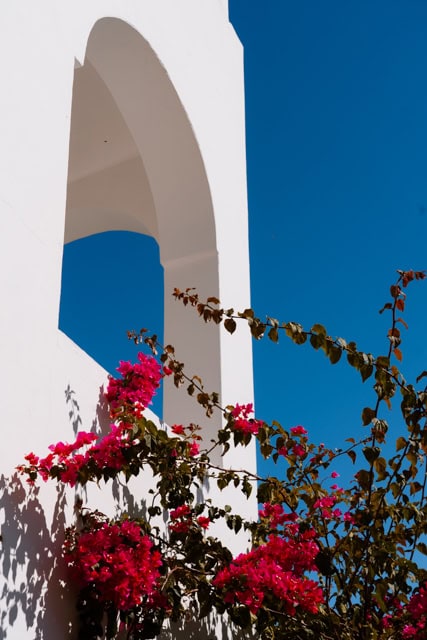
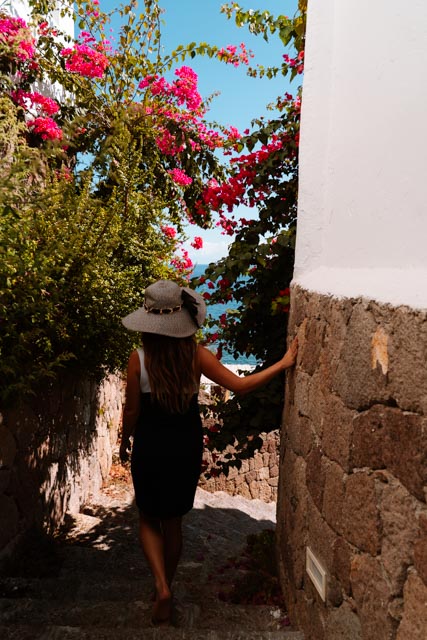
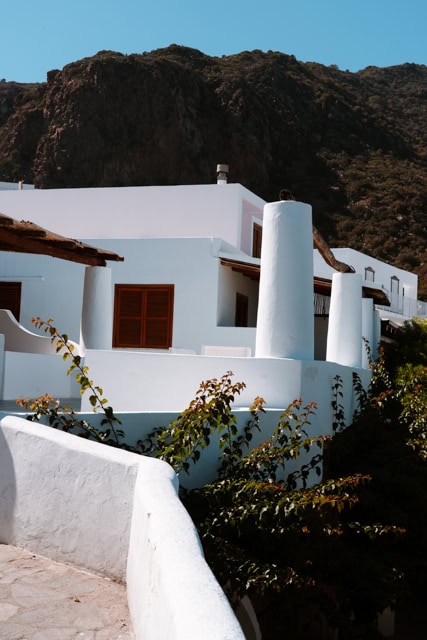
Chic is the first word that comes to mind. Not the loud, look-at-me kind, but the quiet kind that shows up in details: a whitewashed house with blue shutters, linen shirts drying in the breeze, bougainvillea spilling over a low wall. The moment I stepped off the ferry in San Pietro, I felt that familiar Aeolian light bouncing off every wall.
Panarea is tiny, polished, and undeniably chic – but not in a pretentious way. It’s the kind of elegance that comes from simplicity. Linen fluttering in the wind. Big terracotta pots lined up outside someone’s kitchen door. The sound of a fishing boat in the distance. All these little things reminded me, over and over again, why I travel this way – slowly, with time to actually notice them. And I would love for you to experience Panarea like that too.
Wander around the island
I wandered the lanes with no particular purpose, which is exactly how this island should be explored. It’s small enough that you’ll eventually end up on the same street twice, walk past the same little boutiques again, and start recognizing familiar faces after a day or two.
At lunch I found myself on a terrace overlooking the water – grilled tuna, a plate of caponata, and a granita so cold it made me laugh out loud. The whole moment felt like slipping into the kind of summer you think only exists in Italian movies. Panarea isn’t a place of big, dramatic “must-sees”. It’s an island for mood, for long boat days, for barefoot evenings and salty hair. For a little bit of dolce far niente – but make it chic.
Let me take you there. Let’s go On the move
Table of contents | On the move
- Why Visit Panarea Island (Sicily)
- Getting to Panarea: Ferries, Routes & First Arrival
- First Impressions: San Pietro & Island Rhythm
- Boat Days Around Panarea: Basiluzzo, Dattilo & the Little Sisters
- Beaches & Swimming Spots on Panarea
- Hiking & Viewpoints: Punta del Corvo & Capo Milazzese
- Where to Eat on Panarea Island
- Where to Stay on Panarea: Chic Hotels & Quiet Corners
- Day Trips from Panarea: Stromboli by Night & the Other Aeolian Islands
- Getting Around Panarea (Car-Free Bliss)
- Practical Tips for Visiting Panarea Island Sicily
- Frequently Asked Questions About Panarea
- On the Move to Panarea – My Reflection
Why Visit Panarea Island (Sicily)
If Salina is the green, refined sister and Stromboli is the dramatic one, then Panarea is the glamorous younger sibling who somehow still feels laid-back when you get to know her.
On paper, Panarea is tiny – just over 3 square kilometers, one main village (San Pietro), no cars, and a handful of beaches and coves. In reality, it feels much bigger, because life here spills out onto the sea. Boats, bays, satellite islets, long days anchored off rocky headlands – that’s where the real island lives.
People often talk about Panarea as the “exclusive” Aeolian island: yachts, designer kaftans, discreet famous faces behind sunglasses. That side exists, especially in high summer, and you’ll definitely feel it around sunset at Raya or along the harbor in August.
But there’s another side that I fell for more:
- barefoot kids racing down whitewashed steps
- the smell of figs and wild capers in the heat
- older locals sitting on low walls chatting in dialect
- boats tied together in little floating parties off Lisca Bianca
- that feeling that everyone who returns here year after year knows each other by name
By day, Panarea is slow, sun-drenched and almost sleepy. By night, it turns into something softer and more electric – aperitivo terraces, low music drifting over the water, a line of lights from boats anchored just offshore, Stromboli glowing in the distance.
If you love:
- islands you can explore on foot
- long lunches, simple but excellent food
- swimming in clear, deep water
- boat days that feel like they could go on forever
- a touch of chic, but still with real soul
…then Panarea is absolutely worth weaving into your Aeolian route.

Getting to Panarea: Ferries, Routes & First Arrival on the island
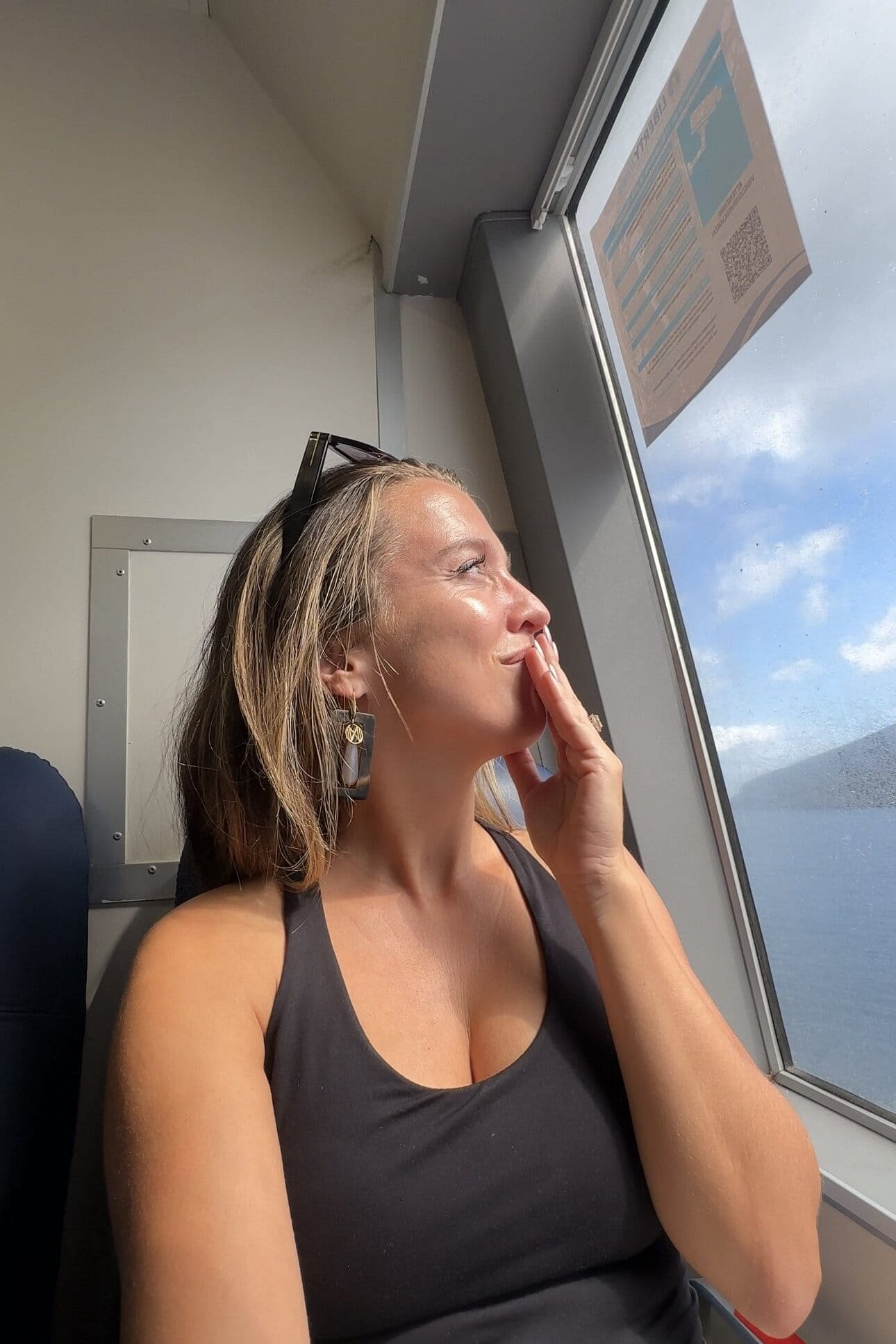
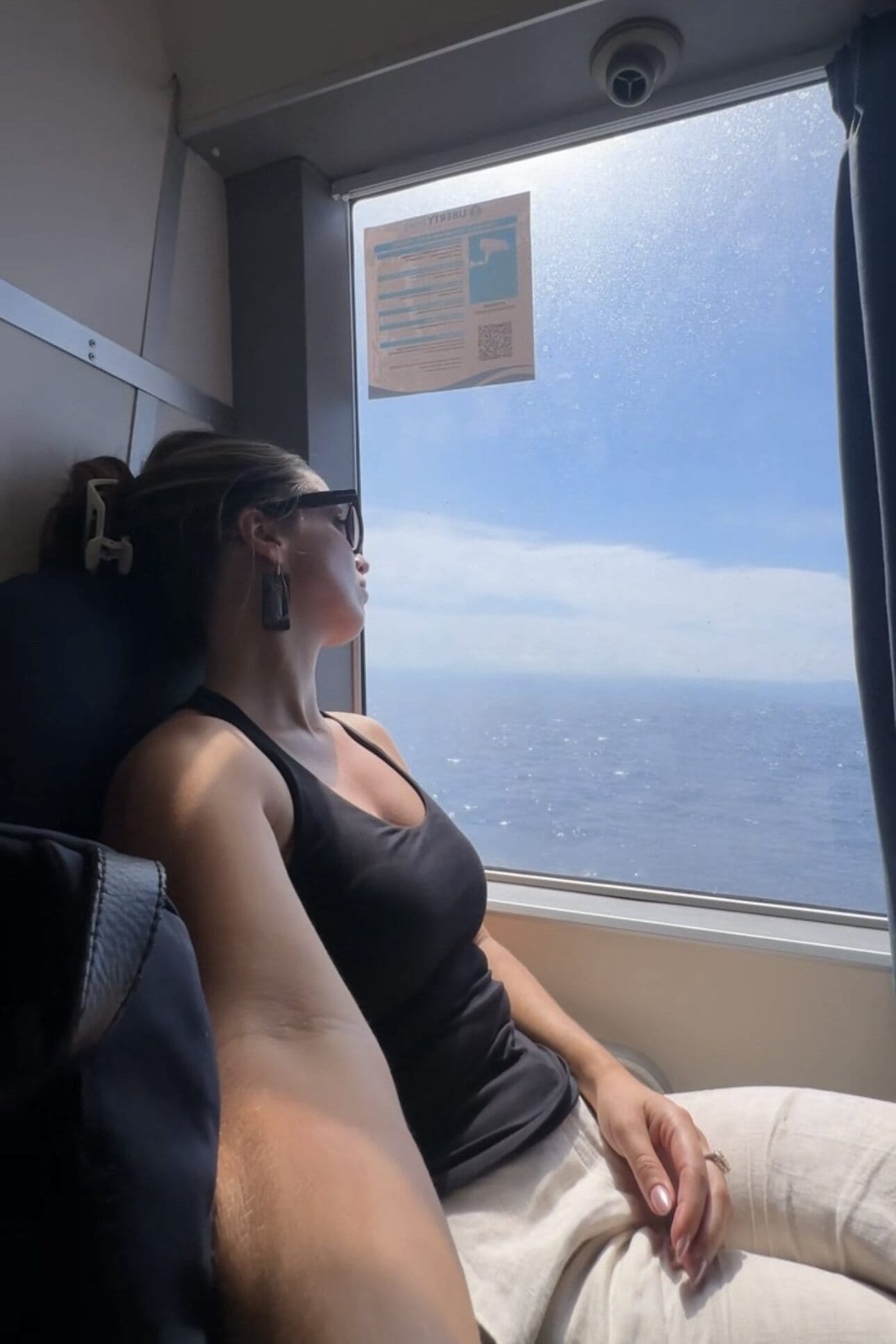
Reaching Panarea is a little journey in itself – and that’s part of the charm. These islands aren’t meant to be “quick”.
Most routes follow this rhythm:
1. Fly into Sicily
- Catania (CTA) – usually the easiest choice, with the most flights and direct buses to Milazzo.
- Palermo (PMO) – good alternative, especially if you plan to explore western Sicily too.
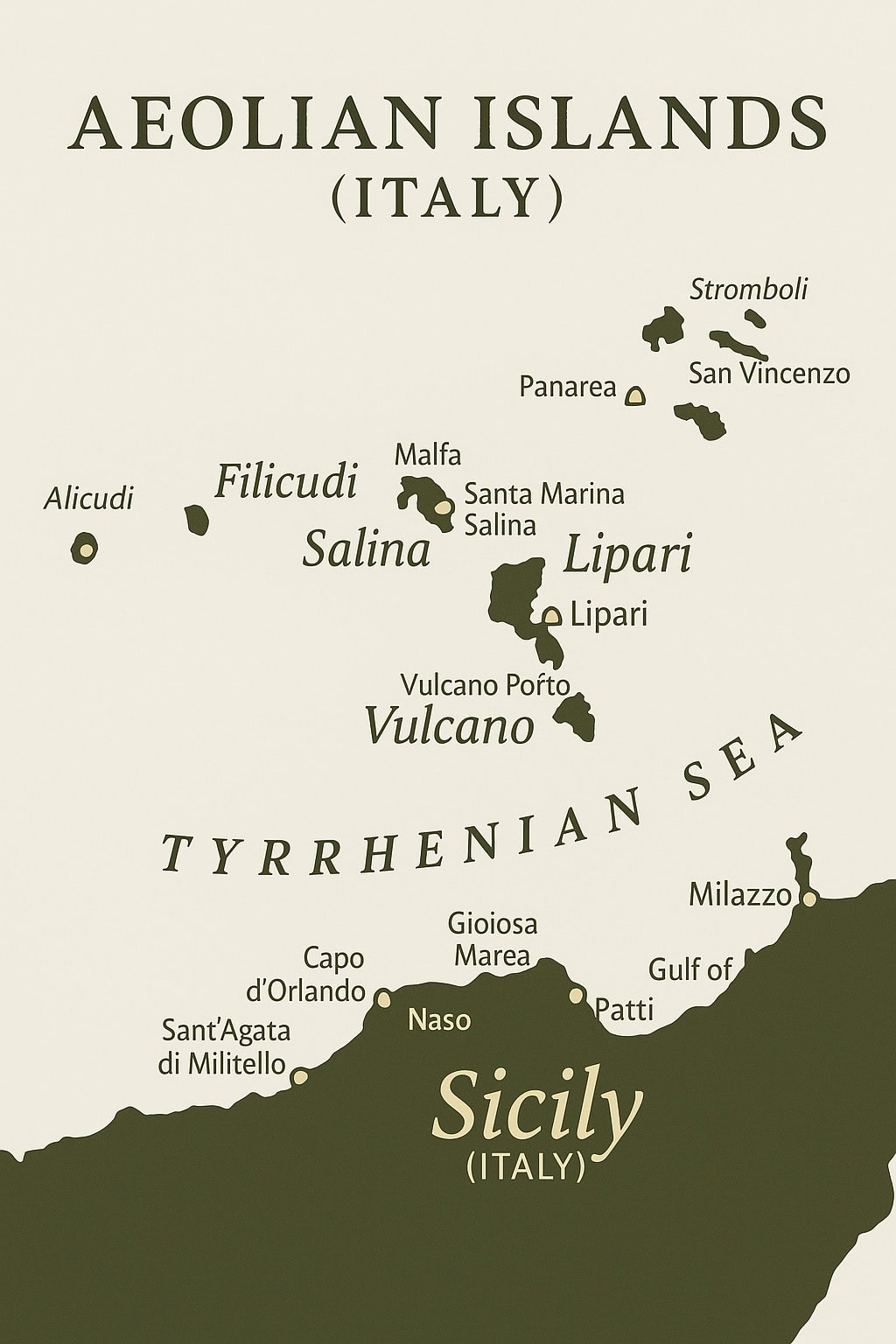
From the airport, I took a bus to Milazzo, the main gateway to the Aeolian Islands. It’s around 2 hours from Catania, slightly longer from Palermo.
2. Ferry or hydrofoil to Panarea
From Milazzo, you have:
- Hydrofoil (Liberty Lines)
- Fast and easy.
- Around 1.5–2 hours, depending on stops.
- Passenger-only.
- Ferry (Siremar)
- Slower and a bit more old-school.
- Usually cheaper, but less frequent.
- You don’t need a car anyway, so I’d just take the hydrofoil.
In summer there are also seasonal connections from Naples, Palermo, Messina and Reggio Calabria. I like to keep at least one buffer hour between flight landing and the last hydrofoil of the day – island time and tight connections are not a good match.
As you get closer, Panarea appears slowly: a low, dark volcanic outline, clusters of white houses, and then that tiny port of San Pietro where most of island life begins and ends.
The moment you step off the boat, everything slows down. No car noise. Just voices, the buzz of a golf-cart taxi, and the sea.
First Impressions: San Pietro & Island Rhythm
San Pietro is essentially Panarea’s living room. It’s where you arrive, where you buy your morning granita, where you hop on a boat, where you wander back to after dinner.
My days usually started the same way:
- granita (pistachio or mulberry) and brioche at a bar near the port
- watching boats come and go, people arriving with salty hair and big beach bags
- locals catching up in the shade, someone always knowing someone
From the port, narrow lanes lead up into the village. Everything is white, blue, pink, or green. White walls, blue doors, pink bougainvillea, green shutters. Pots of basil and geraniums, laundry lines, tiny boutiques selling linen and handmade jewelry.
Panarea is one of those places where getting lost is the plan. There are no long distances – just gentle climbs, unexpected viewpoints, glimpses of Stromboli between houses, a small church square, and terraces with that endless blue in front of them.
It’s also an island of routines:
- coffee and newspapers in the morning
- grocery bags carried home along the lanes
- boat taxis going back and forth to moorings
- kids playing outside until late
- the little shift around sunset when everyone showers off the salt and appears again, just a bit more dressed up
Even in the more polished corners, Panarea still feels like a place where people actually live, not just a backdrop. And that balance is what makes it so special.
Boat Days Around Panarea: Basiluzzo, Dattilo & the Little Sisters
If there’s one thing you have to do on Panarea, it’s a boat day. This island feels like it was designed to be lived from the water.
Just offshore, Panarea has its own “mini-archipelago”:
- Basiluzzo – a beautiful rocky islet with steep cliffs and turquoise water
- Dattilo – tall and slender, like a volcanic finger rising from the sea
- Lisca Bianca, Lisca Nera & co. – small rocky outcrops, perfect for swims and snorkelling
You can:
- Join a small-group boat tour from the port – usually 4–8 hours, with swim stops around the islets.
- Rent a small boat with a skipper – more expensive, but wonderful if you’re with friends or family and want flexibility.
- In low wind and calm seas, confident boaters sometimes rent a small gommone (inflatable boat) themselves – only if you’re comfortable on the water.
I loved those days where the whole plan was simple:
- pick up some caponata, pane cunzato and fruit from a little rosticceria near the port
- sail out towards Basiluzzo
- drop anchor in a quiet cove
- swim, nap, read, repeat
Some locals have names for all the rocks – the Whale, the Finger, the Mushroom – and they can tell you what the weather will do just by seeing which one is visible from shore. That’s the kind of sea culture I adore.
There’s also the Grotta degli Innamorati (Cave of Lovers) near Lisca Bianca. Local legend says that if you kiss inside the cave, your love will last forever. There are all kinds of stories attached to that spot – royal visits, famous couples – but honestly, even without the gossip, it’s a beautiful little cave and a sweet excuse for a moment out of the sun.
Beaches & Swimming Spots on Panarea
Panarea’s coastline is rocky, wild and dramatic. That means fewer “classic” beaches – but the ones it has are special.
Cala Junco
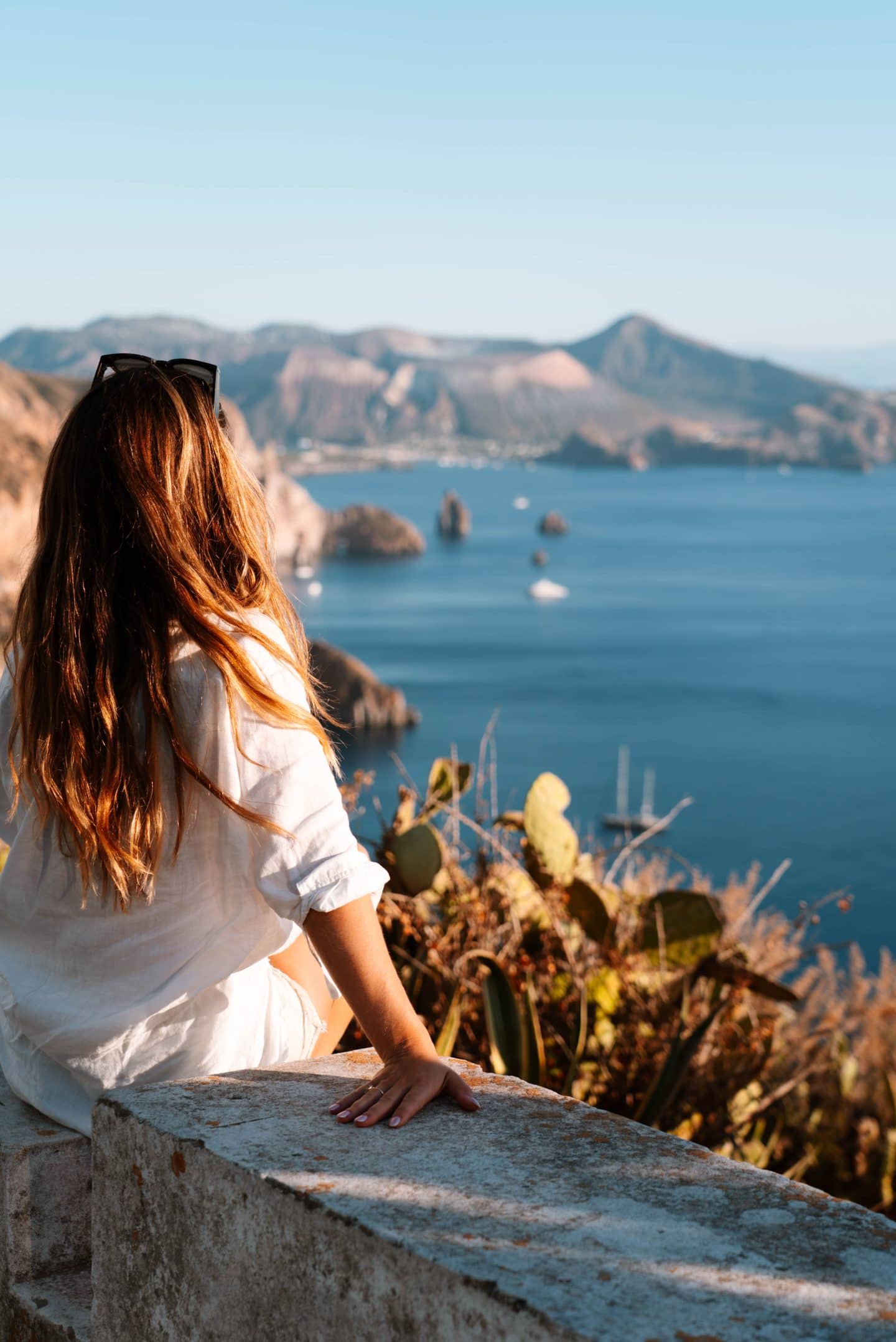
Probably the most iconic spot on the island. Cala Junco is a natural amphitheatre of rock dropping into clear turquoise water, formed by an ancient volcanic crater.
- 25–30 minute walk from San Pietro along a coastal path
- pebbly and rocky, not sandy – bring water shoes if you have sensitive feet
- the water is usually crystal-clear and perfect for snorkelling
In high summer, it gets busy in the middle of the day. My favourite times were:
- early morning – almost empty, softer light, calm sea
- late afternoon – warm rock, long shadows, the walk back at golden hour
Cala degli Zimmari
A little further along the path from San Pietro, you’ll find Cala degli Zimmari – the main sandy-ish beach on Panarea.
- small bay with reddish sand and calm water
- popular with families
- good if you just want a more “classic” beach day with less climbing over rocks
Spiaggia della Calcara
For something more dramatic, there’s Spiaggia della Calcara, where Panarea’s volcanic heart shows through.
- the rocks here are warm
- fumaroles (small vents) release steam, and the air has that faint sulphur smell
- swimming with those black rocks and rising steam around you is a very Aeolian experience
It’s less of a lie-down-all-day beach and more of a “come, swim, feel the earth under your feet, then move on” kind of place.
♥ My tip:
Pack like the island is basic, not like a resort. Many spots have no facilities – no umbrellas, no changing cabins. Bring:
- sarong (my beach essential – light, easy, looks chic thrown over anything)
- water shoes
- plenty of water
- snacks
- a small dry bag for your phone and camera on boat days
Hiking & Viewpoints: Punta del Corvo & Capo Milazzese
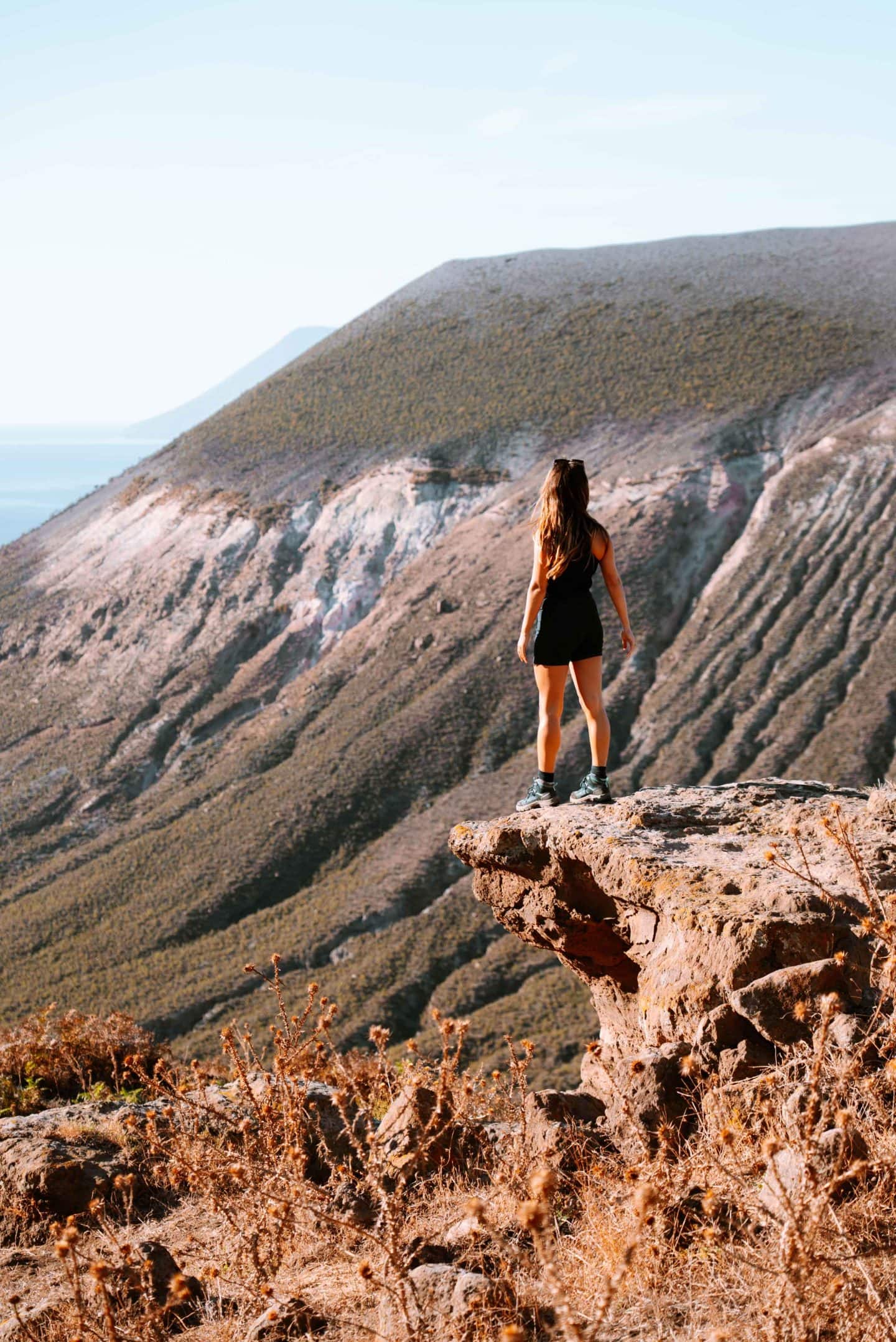
Even though Panarea is small, it offers some beautiful walks with big views.
Punta del Corvo – The Island From Above
Punta del Corvo is the highest point on Panarea at around 421 metres. The path climbs through low Mediterranean scrub, with views opening up more and more as you go.
From the top, you see:
- Panarea’s outline under your feet
- the little islets scattered around it
- Stromboli, Salina and the other sisters on the horizon
The hike itself is:
- moderately challenging (especially in summer heat)
- mainly for those who are used to walking uphill
- best started early in the morning or later in the day to avoid the strongest sun
I’d treat it as a 2.5–3.5 hour round-trip, depending on your pace and how long you stay at the top.
Capo Milazzese & the Prehistoric Village
Above Cala Junco lies Capo Milazzese, home to an archaeological site that quietly tells another side of Panarea’s story.
Here, you’ll find the remains of a Bronze Age village – oval stone hut foundations perched on a cliff with ridiculous sea views. It’s not a big site, but there’s something powerful about standing in a place where people were already living thousands of years ago, looking out at basically the same horizon.
The path to Capo Milazzese is the same one that takes you to Cala Junco, so you can easily combine both in half a day.
♥ Hiking tips for Panarea:
- Wear proper walking shoes or sturdy sandals – volcanic paths can be loose.
- Bring more water than you think you need.
- In summer, avoid the midday heat.
- Download offline maps if you’re hiking alone.
Where to Eat on Panarea Island, Sicily
Food on Panarea sits neatly between simple island cooking and elegant, long-dinner terraces. It can get expensive quickly, so I like to mix: one or two special evenings, and the rest more casual, local, unfussy.
Here are a few places and flavours to look out for:
Classic Panarea Dinner Spots
Da Pina
A Panarea institution since the late 1960s. Think lava stone tables, soft light, and a menu that respects Aeolian traditions but isn’t afraid to play a little.
- Try:
- pasta with swordfish and capers
- eggplant dishes (they do them incredibly well)
- anything with local fresh fish
Cusiritati
Terrace above the harbor, run by generations of women from the same family. Intimate, with just a handful of tables and Stromboli in the distance.
- At lunch you’ll find more traditional plates,
- dinner leans a little more creative with combinations that still feel true to the island.
I love these places not just for the food, but for the atmosphere: it still feels like a family dining room that grew into a restaurant, not a concept.
Raya
Raya is part hotel, part restaurant, part legend. If Panarea had a symbol, this terrace would be it.
- Go for sunset aperitivo at least once if you can
- The view over the bay and the boats is something you’ll remember
- Later at night, it can turn into more of an open-air party depending on the time of year
I see Raya less as “come here for the food only” and more as “come here for the feeling”.
Casual & Takeaway – For Boat & Beach Days
Some of my favourite meals on Panarea weren’t at white-tablecloth places, but picked up from small rosticceria / gastronomy spots near the port:
- caponata
- pane cunzato (dressed bread with tomatoes, capers, olives)
- little arancini
- roasted vegetables
- local cheeses and salumi
Perfect to take on the boat or eat on a shady terrace between swims.
Flavours to Look For
Wherever you eat, keep an eye out for:
- capers – Panarea’s neighbours, especially Salina, are famous for them
- fresh fish – simply grilled with olive oil and lemon
- pane cunzato – my favourite kind of island lunch
- granita + brioche – breakfast, dessert… or both
- local sweets with nuts, honey and spices – perfect with a glass of Malvasia
♥ My mindset for eating on Panarea:
Service is island-paced. Things take time. Order a second glass of wine, relax into it, and treat the slowness as part of the experience rather than a problem.
Where to Stay on Panarea: Chic Hotels & Quiet Corners
Panarea is not a budget island, but there are degrees of “chic”. You don’t have to arrive by yacht to enjoy it – you just need to be selective and book early.
Boutique Hotels & Classic Panarea Style
Hotel Raya
- Iconic, with views that feel like a painting
- Rooms in classic white-and-blue island style
- Ideal if you want to be in the middle of Panarea’s social heart
Bayfront hotel: Hotel Lisca Bianca
- Right by the port with terraces overlooking the sea
- Perfect if you like to sit with a drink and watch the boats move in and out
Hotel Oasi / garden-style stays
- Rooms tucked between greenery
- Often with small pools and a calmer atmosphere, still within walking distance of everything
Hotel Cincotta di Cincotta Angela
- Perched on top of a hill, with views to die for. I mean – look at that pool alone?

Apartments & B&Bs
I love the idea of staying in a small house or apartment on Panarea:
- private terrace with a view or little garden
- simple kitchen for breakfasts and snacks
- more “local” feeling
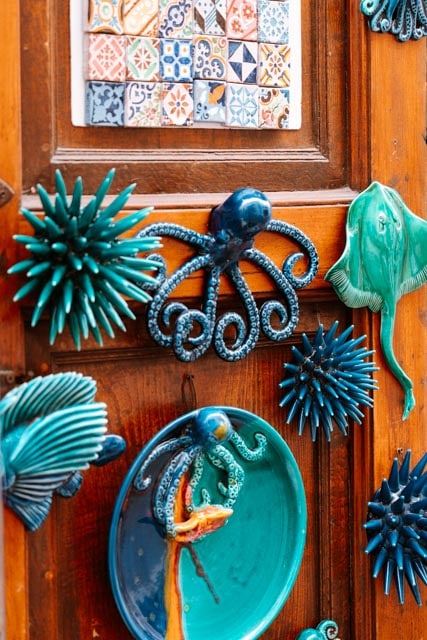
If you’re staying a few nights and traveling with friends or family, this can work really well. You’ll see everything from minimal white cubes to more rustic Aeolian homes with painted tiles and old wooden doors.
♥ Booking tips:
- For July and August, book as early as you can – months ahead, if possible.
- I personally love June and September: still warm, but lighter on crowds and prices.
- Don’t underestimate how nice it is to be within easy walking distance of the port – especially when you’re arriving or leaving with luggage.
Day Trips from Panarea: Stromboli by Night & the Other Sisters
Panarea sits in a beautiful position for exploring other Aeolian islands. Even if you’re based here just 2–3 nights, you can still fit in something special.
Stromboli by Night
This is the big one from Panarea. Many boat tours follow a similar rhythm:
- afternoon departure from Panarea
- short walk or swim stop
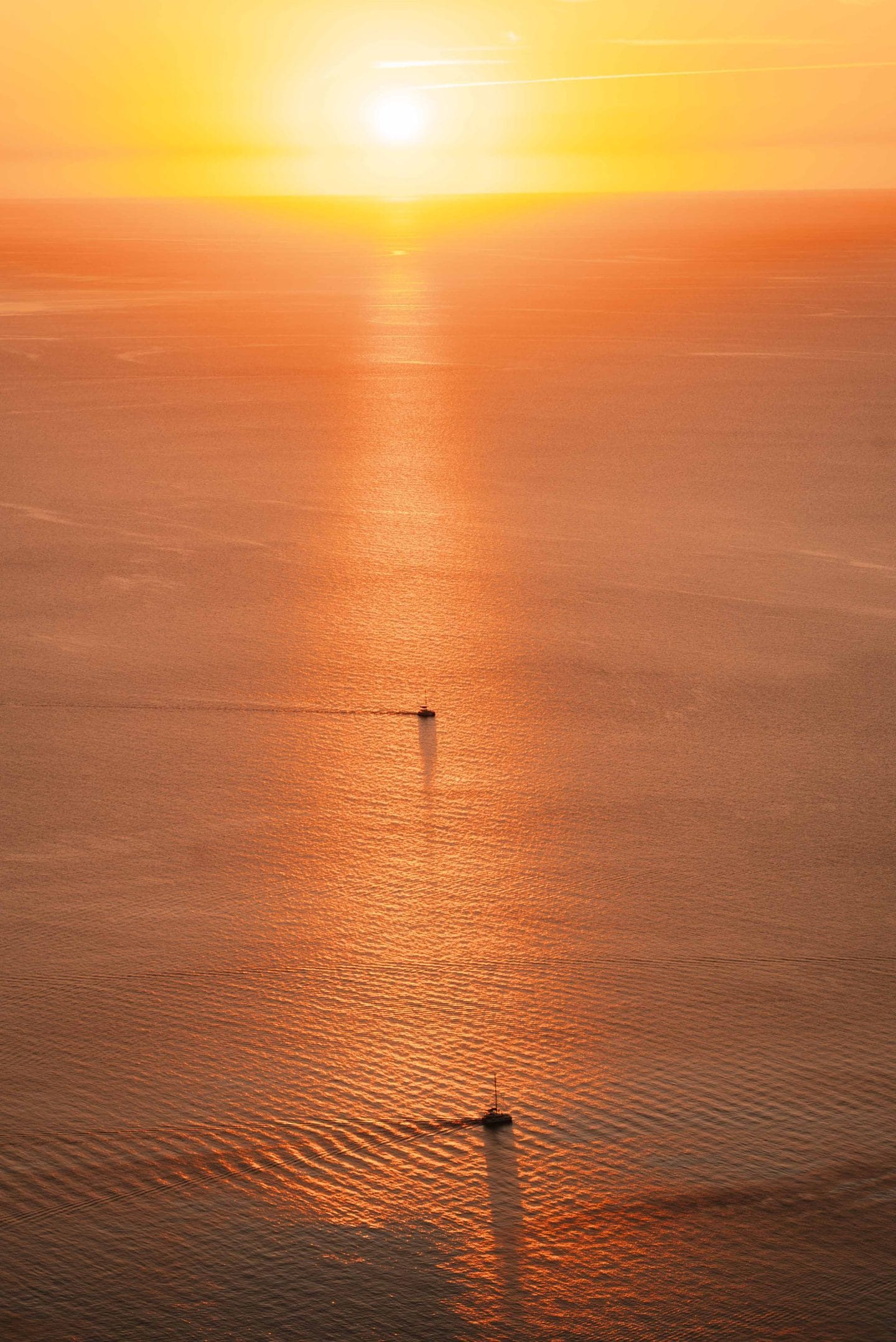
- reaching Stromboli around sunset
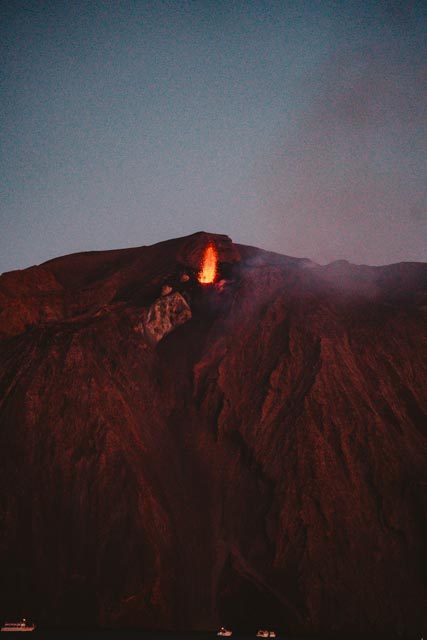
- circling to the Sciara del Fuoco – the dark slope where lava and glowing rocks roll down into the sea
- turning off the engine and waiting in silence for the eruptions
Stromboli usually erupts regularly – small, frequent bursts rather than one huge explosion. At night, it’s like watching the earth breathe fire.
If you’ve never seen an active volcano from the water in the dark… it’s hard to describe. You feel very small, in a good way.
Salina, Lipari & Beyond
Depending on schedules and season, you can also:
- hop over to Salina for a day of wine, capers and green hills (my calm, elegant favourite)
- visit Lipari for more shops, history, and a livelier feel
- use Panarea as one chic stop on a longer route that includes Vulcano or even the wild duo Filicudi & Alicudi
My ideal Aeolian trip always includes at least:
- one island for elegance and slow days (Salina / Panarea)
- one for raw energy (Vulcano / Stromboli)
- one as a more practical base (Lipari)
Panarea fits beautifully into that puzzle.
Getting Around Panarea (Car-Free Bliss)
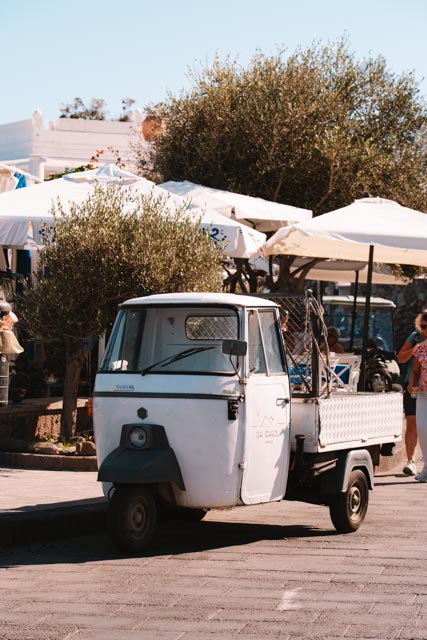
One of my favourite things: there are no cars.
Here’s how you actually move around:
- On foot – honestly, this covers most of it. San Pietro, Cala degli Zimmari and Cala Junco are all reachable on foot if you don’t mind some uphill/downhill walking.
- Electric golf-cart taxis – you’ll see them at the port. Perfect for luggage, hot days, or if you’re staying a little further up the hill.
- Scooters / e-bikes – limited, but you can sometimes rent them if you want a bit more freedom on the single main road.
I spent most of my time simply walking. Lanes are narrow, often just wide enough for two people to pass, lined with little courtyards, cats, and glimpses of the sea. At night, it feels safe and intimate – you hear the sea, not engines.
Practical Tips for Visiting Panarea Island Sicily
Best Time to Visit
- June & September – my favourites
- warm sea, long days, less intense crowds
- still a good buzz in the evenings, but you can breathe
- July & August
- Panarea at its most “Panarea”: party terraces, yachts, full restaurants
- also the most expensive and crowded
- May & early October
- quieter, some places may be closed, but beautiful if you like calm and don’t mind fewer services
Money, ATMs & Cards
- There are ATMs in San Pietro, but I always travel with some cash, especially for:
- beach bars
- smaller eateries
- boat contributions / small things on the go
Packing
- flat sandals and comfortable walking shoes
- something light for the evenings (it can get breezy)
- swimsuit you don’t mind wearing under clothes while moving between beach and village
- sarong or light cover-up
- sunscreen – the Aeolian sun reflects off rock and water
- a small tote or backpack for boat and beach days
Safety & Solo Travel
Panarea felt very safe to me, even walking alone at night. It’s a small, contained island where people naturally keep an eye on each other – especially in shoulder season.
Usual solo travel common sense always applies:
- don’t hike remote paths alone in midday heat
- check sea and wind conditions before boat trips
- know your limits in the water (some spots are very deep straight away)
FAQ | Panarea Island, Sicily
Yes – especially if you’re curious about the island’s chic reputation and you love small, walkable places with strong personality. Even 1–2 nights here can give you a completely different mood than Lipari or Salina.
I’d say 2–3 nights is ideal: one full day for the island and beaches. one full day for a boat trip around the islets or Stromboli by night. If you travel very slowly and love sea days, you could easily stay longer.
It can be. Accommodation and some restaurants are priced for a high-end crowd, especially in July and August. You can soften that by: travelling in June or September and focusing on nature, walking and the sea which are all free.
Yes, especially from Lipari or Salina. But to really understand the island – the evening mood, the quiet mornings before the first ferries – I’d recommend at least one night. Panarea breathes differently once the day-trippers leave.
Yes, especially if your kids are happy with walking, swimming, and boat days instead of big resort-style facilities. Cala degli Zimmari works well for a more traditional beach day, and the car-free nature of the island is actually a big plus with children.
On the Move to Panarea – My Reflection
When I think of Panarea now, I don’t see one big highlight. I see small scenes stitched together.
The first barefoot steps onto warm volcanic stone. The walk to Cala Junco with that blue getting brighter at every curve. A boat rocking gently at anchor while everyone dozes after lunch. The quiet of the lanes after midnight, just the sea making that soft squash-squash-squash sound on the rocks.
I also see the other side: full terraces, music, people dressed in linen and silk, boats lit up like floating houses. It’s a funny mix – simple island life and this layer of glamour sitting on top like sea foam.
What stayed with me most, though, wasn’t the “exclusive” image. It was how fragile the island feels, in a beautiful way. Not just as a pretty postcard, but as a real home for the people who live there – and a living piece of volcanic rock sitting in the middle of the Tyrrhenian Sea.
If you do decide to come, I hope you’ll:
- walk instead of rush
- swim until your fingers wrinkle
- taste something you wouldn’t usually order
- watch Stromboli glow at least once
- and leave the island just as soft and quiet as you found it
So, Let’s go On the move!
More Aeolian Islands Inspiration:

