Are you wondering whether the Palace of Knossos is actually worth visiting — and whether you really need a guided tour? Here’s my honest answer after a morning there: yes to both, and the guide is the whole reason.
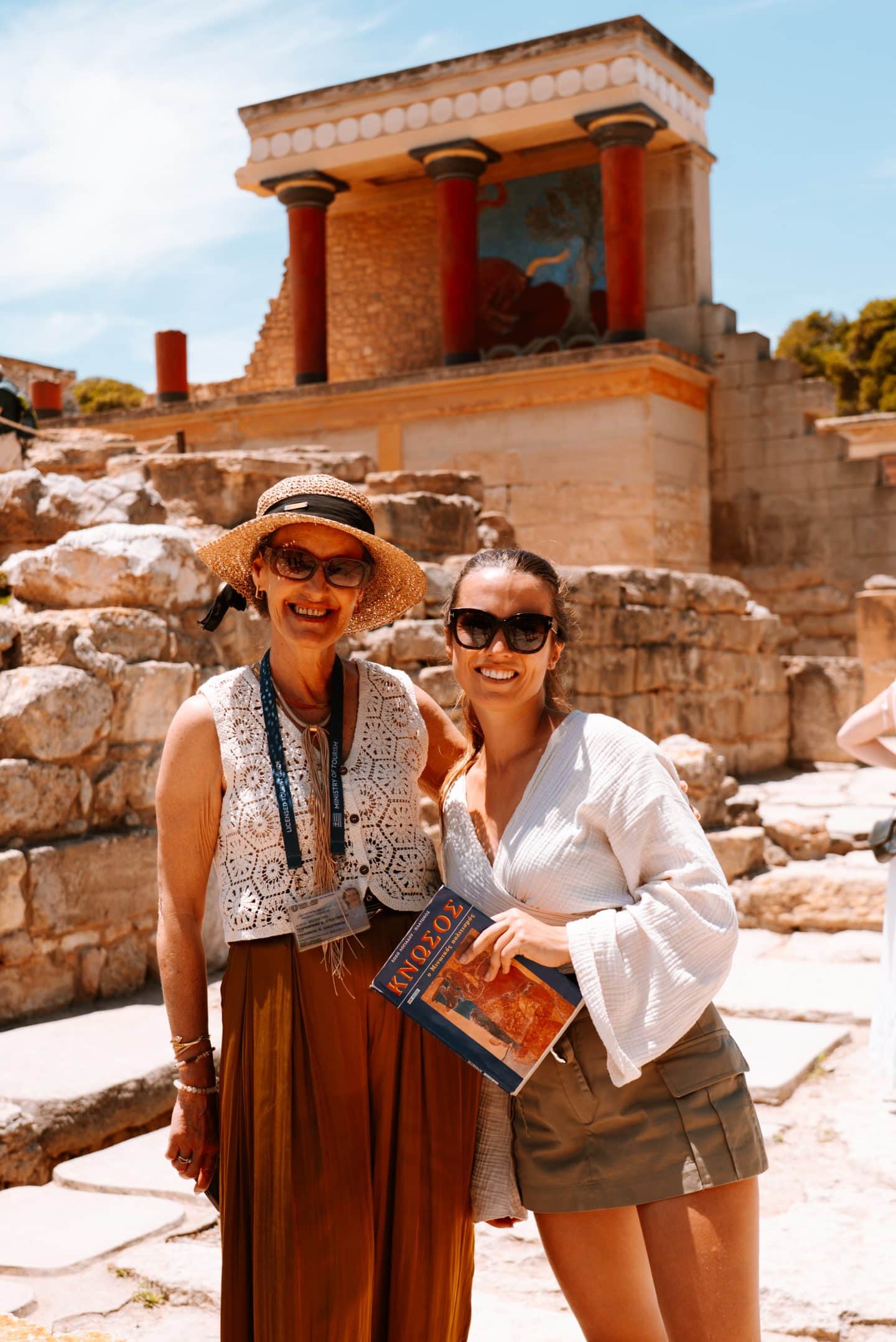
Knossos is the ceremonial heart of the Minoans, Europe’s oldest civilisation, and the half-myth labyrinth of King Minos. But I’ll be straight with you — walk it alone and it can feel like a hot stroll past reconstructed walls, and you leave a little confused about what you just saw. With our guide, Katarina, it became a story I still haven’t stopped thinking about: four-thousand-year-old clay pipes, a snake goddess, a writing system nobody can read, and what she called the oldest road in Europe. So if you take one thing from this guide to visiting Knossos Palace, take this: book a good Knossos Palace guided tour, and arrive after the morning buses.
♥ A morning like this is exactly our kind of slow travel — depth over ticking boxes
Know before you go
At a glance
Visiting the Palace of Knossos
| Where | 5 km south of Heraklion (about 15 minutes by car) |
| Best time to arrive | After the tour buses — Katarina said the crush is roughly 9am–12pm |
| How long | 1.5–2 hours on site; half a day with a guide + the museum |
| Tickets & hours | Confirm the current fee + hours before you go; a combined ticket with the Heraklion Archaeological Museum is usually available |
| Pair it with | Heraklion Archaeological Museum + the Archanes wineries |
Bring water, sun protection and comfortable shoes — the site is open and gets very warm.
You can pre-book a skip-the-line ticket and a Knossos Palace guided tour, which locks in both the timing and the guide in one go.
Do you really need a guide for Knossos?
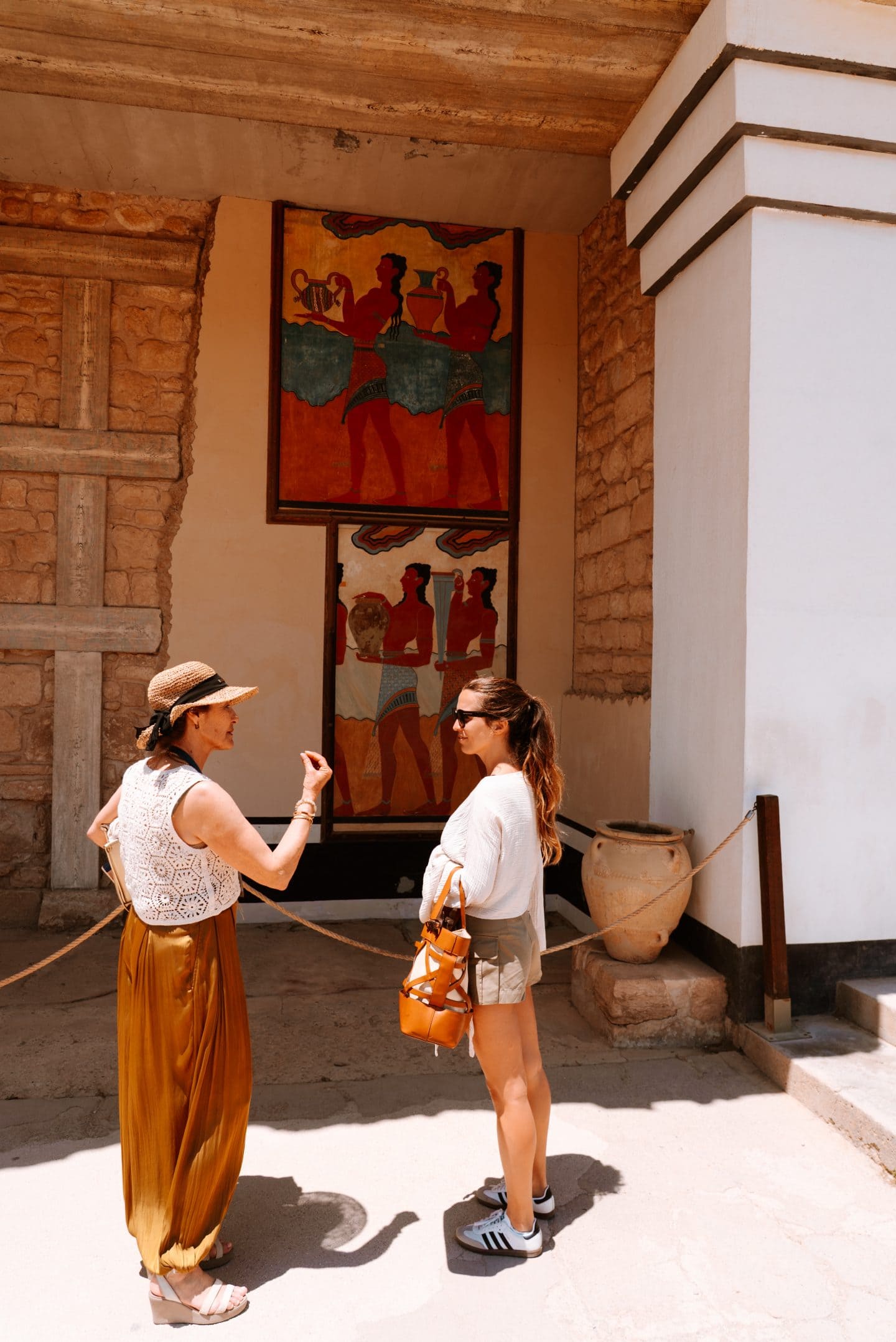
Short answer: you don’t need one to walk in, but I’d never do Knossos without one again. The genius of a great guide here is that Minoan history is genuinely strange — and without context, strange just looks like rubble. Katarina was elegant, vibrant and refused to simply point at stones; she gave them movement and meaning. A guided tour is the difference between “some old walls in the heat” and a civilisation you can suddenly picture.
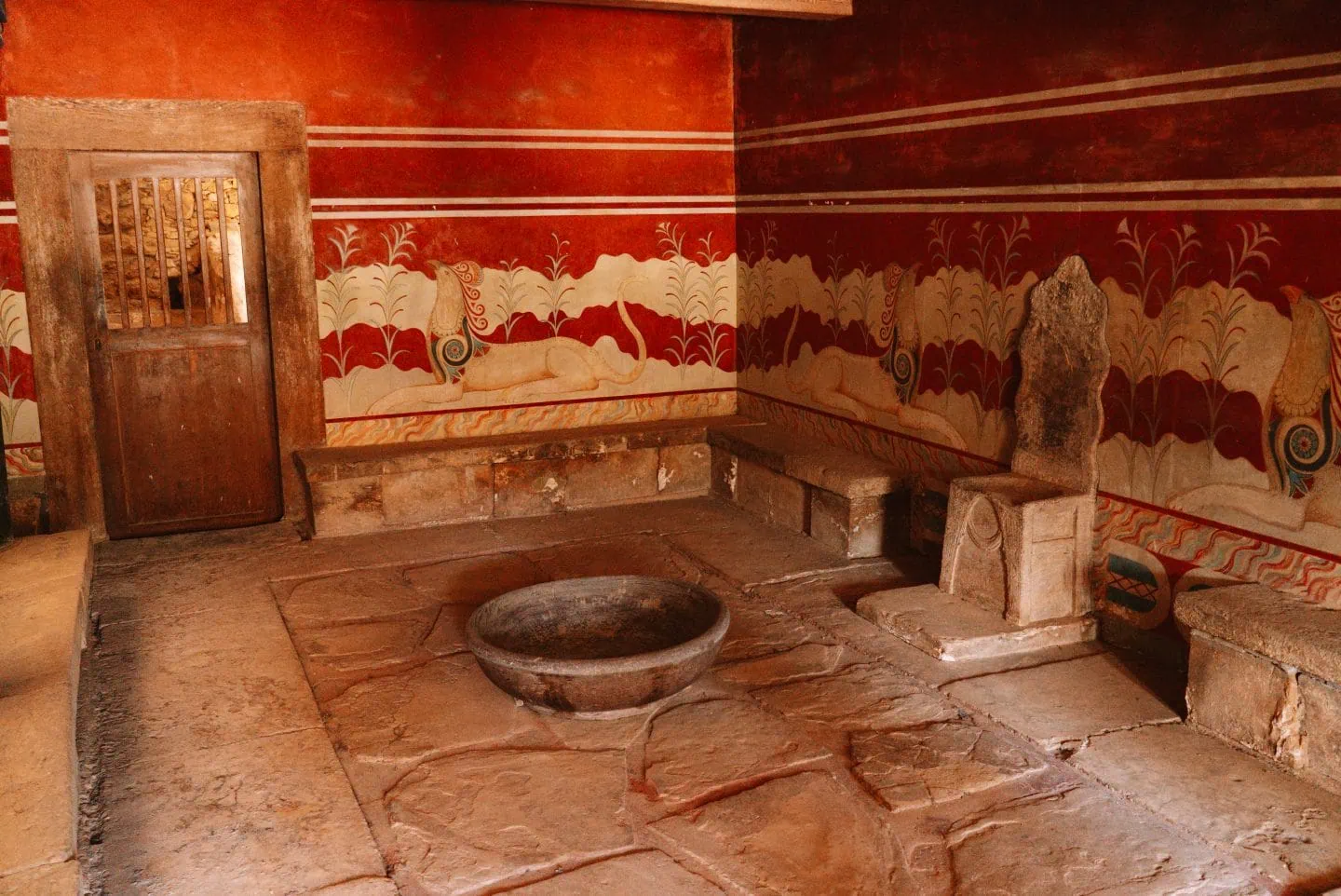
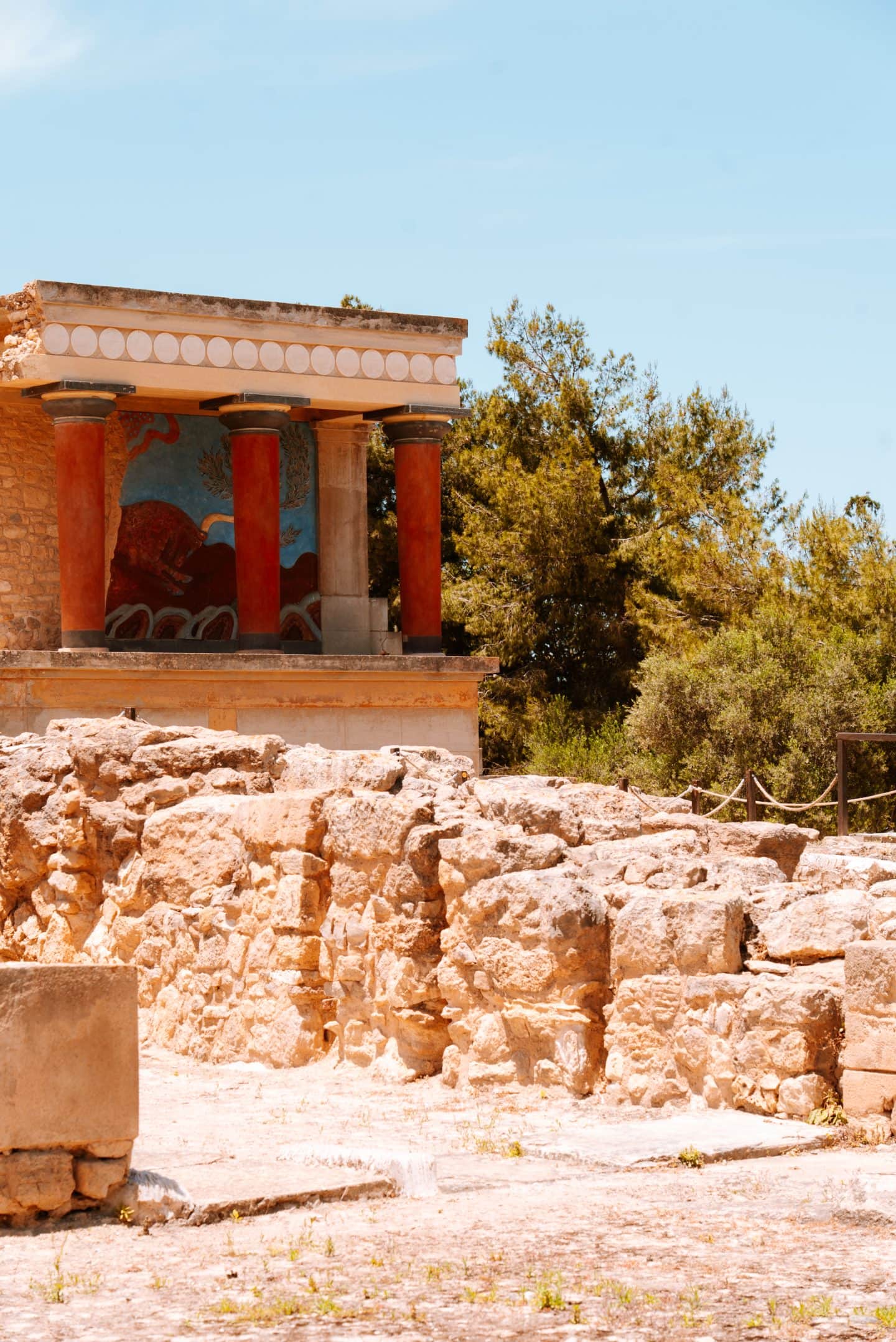
The catch (so you book wisely): much of what you see is reconstruction — Sir Arthur Evans rebuilt parts in the early 1900s, and those famous jewel-bright frescoes on site are copies. It’s beautiful, but knowing that in advance changes how you look at it. (More on where the originals live below.)
When is the best time to visit Knossos Palace?
After the buses. Katarina’s tip — and it was spot on — is that the heaviest coach traffic rolls in roughly 9am to noon, so arriving later in the day (or right at opening) means a calmer, cooler, far more atmospheric visit. The site is exposed with little shade, so whenever you go, bring water and sun protection and wear proper shoes.
What you’ll actually see — the stories that bring it alive
This is where Knossos earns its fame. A few of the moments that stayed with me:
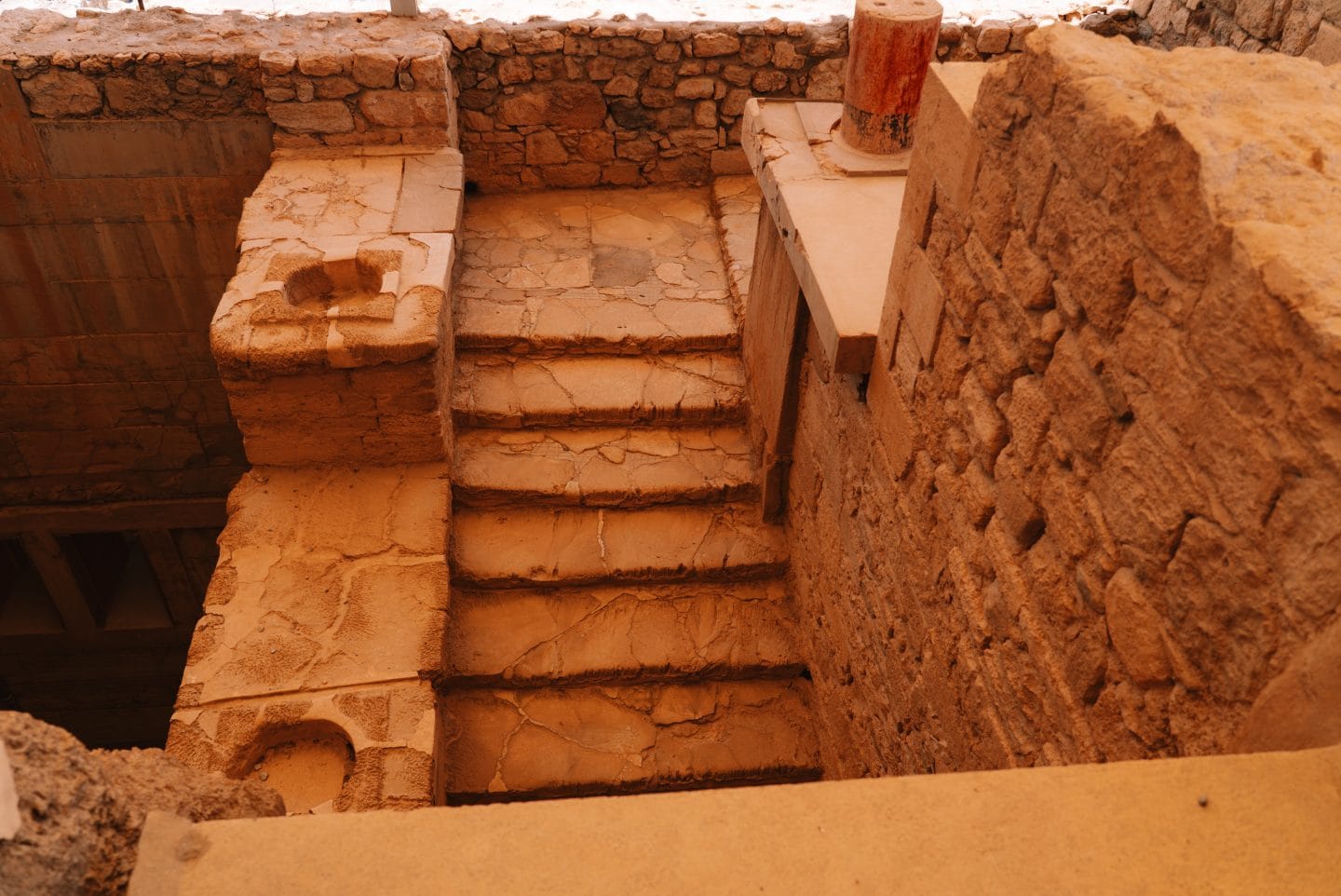
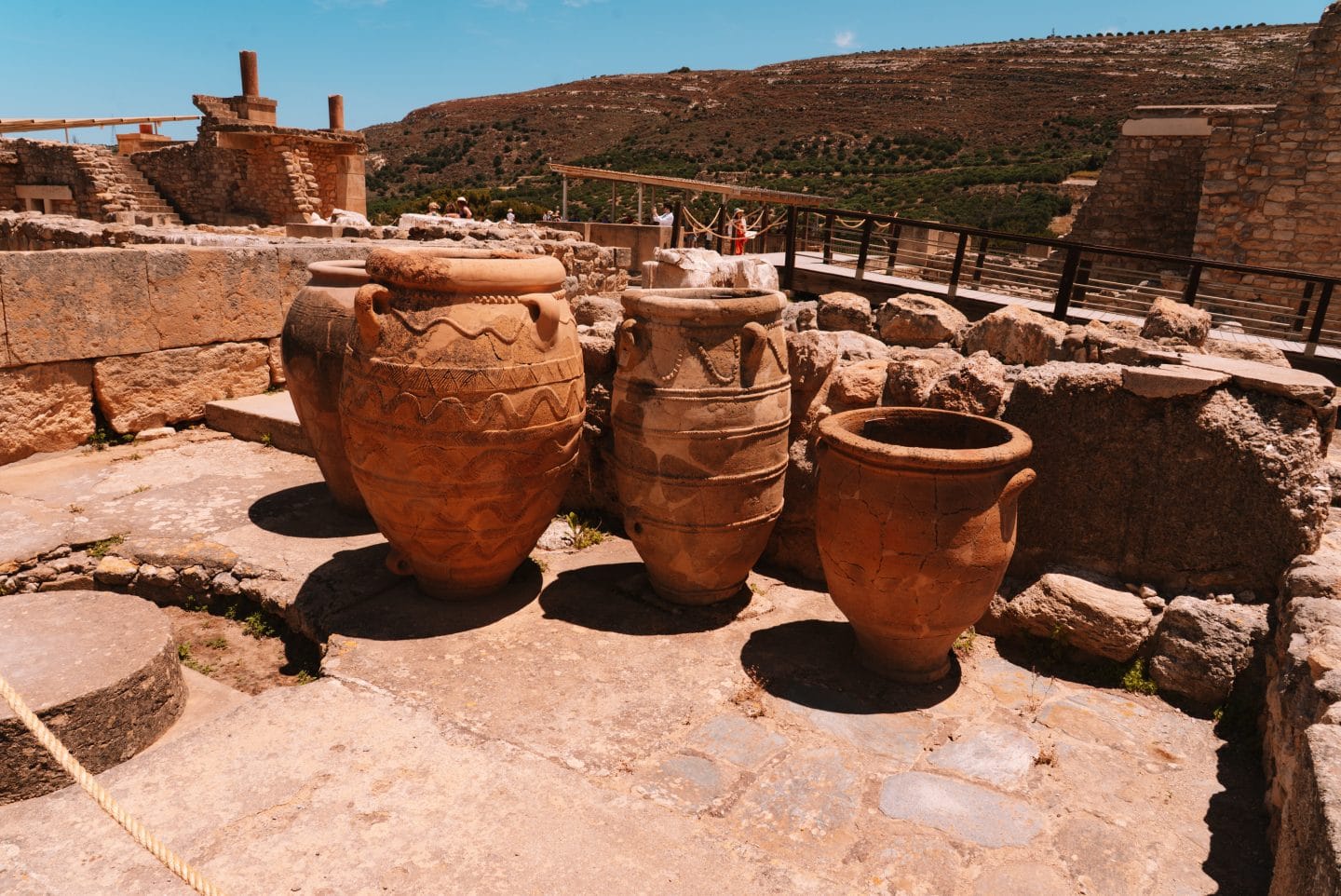
- The clay pipes. Original Minoan drainage pipes — real, four-thousand-year-old plumbing — woven into the palace. It’s the detail that makes you realise how advanced these people were.
- Earthquake and recovery. The palace was damaged and rebuilt more than once; as Katarina framed it, as long as Minoan sea power held, they could always recover. Wealth came from the water.
- Forests, ships and goats. Crete’s mountains were once far more forested; she linked the deforestation to shipbuilding and fire, then added a memorable modern coda — grazing goats eat the new growth, which is part of why the hills stay bare. Suddenly the landscape around you has a backstory.
- The bull, the snake goddess, the unreadable script. The bull motif ties to ritual and the famous bull-leaping imagery; the snake goddess, our guide explained, connected to fertility and warnings of catastrophe; and the Minoan scripts — hieroglyphic and Linear A — remain undeciphered to this day. Standing beside something nobody alive can fully read is quietly thrilling.
- The oldest road in Europe. Katarina walked us along what she described as the oldest road on the continent, threading it into the Ariadne and Theseus stories.
A note on how I tell these, because it matters to us: several are stories as a guide tells them, and Minoan scholarship is full of debate. I’d rather pass them on as “our guide explained…” than dress interpretation up as settled fact — and I’d gently suggest you hold them the same way.
Pair Knossos with the museum (and the wineries)
The slow-luxury way to do Knossos is not to bolt back to the coast. Two pairings turn a hot hour of ruins into one of the best half-days on the island:
- The Heraklion Archaeological Museum. This is where the original frescoes and the small Minoan treasures actually live — including examples of that mysterious script. See the site first and the objects second, and both finally click into place.
- The Archanes wineries. Moinoterra and the other Heraklion estates sit just fifteen minutes from Knossos, on the same ancient wine-growing soil. A Minoan morning and a wine afternoon is, for me, the perfect Cretan day — here’s the full route in our: guide to wine tours in Crete.
Where we ate after — Antipodas, Heraklion
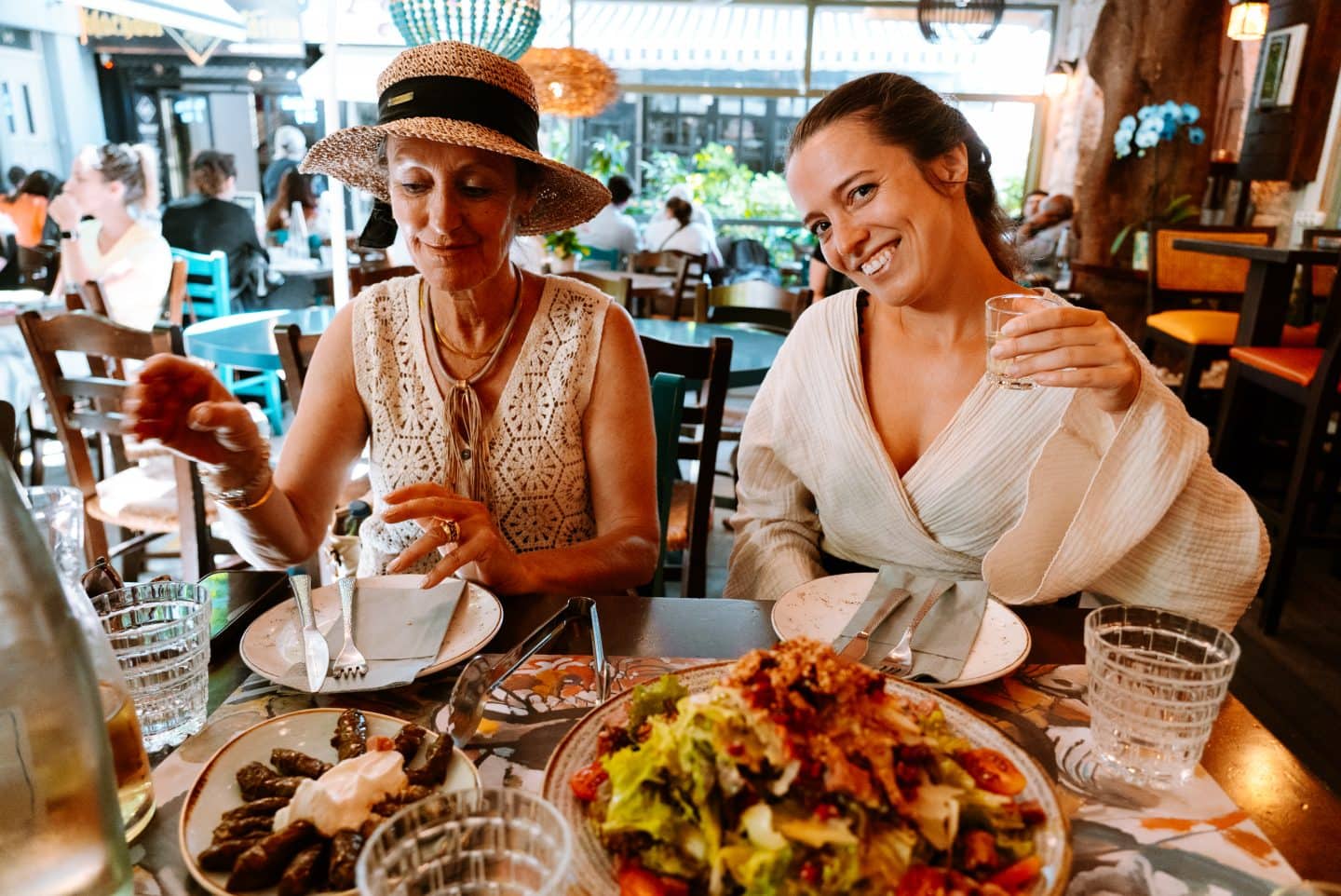
After the tour we carried the conversation into Heraklion over lunch at Antipodas, and honestly it made the whole morning feel less like sightseeing and more like being let into the island’s story. That’s the rhythm I’d recommend: Knossos, then the museum or a long Cretan lunch in town, never a dash to the next sight. More of where we ate across the island lives in our Wine & Dine collection.
Getting there & where to stay
Knossos sits just south of Heraklion, so the city is the obvious base — though we stayed east near Agios Nikolaos and drove in (see our slow guide to Agios Nikolaos (coming soon 👩💻). You’ll want a car either way; I hire through SunnyCars. For a night near the site and museum, compare central Heraklion stays.
A guided morning at Knossos is the cultural anchor of our wider: things to do in Crete guide — proof the island is so much more than its beaches.
More slow journeys
♥ Planning the trip? Explore more of how we travel, gently and with intention, in our slow travel guides
Frequently asked questions
Yes — especially with a guide. On your own it can feel like a hot walk through reconstructed ruins; with a good guided tour, Knossos becomes a vivid story of Minoan sea power, ritual, writing and myth. Pairing it with the Heraklion Archaeological Museum makes it even more worthwhile.
You don’t need one to enter, but I’d strongly recommend a guided tour. Minoan history is unusual and easy to misread without context, and a great guide is what turns the site from confusing into genuinely memorable.
After the morning tour buses — the busiest window is roughly 9am to noon, so arrive later or right at opening for a calmer, cooler visit. Bring water and sun protection regardless.
About 1.5 to 2 hours on the site, or half a day if you add a guide and the Heraklion Archaeological Museum afterwards.
The vivid frescoes you see on site are reconstructions; the originals are kept in the Heraklion Archaeological Museum, which is exactly why the two make such a good pairing.
On the move to | the Palace of Knossos
I arrived thinking Knossos would be interesting. I left thinking it was unforgettable — and the difference was one person who refused to let the stones stay silent. Book the guided tour, go after the buses, pair it with the museum, and give the whole thing the slow morning it deserves. This is the side of Crete that proves the island is so much more than a beach.
» Ready to go? Pre-book a Knossos Palace guided tour or sort your wheels with SunnyCars.

Hi, I’m Lisa, the Dutch blogger behind Dutchbloggeronthemove — a luxury slow travel platform built on the belief that the best journeys happen at a pace that lets you actually remember them.
She has lived in Mallorca for over three years, visited Lake Garda 35+ times since childhood, and spent years exploring South Africa’s wine regions until she knew them the way locals do. She travels with her partner and her Labrador Buddy, and she still returns to her favourite destinations four or more times a year — because one visit is never enough to write about a place honestly.
Everything published here starts from personal experience. That’s the only kind worth reading. ♥
