Looking for a coastal escape in southern Spain that goes beyond the usual hotspots? In this Salobreña Spain travel guide, I’ll share my insider tips to help you discover this hidden gem on the Costa Tropical, where history, beaches, and subtropical landscapes unfold at a slower, more authentic pace.
After travelling through places like Barcelona, Madrid, Alicante, San Sebastián, Mallorca and the Canary Islands, I arrived here expecting a simple day trip from Granada or Málaga, but it quickly turned out to be much more, as I began exploring Salobreña.
In this Salobreña Spain travel guide, I’ll share what to do, where to eat, and where to stay. From exploring its historic old town to discovering fresh seafood, the best beaches and the region’s surprising tropical fruits.
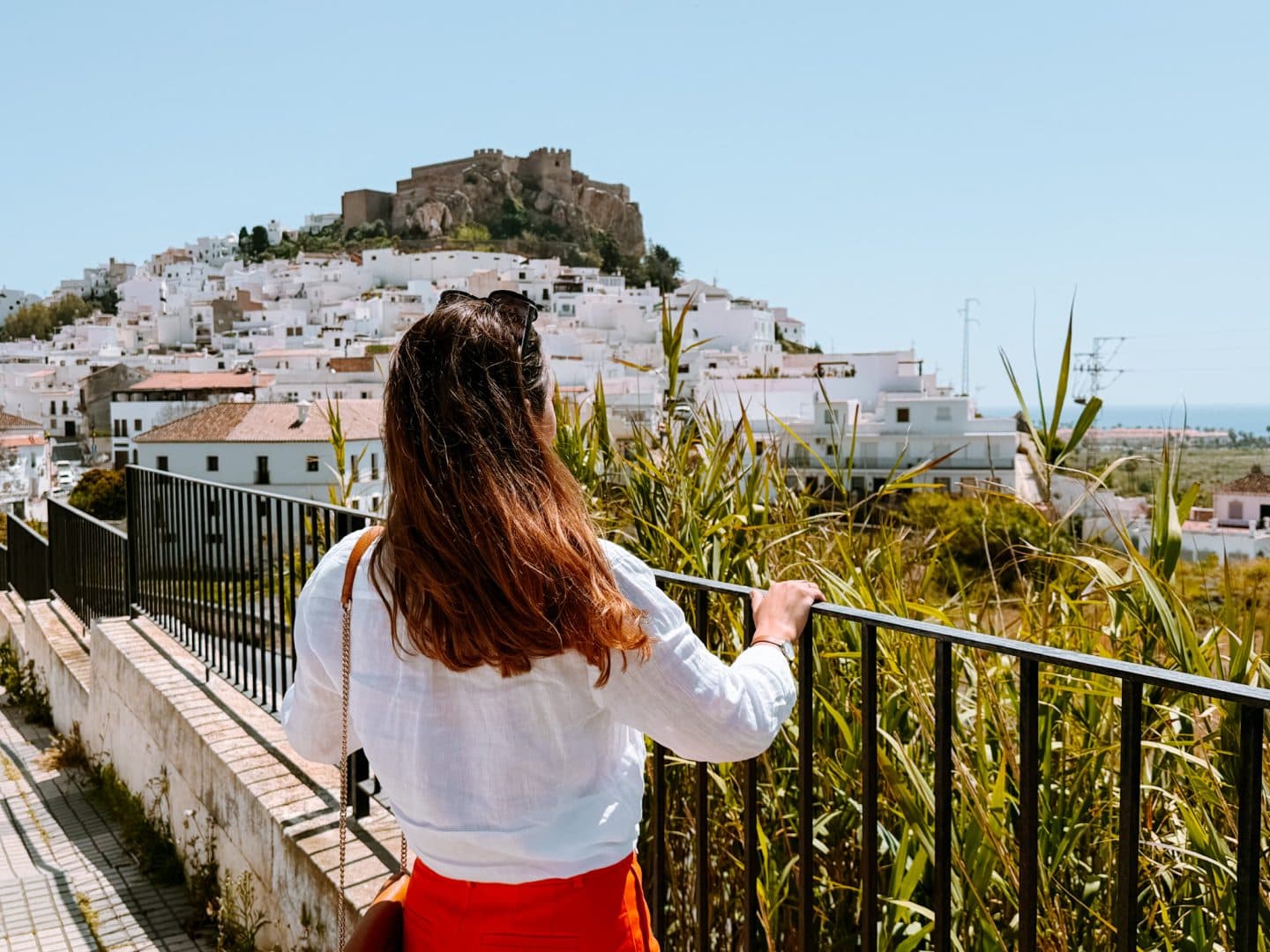
On the move to Salobreña Spain
Reaching Salobreña is relatively easy, whether you’re travelling from Spain, Europe, or further afield. You can fly direct or connect via hubs like Barcelona. From there, fly into Granada Airport or Málaga Airport.
Granada Airport is the closest, about 80 km away. The drive takes just over an hour. Alternatively, Málaga Airport is around 100 km away. I personally loved the drive from Málaga. It follows the coastline with the Mediterranean on one side. Meanwhile, mountains rise on the other. It’s one of those journeys where the scenery already feels like part of the experience.
From Málaga, regular direct buses run along the coast to Salobreña. In contrast, connections from Granada are less frequent. If you’re planning a Salobreña beach holiday, the bus works well. However, a car gives you more flexibility. This is especially useful for exploring nearby villages and the wider Costa Tropical of Spain.
1. Castillo of Salobreña and the whitewashed old town
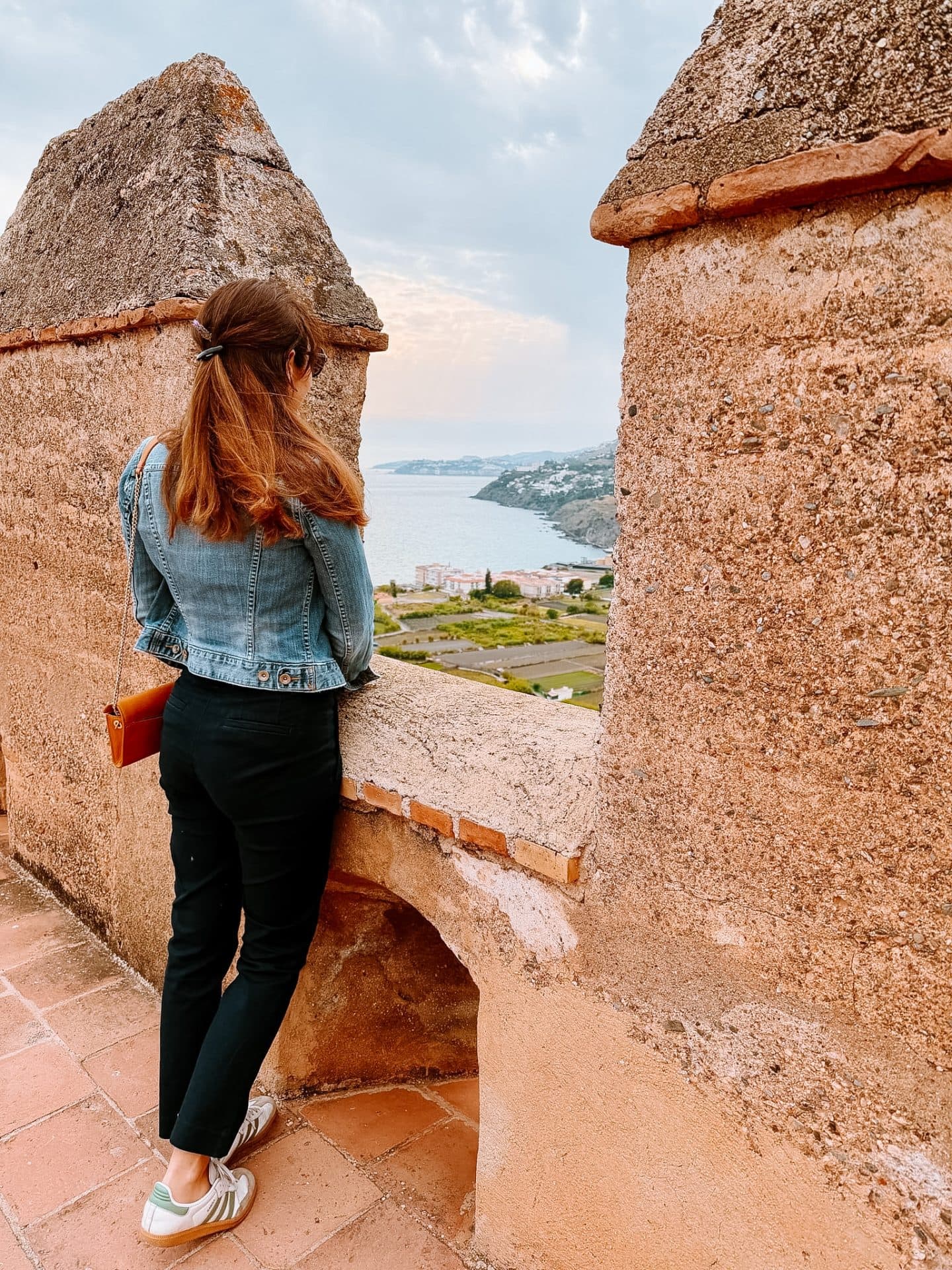
Perched 73 metres above the village, the castle dominates the whitewashed old town. From up here, it overlooks the beaches of Salobreña and the Costa Tropical coastline of Spain with the Mediterranean Sea on one side and the snow-dusted mountains of the Sierra Nevada on the other. No matter where you are in Salobreña, you’ll see it.
Walking through the narrow streets, along the seafront, or even from a distance, it’s always there. Like a reference point. Almost like a lighthouse guiding you through the village. As one of the key things to see in Salobreña, the castle naturally draws your attention. Over time, I found myself constantly looking up. Checking where I was, just by spotting it.
From down the hill it’s about 15 minutes to walk up, but can be much longer as like me you love to take photos of the little details and flowers decorating the the cute white houses of the old town.
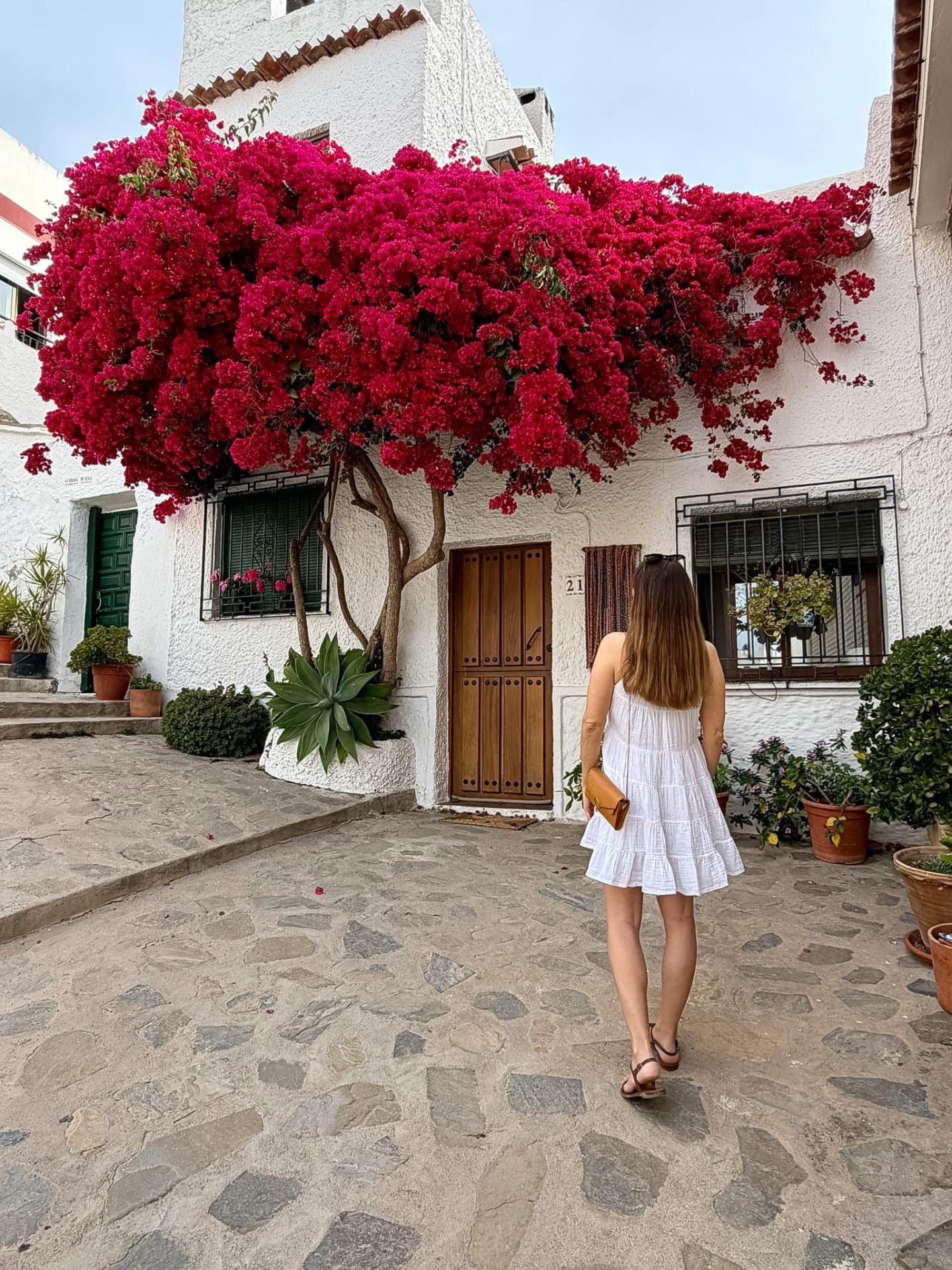
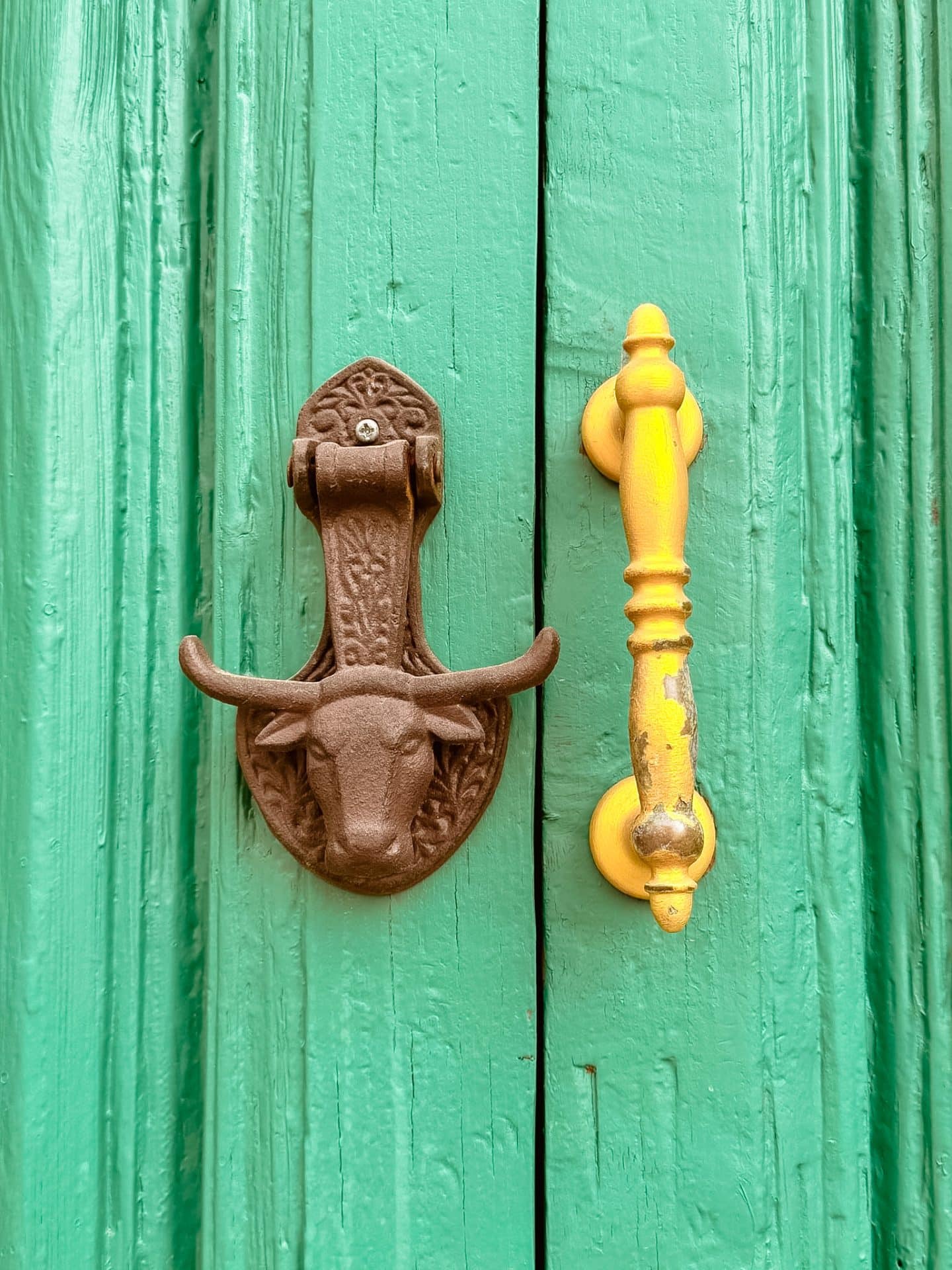
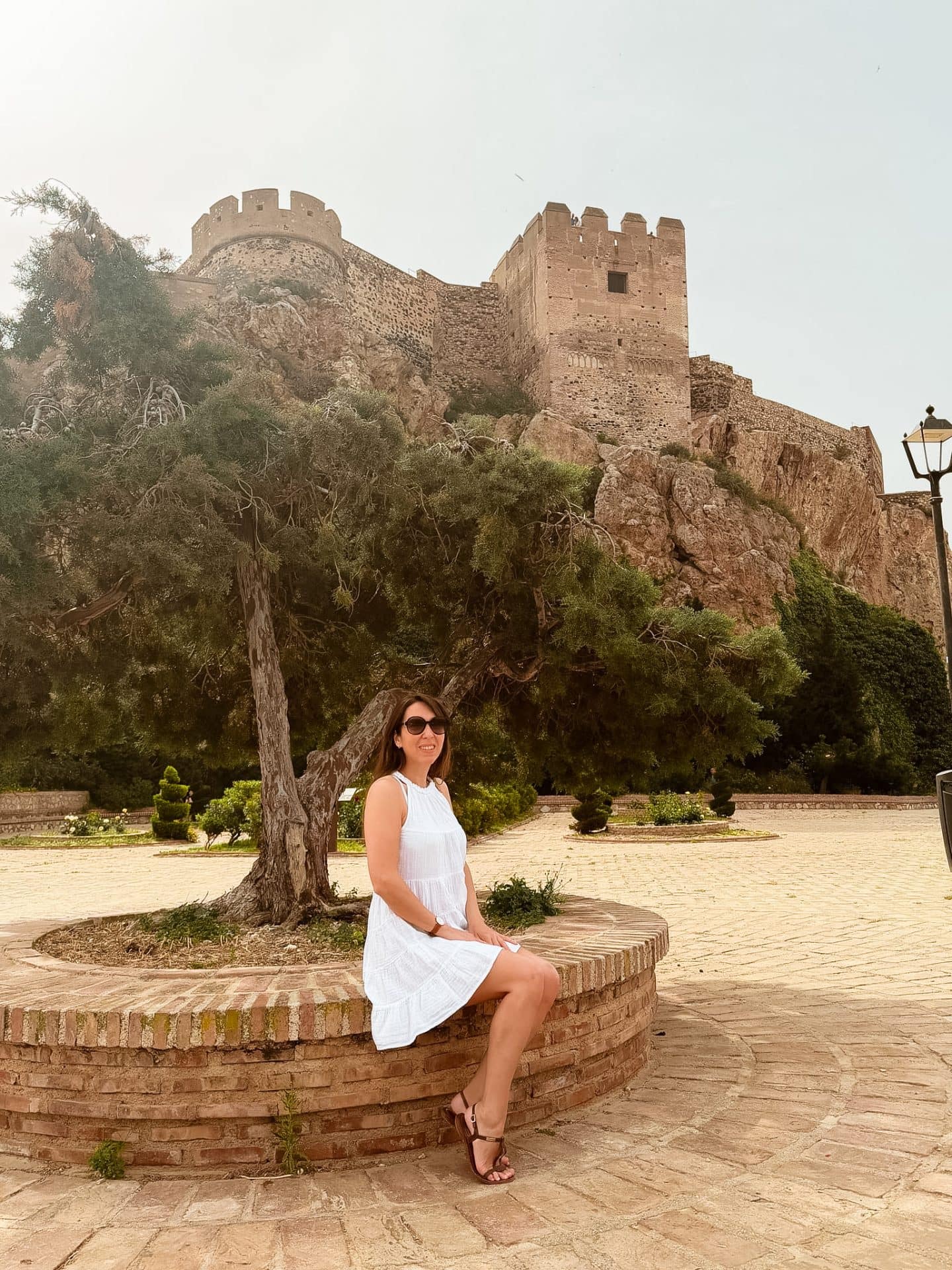
Walking through history above the Costa Tropical in Spain
I really recommend visiting the old town and castle with a guide, as it’s one of the best things to do in Salobreña. When I went, my guide Juan Bolívar made the experience unforgettable. He was full of passion and brought the stories to life by involving us, almost like we were part of them.
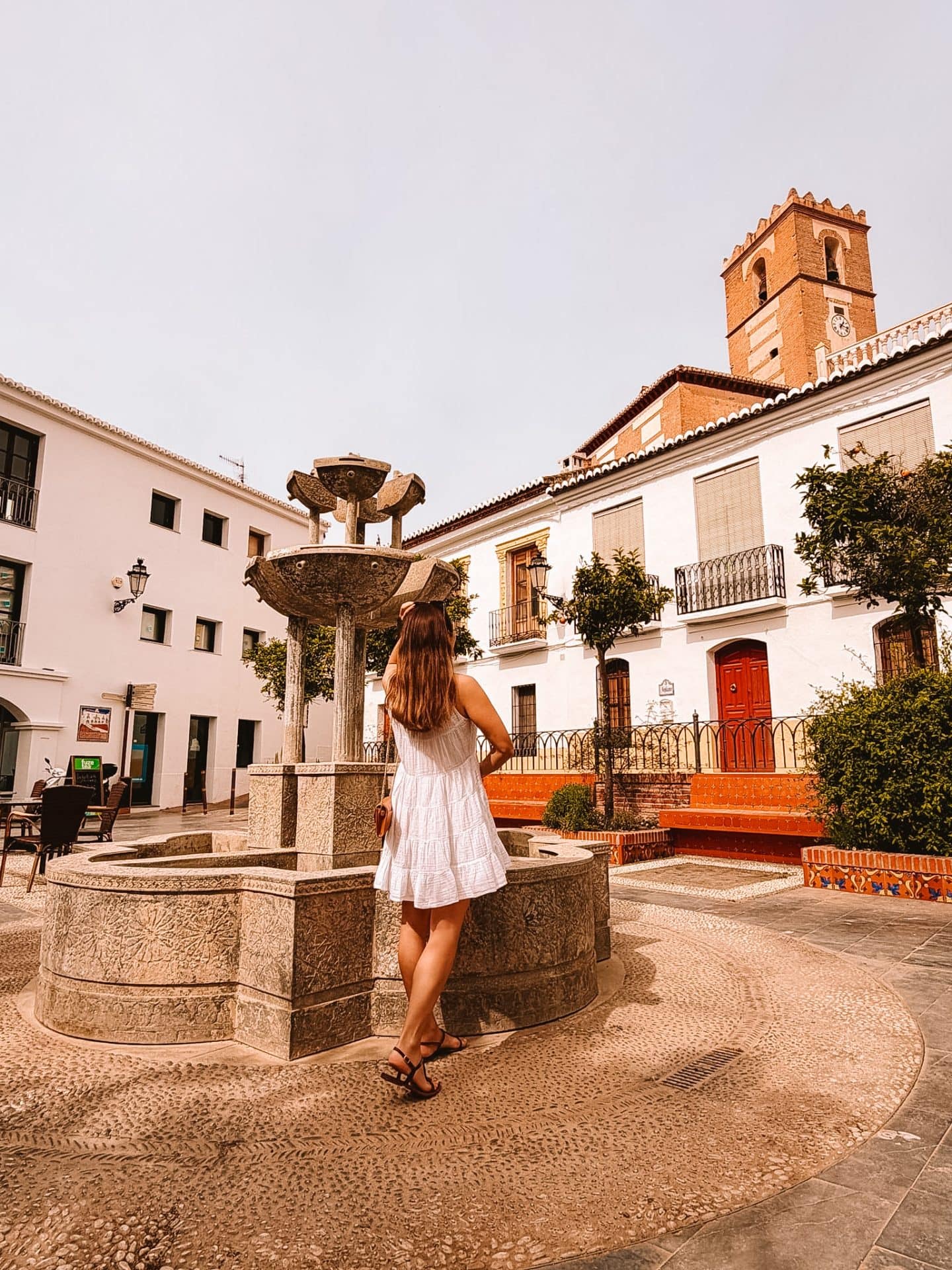
The tour doesn’t just lead you up to the castle; along the way, you’re taken through some of the most beautifully decorated streets of the old town, with little details and hidden corners you might otherwise miss. We also stopped at places like the Nuestra Señora del Rosario church built on a mosque (only open on Sundays), the Plaza Ayuntamiento, and a nearby passage that once formed part of the old city walls, little touches that really help you imagine what the town used to be like.
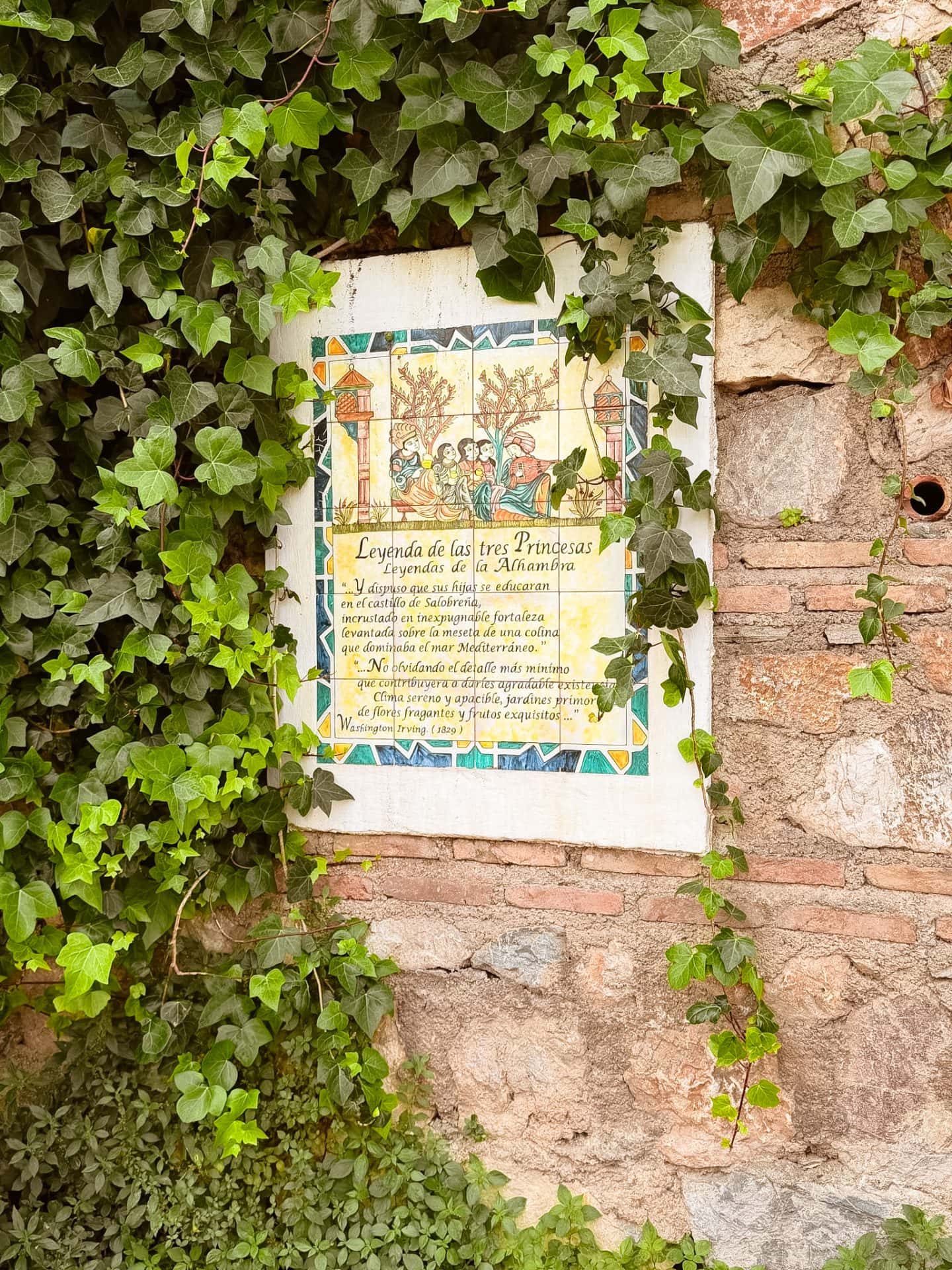
Since today mainly the ramparts of the fortress remain, having someone to share both the history and the legends really transforms what you’re seeing into something much more vivid and meaningful. Even so, the views over the Mediterranean Sea and the Sierra Nevada mountains alone are worth the visit.
Good to know before your visit
The opening hours of the Castillo of Salobreña vary depending on the season. In general, it is open from 10:00 am to 01:00 pm in the morning. In the afternoon, it reopens for one or two hours from around 04:00 or 05:00 pm. Entrance costs €4 per person. It is free for children up to 12 years old.
In addition, the local tourism office offers a useful map on their website. It includes 23 points of interest in and around the city. You can download the accompanying MP3 files on your smartphone. This way, you can explore each location at your own pace while listening to the explanations along the way. Just make sure your phone is fully charged before you start. Download here the Salobreña free audio-guided tour.
2. Finca Matagallares: ecological tropical fruit experience in Salobreña
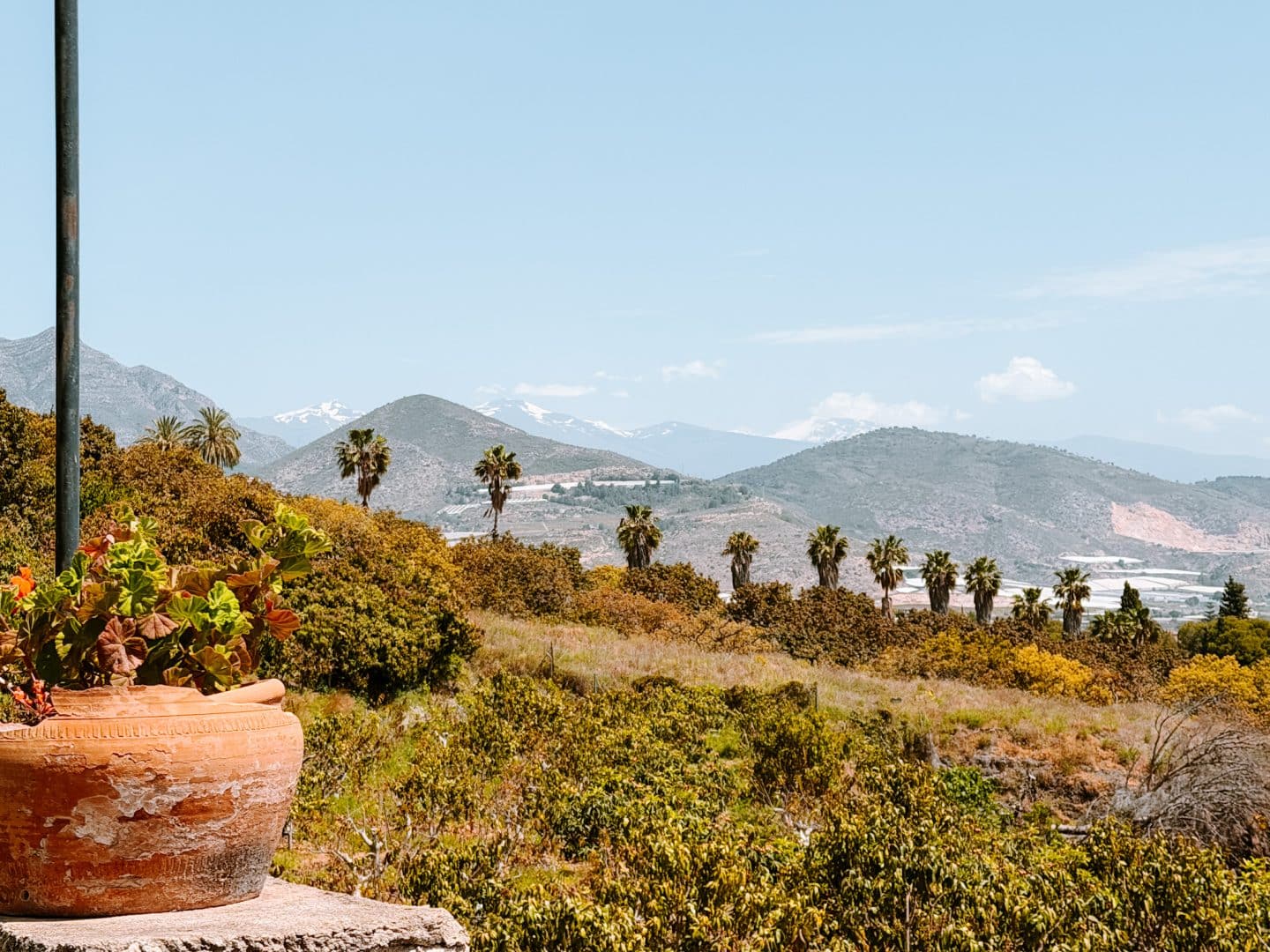
This visit immediately made me understand why this region is called the Costa Tropical of Spain, and it’s one of those things you really need to do in Salobreña to fully grasp the meaning behind the name. Salobreña faces the African continent and sits between the Mediterranean Sea and the Sierra Nevada mountains. As a result, the mountains protect the land from cold winds. This also avoids large temperature differences between day and night. Thanks to this, Salobreña enjoys a subtropical climate with around 320 days of sun per year. The average temperature is about 20°C.
Discovering the tropical fruits cherimoya and loquat
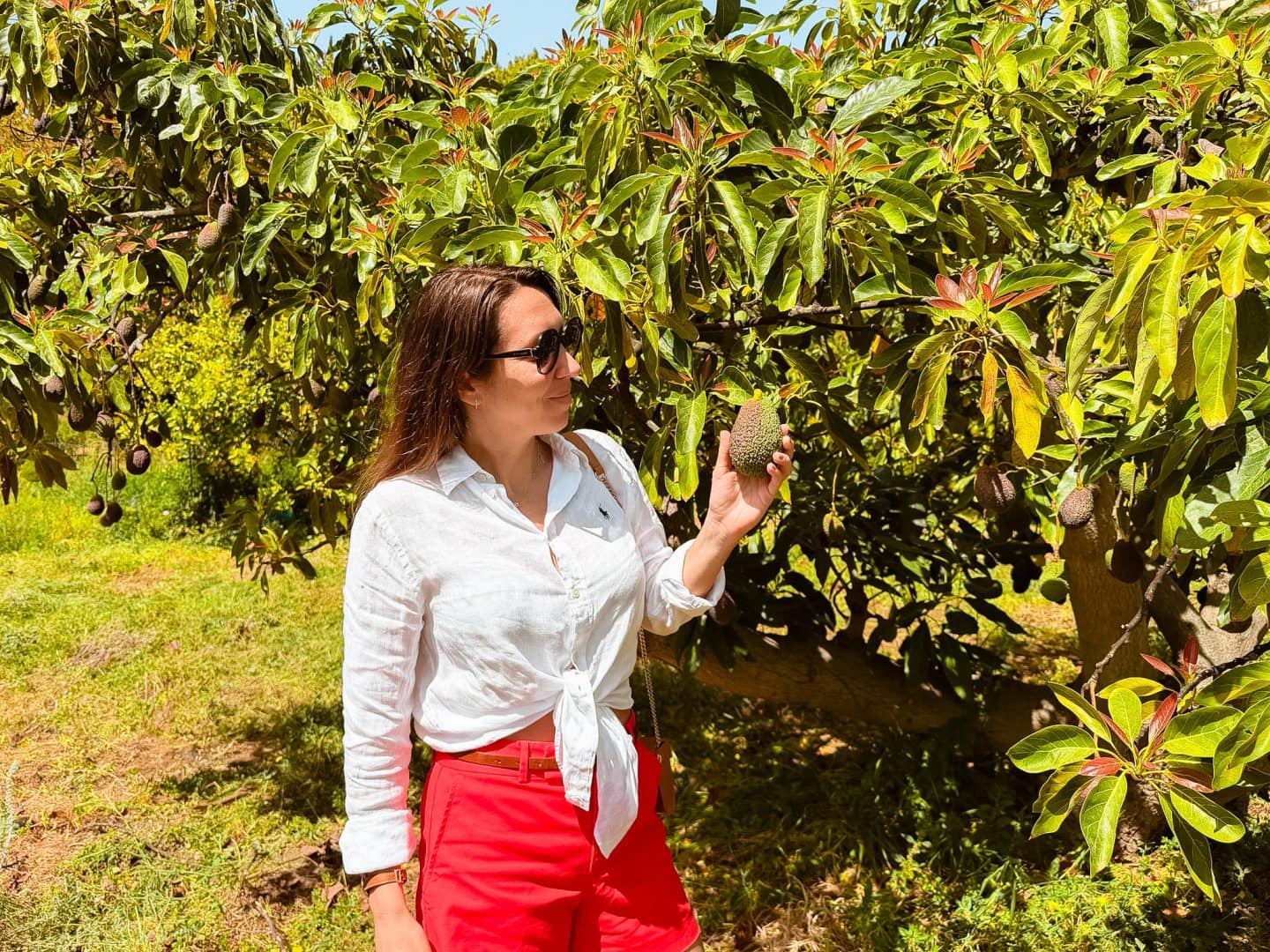
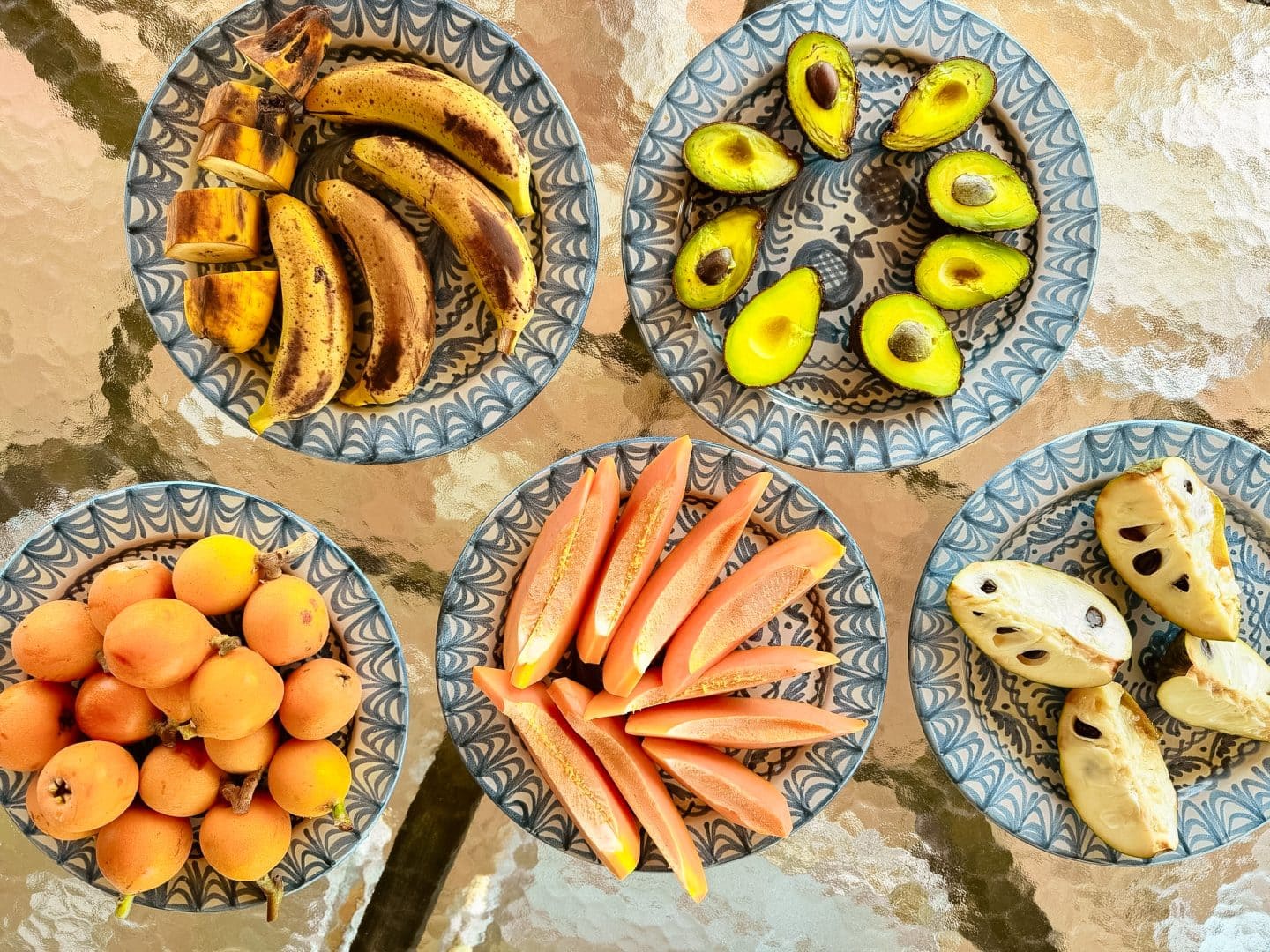
This climate allows the cultivation of many exotic fruits. During my visit to the ecological fruit farm Finca Matagallares, I discovered cherimoyas and loquats for the first time. I also tasted papayas, avocados, bananas, and mangoes — and could even pick the papayas and avocados straight from the trees myself.
Loquats were my favourite. They have a thin peach-like skin. However, they darken when touched, which makes harvesting very delicate. That is why they are always picked with a small stem still attached, to protect the fruit from bruising. Their taste is slightly acidic and refreshing. Cherimoyas, on the other hand, have a creamy texture similar to yogurt and are best eaten with a spoon. Their flavour is close to lychee, giving the sensation of eating a fresh, natural lychee yogurt.
Standing on the terrace of the ecological farm, I tasted the fruits in the warm sun. At the same time, I could see the white peaks of the Sierra Nevada in the distance. It’s a contrast that stays with you, tropical fruit in your hand, and snow-capped mountains on the horizon.
My recommendation: visit Salobreña in September or October as most tropical fruits are picked after the summer season.
3. Discover Salobreña’s sugarcane history: the best museums to visit
The last sugar factory in Europe, the Azucarera del Guadalfeo Nuestra Señora del Rosario in La Caleta (Salobreña), closed in 2006. However, when you’re in Salobreña, the story of sugarcane is still very much alive.
I explored it through three different places. Just 15 minutes away, in nearby Motril, I visited two museums that each reveal a different chapter of this history, from the traditional pre-industrial process to the evolution of the factory era. Walking through them is one of the most insightful things to do in Salobreña and its surroundings, as it gives a real sense of how central sugarcane once was to the region.
To complete the experience, I went back into the Salobreña area, to Lobres, where I visited Bodegas El Mondero. This is where the story becomes something you can actually taste, with rum, sugarcane liqueur, and traditional products made directly from the cane. It felt like the perfect final chapter to understand the full journey from field to glass.
Museum Preindustrial de la Caña de Azucar
I visited the Museo Preindustrial de la Caña de Azúcar, a small but fascinating place that really brings the region’s past to life. The museum was created after the remains of a 16th-century sugar mill were discovered during garden works.
Today, it stands on the exact site of that former mill and covers around 1,000 m². As you walk through the space, you follow the entire journey of sugarcane, from harvesting to transformation and finally commercialisation, all explained in a simple and engaging way.
Along the way, I moved between images, texts, and short videos, which made everything easy to understand. I could even see how the sugar mill worked in practice. There is also a small sugarcane plantation, which helps you visualise how it all began. The focus is on the period between the 13th and 18th centuries, when sugarcane played a central role in the region.
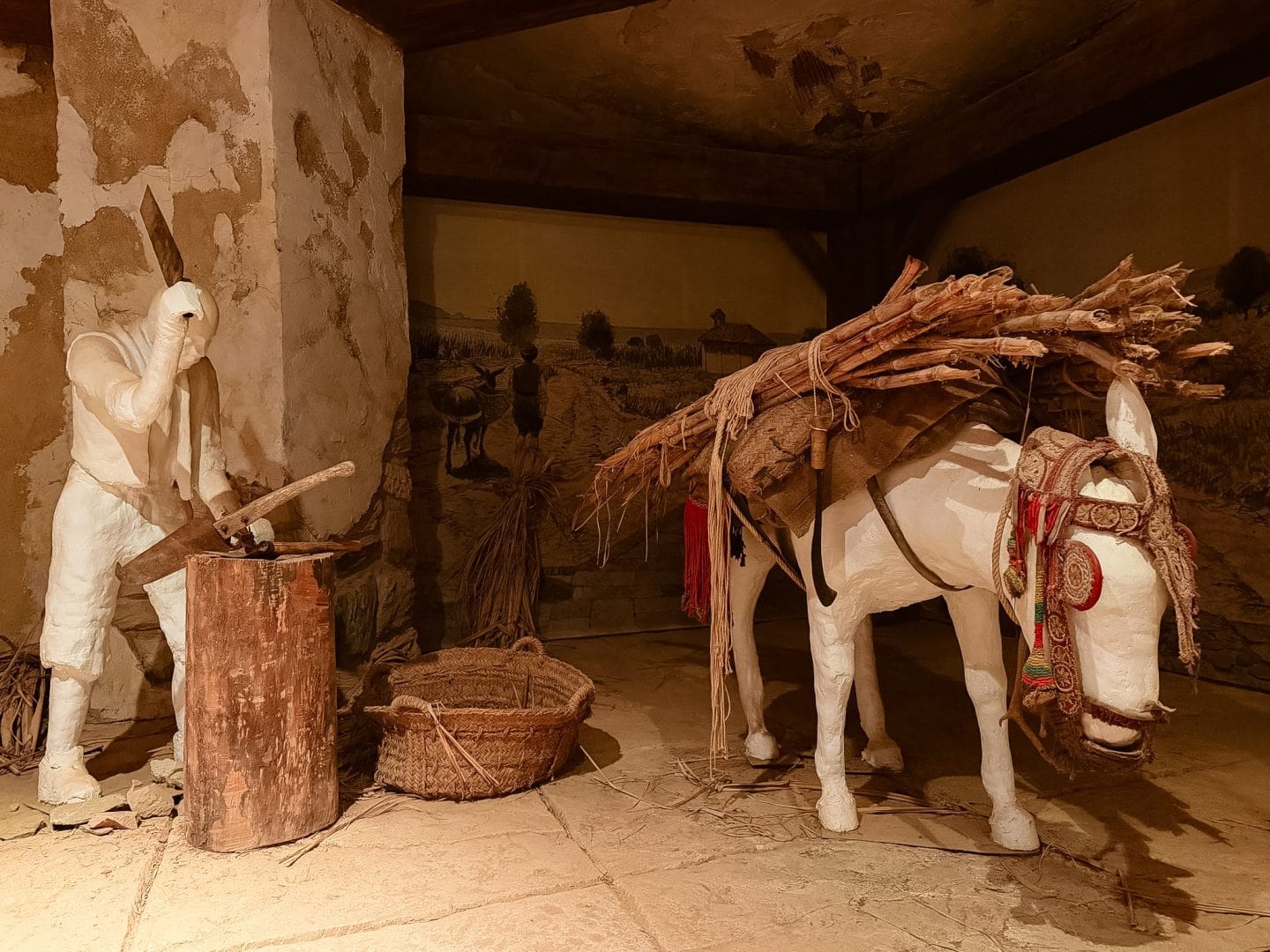
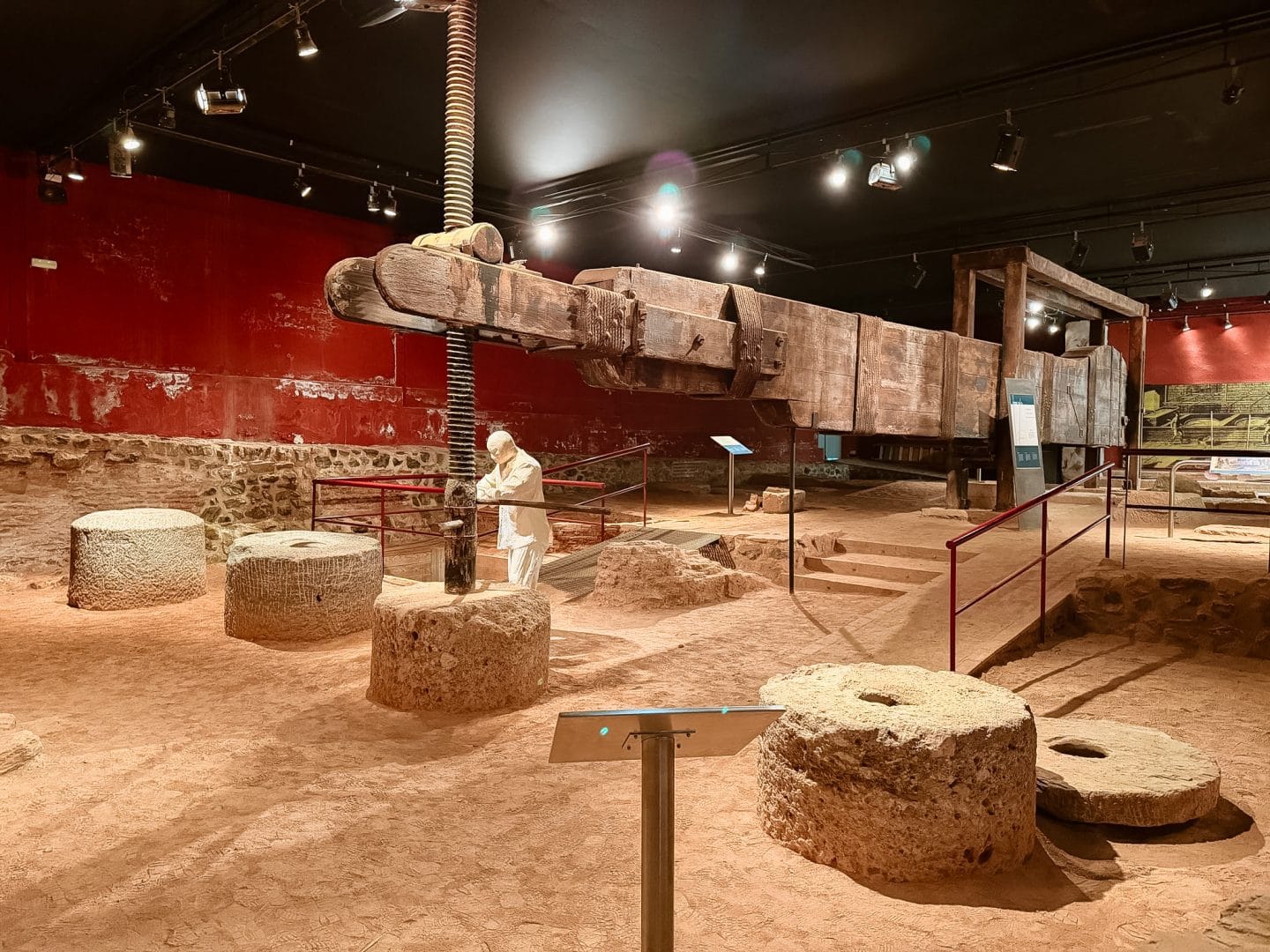
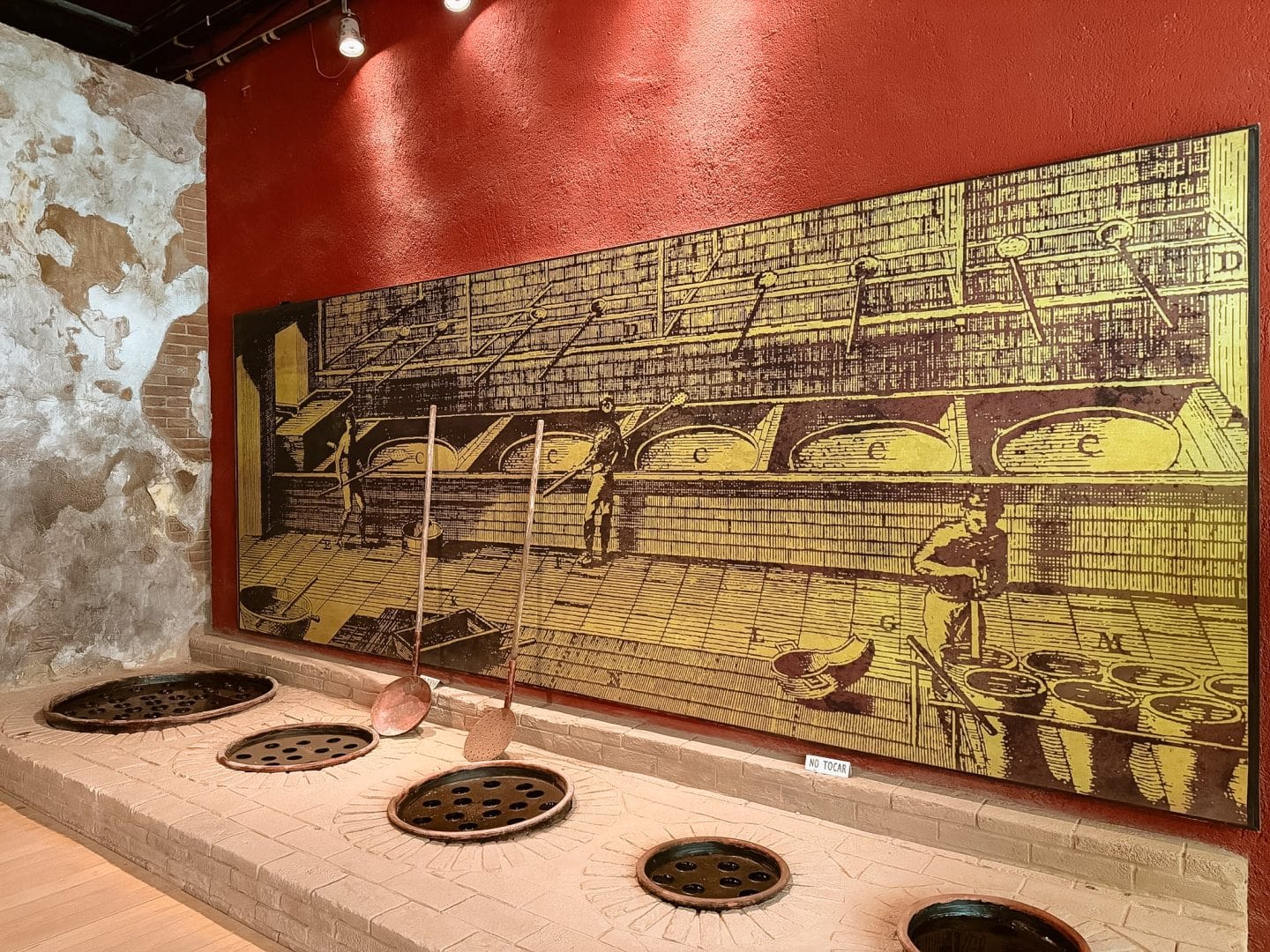
Entrance is €3 and includes a guided visit available in Spanish, English, French, and German.
Address: C. Zafra, 6, 18600 Motril, Granada, Spain
Museum Fábrica del Azúcar
After visiting the Museo Preindustrial de la Caña de Azúcar, I continued on foot to the Museo Fábrica del Azúcar. It’s less than a five-minute walk.
Here, I discovered how industrialisation transformed the sugarcane production. This museum was once a real factory. After it closed, the site was abandoned. Even the machinery was sold piece by piece. Eventually, local authorities stepped in. They decided to preserve what remained and transform it into a museum. At the same time, they tracked down and recovered many of the original pieces to rebuild the factory as it once was.
What I loved most was the start of the guided visit. Just like the workers in the past, you receive a numbered badge. The moment they handed it to me, I felt instantly transported back in time. Back then, it was used to track who was present at work. In the first part of the museum, I listened to testimonies from former workers. It gave a very human perspective to the visit. At the time, many people wanted to work here. Working conditions were considered good, with shorter hours and housing benefits.
Then, I moved deeper into the factory. I saw where the sugarcane first entered the building. After that came the massive machines that crushed and processed it. Some of the machinery is impressive. I had never seen bolts that large before.
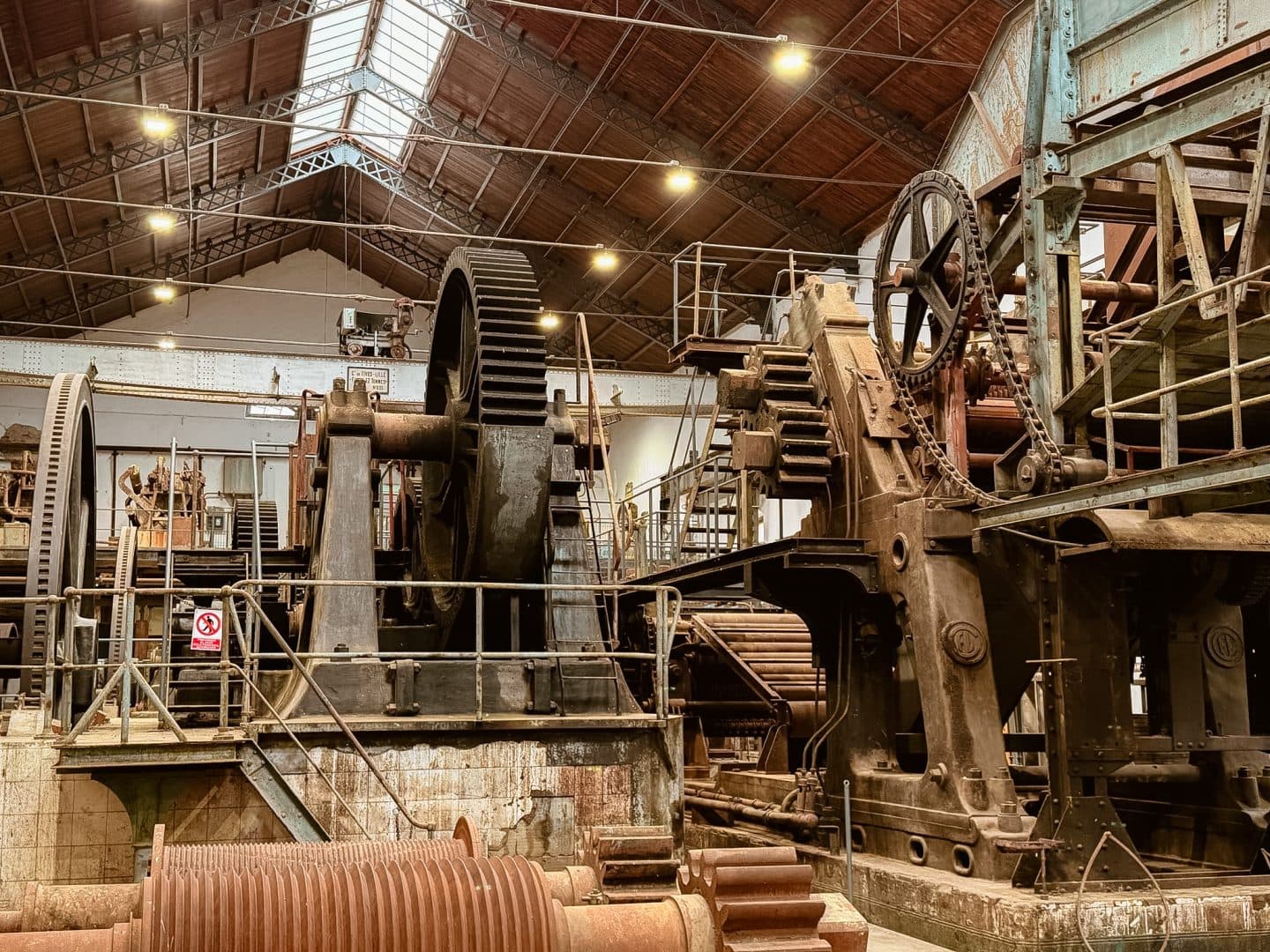
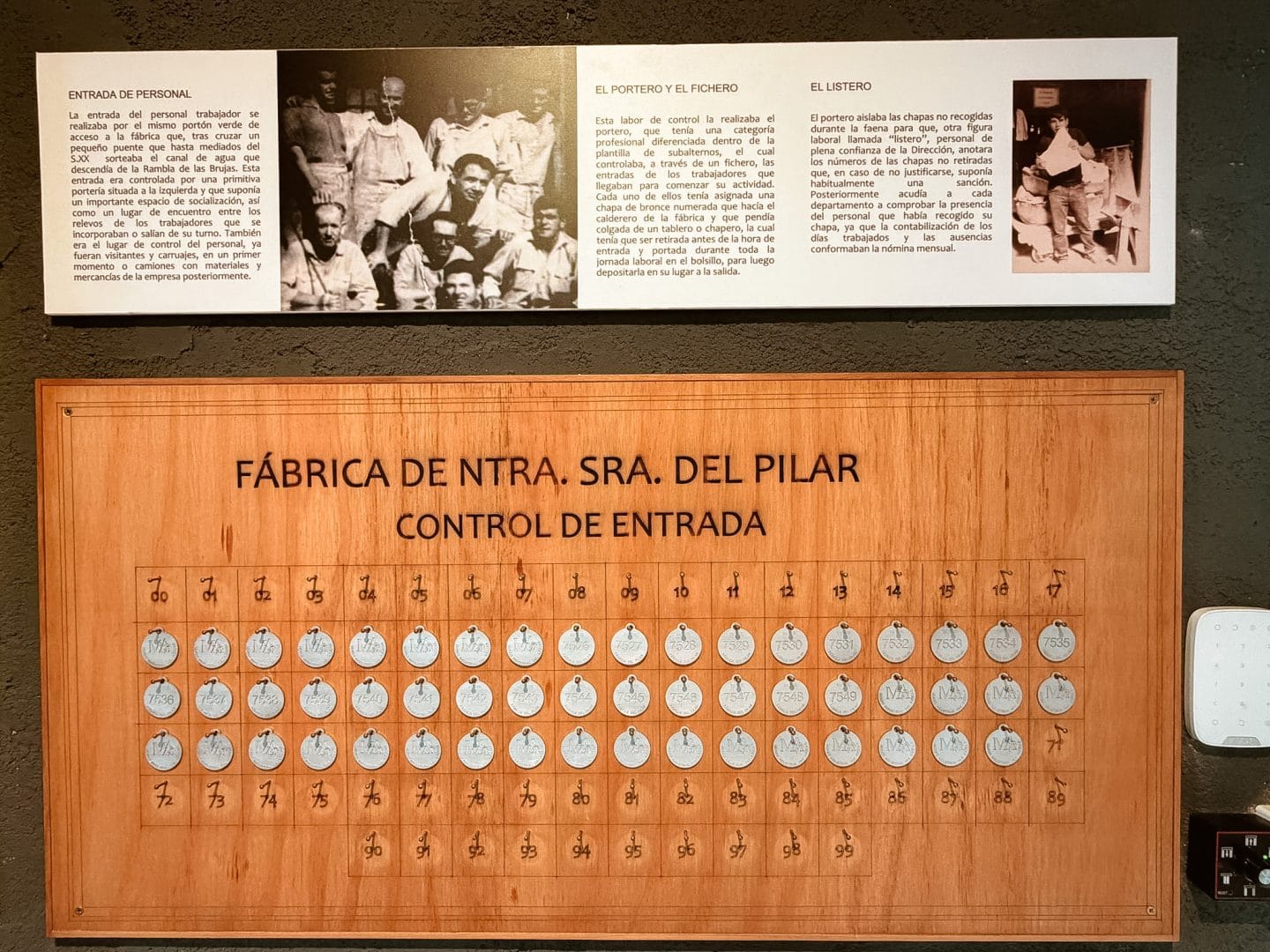
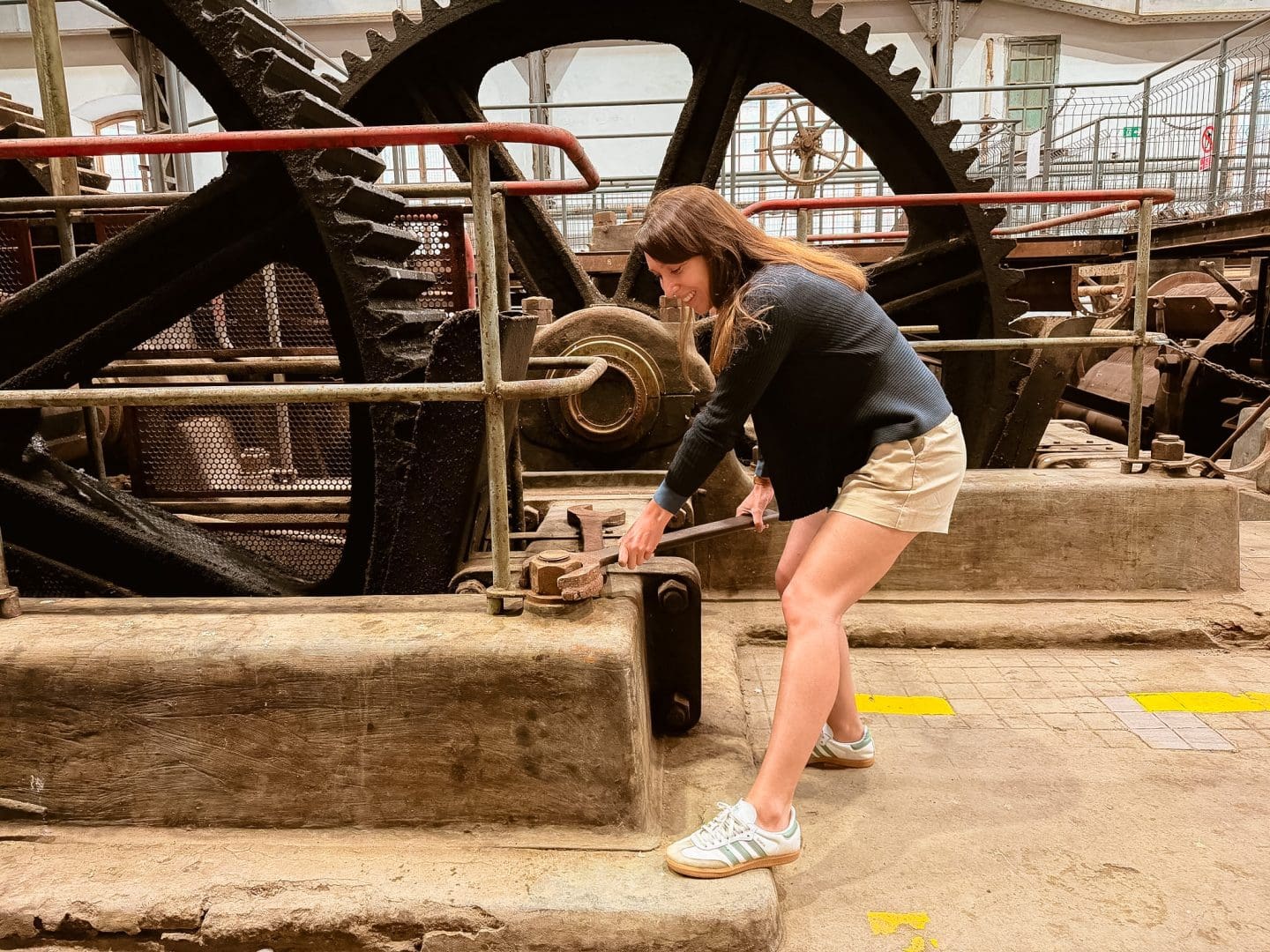
The visit ends with a video filmed by a worker in 1981. It shows the factory fully operational. Watching it made everything feel real
Website Fábrica del Azúcar
Address: Arquitecto Ángel Guijón Díaz 11, 18600 Motril, Granada
You’ll need to book a time slot for your visit through their website, but admission is free.
4. Bodegas El Mondero rum cellar and sugarcane honey
After exploring the two sugarcane museums, I felt ready to experience the final part of the story: the tasting itself. I visited Bodegas El Mondero, where Paco and Carmen continue the sugarcane tradition on a much smaller, more personal scale. From the start, it felt hands-on and authentic, with everything produced on-site: rum, sugarcane liqueur, and sugarcane honey. For anyone interested in local traditions and food experiences, this is definitely one of the most unique things to do in Salobreña.
At first, I was curious about the sugarcane honey. I had always associated honey with bees. Here, I learned it is actually a concentrated syrup made from sugarcane. Despite the traditional name, bees are not involved at all. What makes it interesting is its natural character. It is rich in minerals such as calcium, iron, and potassium. As a result, it has long been used locally as a natural energy source.
However, the real highlight remains the production process. They control everything themselves. They sow the sugarcane and harvest it in March and April. Then they crush it on-site. After that, they distil the juice and age the rum in barrels. Every step stays local, direct, and fully connected to the land and history.
Rum & sugarcane tasting experience
I ended the visit with a tasting, which really brought everything together. First, I tried two rums. The first is aged in old sherry wine barrels, giving it a sweet yet dry profile with notes of salted caramel. The second is aged in brandy barrels, which results in a softer, rounder taste.
What surprised me most, however, was the sugarcane liqueur. It contains 20% alcohol and 80% sugarcane juice. At first, it smells almost like olives, but on the palate it tastes like a natural syrup, directly coming from the sugarcane.
I finished the tasting with the sugarcane concentrate (often called honey). It is very fluid and has a flavour reminiscent of liquorice. Locally, it is used in many ways, for example with fried aubergines, in goat cheese salads, and even in coffee.
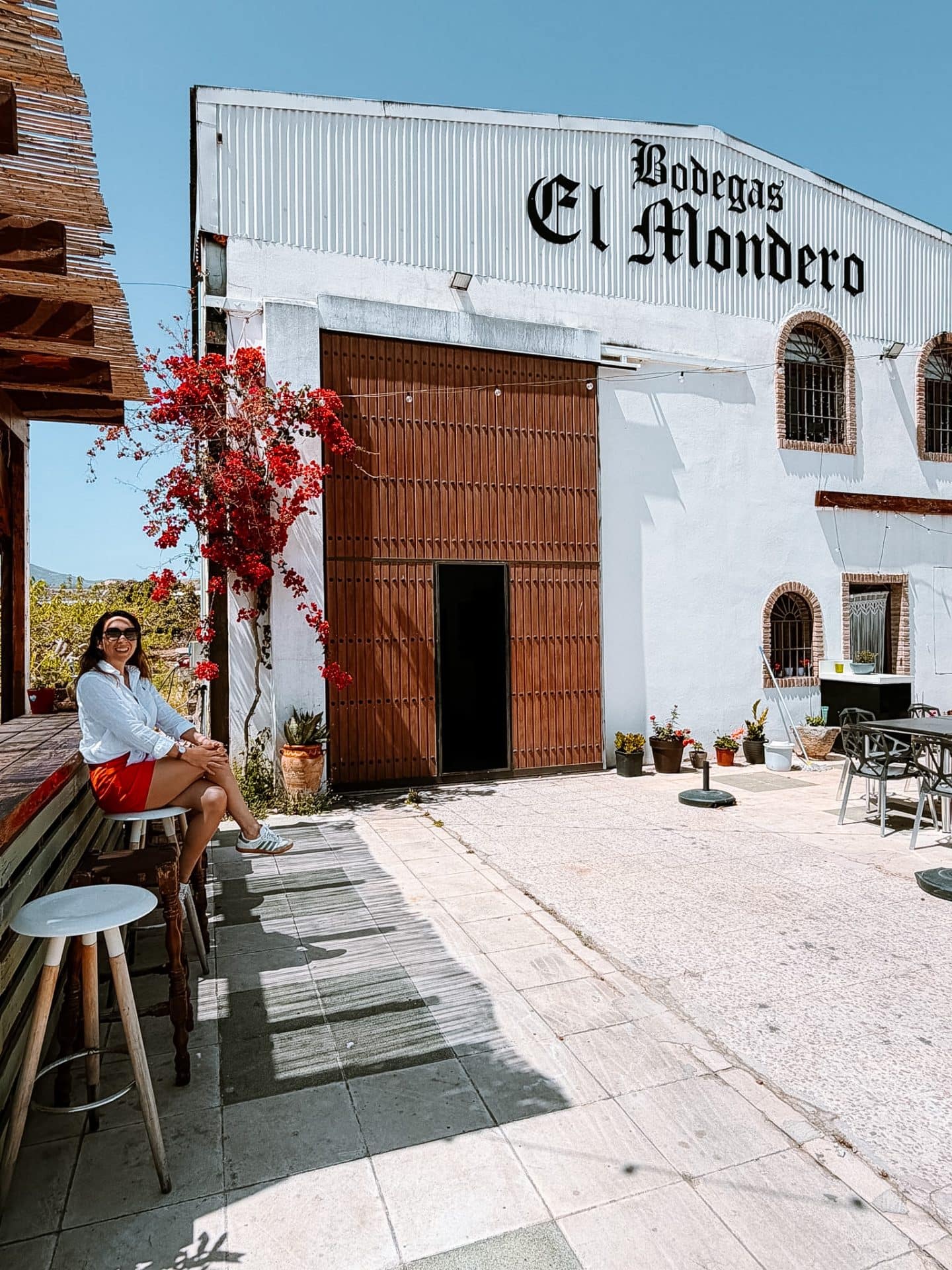
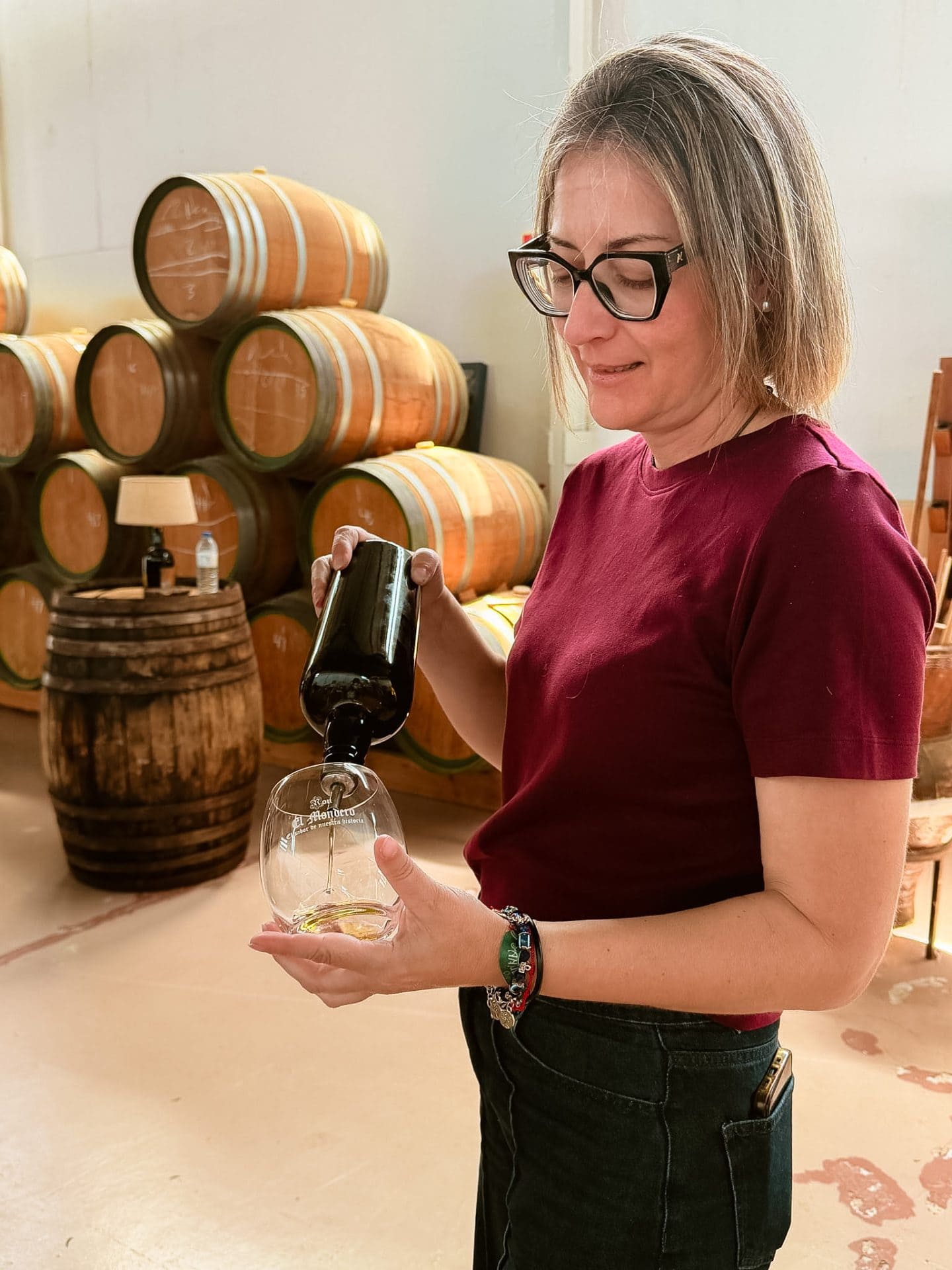
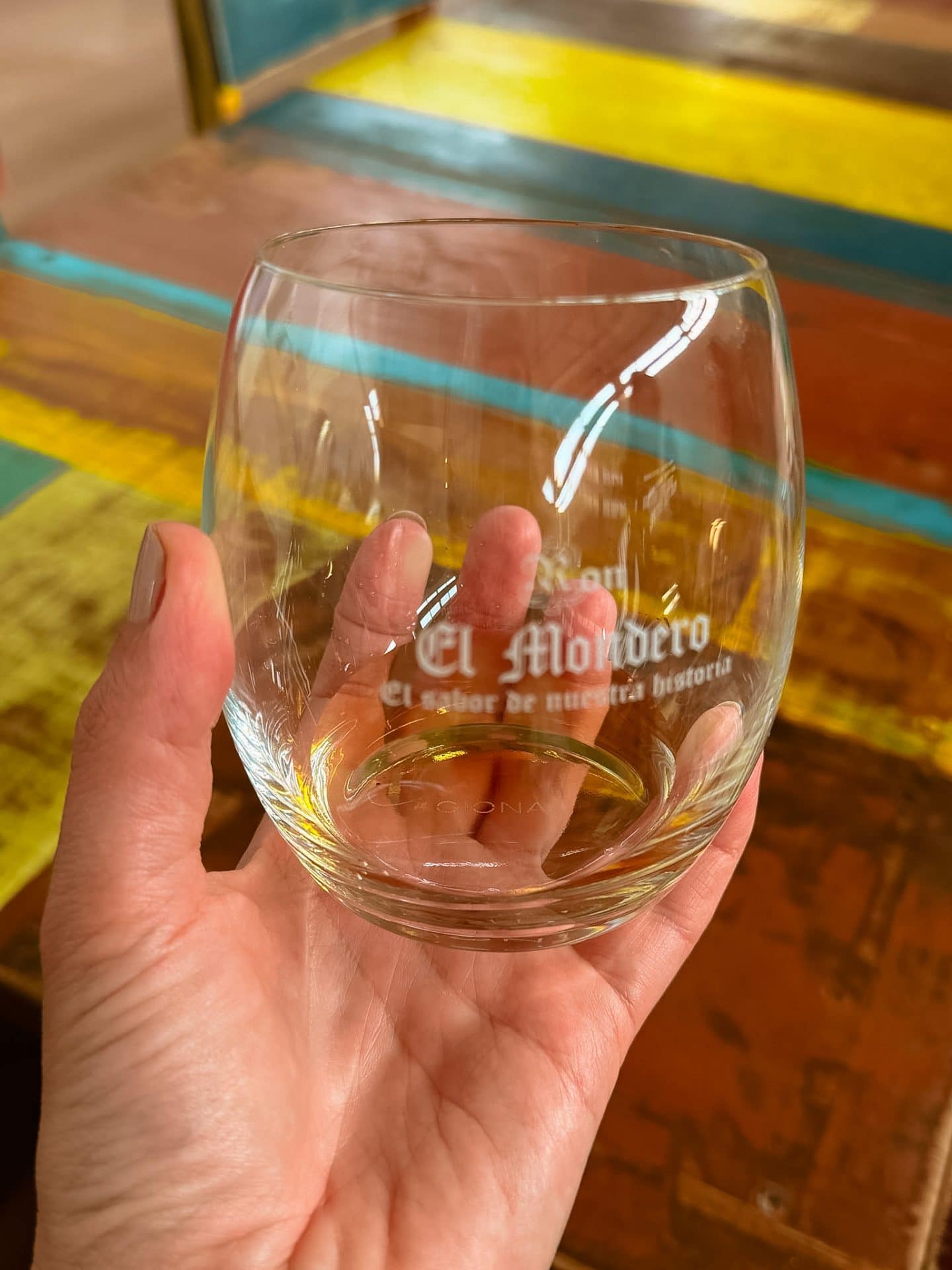
Insider tip: To fully understand the history of sugarcane in Salobreña and on the Costa Tropical of Spain, start with the preindustrial museum, then visit the factory museum, and finish with a tasting at Bodegas El Mondero. This way, you follow the story in chronological order and it all comes together naturally.
I even bought some sugarcane concentrate as a souvenir to bring home and try in my own kitchen. If you don’t have enough space in your suitcase, or if you simply want to taste it in advance, you can also buy directly from their online store. Their rums have even won several international awards thanks to the care taken in how they are made and their distinctive flavour.
Visits are possible upon reservation from Tuesday-Saturday from 10:00am to 02:00pm.
Website Bodegas El Mondero
Address: Paseo San Agustín, 40, Nave, 18610 Lobres, (Granada). Spain
E-mail: info@ronelmondero.com / WhatsApp: +34 698 98 13 81
5. Cycling tour in Salobreña Spain: River landscapes, Captain’s cave & tropical fruit valley
Just opposite my hotel (Hotel Avenida), I found Trujbike. Here you can rent electric bikes or join a guided tour, making it one of the best outdoor activities in Salobreña for exploring the surrounding landscapes. I decided to book the guided tour, because honestly, I don’t have the best sense of direction. The route is around 22 km and takes about 2h30. It includes a 150-metre elevation gain.
Along the Guadalfeo River towards the hills
The tour starts directly from the shop and heads towards the Salobreña beach boulevard along the Costa Tropical coastline of Spain. From there, we follow the Guadalfeo River, which comes down from the Sierra Nevada mountains. Along the way, I noticed many bird species. I recognised a heron, and saw several ducks with their cute little babies.
Slowly, we left the river behind and started climbing into higher terrain. Here, the landscape changes immediately. There is less water, and the vegetation becomes more dry and open. As a result, the viewpoints become even more impressive. We stopped at several spots to take photos overlooking the castle and the Mediterranean Sea, with the snow-capped mountains behind us.
Thanks to the electric bike, the climb was completely effortless, even in the steeper sections. It made it easy to simply enjoy the scenery without thinking about the effort.
Captain’s Cave: a hidden natural passage
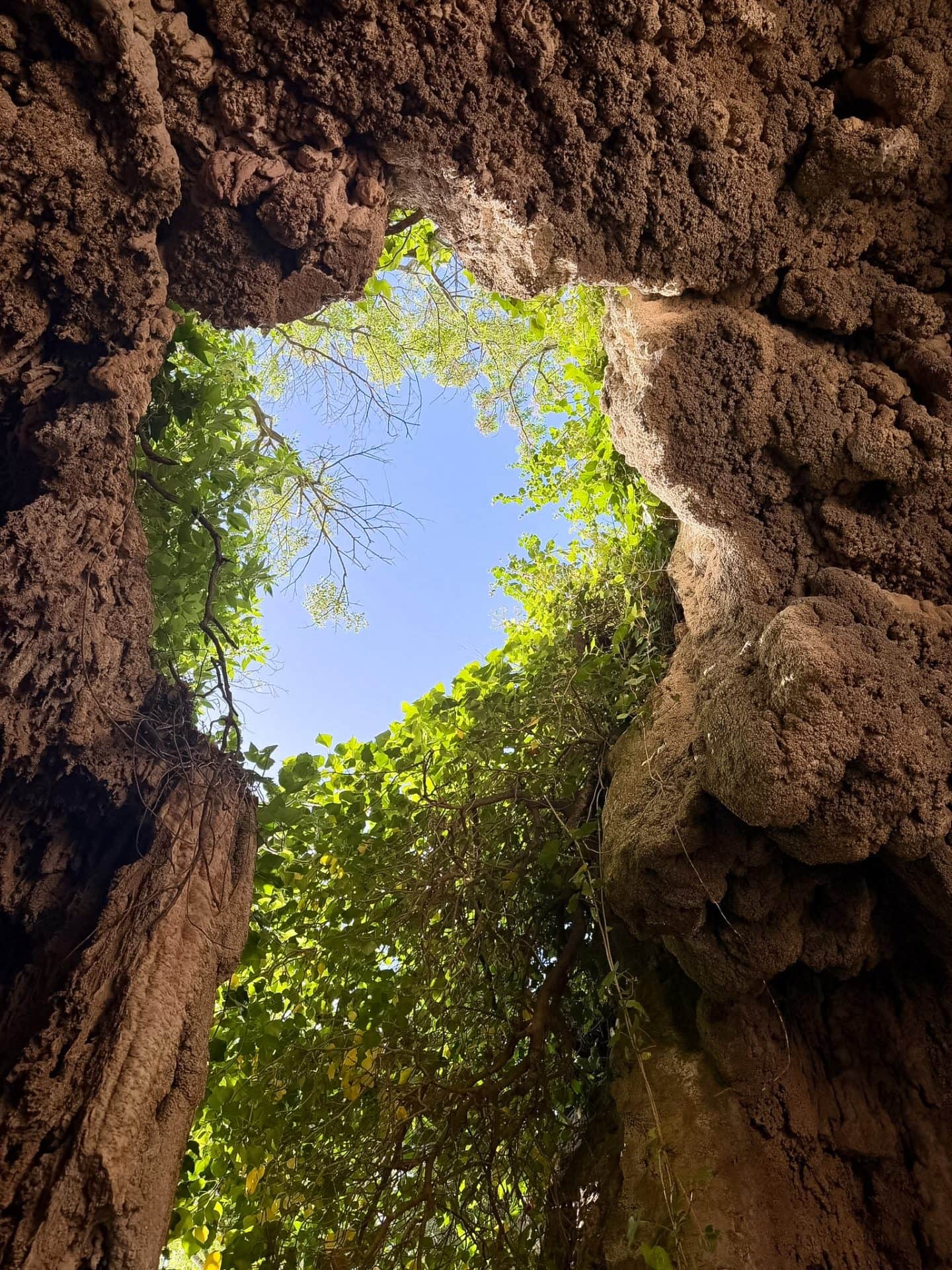
One highlight of the route is the passage through the Captain’s Cave, a natural rock formation carved into the hillside that once served as a shelter and lookout point, and today feels like a hidden corridor through the landscape.
Cycling through the tropical fruit valley
After that, the tour descends again towards the coast. We ride through the tropical valley, where I tried to recognise trees I had seen earlier at the ecological fruit farm Finca Matagallares. Avocado, mango, cherimoya, and loquat trees were all there. This time, I could actually recognise them.

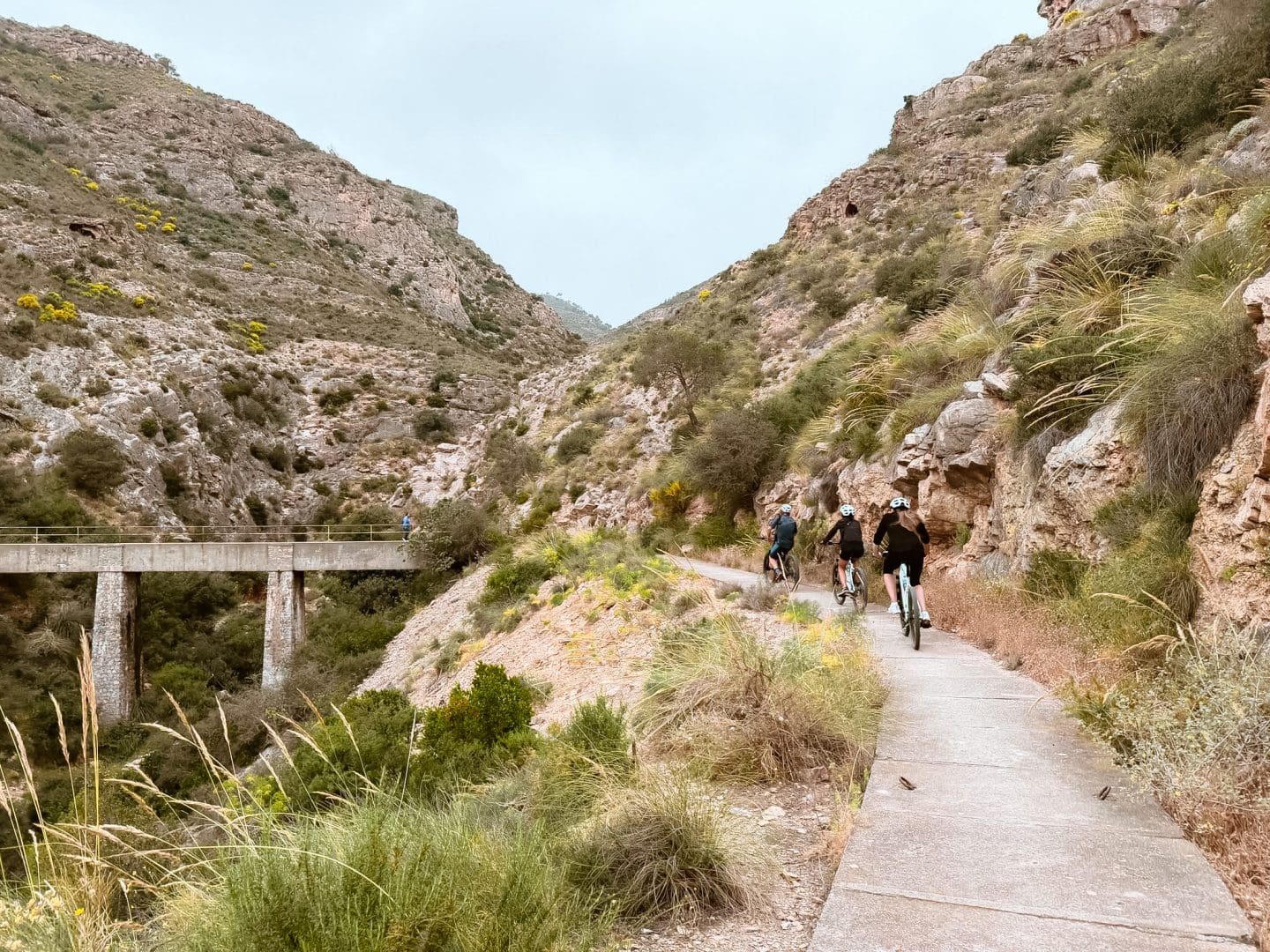
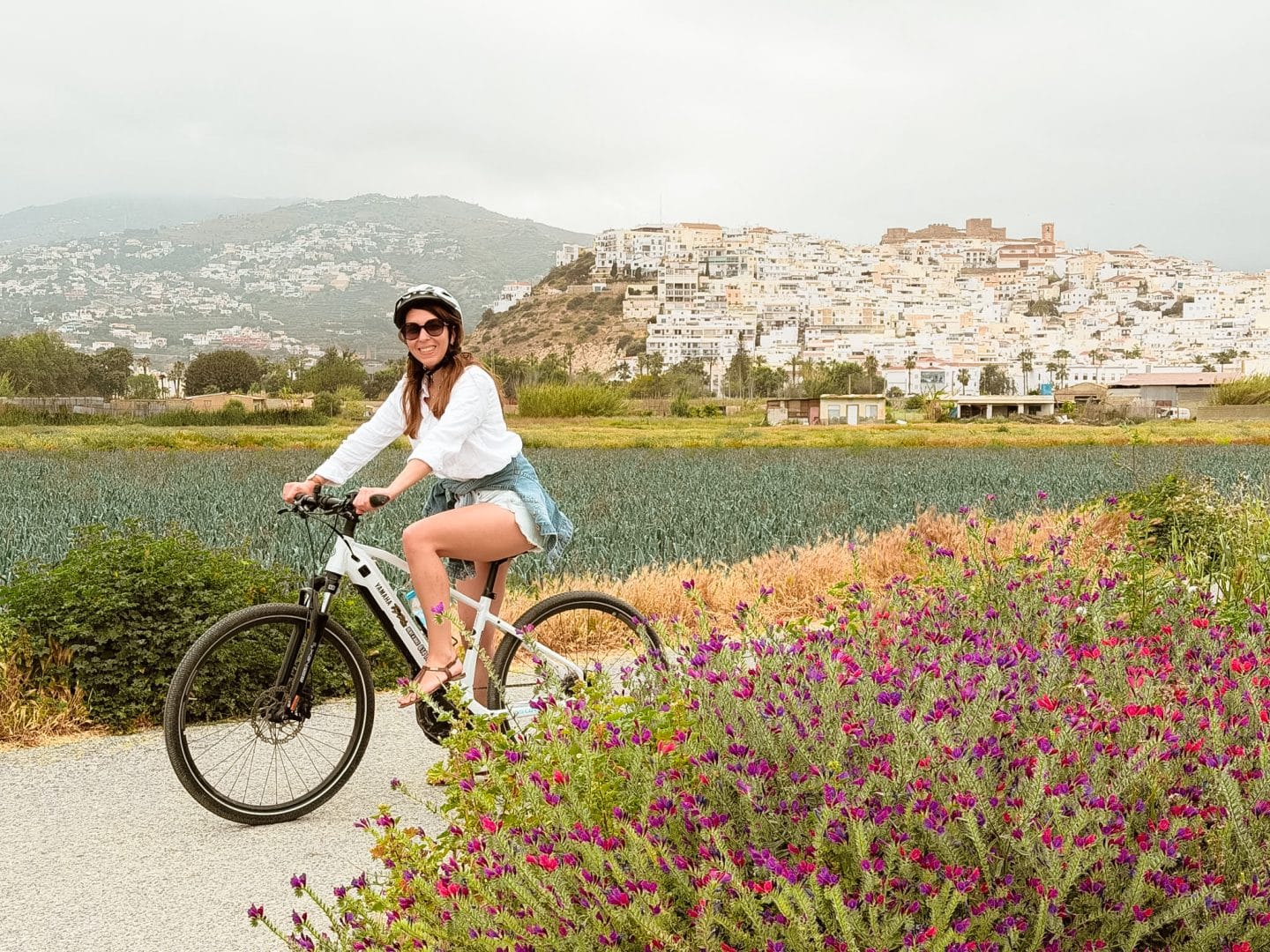
Practical tip: I recommend wearing closed shoes. In some areas, the grass is high and small branches can touch your feet.
Guided tours: Monday to Friday: 10.00am – 02.00pm and 05.00 – 08.00pm, also Saturday: 10.00am to 01.00pm
Address: Av. del Mediterraneo, 22, 18680 Salobreña, Granada, Spain
Whatsapp: +34 614 136 16
6. Coastal walk in Salobreña: scenic route from hills to sea
In and around Salobreña, you’ll find walking routes for every level, making them one of the best things to do in Salobreña if you enjoy nature and coastal scenery. Some follow the Costa Tropical coastline of Spain, while others pass through the tropical fruit valley. More challenging trails lead higher into the surrounding hills and mountains, offering wider views over the Mediterranean Sea and the Sierra Nevada. For anyone interested in exploring Salobreña beyond the beaches, these scenic walks reveal a completely different side of the region.
As you probably know by now, I’m not the most sporty person. However, I do love beautiful landscapes and coastal views. After living for 15 years on Île d’Oléron, I always need to be close to the sea. So, I decided to go for an easy coastal walk, with beautiful views along the way.
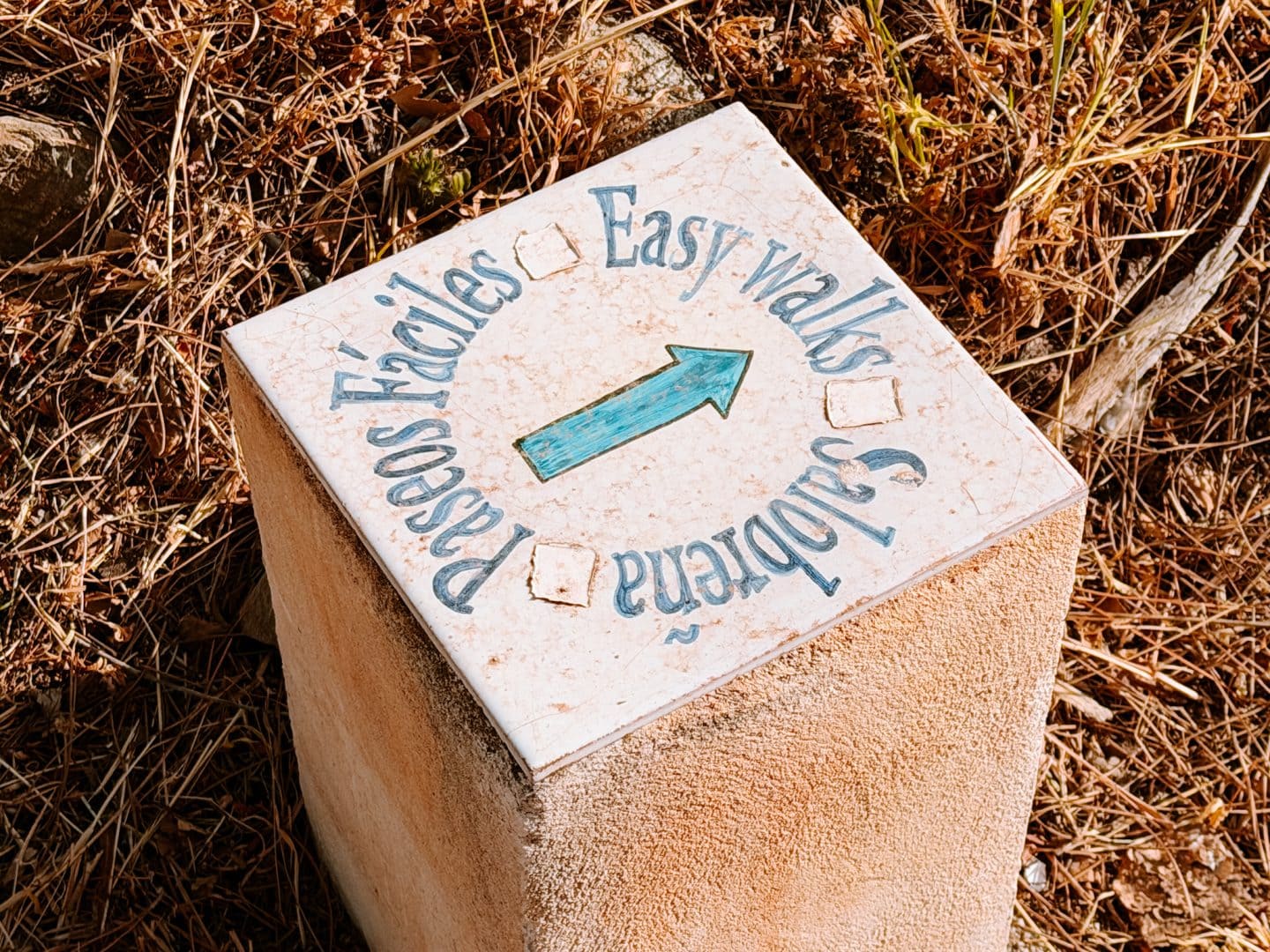
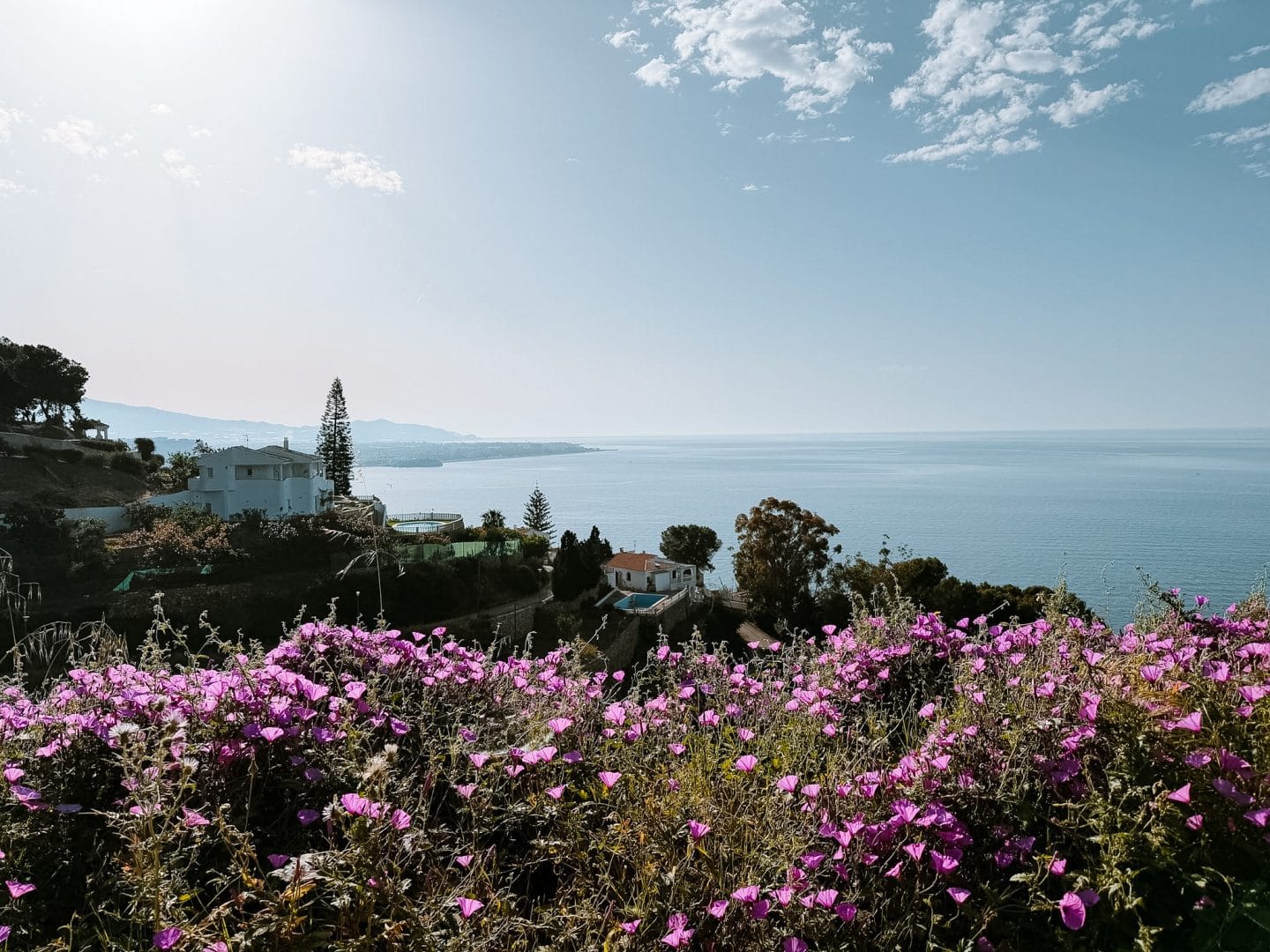
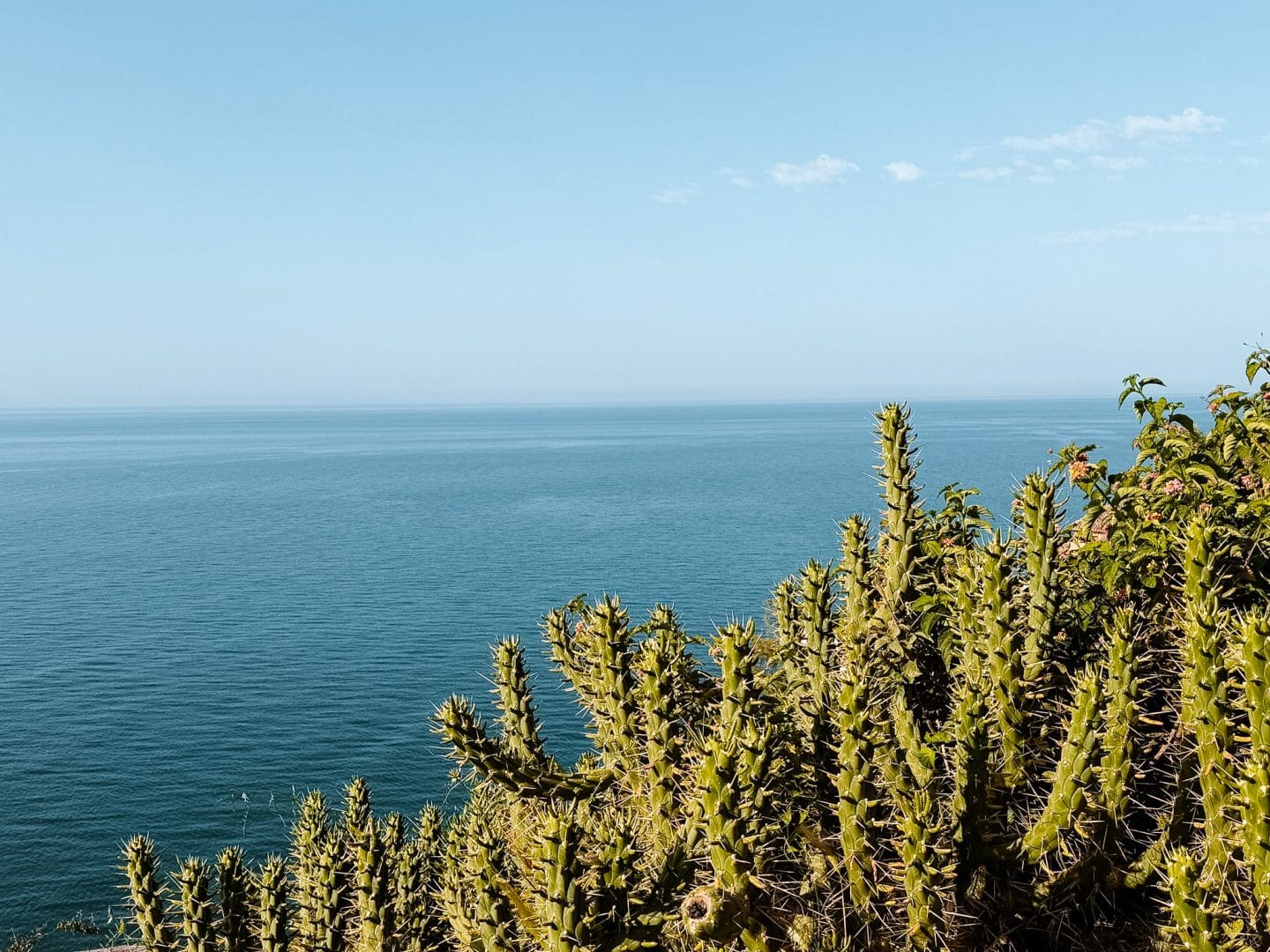
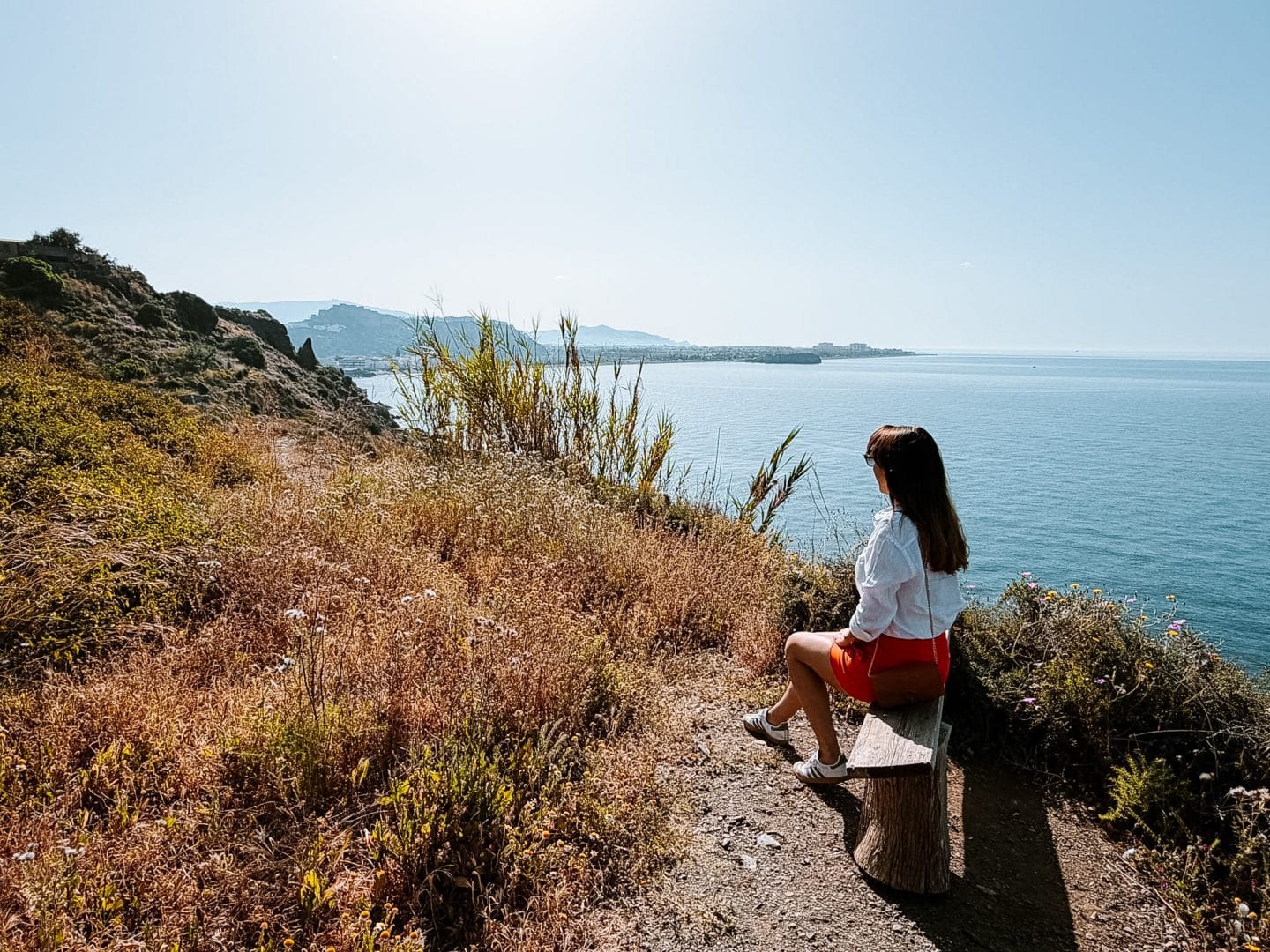
To make it even easier, I started at the highest point and walked downhill. Of course, this required a bit of planning. I didn’t want to walk back up afterwards. So, I took a taxi for €7 to Hotel Salobreña, just 8 minutes from the main boulevard of Salobreña. If you have a rental car, you can also park there. However, keep in mind that you’ll need to return uphill to your starting point to get back to your car.
An easy downhill walk to La Caleta with views of the castle and Salobreña beaches
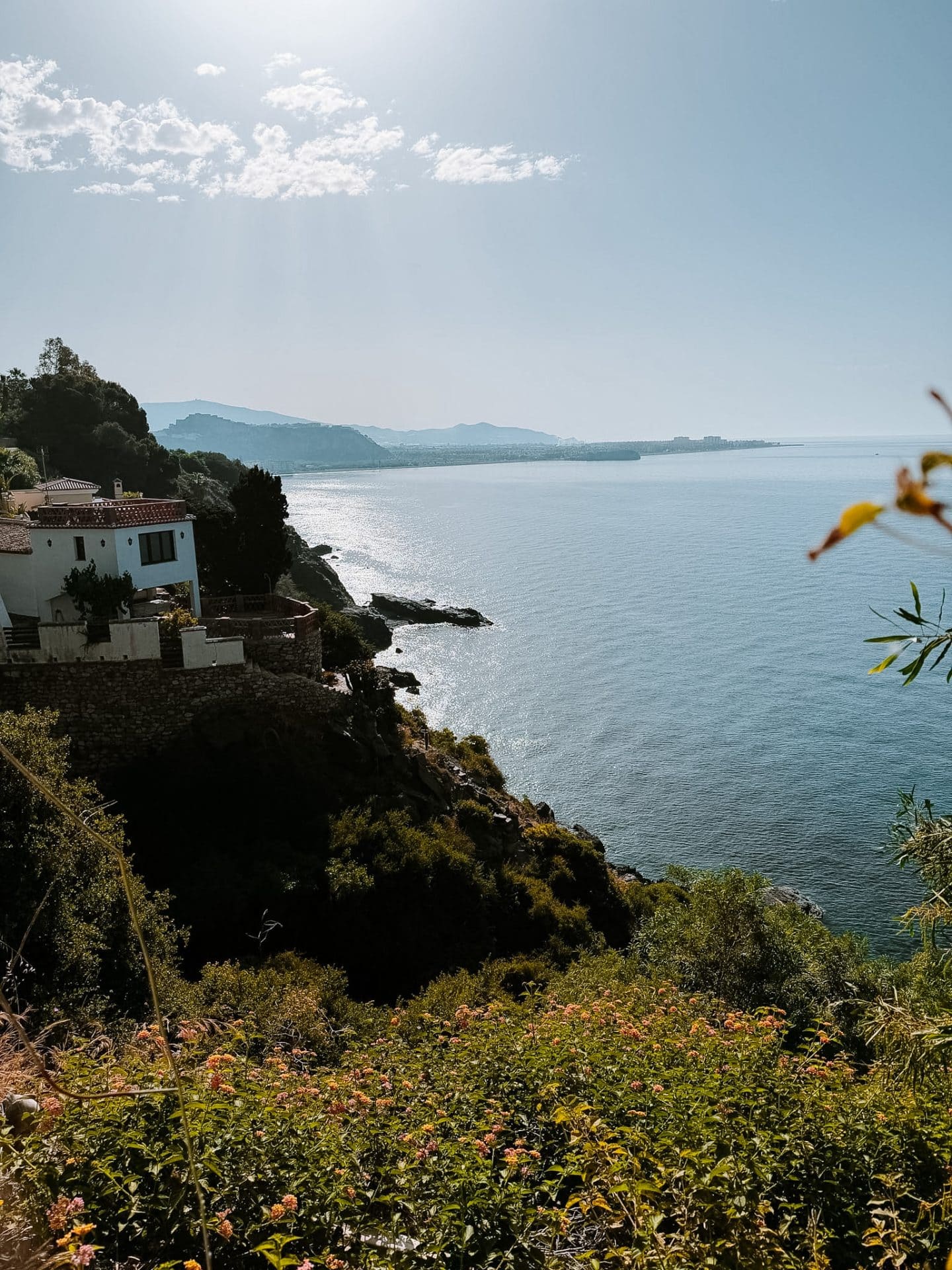
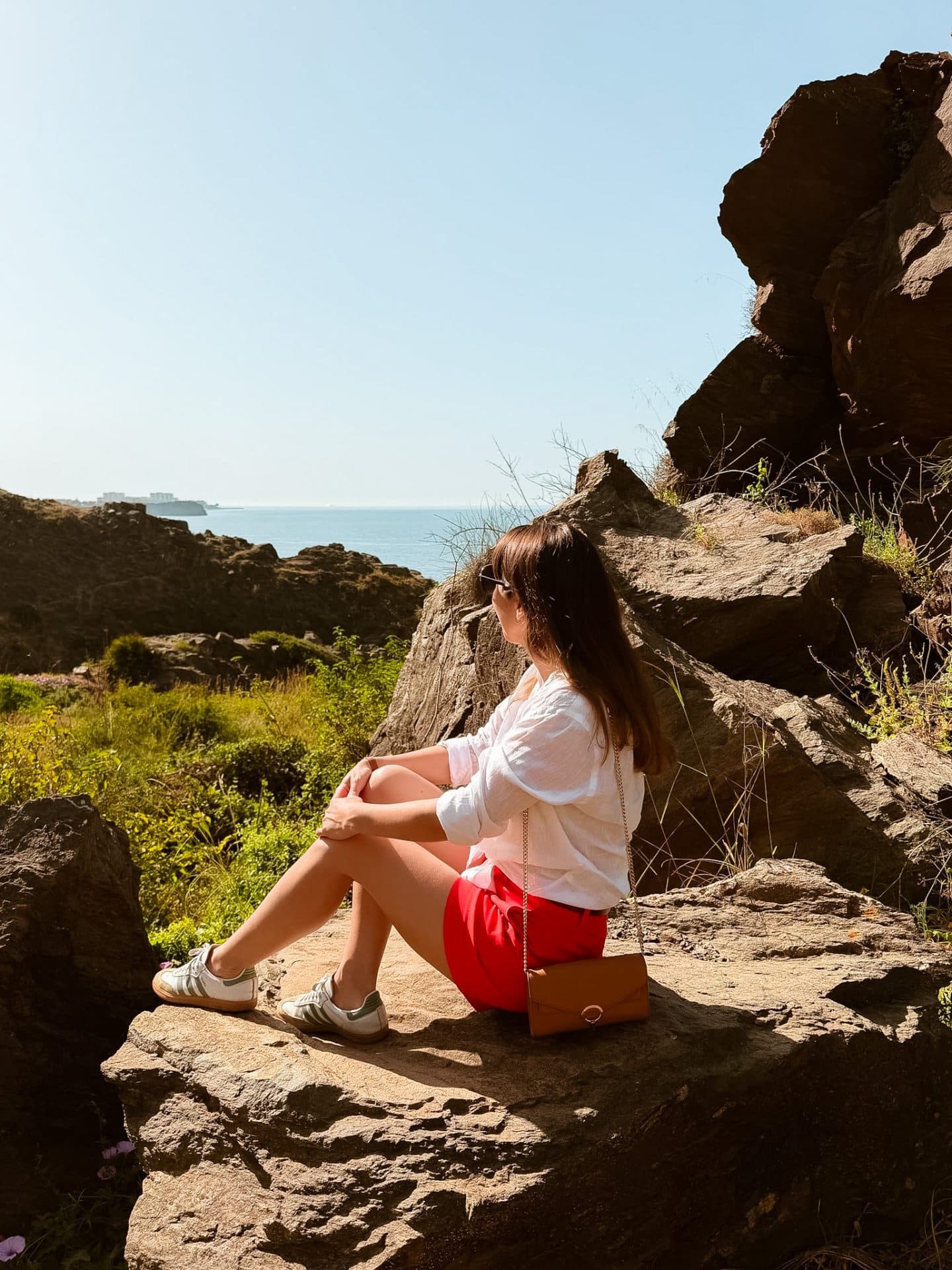
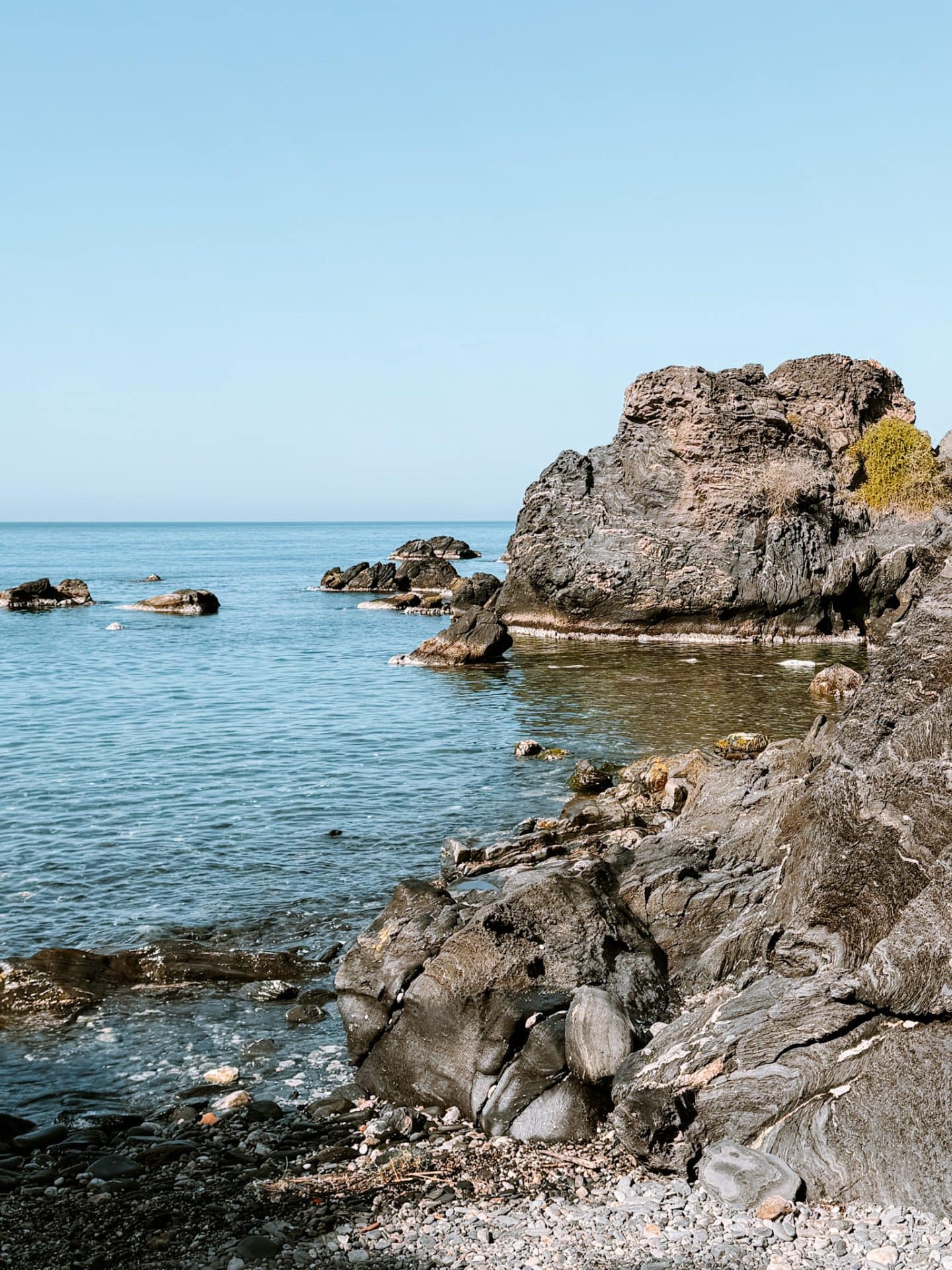
I walked from the starting point Hotel Salobreña down to La Caleta and the Salobreña beach where I had booked a restaurant. It’s about 2.5 km. However, as a slow traveller, I like to take my time. I regulary stop for views and photos. As a result, the walk took me around one hour. At one point, I left the official path and went down to a small cove at sea level. From there, I continued the final part of the walk towards La Caleta. This is usually possible, although in winter, on windy days with strong waves, conditions can change: the sea can crash against the rocks, making this section slippery and temporarily inaccessible.
From La Caleta, you can easily continue the walk along the Costa Tropical coastline of Spain. The route first passes by the old sugar factory. Then, it leads you towards Playa de la Guardia, right below the old town and the Castillo de Salobreña. After that, you reach Peñón de Salobreña, followed by Playa de la Charca and Playa Punta del Rio. In total, the walk is around 5 km and connects some of the most beautiful beaches in Salobreña, with constantly changing coastal scenery along the way.
Insider tips: Don’t forget to wear good walking shoes, and bring your swimsuit if you feel like taking a swim in one of the small, beautiful coves along the route — something I really wanted to do, but didn’t because I hadn’t brought mine. You can also take a small picnic with you and enjoy it somewhere along the coast with a view.
7. Salobreña kayak tour: Discover the Costa Tropical of Spain by sea
A kayak tour was something I had in mind, as I always enjoy discovering places from a different perspective. From the water, I knew the views of the castle and the coastline with the beaches of Salobreña would be completely different. I hesitated at first, though, the weather was around 20 degrees and pleasant, but the sky stayed slightly cloudy. In the end, I didn’t manage to book anything in advance, so I left it open and decided to simply walk around town instead.
An unexpected kayak adventure in Salobreña Spain
While strolling through the centre, I came across Cabopesca, a small fishing shop that clearly has a strong local reputation. People from the wider area were coming in and out to buy equipment. I stopped there out of curiosity, especially when I learned that squid fishing is one of the local specialities along the Costa Tropical of Spain, something I immediately added to my list for another time.
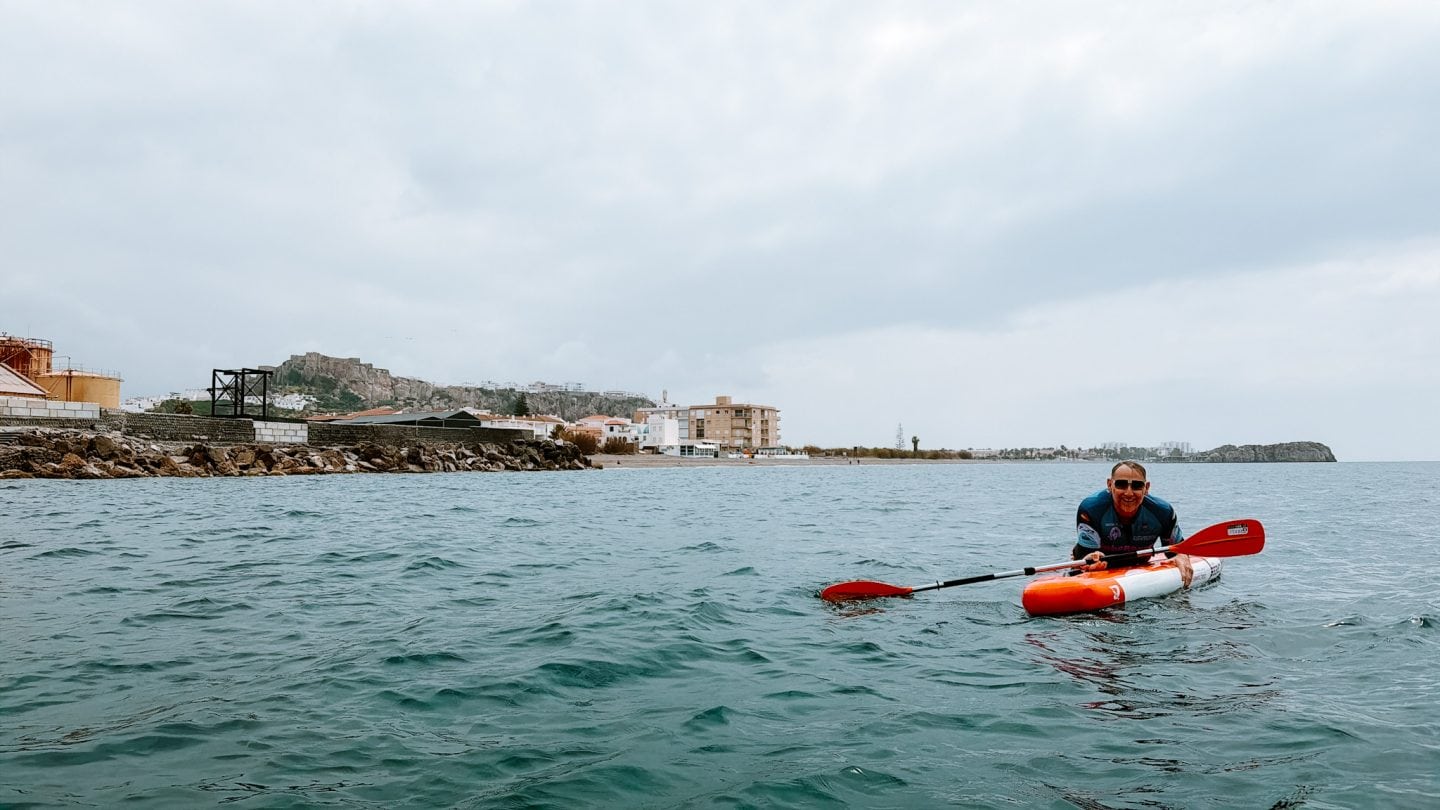
Inside the shop, I started talking with Salvador, the owner. At some point he simply said: “If you like, I can take you out. I’ve got a kayak and a stand-up paddleboard.” And just like that, plans changed completely. A few minutes later, we were already heading towards the water together.
I won’t lie, I did feel a bit bad when he ended up falling into the water during the short trip. But at the same time, it made the whole experience even more memorable.

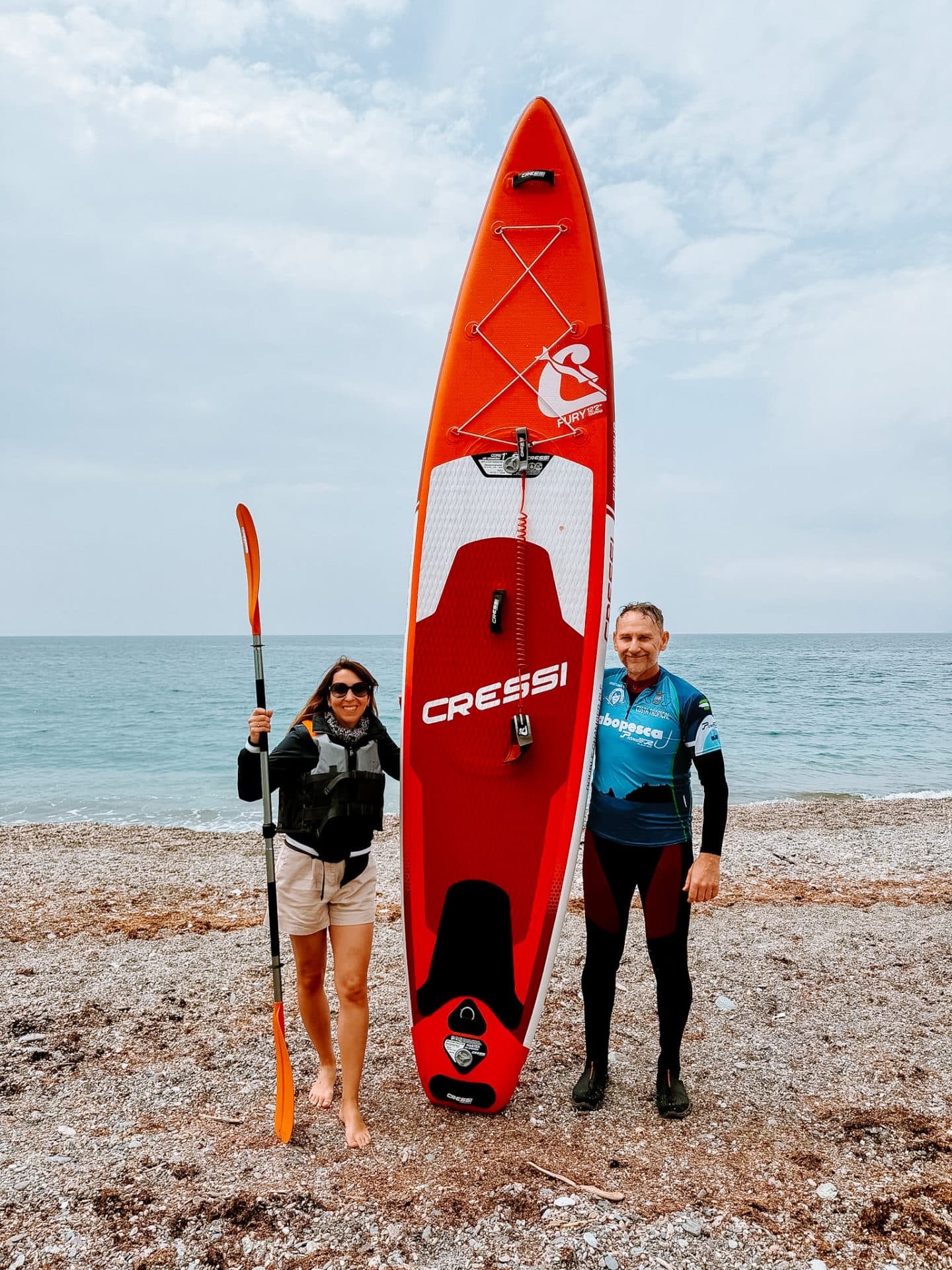
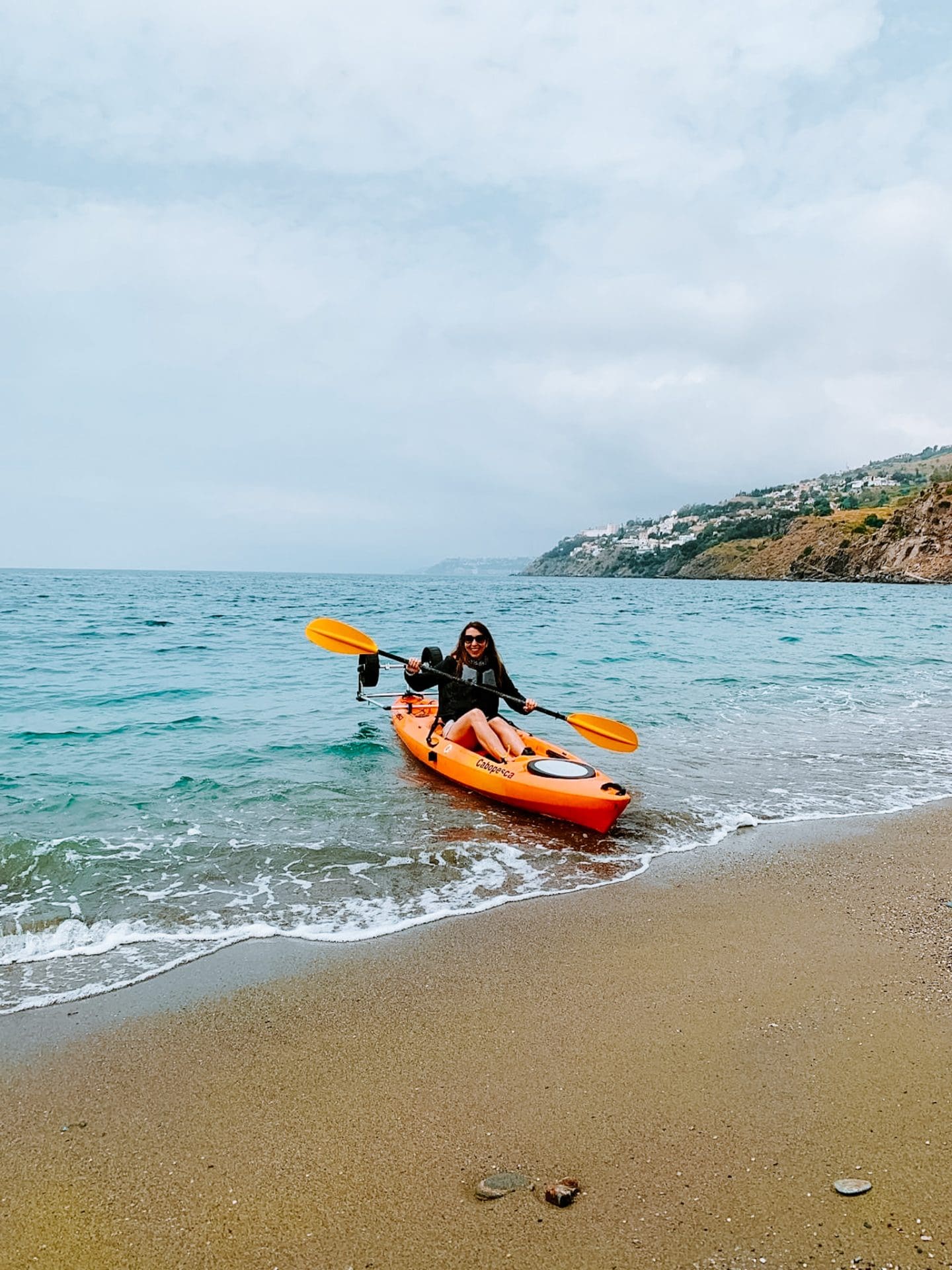
On the water along the Costa Tropical
As soon as we got out onto the sea, a small break in the clouds let a soft ray of sunlight through. From there, everything opened up.
From the water, I could clearly see the old sugar factory, the Azucarera del Guadalfeo Nuestra Señora del Rosario, along with La Caleta, the castle above Salobreña, the Peñón, and several small hidden coves along the coastline.
What struck me most was how different everything felt from this perspective. Places I had already walked past suddenly looked completely new from the sea.
I honestly didn’t expect this moment at all, but it became one of the highlights of my stay. I’m really grateful Salvador brought me out there, especially since he normally spends his time in the shop selling fishing equipment rather than rowing kayaks.
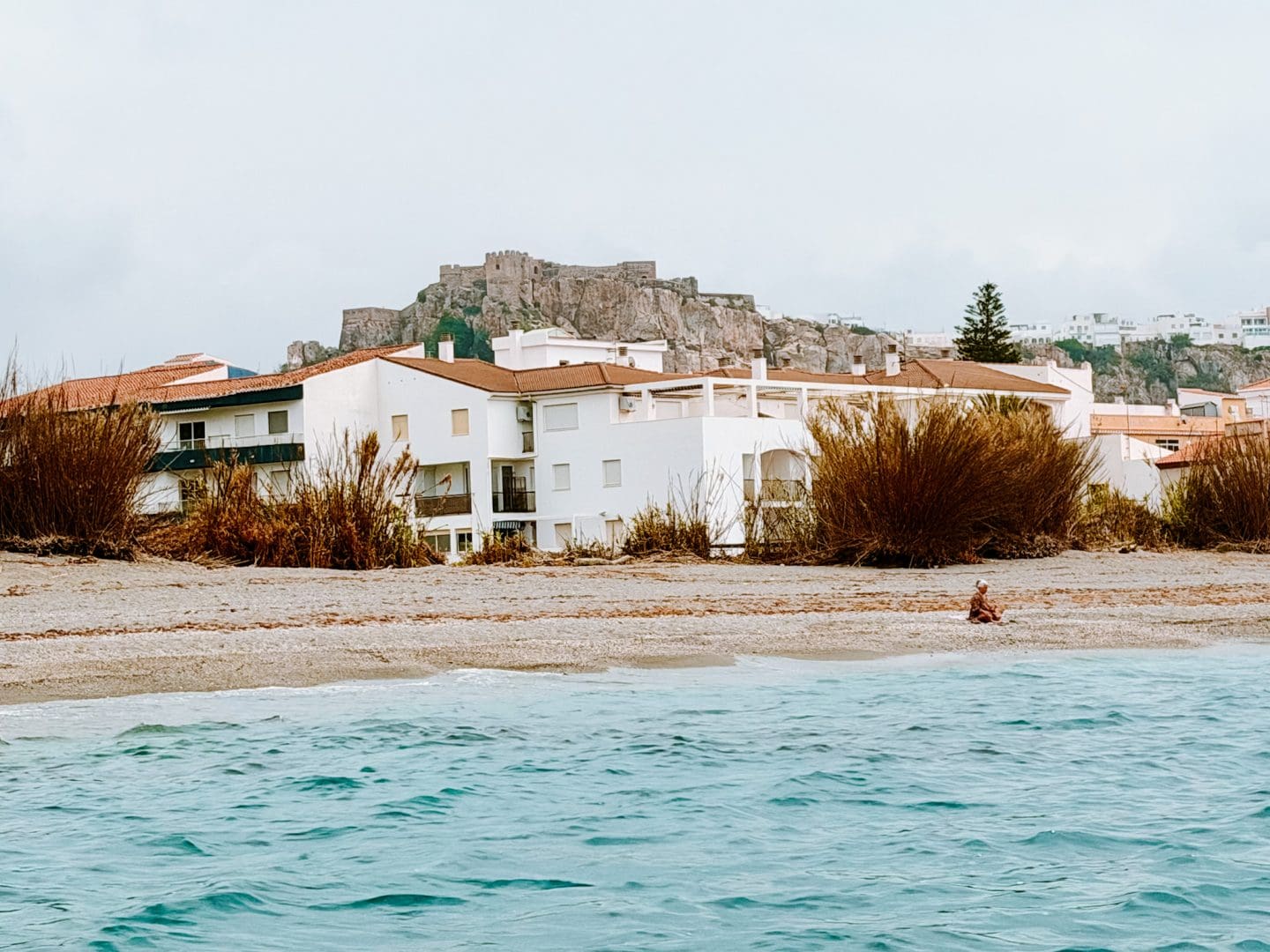
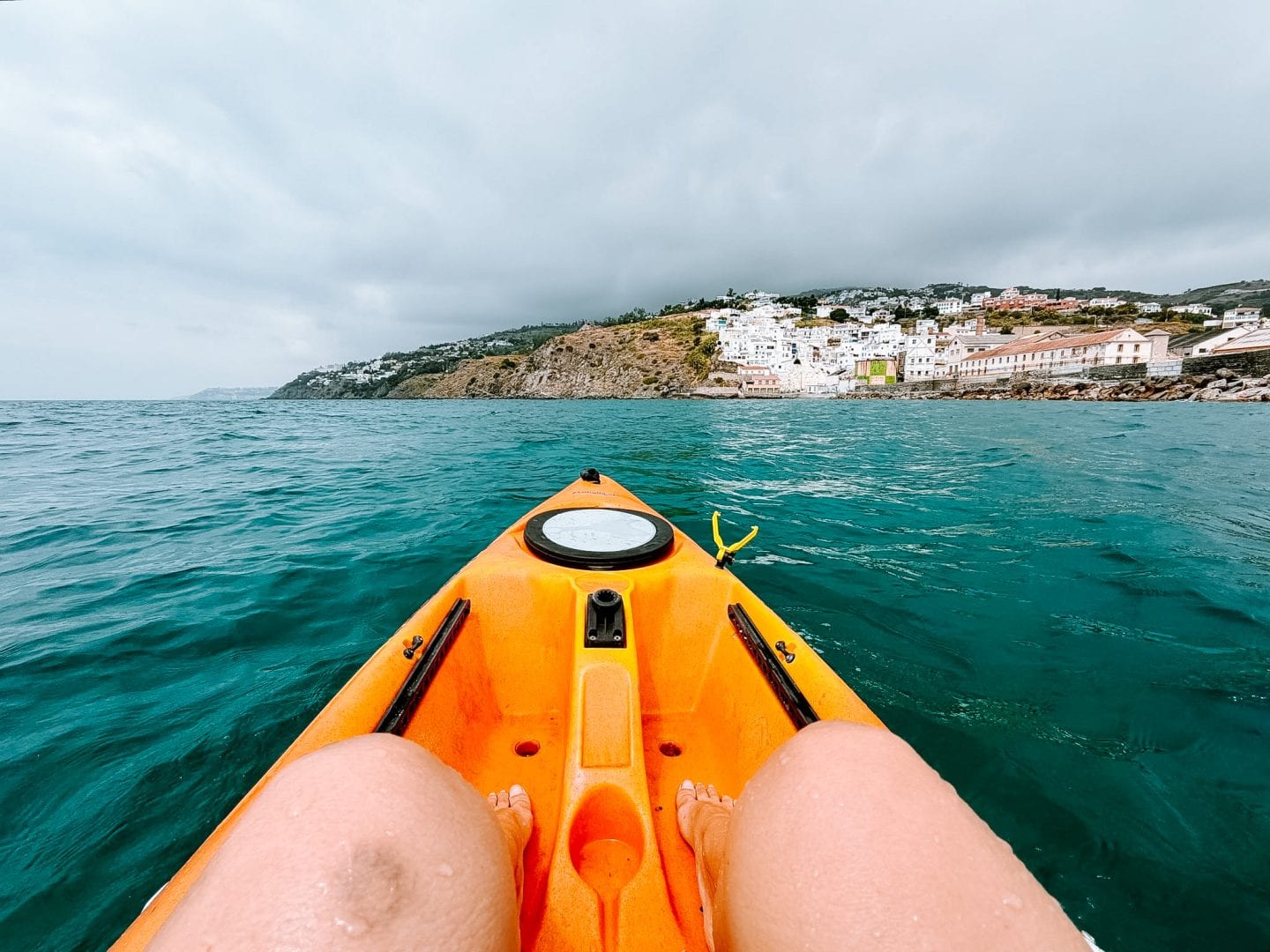
Book your kayak tour in Salobreña Spain
If you want to try a kayak tour, one of the most popular water activities in Salobreña, it’s definitely worth booking in advance rather than leaving it to the last minute like I did. I originally planned to go with Kayak Salobreña, but for easy booking of water activities, it’s worth checking the official Salobreña website, where you can find local companies that offer them.
If you’re more into fishing, visit Salvador at Cabopesca for the best equipments and local fishing tips. He also shares updates through his shop’s Instagram account.
8. Salobreña Street Art Route: Murals in Salobreña, Lobres & La Caleta
During my walks through Salobreña, I discovered the town’s street art route by chance. As one of the more unexpected things to do in Salobreña, it features large murals and artworks spread across Salobreña, Lobres, and La Caleta. The size of these murals is really incredible.
I looked it up and learned there is an official route you can follow using QR codes. You can download the map and explore each zone step by step. However, I chose to simply wander without planning. I preferred to be surprised along the way.
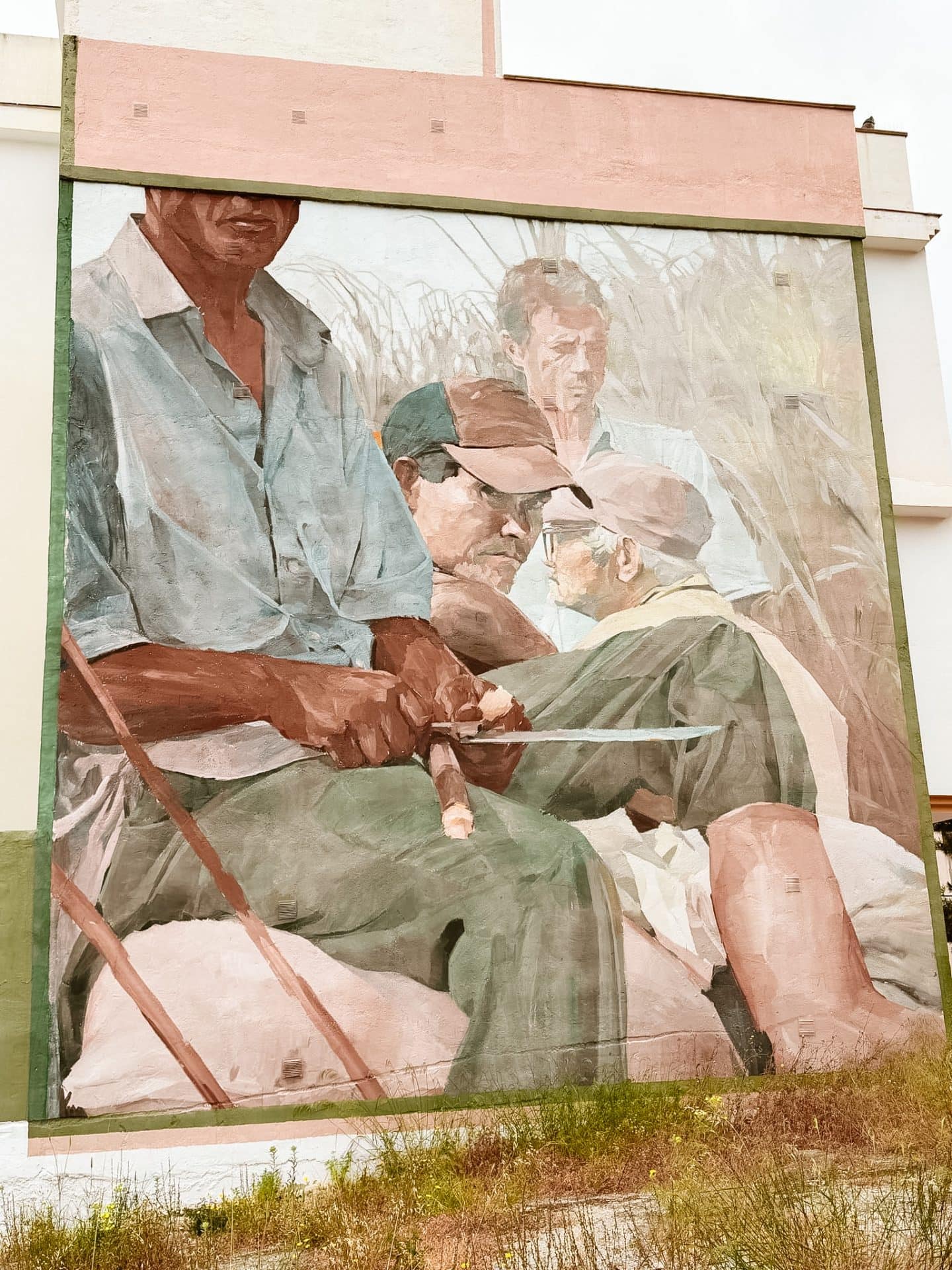
I found it interesting how each mural tells a story. Together, they reflect local history, community spirit, and agricultural roots, especially sugarcane. In a way, the street art feels like a cultural transformation of the town itself, blending past and present on its walls.
My favourite murals in Salobreña Spain
A few murals really stood out to me, each for a different reason. My favourite is The Workers in the Cane Field by Pablo Astrain. It is located near Liberty Park, just below the red house. It reminded me of everything I learned at the sugarcane museum and factory visits.
I also really liked Lady with Red Flower by Medianeras. You can find it in Calle Victoria Kent, just behind the town hall in Salobreña. The colours are striking, and the black-and-white shirt creates a strong optical effect with the wall next to it. Even when you are not standing perfectly in front of it, the perspective still plays with your eyes. It instantly catches your attention.
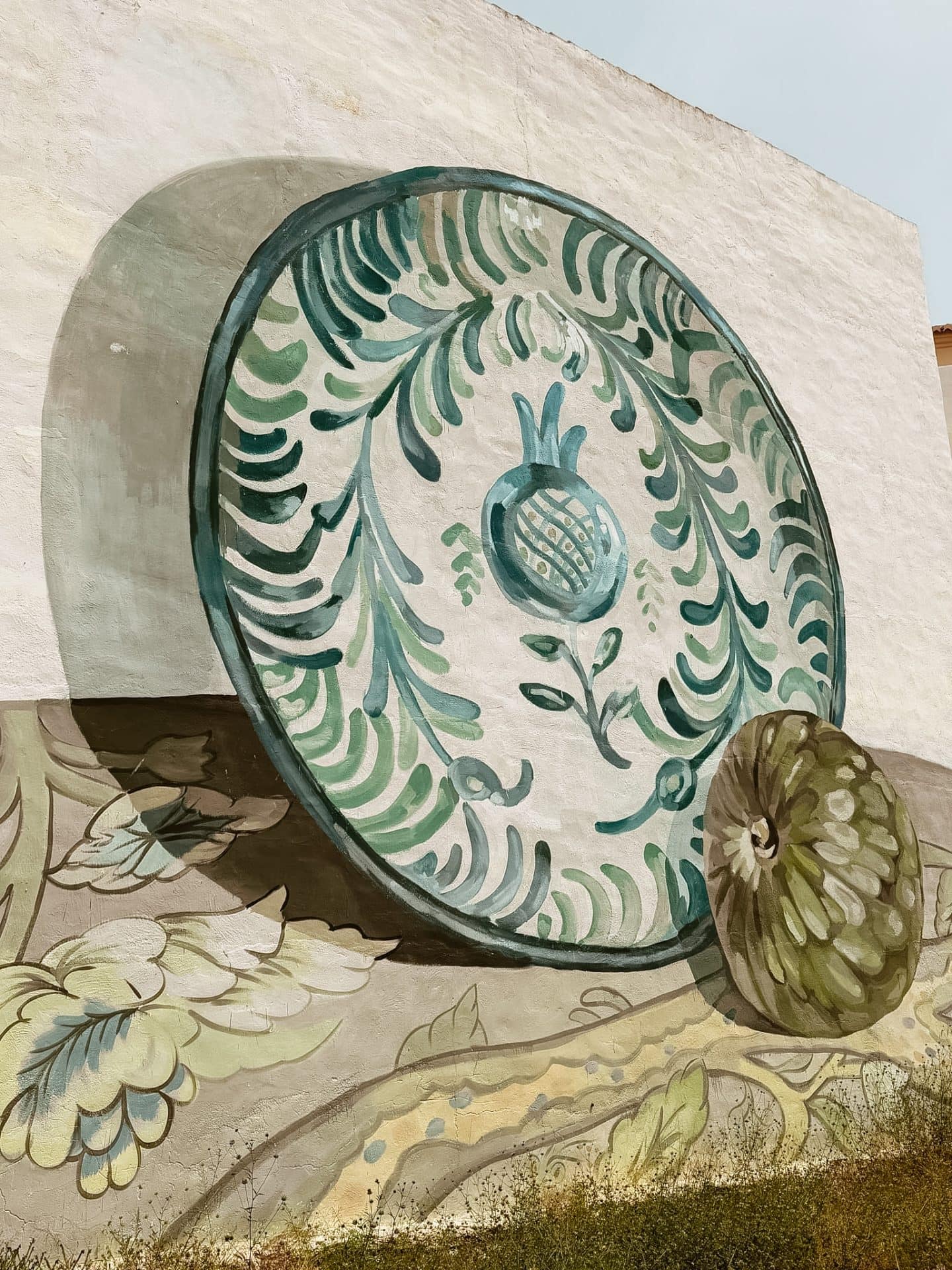
Finally, Granada Ceramic & Chirimoya by Marta Lapeña, located on Avenida Peronne, brought me back to my visit at the ecological fruit farm Finca Matagallares, where I tasted cherimoya for the first time in my life.
One thing is certain: whether you follow the route or just stroll around, comfortable shoes are a must.

9. Best beaches in Salobreña: Playa de la Guardia, Playa de la Charca & sunset at Peñón
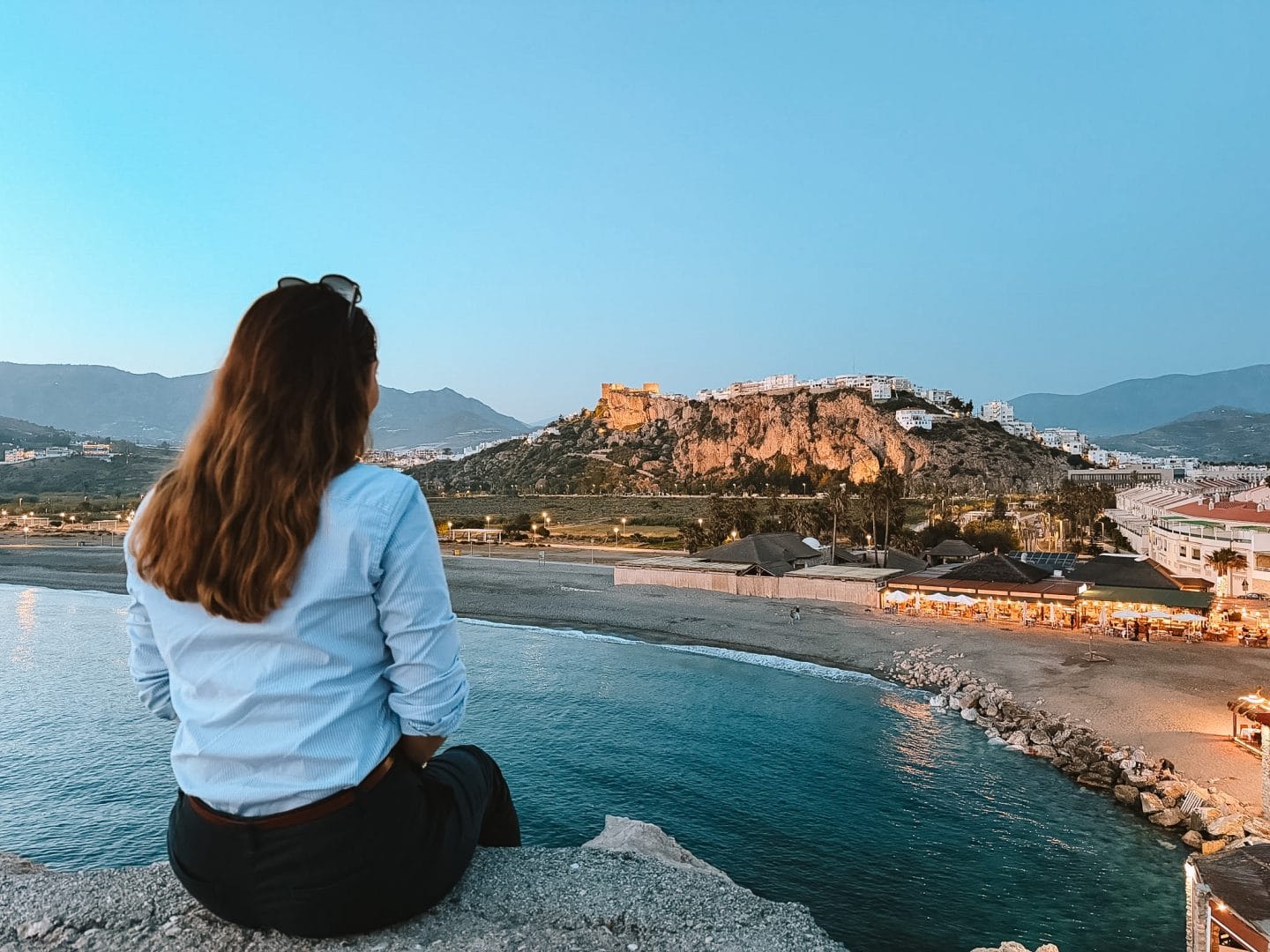
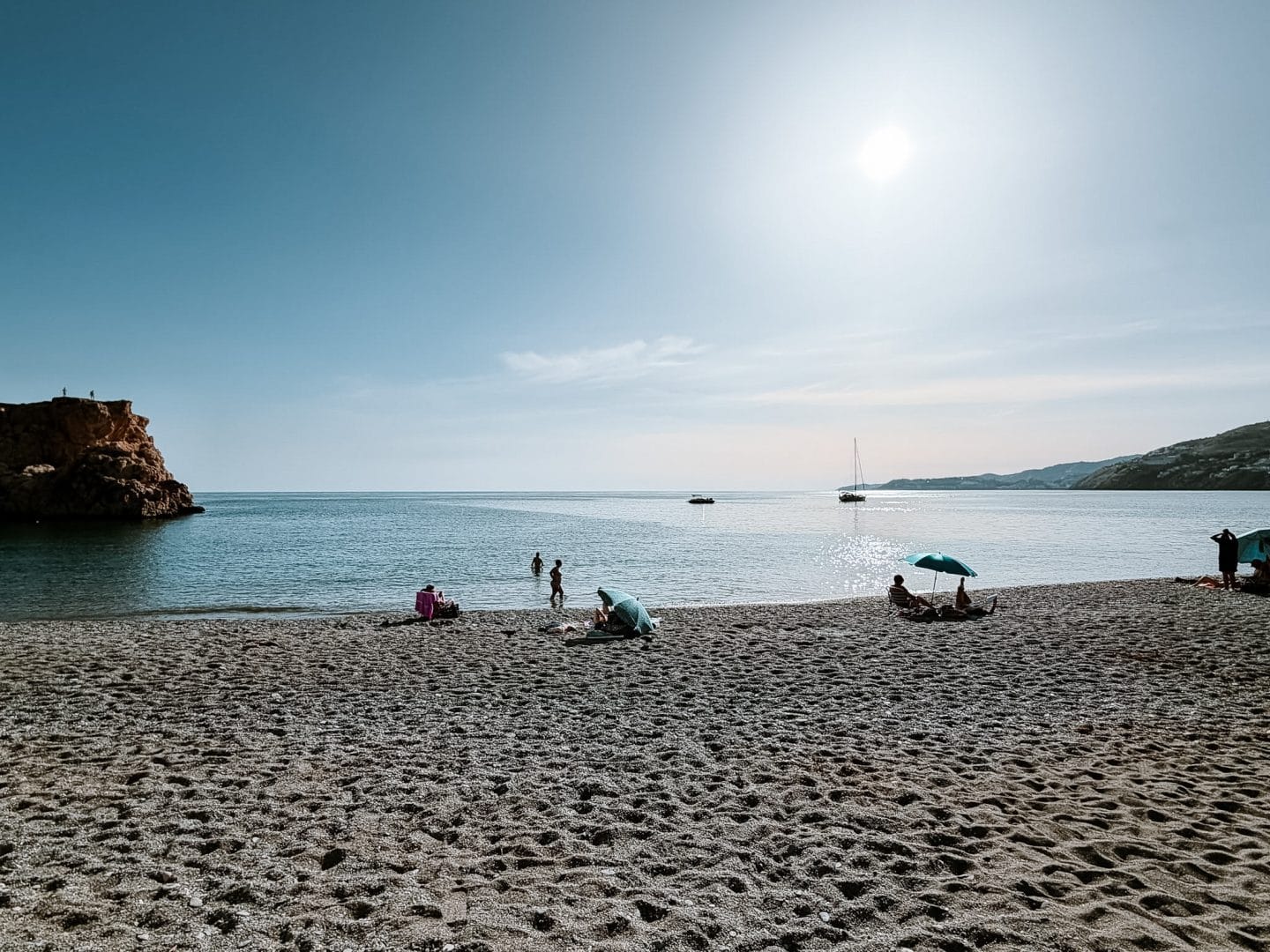
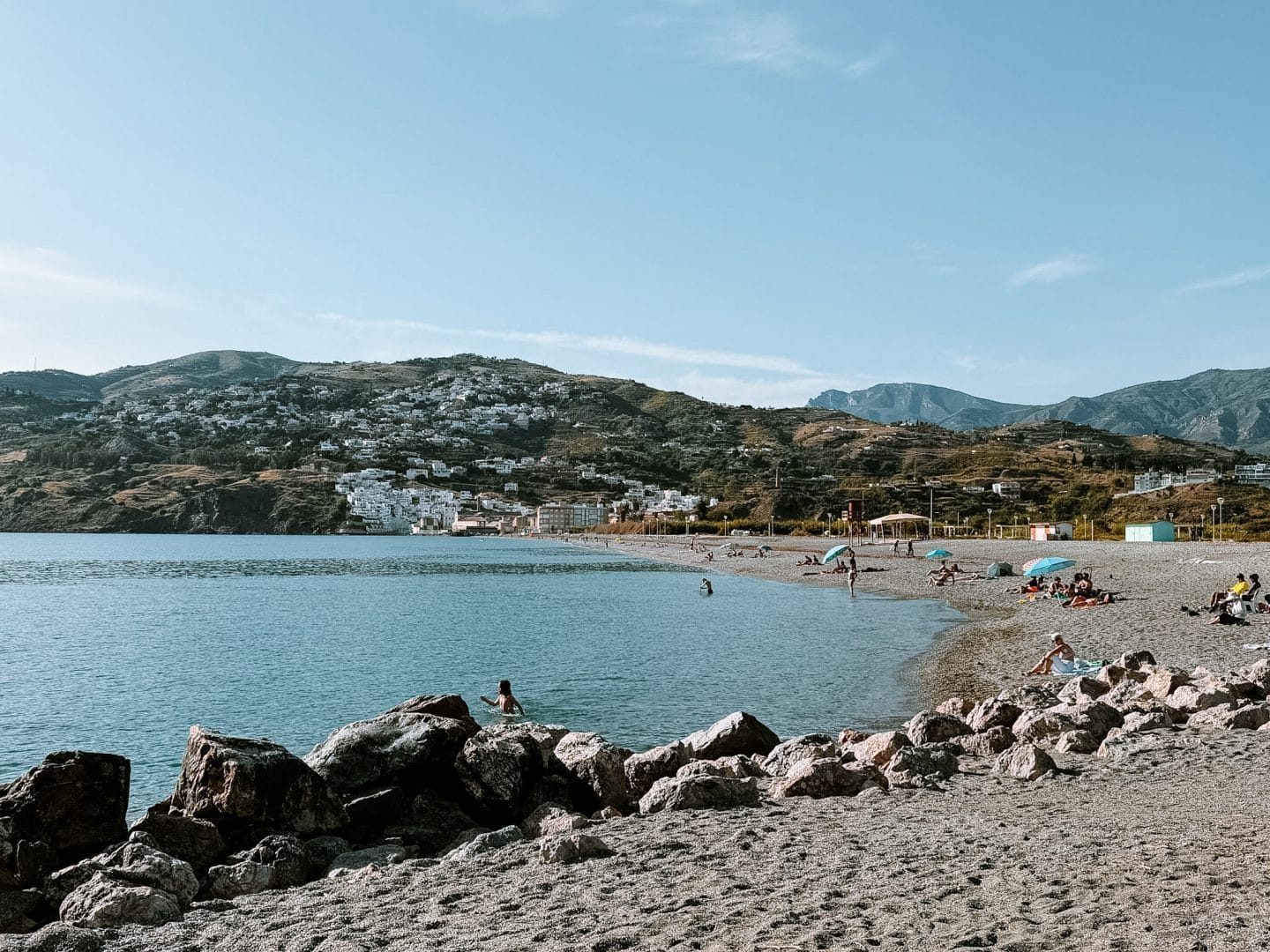
If you are searching for the best beaches Salobreña has to offer, you’ll quickly notice that each stretch of coast has its own atmosphere. I found two main beaches. One sits at the foot of the Castillo de Salobreña: Playa de la Guardia. The other along the main boulevard: Playa de la Charca. They are separated by the Peñón de Salobreña, a rocky formation in the Mediterranean Sea. I learned that this was once a small island, when sea levels were higher.
Today, it has become one of my favourite sunset spots. As the sky slowly turns golden and pink, the castle lights up above the old town. It is one of those simple moments that you won’t forget.
A little bit more eccentric and less crowded there’s Playa Punto del Rio. The beaches themselves are wide and freely accessible. Just behind them, you’ll find small souvenir shops, bars, and plenty of restaurants. You could easily spend a full beach holiday in Salobreña. However, with so many things to see and do in Salobreña, I personally recommend visiting from May to June, or in September and October. Thanks to the subtropical climate, temperatures stay pleasant and the beaches are noticeably less crowded outside peak season.
Among the best beaches in Salobreña, Playa de la Guardia feels more local and relaxed, while Playa de la Charca has a livelier promenade atmosphere. What makes a Salobreña beach experience in Spain different is the contrast between the Mediterranean coastline and the mountain scenery behind it.
10. Day trip from Salobreña Spain: Nasrid Gardens in Vélez de Benaudalla
About 15 km inland from Salobreña, I visited Vélez de Benaudalla after hearing about a historic Hispano-Muslim garden. I arrived mainly to see the Nasrid-inspired garden. But once there, I also took time to explore the village around it.
The five benefits of the Nasrid Garden
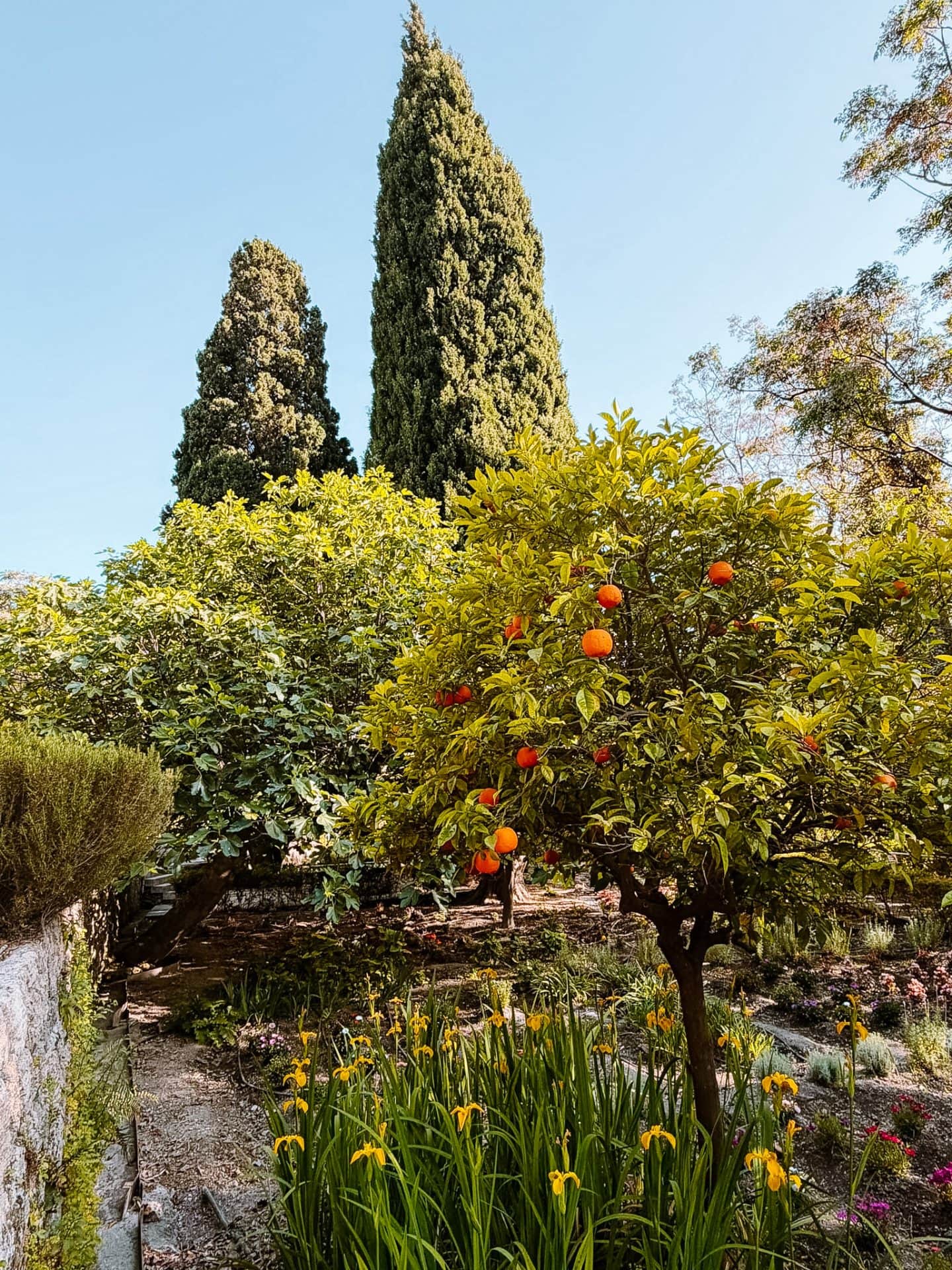
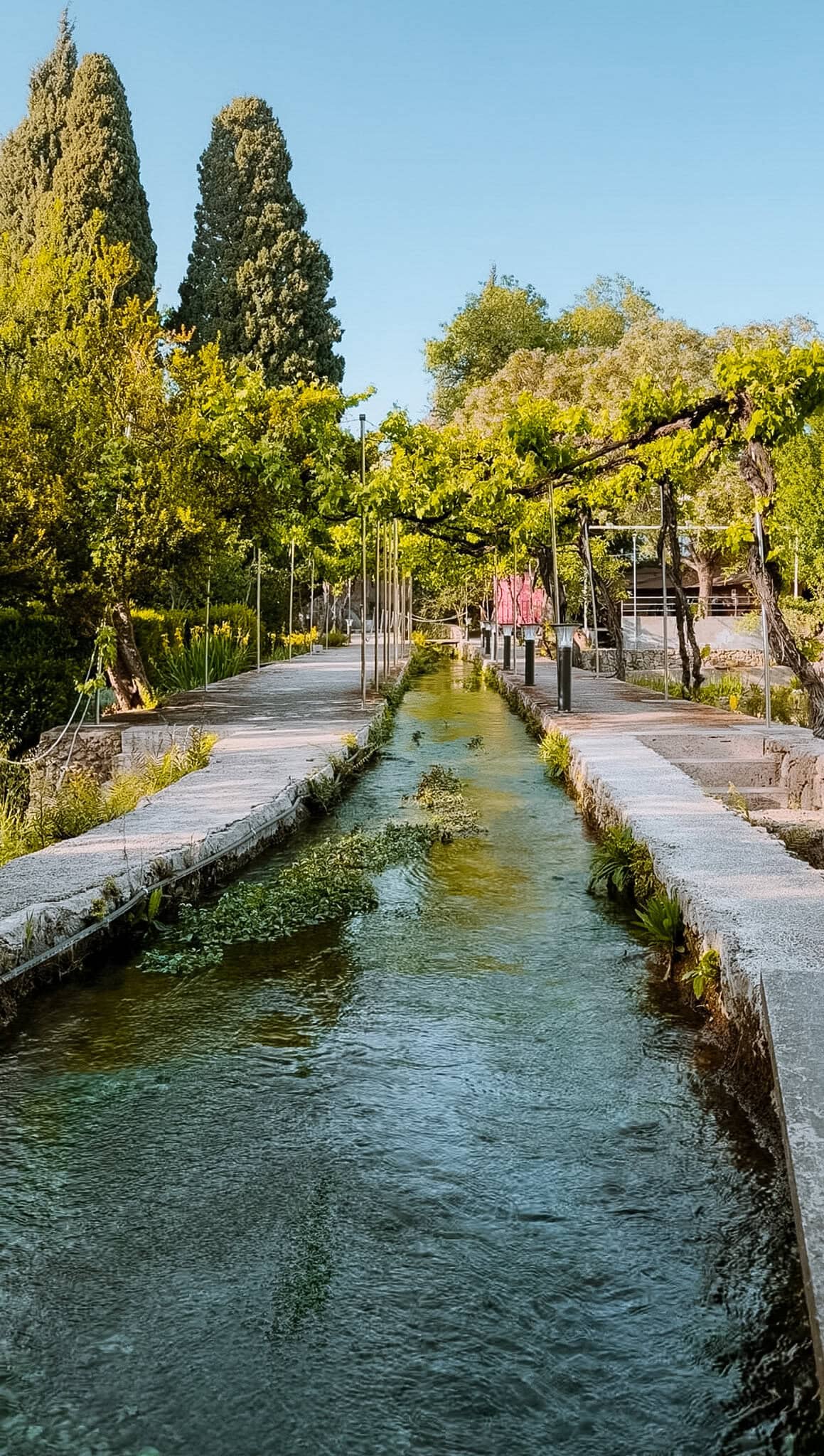
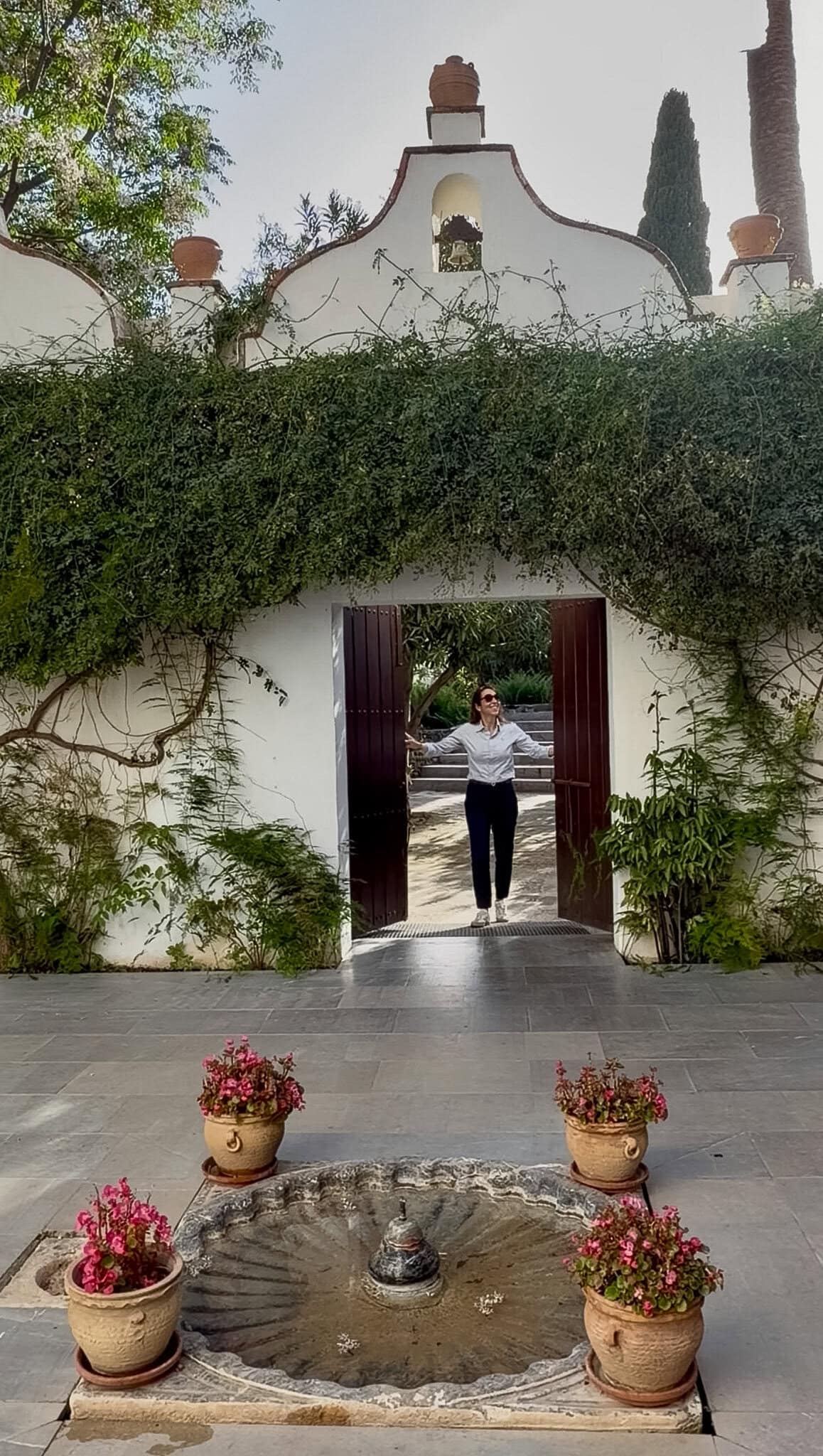
The garden is designed around five benefits: spiritual, aesthetic, psychological, botanical, and nutritional. Walking through it, I noticed how each element feels intentional, from the water channels to the shaded paths and carefully placed vegetation. It is not a large site, but it feels very balanced and calming. The sound of water and the greenery create a quiet atmosphere that naturally slows you down.
What I liked is that it doesn’t feel like a reconstructed show garden. Instead, it feels fully integrated into the landscape and the rhythm of the village.
You can also scan a QR code with your phone to follow a self-guided route through 25 points of interest, available in Spanish, English, and French.
Village life & local discoveries
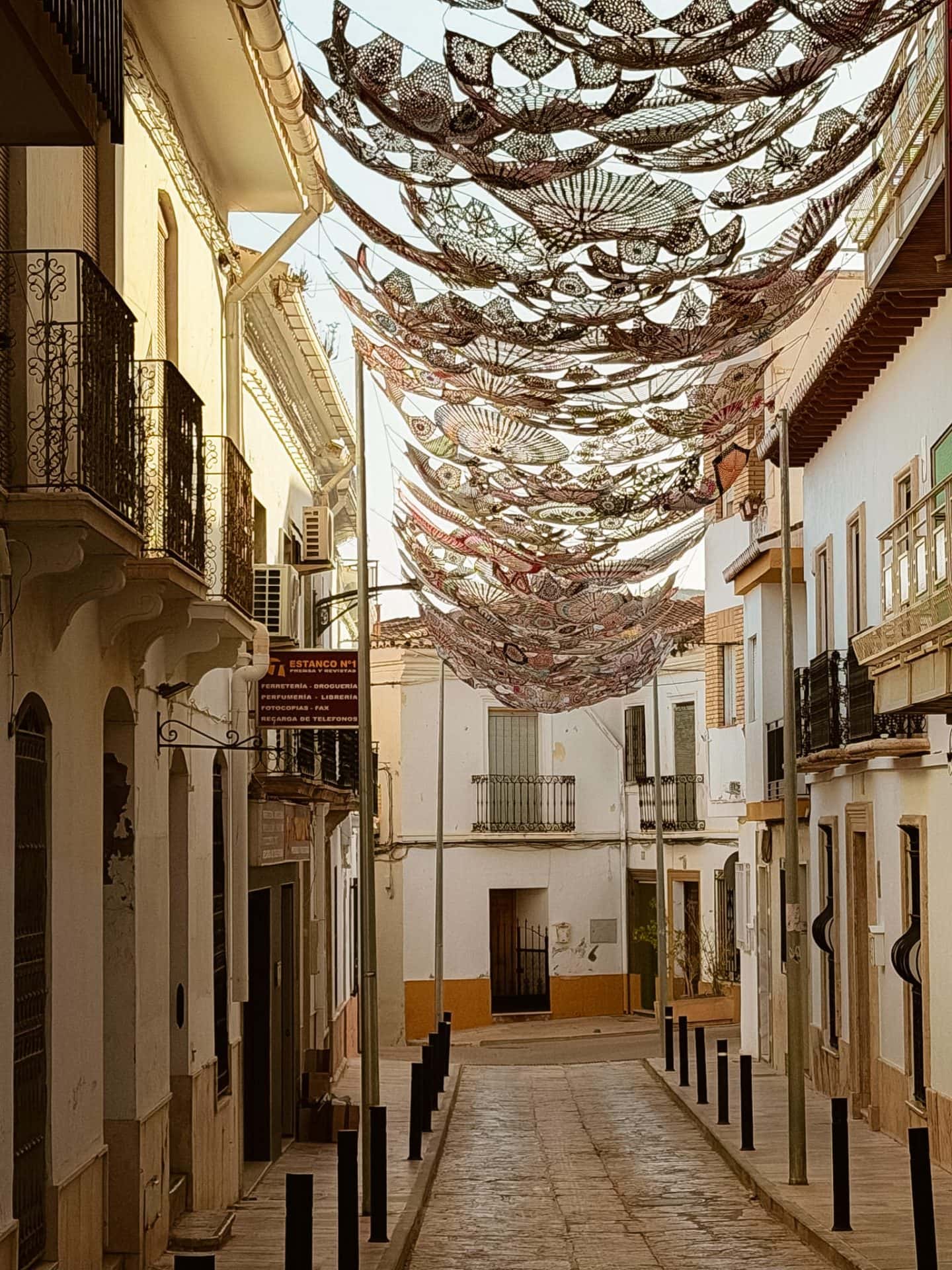
Outside the garden, Vélez de Benaudalla has a very lived-in, local atmosphere. Fountains run through the streets, small squares open up between houses, and everyday village life unfolds at a slow, natural rhythm.
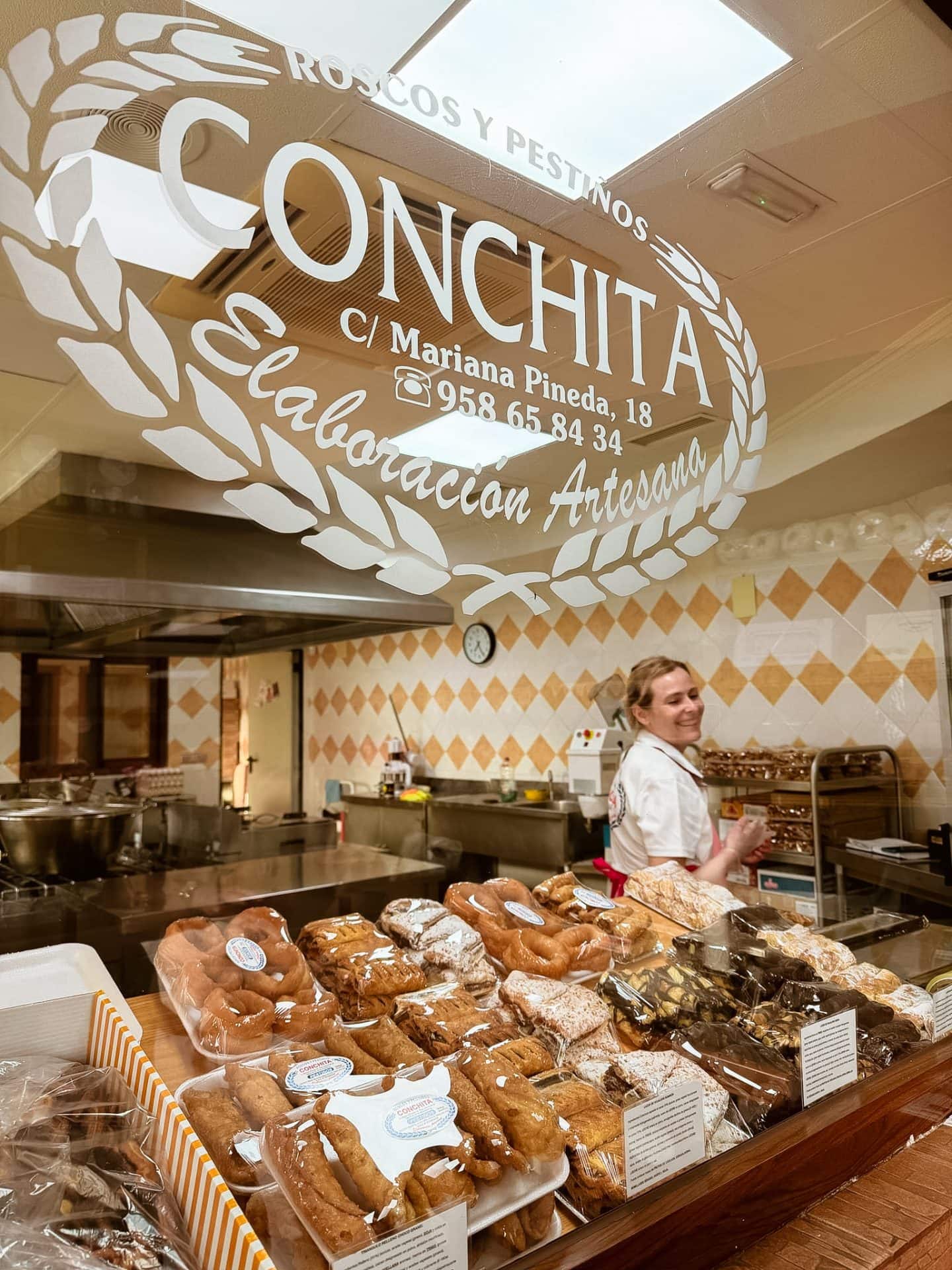
I also stopped at Conchita to try artisanal pestiños, flavoured with anise. It’s a local speciality I kept noticing in bakeries around the area, and this version really stood out.
If you have more time, you can also rent a bicycle or join a tour with Cycle Sierra Nevada. The owner, Cormac, speaks perfect English and knows the surrounding valley extremely well. He shares great local tips and routes through the river landscape and nearby hills, which makes exploring the area much easier and more interesting.
11. Torrenueva sunset walk: hidden Costa Tropical gem near Salobreña
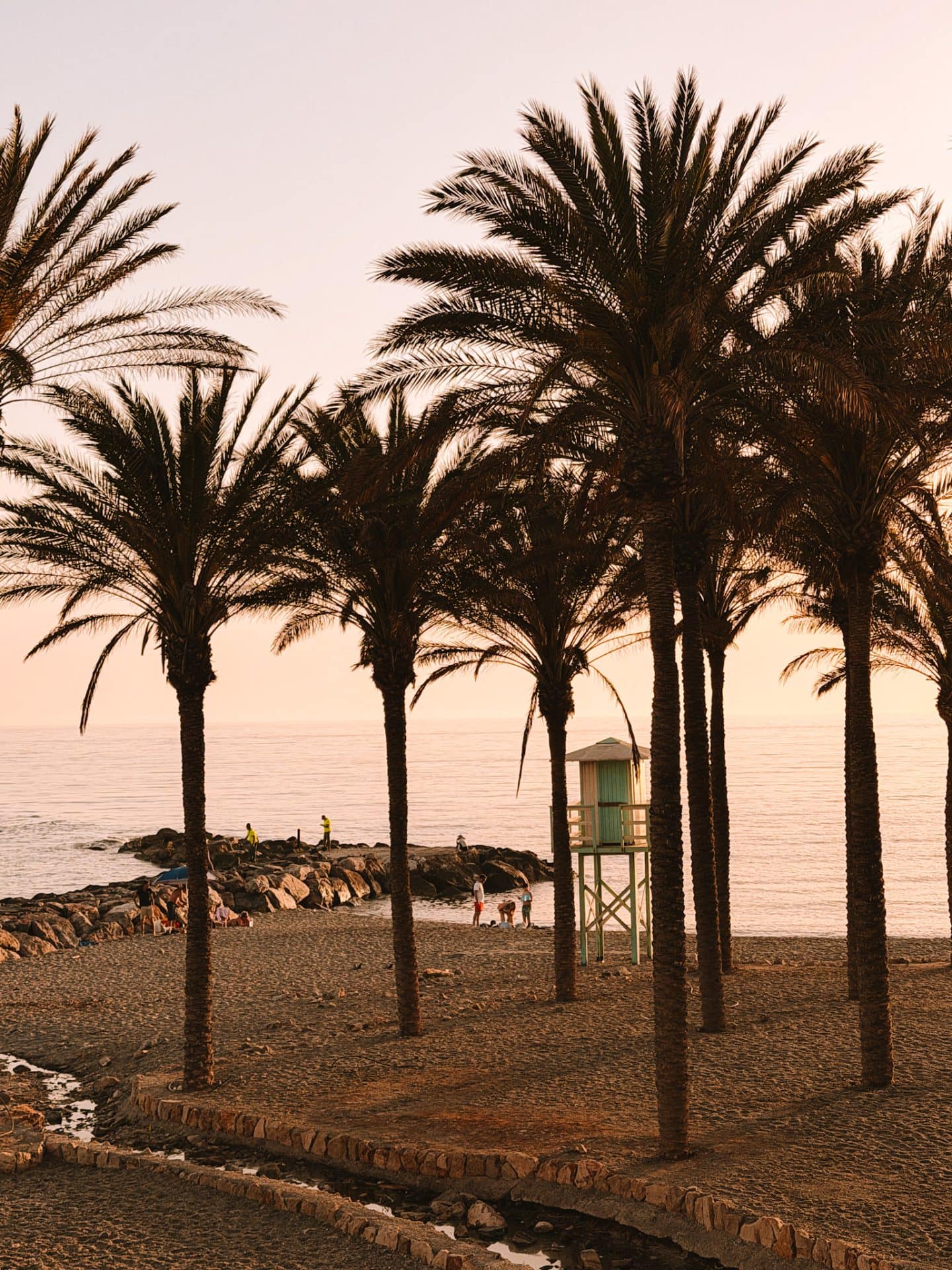
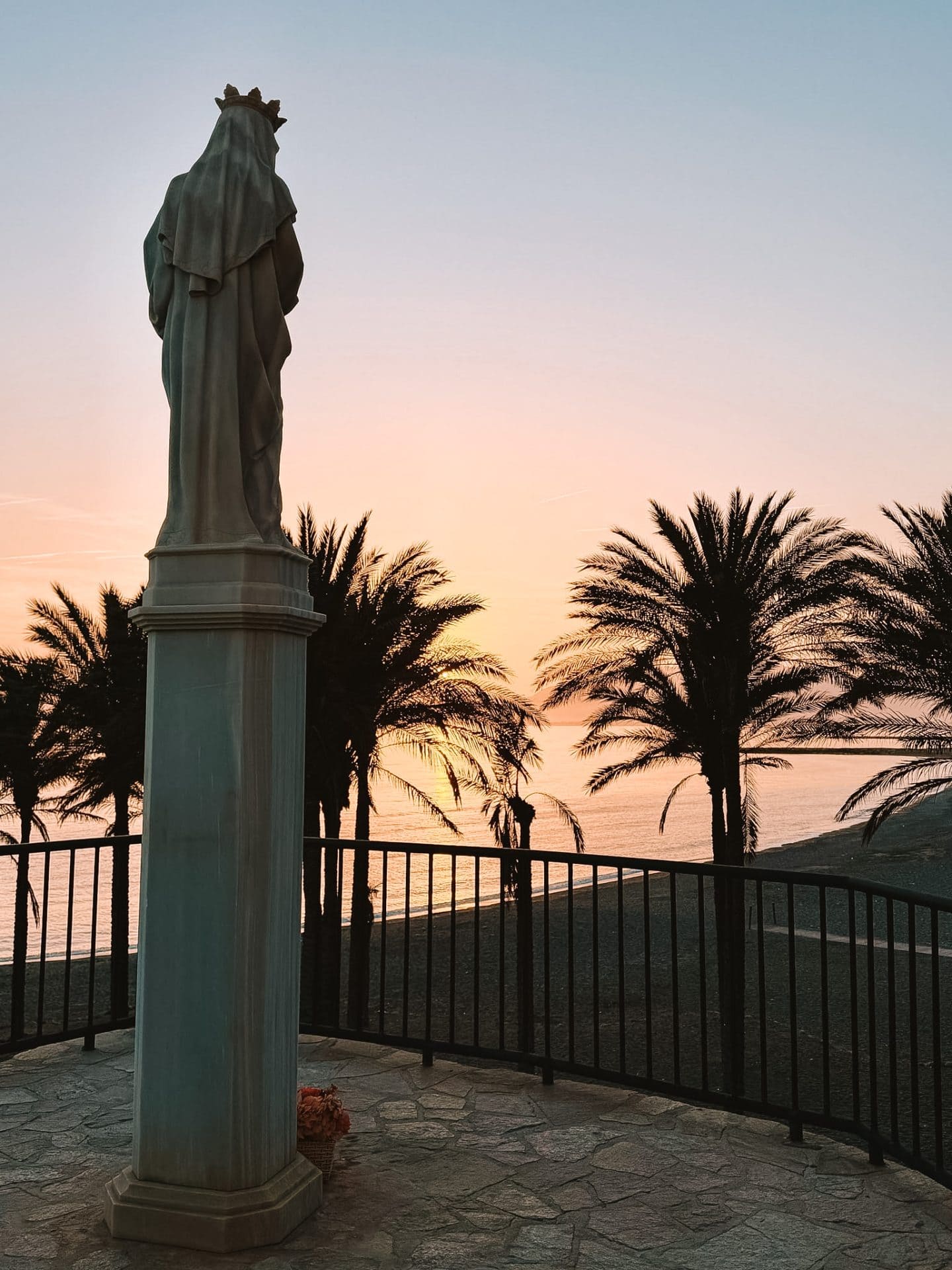
At a 15-minute drive from Salobreña, the neighbouring village Torrenueva Costa is well worth a visit. I came here in the late afternoon, just before sunset, and it was perfect. I really recommend visiting around that time. You can relax on the beach and enjoy an aperitif with sea views.
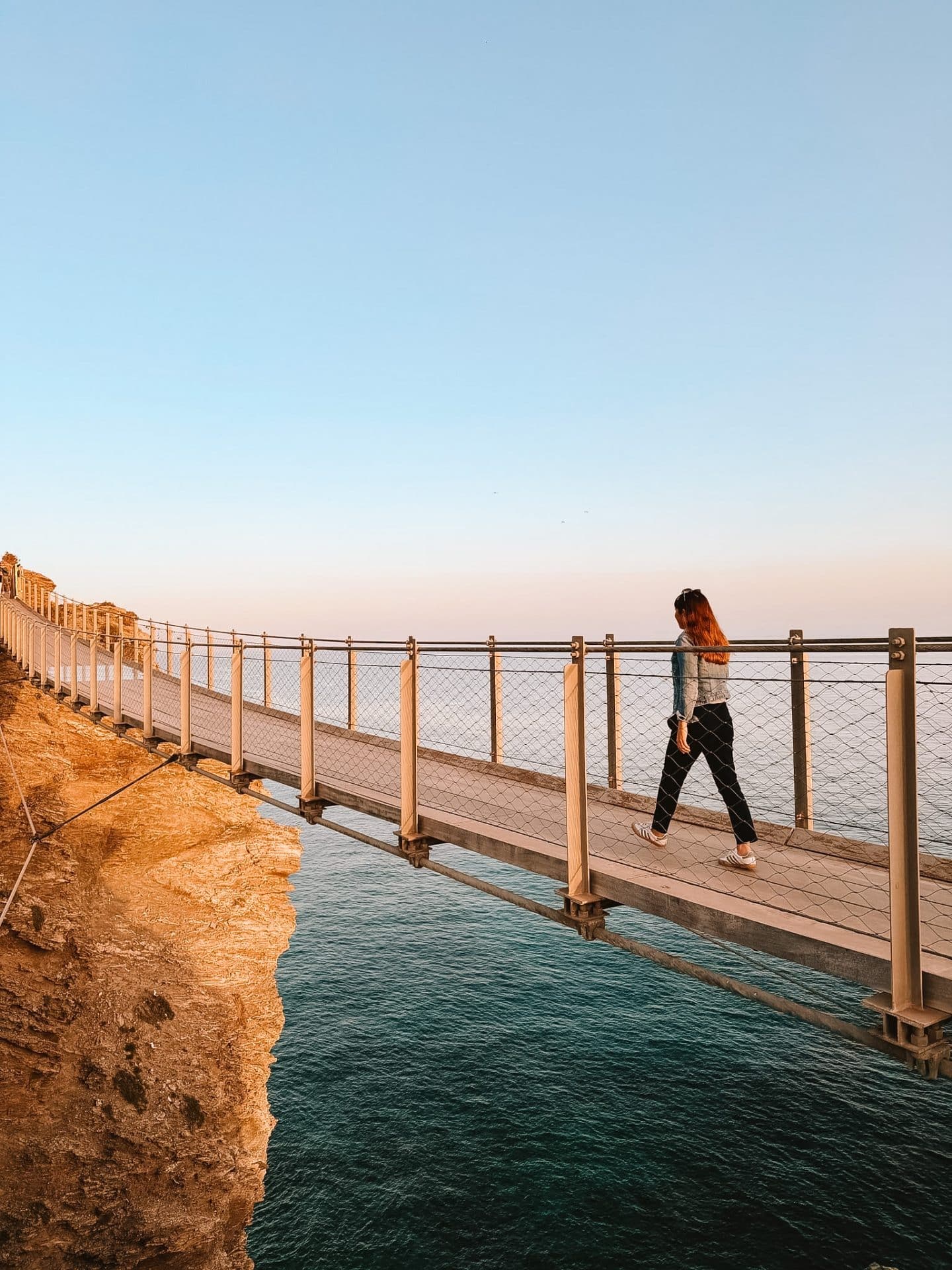
One highlight is the suspension bridge, the Puente Colgante, hanging 35 metres above sea level. Halfway across, there is even a glass floor section that allows you to look straight down below. It is part of the PR-A420 hiking route, known as Miradores y Acantilados. This 10 km trail starts and ends in Torre Atalaya. Along the way, you walk above cliffs, viewpoints, and open sea landscapes.
Where to eat in Salobreña Spain
If there is one thing that truly stood out in Salobreña, it is the food. The local restaurants in Salobreña are consistently high quality. I was never disappointed.
Each place also has its own identity. Some offer sea views, others overlook the snow-capped Sierra Nevada mountains. In addition, you’ll find family-run businesses passed down through generations, authentic live music, outdoor terraces, and even small cooking demonstrations.
I couldn’t get enough of the fresh seafood and local wines.
If you have read my previous articles, you know I am always looking for good food experiences. Honestly, I would come back to Salobreña just for the food alone. That is why I have listed my favourite restaurants in a separate article.
- Where to eat in Salobrena: 7 best restaurants on the Costa Tropical of Spain
The three-star Hotel Avenida in Salobreña on the Costa Tropical of Spain
The three-star Hotel Avenida has 30 rooms and is about a 10-minute walk from the Salobreña beaches, and the stretch of the Costa Tropical of Spain. It sits at the foot of the hill leading through the old town to the castle. As a result, it’s perfectly positioned between the beach and the historic centre. Therefore, it’s an ideal base for exploring Salobreña on foot.
In addition, the hotel offers secure free parking with camera surveillance, which is a real advantage if you’ve arrived by car from the airport. Just next to the hotel, you’ll find a gas station and a supermarket, which is convenient if you need fuel or forgot something in your suitcase or, like me, just feel like picking up some local snacks.
Rooftop views & relaxing atmosphere
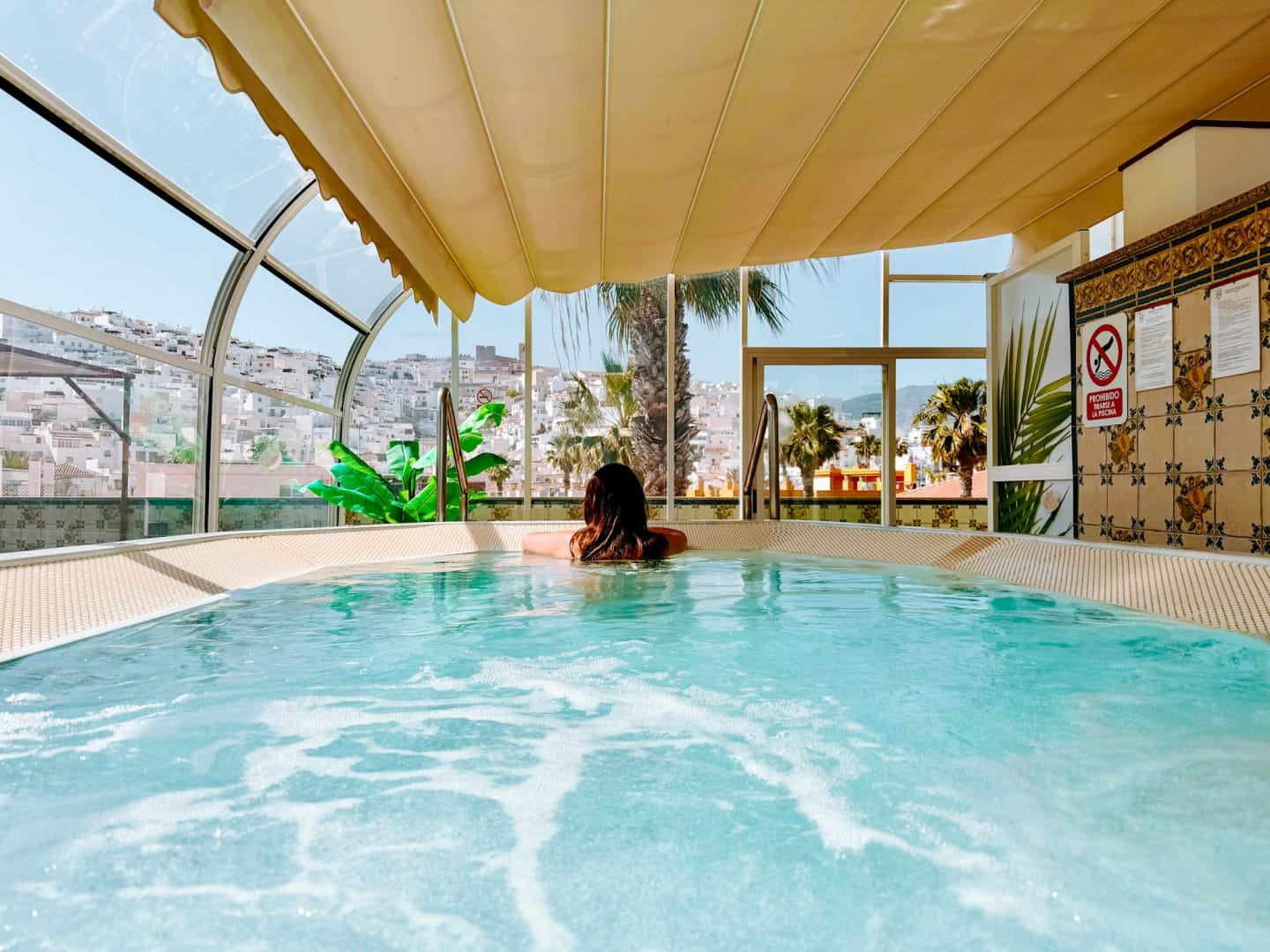
On the rooftop, you’ll find sun loungers, a pool table, foosball, and a jacuzzi with views over the castle. After a 22 km electric bike ride with Trujbike, exploring the natural surroundings of Salobreña, I couldn’t have imagined a better place to unwind.
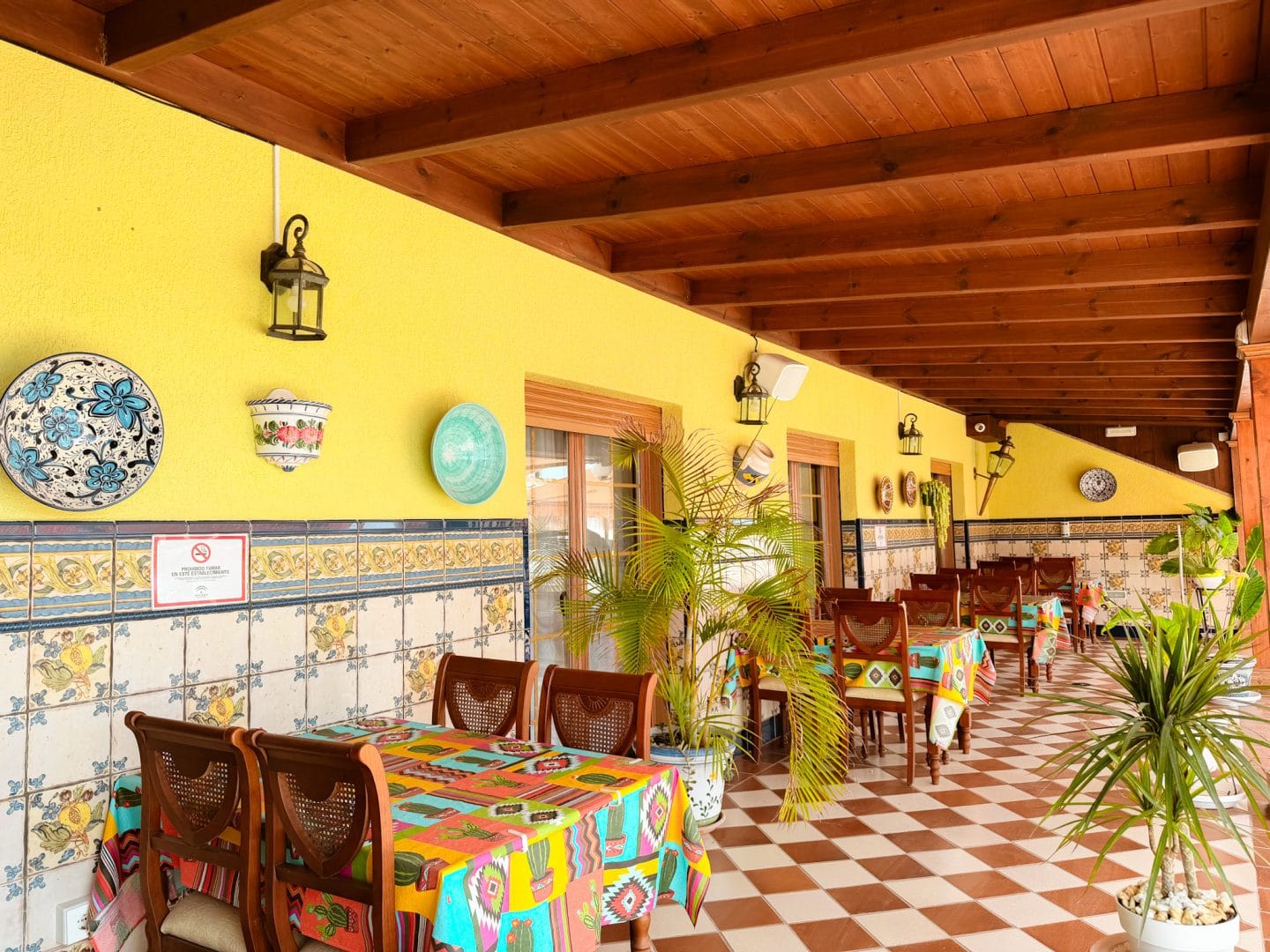
One of the lovely new additions for summer 2026 is the brand-new outdoor swimming pool on the ground floor. I especially loved that you can see it from the breakfast terrace, with the sun loungers all around. It makes breakfast feel like the perfect start to a summer day.
Rooms & comfort
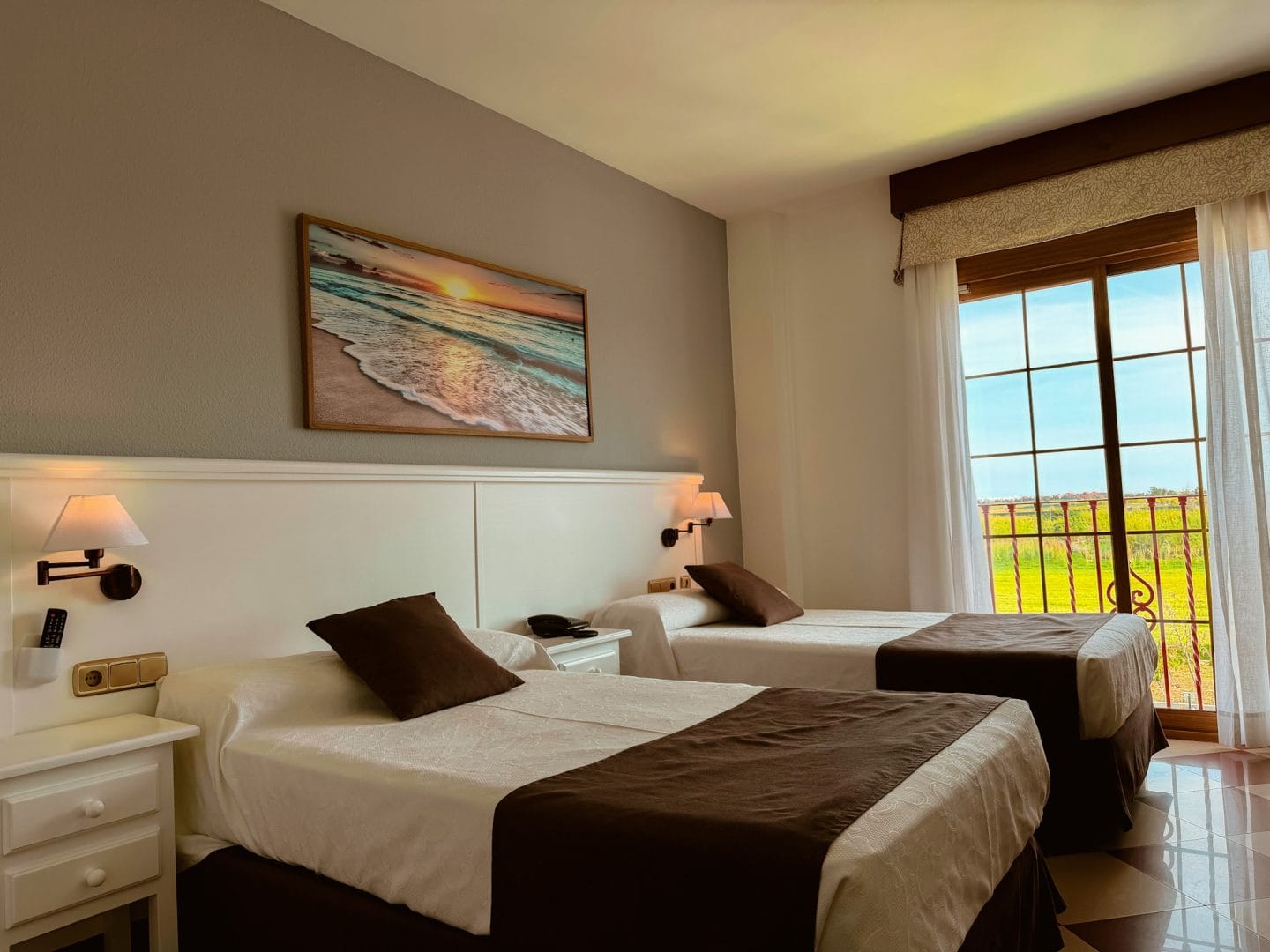
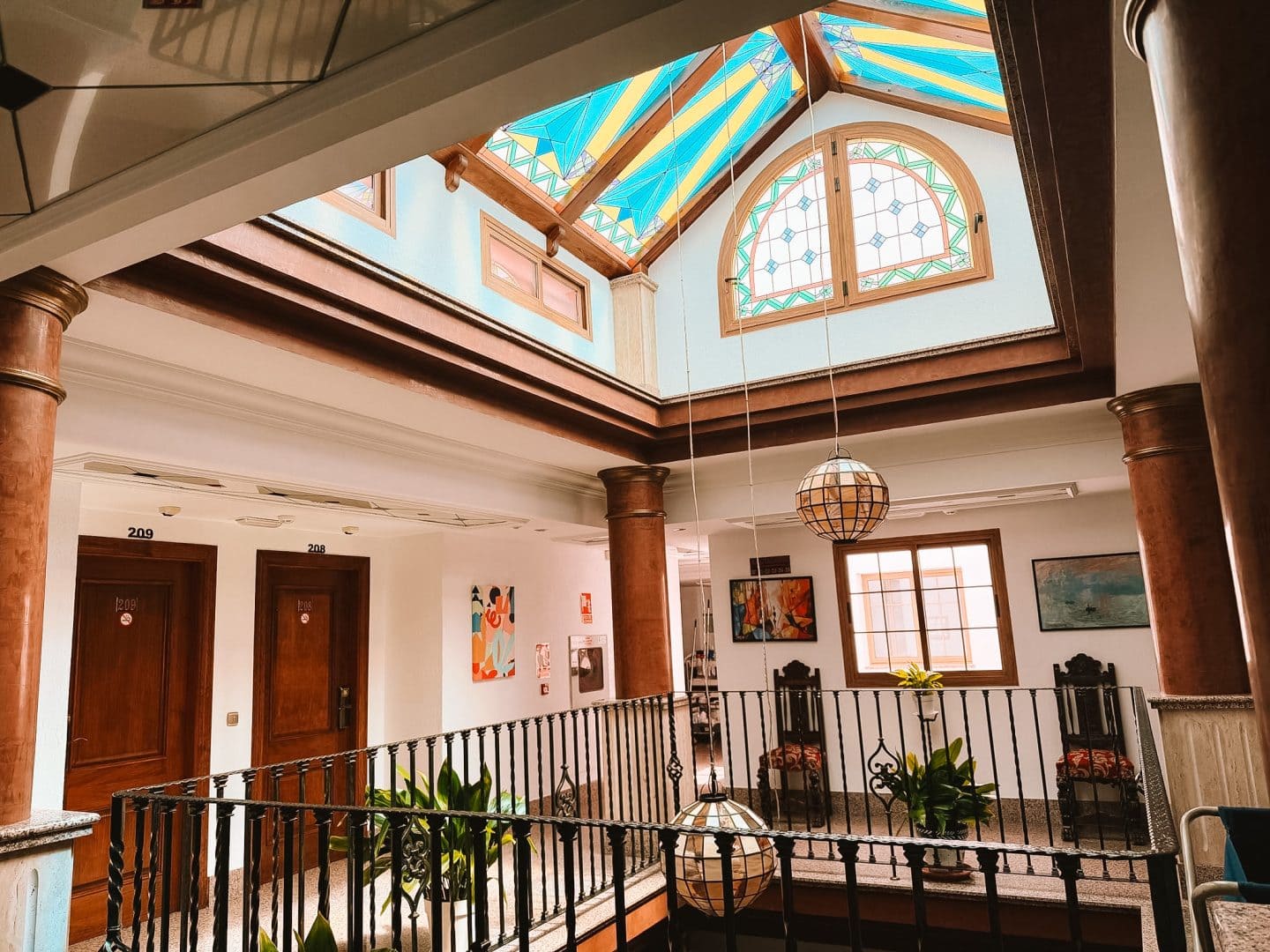
One thing I’ve consistently noticed when staying in hotels across Spain is the level of cleanliness. Here, this is no exception. Not only are the rooms spacious, but they are also very well maintained. In addition, each room comes with a large TV and a small desk. This is ideal for working on your laptop and charging your devices.
Each morning, a breakfast buffet is served. You can choose between indoor and outdoor seating. Moreover, once the new swimming pool is completed, the outdoor terrace will overlook it.
One small tip: amenities like cotton pads or cotton buds are not provided. If you have specific hair care needs, bring your own shampoo and conditioner, as only basic soap is available.
The people that make the stay
What truly makes Hotel Avenida on the Costa Tropical of Spain memorable, however, is the staff. Dolores has been working here for 23 years. She has held almost every role, from housekeeping to breakfast service. She is now the reception manager. As a result, she brings a sense of continuity and care you don’t often find.
In addition, Christian is always available with recommendations. He helps with things to do, places to visit, and planning your itinerary. Finally, Nicco prepared a small breakfast to go for us on departure. This was especially helpful as we had an early airport transfer.
Good to know: the hotel is open from mid March to November
Salobreña Spain — full of good things
After exploring Salobreña in all its layers, one thing becomes clear: this is not just another stop on the Costa Tropical of Spain. It is a place where history, landscapes, fresh food and everyday life are tightly woven together.
From the hilltop castle watching over the old town to the Salobreña beaches stretching below, from tropical fruit farms and sugarcane heritage to unexpected kayak trips, cycling routes, street art, and quiet villages inland. Everything feels close, varied, and easy to experience at your own pace.
Salobreña — full of good things is not just a slogan. After this journey, for me it feels like a very accurate summary of what the place actually is.
FAQ Salobreña Spain travel guide
Yes, Salobreña is absolutely worth visiting, especially if you’re looking for something more authentic than Spain’s more crowded coastal destinations. What makes Salobreña stand out is its variety: history, nature, food, and local life all sit within a compact area. It’s also a great base for exploring nearby places like Motril, Vélez de Benaudalla, and Torrenueva Costa. It’s especially worth visiting if you prefer slower travel, fewer crowds, and a mix of cultural and coastal experiences rather than a typical resort-town atmosphere.
The best time to visit Salobreña is in late spring (May to June) or early autumn (September to October). During these months, the weather is warm and sunny thanks to its subtropical climate, but it is less crowded than in peak summer. It’s ideal for exploring the old town, enjoying the beaches, and discovering the surrounding nature without the intense heat of July and August.
Salobreña is part of the Costa Tropical because of its unique subtropical climate. Protected by the Sierra Nevada mountains, facing the Mediterranean Sea and influenced by its proximity to Africa, the area enjoys mild winters, warm summers, and around 320 days of sunshine per year. This special climate allows the cultivation of exotic fruits such as mangoes, avocados, cherimoyas, and bananas. Fruits you wouldn’t normally expect to find in mainland Europe.
Fruit season in Salobreña varies depending on the type of fruit, thanks to its subtropical climate. In general, tropical fruits like mangoes and avocados are harvested from late summer into autumn (August to October). Cherimoyas are typically in season from autumn into winter (October to February), while bananas and other subtropical fruits can often be found almost year-round. Visiting in September or October is especially rewarding, as many fruits are at their peak and local farms are in full harvest.
Salobreña is perfect for travellers looking for a quieter and more authentic alternative to Spain’s busier coastal resorts. It suits slow travellers, couples, and nature lovers who enjoy a mix of beach time, cultural discovery, and scenic walks. It’s also ideal for food lovers interested in local seafood and seasonal tropical fruit, as well as active travellers and outdoor enthusiasts who enjoy cycling, hiking, kayaking, and exploring nature. Thanks to its varied landscape of coast, river valleys, and hills, Salobreña offers plenty of opportunities to stay active while enjoying a relaxed atmosphere.
It is also a great destination for people who prefer travelling outside the peak summer season. In late spring and early autumn, you can still enjoy warm, sunny weather thanks to the Costa Tropical’s mild climate, but with fewer crowds and a more peaceful, local atmosphere.
You can see the main highlights of Salobreña in 2 to 3 days, which is enough to explore the old town and Castillo de Salobreña, relax on the beaches, and enjoy a good meal with sea views.
However, if you want to experience it more fully and at a slower pace, 4 to 5 days is ideal. That gives you time to go beyond the village itself and explore nearby places like Motril, Vélez de Benaudalla, Torrenueva Costa, and the tropical fruit valleys inland. It also allows space for activities such as cycling, kayaking, hiking, or visiting local farms and sugarcane heritage sites without rushing.
If you’re into slow travel, food experiences, and discovering places off the usual tourist radar, Salobreña really rewards staying a bit longer.
The best beaches in Salobreña depend on the atmosphere you’re looking for. Playa de la Charca is the main beach, with a long promenade, restaurants, and easy access from town. Playa de la Guardia, located below the Castillo de Salobreña, feels more local and relaxed. For something quieter, Playa Punta del Río offers a wider and less crowded stretch of coastline. Along the coast, you’ll also find small coves and scenic walking routes connecting different Salobreña beaches. Many travellers choose Salobreña specifically, because the Salobreña beaches offer a quieter alternative to the busier Costa del Sol.
The best way to eat in Salobreña is to mix: long lunches by the sea and evenings in the old town with tapas and wine.
You can find all my personal favourites and full recommendations in my Salobreña Food Guide
Read more of our Spain travels:
- Where to eat in Salobreña: 7 best restaurants on the Costa Tropical of Spain
- Gems of Costa Brava Spain: Coastal Villages & Boutique Escapes
- Mallorca Travel Guide – Ultimate Slow-Luxury Guide
- Best Things to Do in Valencia: Hiking, Biking & Local Tips
- Read our Spanish travel guide
- Also a fan of slow traveling? Read our slow travel tips

Meet Jessika, a luxury travel writer with a background in international hospitality spanning over 15 years. Half Dutch, half French, and fluent in five languages, she has a natural affinity for the finer things: elegant hotels with soul, wine regions with a story to tell, and tables that celebrate local flavour at its best. Her writing is shaped by a slow, intentional approach to travel — where atmosphere, craftsmanship, and a strong sense of place matter most. She is often accompanied by her dachshund Takkie, her most discerning travel companion.
